
Process Equipment Lead Times: Quarterly Tracker, Q4 2026
Lead times for valves, pumps and transformers from named, dated public sources, the UK and US delivery trend this autumn, and how to build lead times into a project schedule. Updated quarterly.
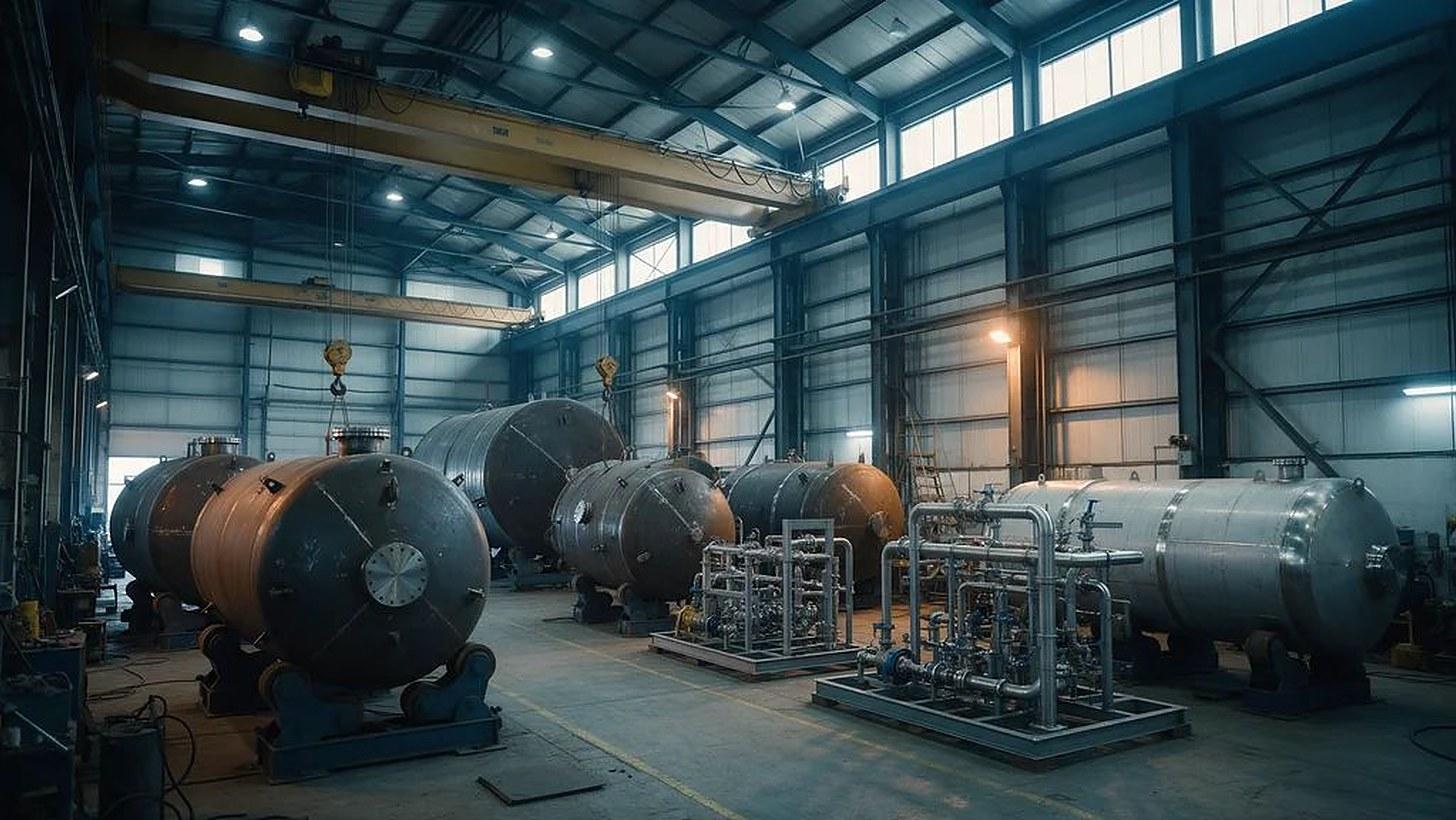
This is ChemCapital's quarterly tracker of process equipment lead times, written on 6 November 2026. In short: catalogue valves still ship in a few weeks, but every option you add, from special alloys to electric actuation and fire safe certification, adds weeks; engineered pumps run to months; large transformers still take a year or more. Broad indicators in both the UK and the US show supplier delivery times lengthening this autumn. Use the figures as a starting point, confirm them with suppliers, and plan your schedule backwards from the date you need the equipment.
How to read this tracker
We only include figures from named, dated public sources, and we show the date next to every number. Lead times change quickly and vary by supplier, size, material and order book, so treat each figure as a range to check, not a promise. Where we found no reliable, dated public data, we say so rather than guess. We will update the tracker each quarter.
Create and manage RFQs in minutes
ChemCapital handles the entire procurement cycle, from structured RFQs and supplier comparisons to formal purchase orders and delivery tracking.
The market this quarter
Two monthly surveys of purchasing managers give the broad picture.
In the UK, the S&P Global UK Manufacturing PMI rose to 52.8 in October 2026, a five month high. Average supplier lead times lengthened to one of the greatest extents in four years, with firms citing shipping rerouting, port congestion, material shortages and conflicts affecting transport routes. Input prices rose for the 34th month running [1].
In the US, the ISM manufacturing index for October 2026 was 55.5, its tenth month of expansion. The supplier deliveries index was 59.1; a reading above 50 indicates slower deliveries. One respondent summed it up: "Lead times and prices are increasing" [2].
Both point the same way: allow more time this quarter, not less.
These surveys cover all of manufacturing, not process equipment alone, so they tell you the direction rather than the number of weeks. What they do show is pressure on the inputs that equipment makers depend on: shipping, metals, electronics and chemicals. A fabricator waiting for plate or a pump maker waiting for castings passes that wait straight to you. In practice, that means asking suppliers whether their quoted lead time already reflects current material deliveries, and building float into any schedule that relies on imported components or long sea routes.
Lead times by equipment type
| Equipment | Lead time | Source and date |
|---|---|---|
| Catalogue ball valve, 2 inch, 150 psi | 2 to 3 weeks | Valtorc, October 2026 [3] |
| Same valve in 316 stainless steel with electric actuation and ASME certification | 8 to 12 weeks | Valtorc, October 2026 [3] |
| Forged steel valve body, 600 psi, foundry backlogged | 6 to 8 weeks | Valtorc, October 2026 [3] |
| Pumps, configured or assembled to order | Several weeks, perhaps a few months | Empowering Pumps, 2018, updated January 2025 [4] |
| Pumps, engineered to order from catalogue designs | 4 to 6 months | Empowering Pumps, 2018, updated January 2025 [4] |
| Pumps, large custom engineered | About 18 months | Empowering Pumps, 2018, updated January 2025 [4] |
| Power transformers | More than 12 months for most; more than 24 months for the largest | Rystad Energy, May 2026 [5] |
| Power transformers, average | 128 weeks | Wood Mackenzie Q2 2025 survey, reported by POWER, January 2026 [6] |
| Generator step up transformers, average | 144 weeks | Wood Mackenzie Q2 2025 survey, reported by POWER, January 2026 [6] |
| Pressure vessels, heat exchangers, skids | No reliable dated public figure found | Ask fabricators for current shop load |
The pump figures are older than the rest and describe categories rather than current conditions, so check them against quotes. The transformer figures matter for process projects too: a new plant or a large electrical upgrade often needs one, and it can set the critical path.
What adds time to a valve
Valtorc's breakdown shows how options stack up on a valve order [3]:
- Special alloys: plus 4 to 6 weeks, while the foundry orders material from the mill.
- Pneumatic actuator: plus 1 to 2 weeks.
- Electric actuator with positioner or controls: plus 3 to 4 weeks.
- Fire safe certification: plus 2 to 3 weeks.
- Pressure test reports: plus 1 to 2 weeks.
What adds time to a pump
For pumps, Empowering Pumps lists order size, special engineering or testing, new patterns and tooling, special material castings, new welding procedures, inspection hold points, performance testing, exotic metallurgies, special coatings, witnessed testing and the drawing approval cycle [4]. Each witnessed test or special material you specify has a time cost; decide whether you need it before you send the RFQ.
How to use lead times in a schedule
A quoted lead time is only part of the time between deciding to buy and having equipment on site. Build the full chain:
- RFQ to award. Preparing the RFQ, bidding, evaluation, clarification and approval.
- Drawing approval. Many suppliers start the clock only when you approve their drawings. Check whether the quoted lead time runs from order or from approval.
- Manufacture. The quoted lead time, driven by the longest bought in item inside the package.
- Inspection and FAT. Witness points and the factory acceptance test.
- Packing and shipping. Including export packing and customs where relevant.
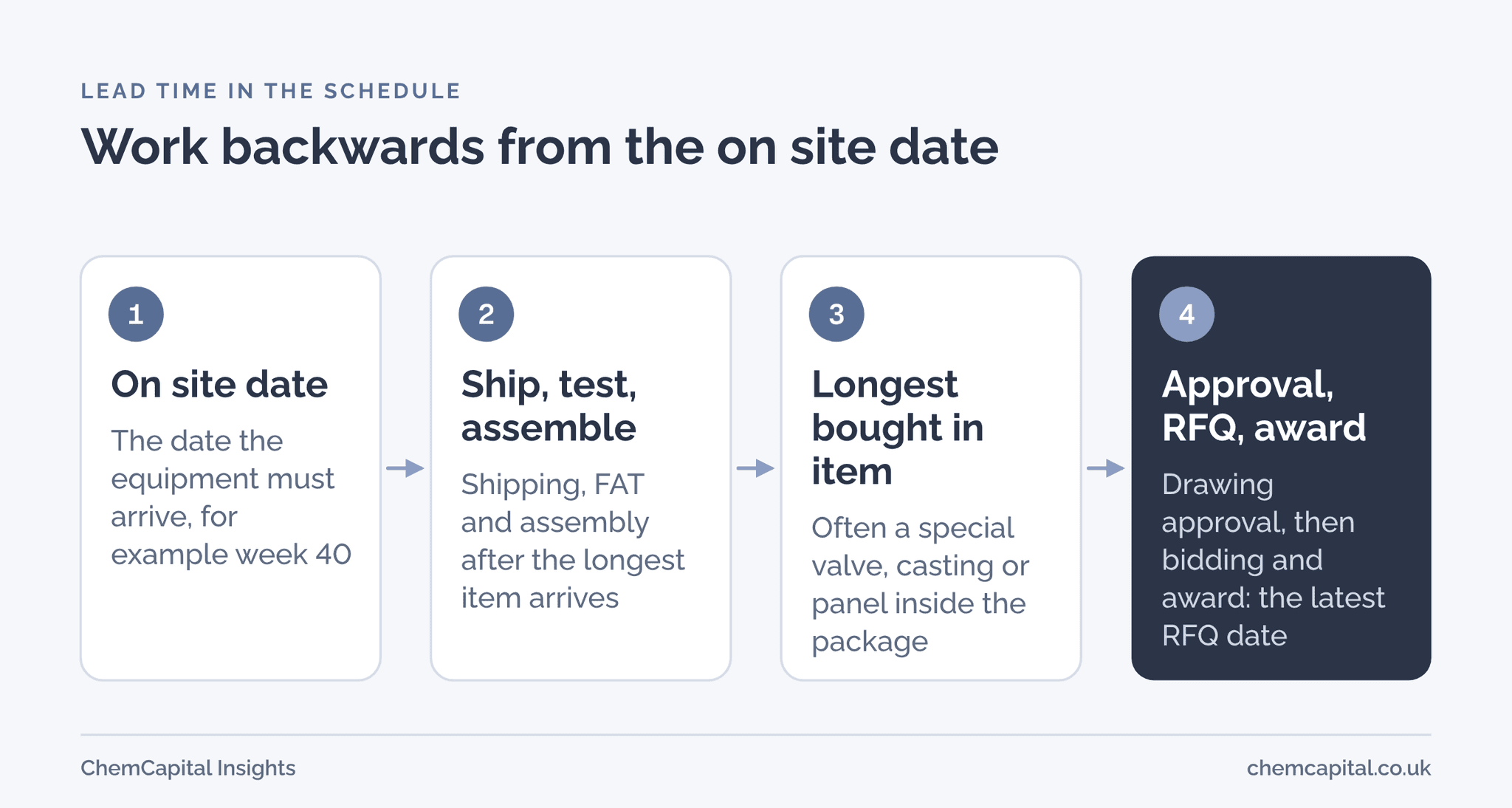
Then work backwards from the date you need the equipment on site. Items whose chain is longest are your long lead items; our guide to long lead items in process plant projects explains how to buy them early. Once ordered, expediting keeps them on track.
Practical example
Illustrative figures. A pump skid must be on site in week 40 of the project. Its longest bought in item is a 2 inch electrically actuated valve in a special alloy with ASME certification. Using the upper end of Valtorc's ranges, 12 weeks for the actuated, certified 316 valve plus 6 weeks for the special alloy gives 18 weeks [3].
| Step | Weeks |
|---|---|
| Shipping to site | 2 |
| Factory acceptance test | 1 |
| Skid assembly after the valve arrives | 6 |
| Long lead valve | 18 |
| Drawing approval | 3 |
| RFQ, evaluation and award | 6 |
| Total | 36 |
Working back from week 40, the RFQ must go out by week 4. A team that waits for detailed design to finish before issuing it will deliver late, however hard it expedites. The fix is to buy the valve, or reserve a slot for it, before the skid order is placed.
Ways to shorten a lead time
Not every lead time is fixed. Several levers are in the buyer's hands:
- Accept standard designs and materials. Each special alloy, coating or test adds weeks, as the valve breakdown above shows. Challenge any requirement that adds time without adding value for your duty.
- Approve drawings quickly. If the supplier's clock starts at approval, every week your engineers take is a week on the delivery date. Agree a review period in the order and keep to it.
- Release long lead materials early. Pay a small order or a limited notice to proceed for castings, forgings or plate, so the supplier can buy them before the full design is approved.
- Reserve a manufacturing slot. For transformers and large engineered items, a slot reservation can matter more than the price.
- Allow alternatives. A second approved make, or a supplier with stock of a near equivalent, can save months on a critical item.
- Combine witness points. Fewer separate inspection visits mean fewer waits for diaries to align.
Questions to ask a supplier about lead time
- Does the quoted lead time run from order, from drawing approval or from receipt of a down payment?
- Which bought in items drive it, and have you ordered them yet?
- What is your current shop load, and how firm is the slot you are offering?
- Which of our requirements add the most time, and what would you suggest instead?
- What delivery did you achieve on your last three similar orders?
Write the answers into the comparison. A quote of 16 weeks from approval, with the critical castings already on order, is often better than a quote of 12 weeks from order with nothing bought.
Keep your own tracker
Public figures are a starting point; your own purchase orders are better. Each quarter, record for each category the lead time quoted, the lead time achieved, and the supplier. Over a year, you will see which categories are lengthening, which suppliers deliver what they quote, and how much float to build into the next schedule.
When you send RFQs, ask every bidder to state lead time from order and from drawing approval, and the long lead items inside their package. ChemCapital's AI quotation comparison puts those lead times side by side, so the fastest compliant offer is easy to see.
Where ChemCapital fits
When lead times stretch, a wider shortlist helps. Supplier Discovery finds suppliers by category and capability, so you can approach makers with capacity instead of waiting in one queue.
Ready to compare lead times across suppliers? Start a free 14 day ChemCapital trial, with no credit card needed.
Next update: first quarter of 2027.
Frequently asked questions
What is the lead time for an industrial valve in 2026?
A catalogue 2 inch, 150 psi ball valve can ship in 2 to 3 weeks; the same valve in 316 stainless steel with electric actuation and certification takes 8 to 12 weeks, according to Valtorc in October 2026. Special alloys add 4 to 6 weeks.
How long does an engineered pump take?
Engineered to order pumps from catalogue designs typically take 4 to 6 months, and large custom engineered pumps around 18 months, according to Empowering Pumps. Confirm with current quotes.
Are lead times getting longer?
In autumn 2026, yes on the broad indicators: UK purchasing managers reported supplier lead times lengthening to one of the greatest extents in four years in October, and the US ISM supplier deliveries index showed slower deliveries.
How do I build lead times into a project schedule?
Work backwards from the on site date: shipping, FAT, assembly, the longest bought in item, drawing approval, then RFQ and award. The result is the latest date to issue the RFQ.
Continue reading
Informational only, not procurement or legal advice. Cited names, frameworks, and statistics belong to their respective owners.
Create and manage RFQs in minutes
ChemCapital handles the entire procurement cycle, from structured RFQs and supplier comparisons to formal purchase orders and delivery tracking.
Start for freeRelated articles
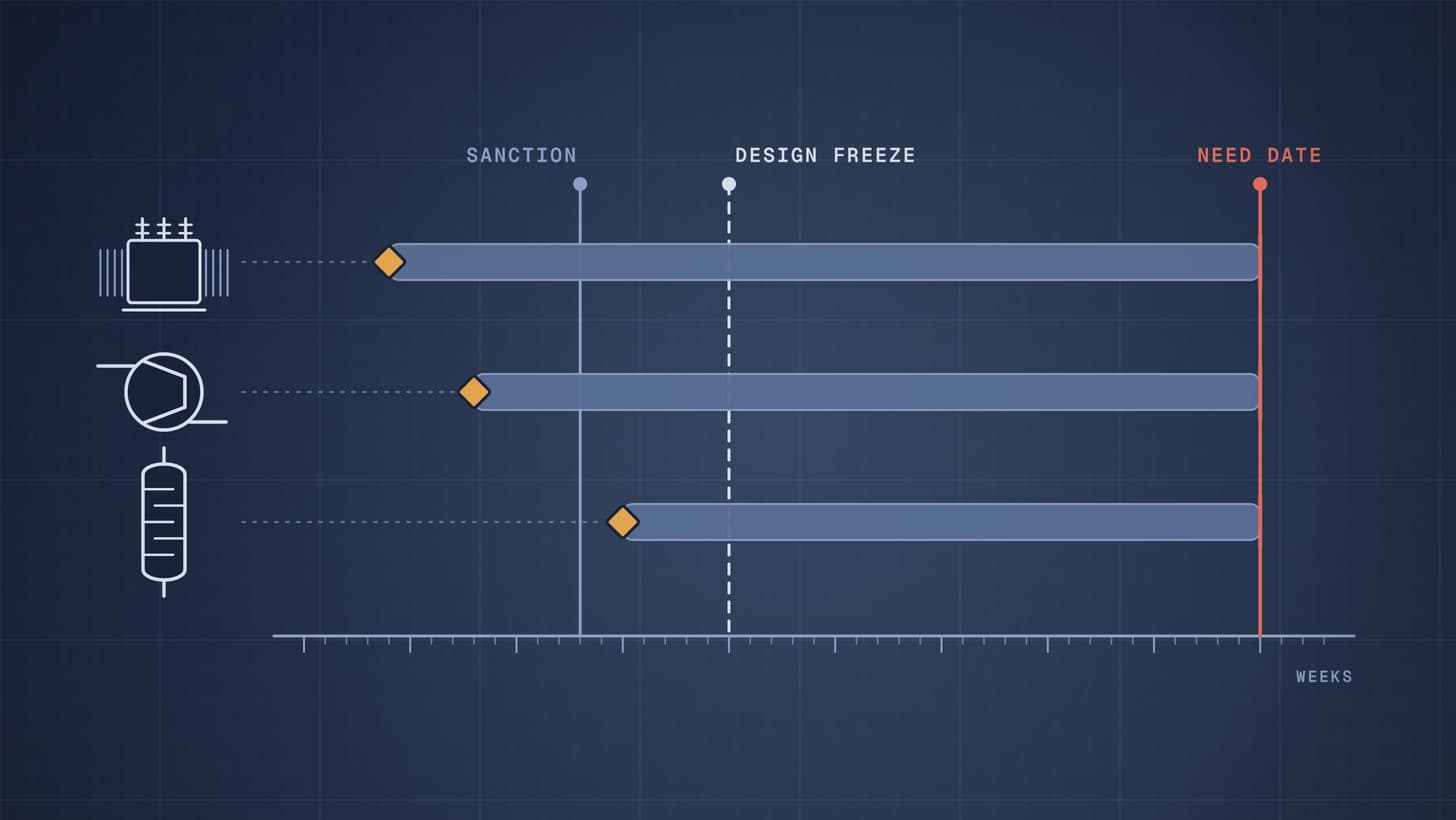
Long Lead Items: Meaning, Typical Examples and How to Order Them Early
A long lead item is equipment or material that must be ordered early to arrive on time. Typical items and lead times, how to find and rank them, and ways to order ahead.
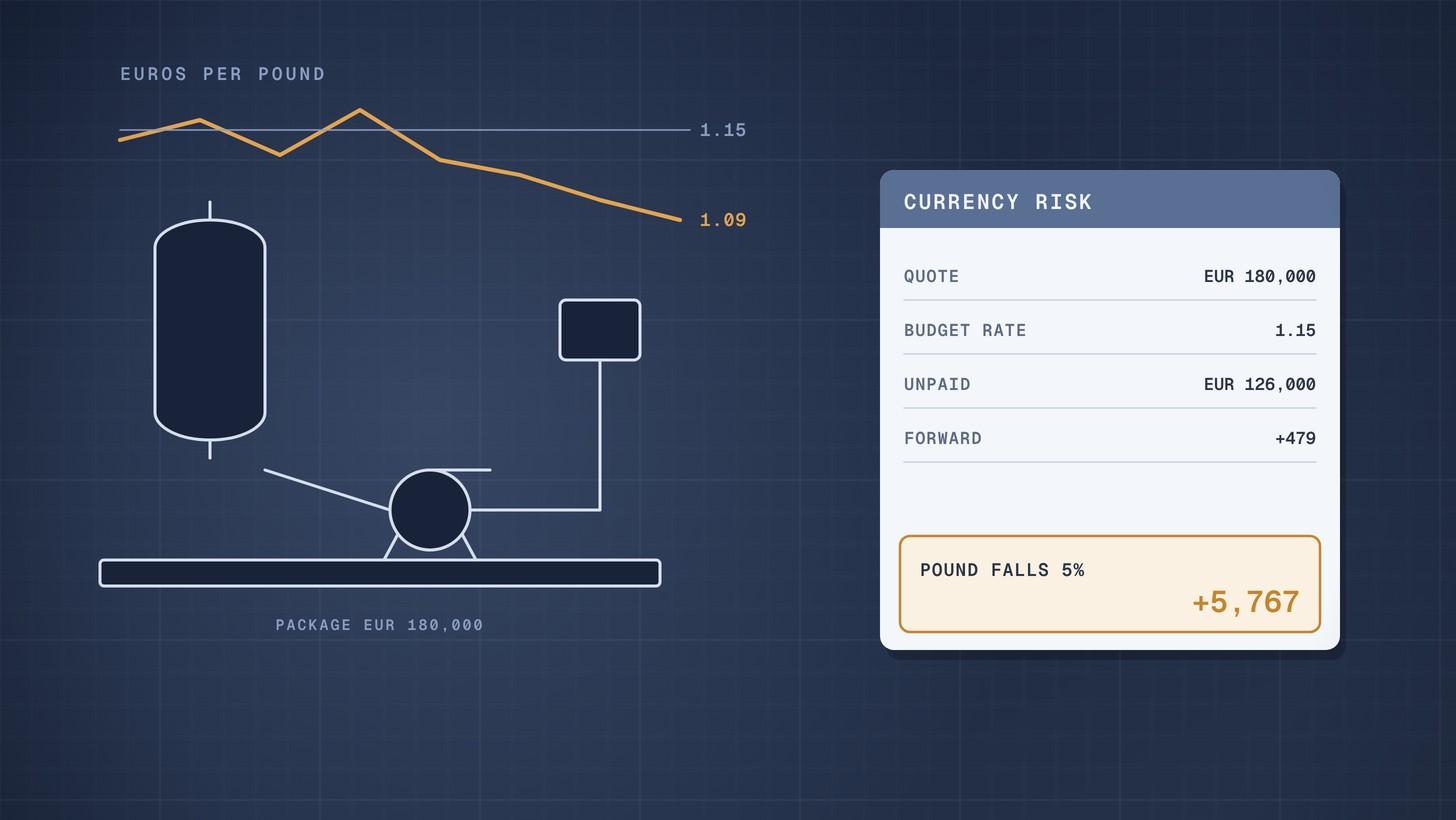
Exchange Rate Risk on Equipment Quotes: Worked Example
How exchange rate risk builds up on a euro or dollar equipment quote between order and final payment, what a 5% move costs, and how forwards and currency clauses limit it.
US Tariffs on Imported Process Equipment in 2026: What UK Suppliers Pay Now
The US tariff position for process equipment as of November 2026: Section 232 metals tariffs and UK rates, the Section 301 tariff that replaced Section 122, the new industrial machinery action, and how to protect a quotation.