
Long Lead Items: Meaning, Typical Examples and How to Order Them Early
A long lead item is equipment or material that must be ordered early to arrive on time. Typical items and lead times, how to find and rank them, and ways to order ahead.
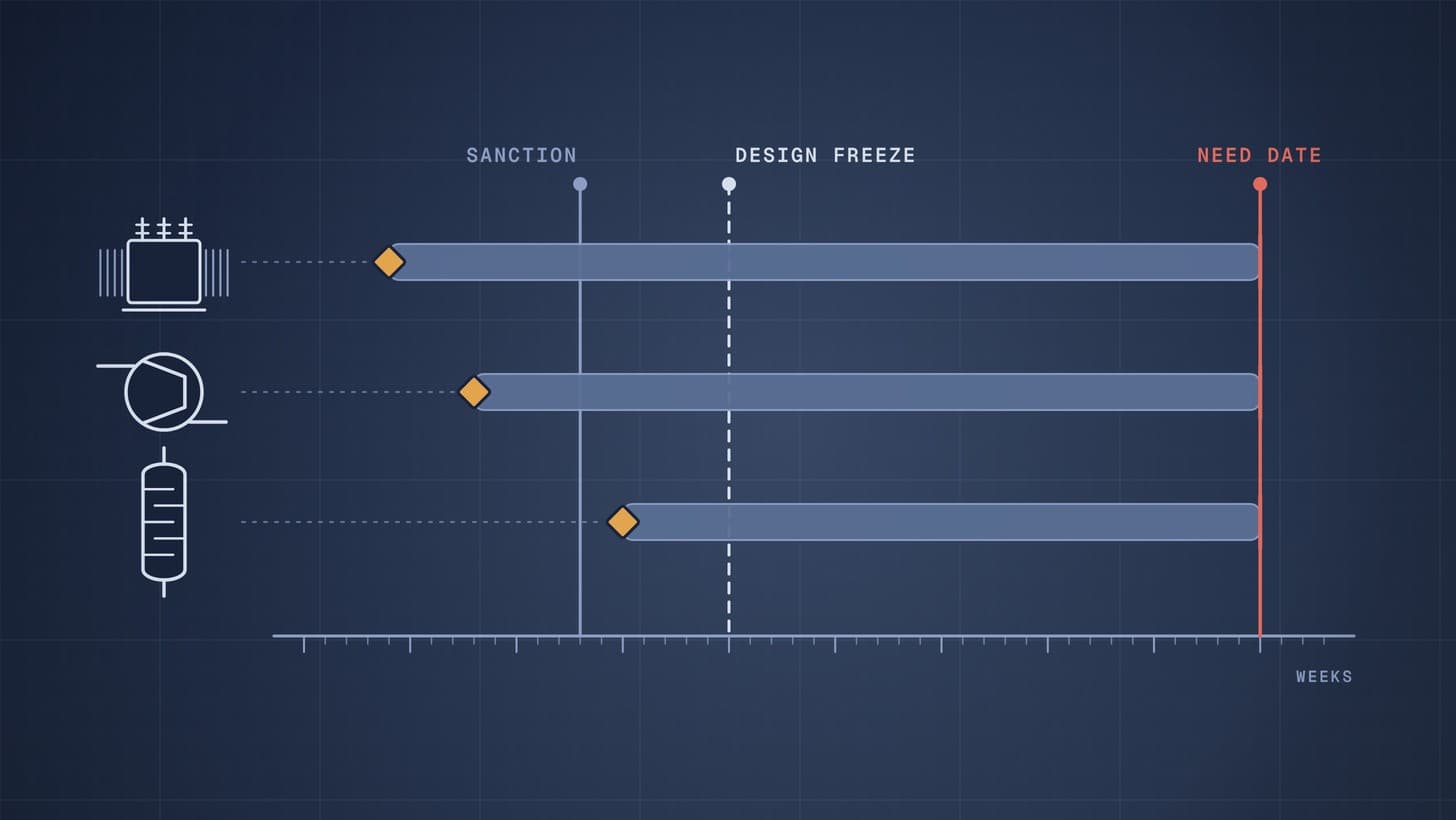
A long lead item (LLI) is any piece of equipment or material whose full lead time, from first enquiry to delivery, is longer than your schedule allows if you order it at the usual point in the project. It matters because it cannot be bought late without delaying start up, so it has to be found early and is often ordered before the design is finished or the project has final approval. You will also see the terms long lead time items, long lead equipment and, for raw inputs such as forgings and alloy plate, long lead materials.
On process plants, typical long lead items include power transformers, high voltage switchgear, large compressors, alloy vessels and columns, large valves, castings and forgings, and control systems, plus gas turbines where a site generates its own power. To manage them, put a realistic lead time and a need date against every line of the equipment list, rank the long lead items by float (spare time), criticality and number of possible suppliers, then order the critical few early.
Why this matters now
Electrical equipment shows the problem most clearly. In the US, a large power transformer (100 MVA or more) could be ordered with a lead time of under a year before the pandemic; in 2024 the Department of Energy reported 36 months as commonly quoted, and up to 60 months [1]. The International Energy Agency (IEA) puts large power transformers at up to four years, with average lead times almost doubled since 2021 [2]. Wood Mackenzie had US power transformers averaging 128 weeks in the second quarter of 2025, and switchgear averaging 44 weeks [3], and transmission owners in Great Britain report up to 36 months for gas insulated switchgear [4].
Gas turbines show the same pattern. In April 2026, Power Engineering reported GE Vernova's chief executive putting lead times on new heavy duty gas turbine orders, the large machines used in power stations, at about three years, with about 10 GW of capacity left across 2029 and 2030 combined [5].
A plant that needs a new grid connection or substation buys the same kinds of equipment, usually smaller. And the decisions come early: as our review of UK and Ireland process plant projects noted, vendor lists for long lead equipment are usually shaped during front end design. Find long lead items late, and a factory queue sets your start up date.
Create and manage RFQs in minutes
ChemCapital handles the entire procurement cycle, from structured RFQs and supplier comparisons to formal purchase orders and delivery tracking.
Typical long lead items and their lead times
A supplier's quoted weeks are only part of the clock. The real lead time runs from your first enquiry to the item on its foundation: enquiry and approval, supplier engineering and drawing review, materials, a factory slot, manufacture, testing and shipping. The US Department of Energy describes much the same chain for large transformers, with extra delay when the order queue is backed up or a key input such as electrical steel is scarce [1]. An item is long lead when the whole chain is longer than the gap between your normal ordering point and the date it is needed.
The table gathers recent published figures. They come from different markets, dates and methods, so use them to decide what to check, not as quotes.
| Item | Indicative lead time | Source and notes |
|---|---|---|
| Large power transformers, 100 MVA or more | 36 months commonly quoted, up to 60 months; average 128 weeks | US figures, 2024 and Q2 2025 [1] [3]; IEA: up to four years [2] |
| Generator step up (GSU) transformers, which connect a generator to the grid | Average 144 weeks | US, Q2 2025 [6] |
| High voltage switchgear | Average 44 weeks; up to 36 months for gas insulated switchgear | US, 2025 [3] [6]; transmission owners in Great Britain [4] |
| Heavy duty gas turbines | About three years for new orders | GE Vernova, April 2026 [5] |
| Large compressor systems | 10 to 22 months to engineer and manufacture | Burckhardt Compression, typical project [7] |
| Castings and forgings | 6 to 18 months or more; one quote of 70 to 80 weeks for a high demand steel alloy | Aerospace evidence, not process plant [8] |
| Alloy vessels and columns | Varies; ask suppliers | Often wait on plate and forgings from the mill |
| Large valves | Varies; ask suppliers | The foundry or forge queue can set the date |
| Control systems | Varies; ask suppliers | Configuration and testing wait for frozen design data |
| Pumps | Varies; ask suppliers | Check large, alloy or highly engineered pumps |
Long lead items vs long lead materials
Long lead materials are the inputs a manufacturer must buy before it can build: forgings, castings, alloy plate and pipe, for example. They often set the date for the finished item. A column in duplex stainless steel, a strong and corrosion resistant alloy, may have a predictable fabrication time, but if the plate takes months to arrive from the mill, the plate is the real long lead item. Long lead parts means the same thing at component level, such as a large casting for a machine or a critical spare.
BCG's work on aerospace shows how long this part of the chain can be: the time depends on the part, size, metal and process, delays can reach 12 months or longer, and the causes include raw material lead times, labour and lost engineering expertise [8]. Process plant forgings are a different market, so treat that as a warning rather than a figure, and ask suppliers where their forgings, castings and plate come from.
Long lead items in oil and gas and in construction
The meaning does not change by sector: anything that must be ordered before the normal point to meet the schedule is long lead. In oil and gas, start with the large rotating machines, such as compressors and gas turbines, then large valves and anything made from heavy forgings or castings. In construction, any project that needs a new grid connection or substation, whether a plant, a factory or a large building, buys transformers and switchgear, so check those first. The figures above come mostly from power, grid and aerospace markets, so ask suppliers for current lead times on your own items.
How to identify long lead items
Long lead procurement, the work of finding these items and buying them ahead of the rest, starts from the equipment list as soon as one exists, not from the purchasing plan.
- Put a lead time on every line. Ask for it in budgetary enquiries, with its basis: ex works or delivered, what drives it, and whether it runs from order or from drawing approval, which our guide to budgetary and firm quotes shows are different clocks.
- Set a need date. On a skid based plant, where equipment is built into steel framed modules off site, skid mounted items are needed at the skid builder's shop, often months before site.
- Work back. The need date minus the supplier's lead time from order gives the latest order date, and your own enquiry and approval time comes off that again. Anything that must be ordered before design freeze (the point after which the design should not change) or sanction (final approval to spend) is long lead.
- Refresh at each stage. Lead times move: Wood Mackenzie saw the US average for power transformers fall 10 weeks in one quarter [3].
 Long lead items are found on the equipment list and ordered on the schedule's terms, not the design's.
How to prioritise them
Not every long lead item justifies early spending. Ask three questions:
- How much float is left? The weeks between the earliest date you could order and the latest order date. Negative float means it is already late.
- Is it on the critical path? A transformer that holds up energisation matters more than a spare pump.
- How many suppliers could make it in time? A single qualified source moves an item up the list.
That gives four groups: act now (long lead, critical, few sources), secure and watch (long lead, with float or several sources), expedite (short lead but critical) and normal procurement. Our guide to CAPEX procurement strategy shows where this fits in your wider package strategy.
Ways to order long lead items early, and the risks
Four routes, from lightest commitment to heaviest:
- Reserve a manufacturing slot. Pay a fee or deposit to hold factory capacity before the specification is complete. Some makers offer formal slot reservation agreements: GE Vernova had 56 GW under them at the end of the first quarter of 2026 [5]. In Great Britain, Ofgem's Advanced Procurement Mechanism lets transmission owners book supply chain capacity before projects are assessed and funded; in October 2026 Ofgem approved about £835m (2023/24 prices) under it, about 20% of the expected contract costs [4].
- Issue a limited notice to proceed. A short instruction, sometimes a letter of intent, authorising named work such as engineering, up to a capped sum, before the full contract. Give it a scope, a cap and an expiry date.
- Buy the raw material in advance. Where plate, forgings or castings set the date, fund them early, and agree who owns and stores them.
- Order with engineering holds. Order on what is firm, such as duty, size and materials, and stop work at agreed points until you release final data such as nozzle orientations.
Where an engineering contractor buys on your behalf, decide early who places each long lead order: you, before the contractor is appointed, or the contractor, once it is. Either way, agree how the order and its documents will be handed over.
The risks to manage:
- Design changes after order are priced by the supplier and can cost you the slot. Freeze what drives manufacture first.
- Cancellation charges should be agreed up front, rising stage by stage as work is done.
- Storage and preservation take more than a dry shed. WEG's motor guide, for example, recommends turning the shaft by hand at least monthly and keeping any heater on while a motor waits to be installed [9]. Agree who stores, preserves and insures the item, and when ownership and risk pass. Our guide to equipment preservation and storage covers the detail.
This is general information, not legal advice.
Practical example
A chemicals site is adding a skid based unit with a gas compressor and a new 33/11 kV supply. Front end design starts today, week 0, with sanction planned for week 26 and design freeze for week 40. All figures are illustrative. Lead times are all in, including drawing approval and shipping.
| Item | Lead time, all in | Needed by | Latest order | If ordered at design freeze, week 40 |
|---|---|---|---|---|
| 33/11 kV transformer | 82 weeks | Week 90, site | Week 8 | Arrives week 122, 32 weeks late |
| Gas compressor | 62 weeks | Week 72, skid shop | Week 10 | Arrives week 102, 30 weeks late |
| Duplex column | 40 weeks | Week 70, skid shop | Week 30 | Arrives week 80, 10 weeks late |
| 11 kV switchgear | 42 weeks | Week 86, site | Week 44 | Arrives week 82, 4 weeks to spare |
| Process pumps | 25 weeks | Week 74, skid shop | Week 49 | Arrives week 65, 9 weeks to spare |
The latest order date is the need date minus the lead time: 90 minus 82 gives week 8 for the transformer, and 72 minus 62 gives week 10 for the compressor. Both must be ordered before sanction. Ordered at design freeze, the normal point, they would arrive 32 and 30 weeks late; even ordered at sanction, they would be 18 and 16 weeks late. With eight weeks allowed to enquire, evaluate and approve, the transformer enquiry must start now. Management approves a slot reservation and a capped notice to proceed for compressor engineering: a known sum at risk, against about seven months of delay if it waited for design freeze.
The column is ordered at sanction, four weeks before its latest date, with an engineering hold on nozzle orientations, and the fabricator buys the duplex plate at once.
The switchgear is not long lead on this plan, but with only four weeks of float after design freeze it goes on the watch list. The pumps follow normal procurement.
Build your options before you need them
A long lead list helps most when it is early and critical items have more than one credible supplier.
ChemCapital's Supplier Discovery finds suppliers on the public web from a text description, a pasted RFQ or an uploaded specification, and scores each product's published parameters against your duty point, so you can line up alternates for critical and single source items early. Results are a starting point, not an approved list: certifications are shown as claimed, so qualify each supplier as you normally would. Then send a structured RFQ early: every supplier gets the same specification, quantities, delivery dates and deadline at once, the answers come back comparable, lead times included, and after the order suppliers post milestone updates.
Ready to find your long lead items while there is still time to act? Start a free 14 day ChemCapital trial, with no credit card needed.
Frequently asked questions
What are long lead items?
Long lead items are equipment or materials whose full lead time, from enquiry to delivery, is longer than the schedule allows if they are ordered at the usual point. On process plants they typically include power transformers, high voltage switchgear, large compressors, alloy vessels and columns, large valves, forgings and castings, and control systems, plus gas turbines where a site generates its own power.
What does LLI stand for?
LLI stands for long lead item: something that must be ordered earlier than normal, often before design freeze or final project approval, so that it arrives in time. Long lead procurement is the work of finding these items and placing those early orders.
What is the difference between long lead items and long lead materials?
Long lead items are the finished equipment, such as a compressor or a column. Long lead materials are the inputs, such as forgings, castings and alloy plate, that a manufacturer must buy first and that often set the delivery date of the finished item.
How can you order long lead items before the design is finished?
Match the commitment to what you know: a slot reservation or a capped limited notice to proceed before sanction, then an order with engineering holds once duty, size and materials are firm. Agree cancellation charges, ownership and storage first. This is general information, not legal advice.
Continue reading
Informational only, not procurement or legal advice. Cited names, frameworks, and statistics belong to their respective owners.
Create and manage RFQs in minutes
ChemCapital handles the entire procurement cycle, from structured RFQs and supplier comparisons to formal purchase orders and delivery tracking.
Start for freeRelated articles
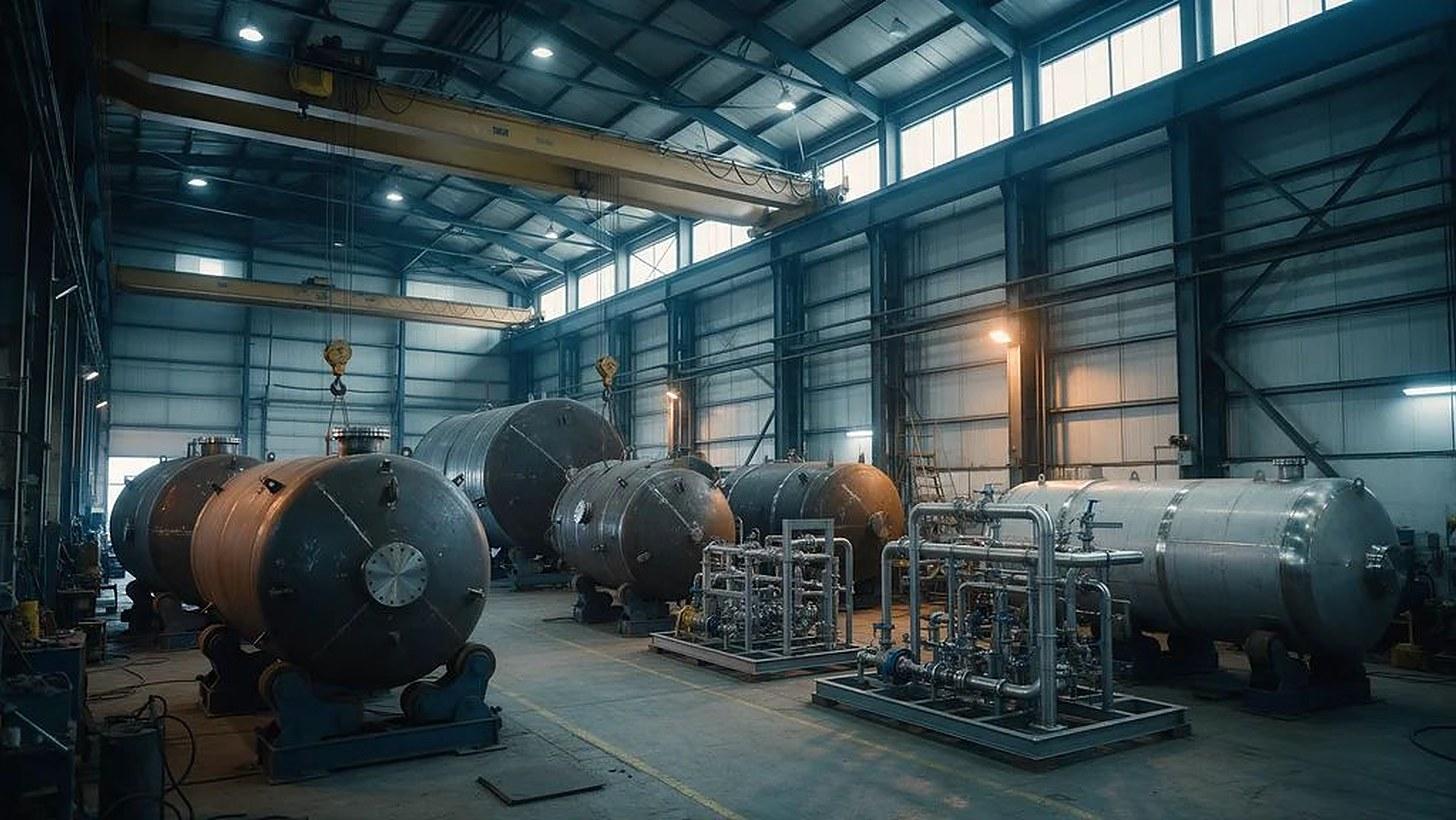
Process Equipment Lead Times: Quarterly Tracker, Q4 2026
Lead times for valves, pumps and transformers from named, dated public sources, the UK and US delivery trend this autumn, and how to build lead times into a project schedule. Updated quarterly.
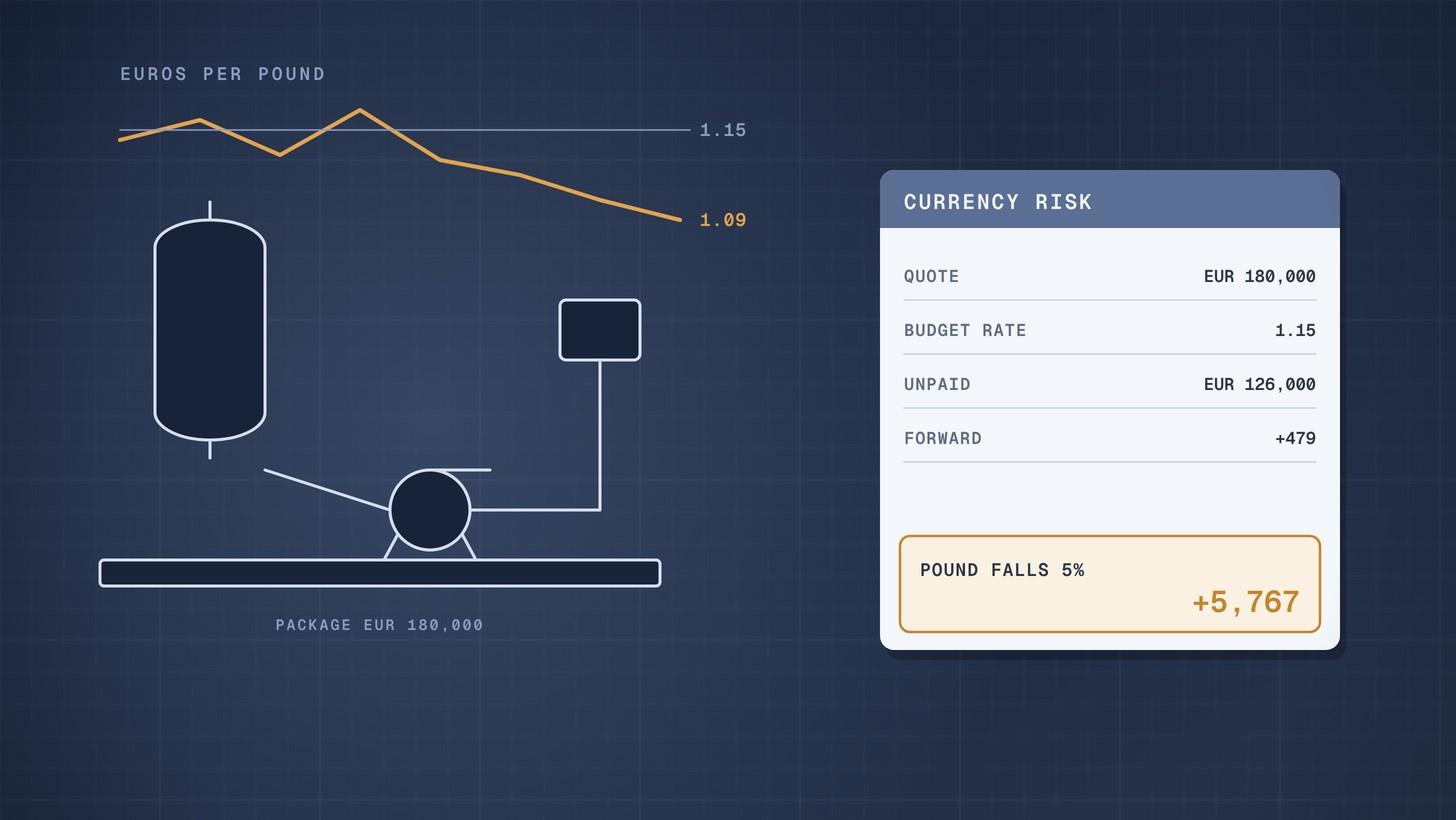
Exchange Rate Risk on Equipment Quotes: Worked Example
How exchange rate risk builds up on a euro or dollar equipment quote between order and final payment, what a 5% move costs, and how forwards and currency clauses limit it.
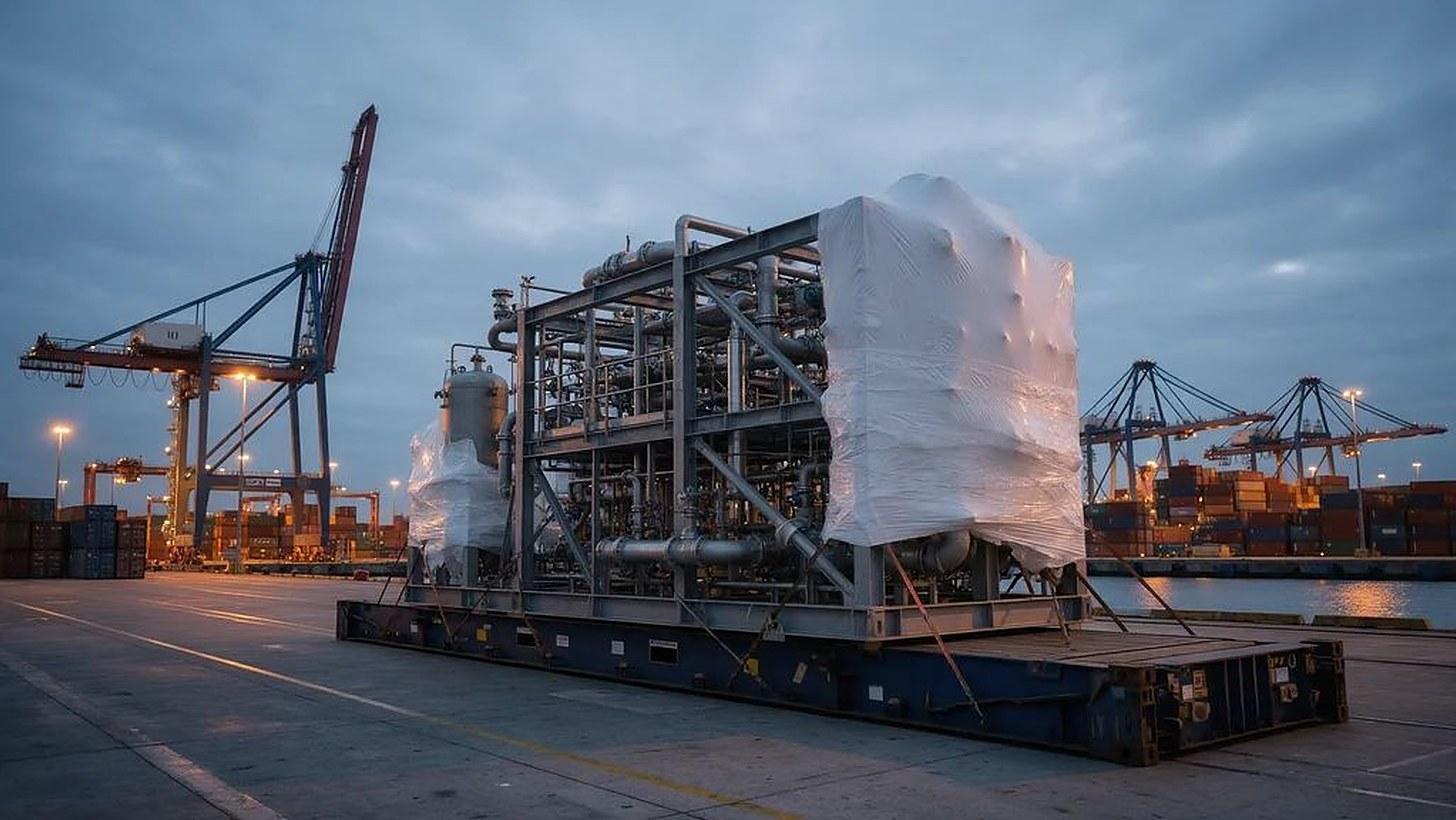
US Tariffs on Imported Process Equipment in 2026: What UK Suppliers Pay Now
The US tariff position for process equipment as of November 2026: Section 232 metals tariffs and UK rates, the Section 301 tariff that replaced Section 122, the new industrial machinery action, and how to protect a quotation.