
Commercial Bid Evaluation: Levelling Price, Terms and Exclusions
How to level technically accepted equipment bids onto one basis: exclusions, options, delivery, payment terms, currency, warranty and lifetime costs, with a worked table.
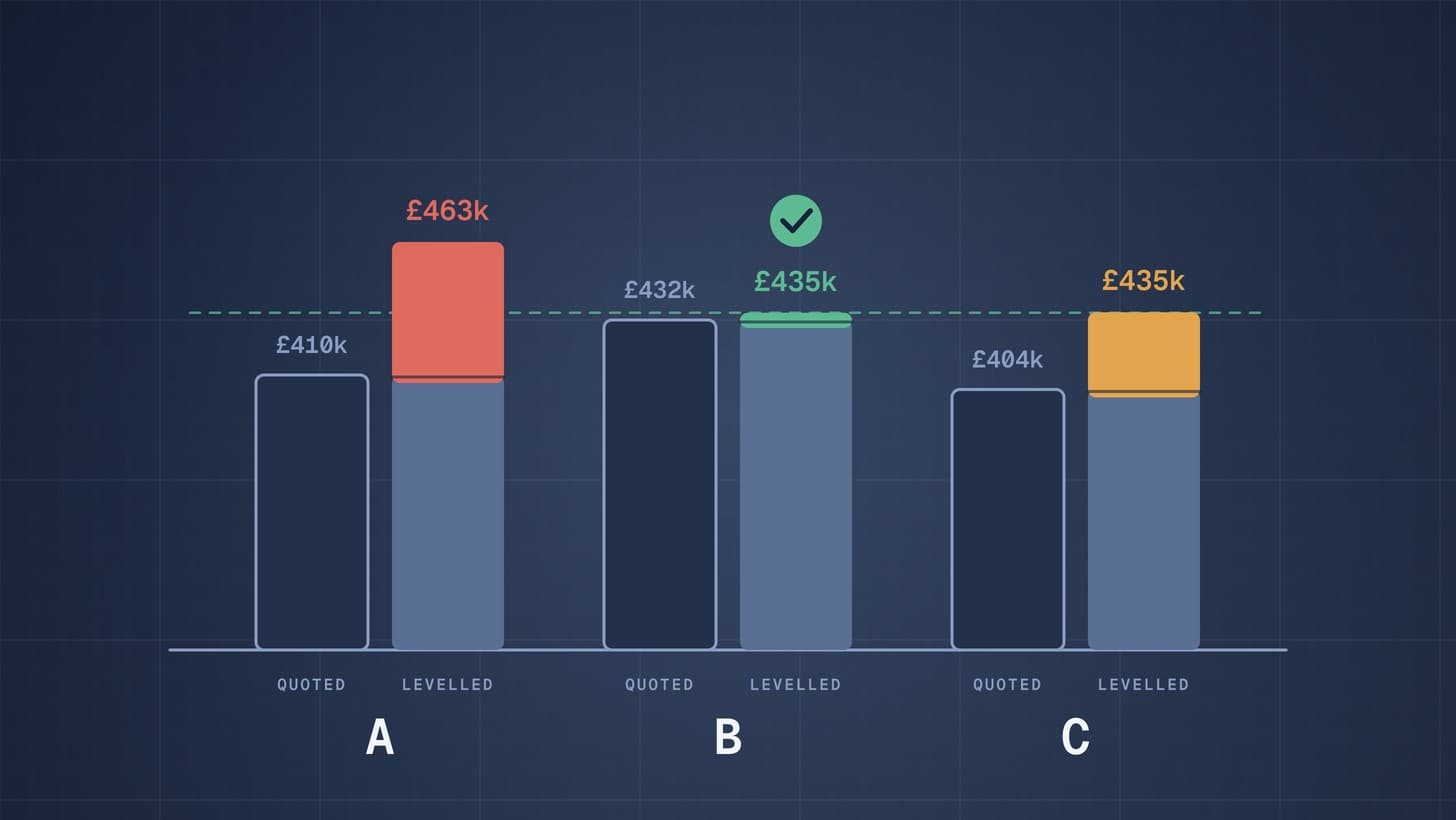
Commercial bid evaluation brings technically accepted bids onto one basis, so the price you compare is the price you would actually pay. That means adding the cost of anything a bidder excluded, removing options you do not want, converting every bid to the same delivery point and currency, allowing for the cost of advance payments, and weighing differences in warranty, delay damages and lifetime costs. The result is a levelled, or evaluated, price for each bid, and it often ranks the bids differently from their headline prices.
Technical evaluation comes first: only bids that meet the specification, or whose deviations you are willing to accept, go forward. Our guide to technical bid evaluation covers that step.
Why this matters now
Buyers are under pressure to show value, not just low prices. Welsh Government guidance on the Procurement Act 2023 notes that awarding on lowest price alone is unlikely to suit most contracts and that the assessment method chosen can directly affect value for money [1]. For private buyers the same logic applies: a bid that looks cheapest because it leaves out the seal system or delivers to the factory gate is not the cheapest bid.
Create and manage RFQs in minutes
ChemCapital handles the entire procurement cycle, from structured RFQs and supplier comparisons to formal purchase orders and delivery tracking.
Technical deviations become commercial adjustments
Where you accept a technical deviation that costs you money, put that cost into the commercial evaluation. Bharat Heavy Electricals' tender conditions, for example, allow it to load bid prices for evaluation where bids carry deviations [2]. The loading should reflect your real cost of the deviation, such as an extra test you will now pay for, not a penalty.
The levelling checklist
| Item | How to level | Typical evidence |
|---|---|---|
| Scope exclusions | Add the cost of each excluded item, using another bid's price or your own estimate | Exclusions list, clarifications |
| Options | Remove options you do not want; add any you need that were priced separately | Price schedule |
| Delivery basis | Convert every bid to the same point, usually delivered to site | Freight quotes, Incoterm stated |
| Payment terms | Add the cost of money paid early, using your cost of capital | Payment milestones |
| Currency | Convert at one fixed evaluation rate, stated in advance | Treasury rate for evaluation |
| Validity and price adjustment | Treat fixed and escalating prices on a common index forecast | Escalation clause, validity date |
| Warranty | Price the difference, for example the cost of extending the shorter warranty | Warranty terms |
| Spares | Add spares for commissioning and early operation if not included | Spares list |
| Lifetime costs | For items like pumps, compare energy and maintenance as well as price | Efficiency, power, maintenance intervals |
A few lines deserve more explanation.
Delivery basis. Incoterms 2020 rules set out how obligations, risk and costs are shared between seller and buyer [3]. A bid priced at the factory leaves you to pay and arrange freight, insurance and handling, so add them. Public RFQs often evaluate on the delivered price for this reason; one 2024 example evaluates on the total price of goods and related services at the project site, taxes included [4].
Payment terms. Money paid before delivery has a cost. Multiply each advance by your cost of capital and by the months it is held.
Delay damages and liability. These are hard to price directly. Record them beside the levelled price. A supplier offering meaningful delay damages carries more of your schedule risk, and English courts will enforce such clauses between commercial parties unless they are out of all proportion to the buyer's legitimate interest [5].
Lifetime costs. For equipment that runs continuously, purchase price may be the smaller number. The Hydraulic Institute and Europump's guide to pump life cycle costs says the initial purchase price is a small part of the life cycle cost for heavily used pumps, with energy and maintenance usually dominating [6].
Practical example
In this illustrative example, three bids for the same package pass technical evaluation. The buyer evaluates on a delivered to site basis in pounds, at an evaluation rate of £0.86 per euro, with a cost of capital of 8% a year and advances held for ten months before delivery.
| Item | Bid A | Bid B | Bid C |
|---|---|---|---|
| Quoted price | £410,000, ex works | £432,000, delivered to site | €470,000 free carrier at port, £404,200 |
| Excluded items added | Seal system £18,000 | None | Witnessed test £3,000 |
| Spares added | £9,000 | Included | £7,500 |
| Freight to site added | £14,000 | Included | £11,000 |
| Advance payment | 30%, cost £8,200 | 10%, cost £2,880 | 20%, cost £5,389 |
| Warranty to 18 months | Add £4,000 | Included | Add £4,000 |
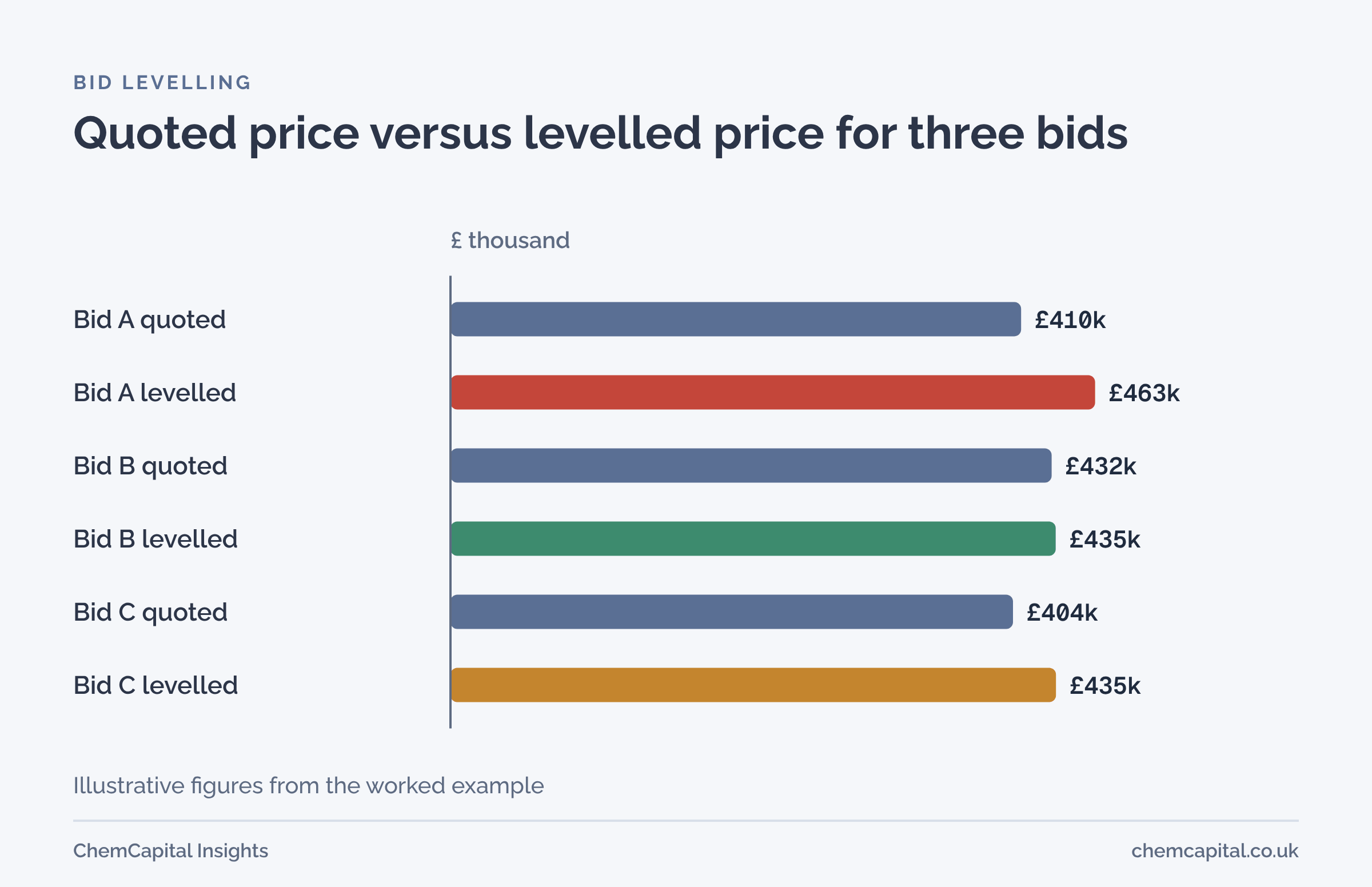
| Levelled price | £463,200 | £434,880 | £435,089 |
| Quoted rank | 2 | 3 | 1 |
| Levelled rank | 3 | 1 | 2 |
Bid A, second on headline price, is clearly the most expensive once its exclusions, ex works delivery and 30% advance are counted. Bids B and C are effectively level, within £210 of each other. At that point terms decide: Bid C carries currency risk until the euro amount is fixed, and Bid B includes spares and delivery in one price. The buyer recommends B and records why.
For laying this out by hand, see our quotation comparison sheet.
Common levelling mistakes
- Using one bid's prices to fill another's gaps without checking. Bidder B's price for a seal system may include items Bidder A already quoted. Compare like with like, line by line.
- Levelling after negotiation has started. Fix the method, the exchange rate and the cost of capital before you open prices, and write them down.
- Ignoring validity. A bid that expires before you can place the order is not a real price; ask for an extension or treat it as a risk.
- Counting the same risk twice. If you add a loading for a short warranty, do not also mark the bid down for the same weakness in a risk score.
- Forgetting to tell bidders. Clarify exclusions in writing before you price them. A bidder may include the item at no cost once asked.
Record the evaluation
Keep a short note with the levelling table: the basis used, each adjustment and its source, and the recommendation. That record answers the questions an auditor, a finance director or an unsuccessful bidder will ask, and it lets the next buyer reuse your adjustments.
Where ChemCapital fits
ChemCapital's AI quotation comparison does much of the groundwork. It extracts price, lead time, materials, certifications and scope from each quote, with the source text kept beside every extracted field, checks incoming quotes for missing fields, unit mismatches and scope differences, and scores bids with adjustable weights across commercial, technical, delivery, compliance and risk. Mandatory failures are flagged and left out of the ranking, and people make the final call. You can try the free version with up to three quotes and no account.
Ready to see your bids side by side on the same basis? Start a free 14 day ChemCapital trial, with no credit card needed.
Frequently asked questions
What is commercial bid evaluation?
It is the step after technical acceptance where bids are brought onto the same commercial basis, covering scope, delivery point, payment timing, currency, warranty and other terms, so the prices compared are the prices you would actually pay. The result is an evaluated or levelled price for each bid.
What is bid levelling?
Bid levelling adjusts each quoted price for differences in scope and terms: adding the cost of excluded items, removing unwanted options, converting to one delivery point and currency, and allowing for the cost of advance payments. It often changes the ranking.
How do you account for advance payments when comparing bids?
Multiply the advance by your cost of capital and by the time it is held before delivery. A 30% advance on a ten month order costs more than a 10% advance, even if the headline prices are the same.
Continue reading
Informational only, not procurement or legal advice. Cited names, frameworks, and statistics belong to their respective owners.
Create and manage RFQs in minutes
ChemCapital handles the entire procurement cycle, from structured RFQs and supplier comparisons to formal purchase orders and delivery tracking.
Start for freeRelated articles
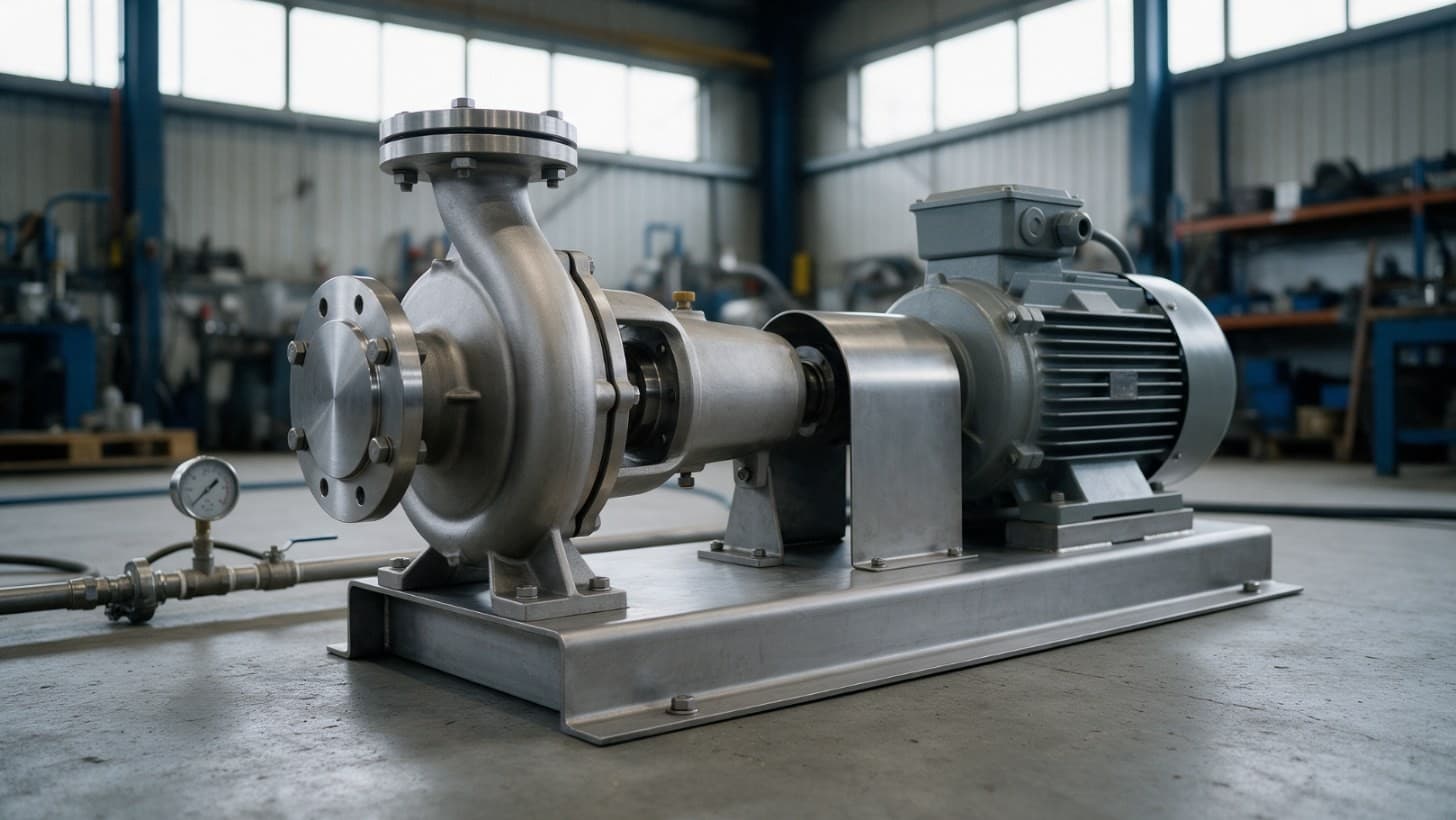
Quotation Comparison Sheet: Layout and Worked Pump Example
How to build a quotation comparison sheet for process equipment that levels scope, Incoterms, currency, payment terms and energy before ranking, with a worked pump example.
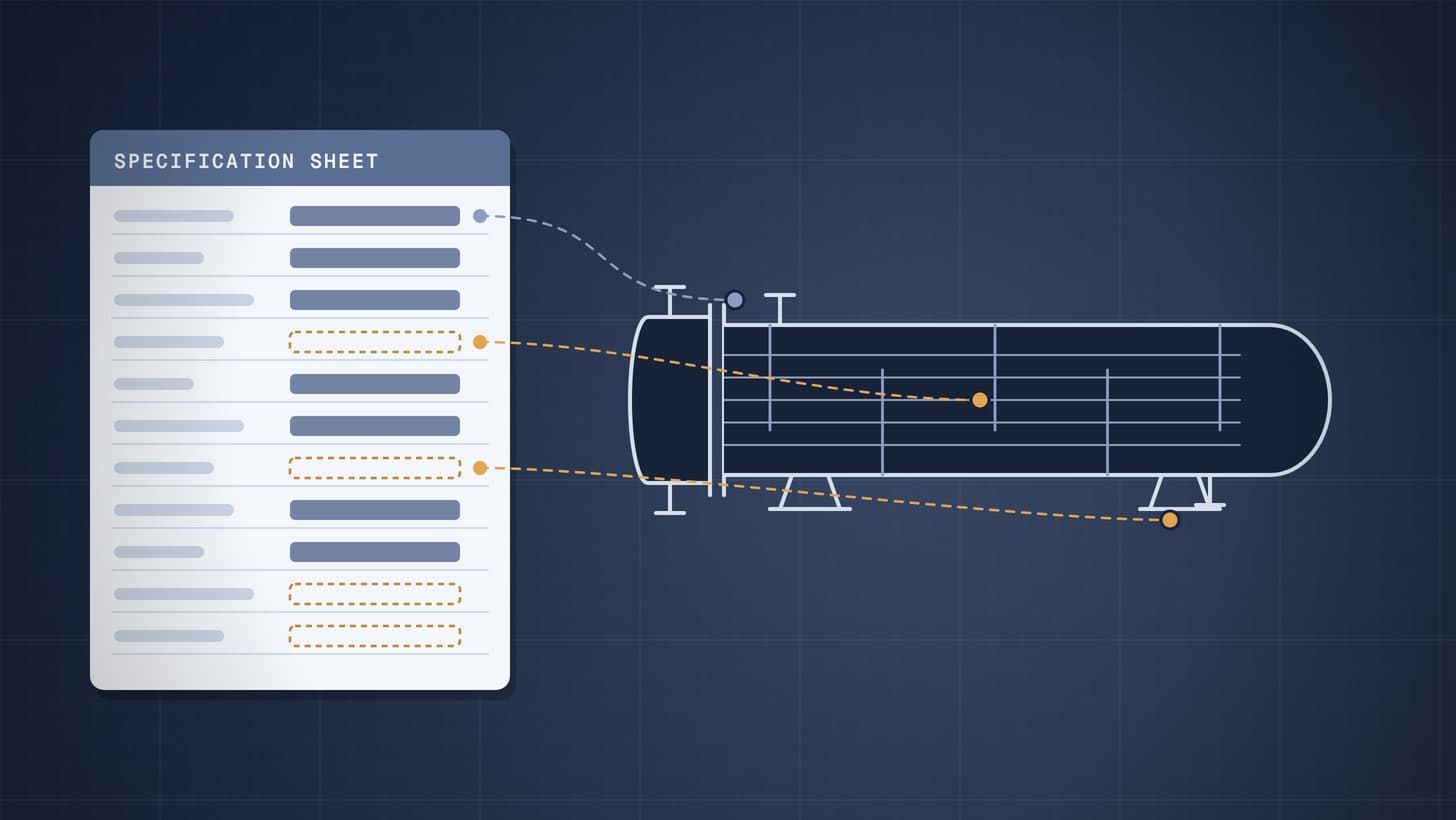
Heat Exchanger Datasheet Explained Line by Line (TEMA)
What each line of the TEMA shell and tube specification sheet means, which lines the buyer must fill, and which the thermal designer returns with the quote.

How to Fill In a Centrifugal Pump Datasheet for an RFQ (API 610)
A field by field guide to the buyer's side of an API 610 pump datasheet: liquid, flows, pressures, NPSH, scope, and what to check when bids come back.