
How to Fill In a Centrifugal Pump Datasheet for an RFQ (API 610)
A field by field guide to the buyer's side of an API 610 pump datasheet: liquid, flows, pressures, NPSH, scope, and what to check when bids come back.

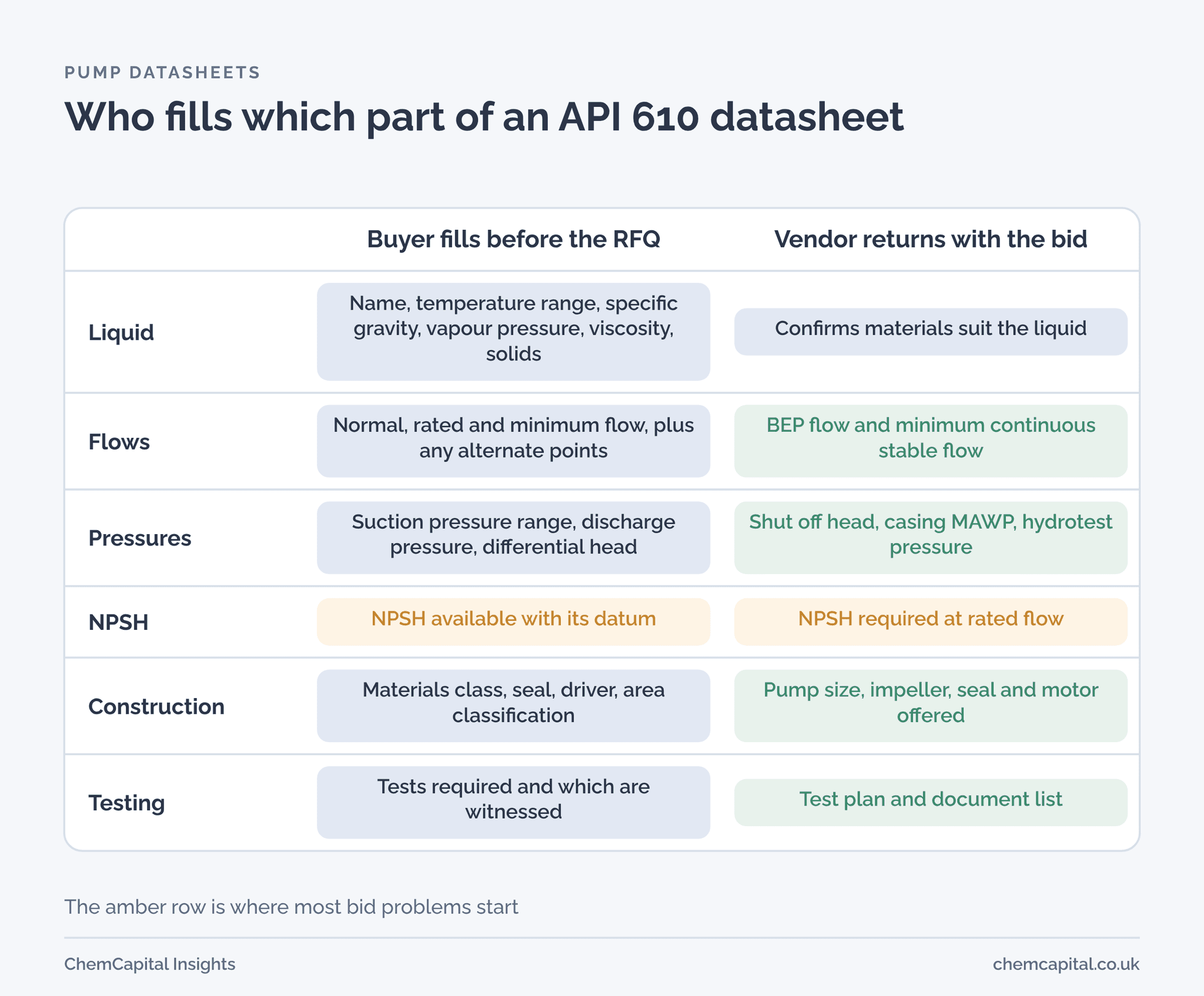
A centrifugal pump datasheet is the form that turns a process duty into a pump that suppliers can quote. On an API 610 datasheet, the buyer or process engineer fills in the process side: the liquid and its properties, the normal, rated and minimum flows, suction and discharge pressures, NPSH available, site conditions and scope choices such as seal, driver and testing. The vendor fills in the pump it offers, including size, curve, efficiency, NPSH required and power, and you check those answers against your duty before you compare prices.
If the process side is complete and consistent, every bidder quotes the same duty. If it is not, you get bids that cannot be compared.
Why this matters now
API released the 13th edition of API 610, the oil, gas and petrochemical standard for centrifugal pumps, in June 2026 [1]. The published summary says its datasheets stayed almost the same as the 12th edition, so existing forms still work, but your RFQ (request for quotation) should name the edition you want [1]. The 12th edition, published in January 2021, made the bigger datasheet change: buyers can now specify three alternate operating points, and a tabular data list was added so contractors, end users and manufacturers can exchange datasheet values electronically [2]. ISO 13709:2009 covers the same ground as an international standard and was last confirmed in 2026 [3].
Chemical and pharmaceutical plants often buy ASME B73 chemical process pumps instead of full API 610 pumps. The ASME datasheet carries a key on every page that marks each field as provided by the purchaser, the supplier, or the supplier if the purchaser leaves it blank [4]. That split is the most useful idea on any pump datasheet, whichever standard you use.
Create and manage RFQs in minutes
ChemCapital handles the entire procurement cycle, from structured RFQs and supplier comparisons to formal purchase orders and delivery tracking.
The buyer's side, field by field
Liquid and site
Give the liquid name and its pumping temperature as a minimum, normal and maximum, not one value. Then give specific gravity (density relative to water), vapour pressure and viscosity at pumping temperature. Values at 20 °C are a common error that distorts head, power and NPSH. Add solids content and particle size, pH and chlorides if present, because these drive material choice [4].
For the site, state indoor or outdoor, ambient range, altitude, the hazardous area classification and the electrical supply [4]. A missing area classification usually means a requote for the motor.
Flows
Three flows matter. Normal flow is where the pump runs most of the time. Rated flow is the guaranteed duty point, usually normal flow plus a stated margin. Minimum flow is the lowest flow the process needs. State the margin once and say who added it; process, mechanical and procurement each adding 10% is how pumps end up oversized.
The vendor then places your rated flow on its curve. Under API 610 the preferred operating region runs from 70% to 120% of best efficiency point (BEP) flow, and the rated flow should sit between 80% and 110% of BEP [5]. The BEP is the flow where the pump converts power to head most efficiently. You need to know both numbers when the bids arrive.
Pressures and NPSH
Give suction pressure as a minimum, rated and maximum, and the required discharge pressure. The maximum suction pressure plus the pump's differential head at shut off sets the casing pressure rating the pump needs, so leaving it blank risks an underrated casing.
NPSH available (NPSHA) is the margin above vapour pressure at the pump suction. The Hydraulic Institute puts it plainly: the system designer sets NPSHA and the manufacturer sets NPSH required (NPSHR) [6]. Calculate NPSHA at rated flow and minimum liquid level, state the datum (usually pump centreline or grade), and say which NPSH margin standard you expect. Our NPSH explainer walks through the calculation.
Scope choices
Choose the materials class, the seal, the driver, the coupling and baseplate, the tests and the documents. Mechanical seals on API 610 pumps are usually specified to API 682, which has its own datasheet [7]. Attach it rather than writing "mechanical seal" in one box.
Template: who fills what, and the usual mistakes
| Field | Who fills | Typical mistake |
|---|---|---|
| Service, tag, number of pumps, operating mode | Buyer | Tag does not match the P&ID; parallel running not stated |
| Pumping temperature (minimum, normal, maximum) | Buyer | One temperature only |
| Specific gravity, vapour pressure, viscosity | Buyer | Values at 20 °C, not at pumping temperature |
| Solids, pH, chlorides, hazards | Buyer | Left blank, so the vendor guesses the materials |
| Normal, rated and minimum flow | Buyer | Margins stacked by several people |
| Suction pressure (minimum, rated, maximum), discharge pressure | Buyer | Maximum suction pressure missing |
| NPSHA and its datum | Buyer | No datum, or worked out at normal flow and high level |
| Site, area classification, power supply | Buyer | Hazardous area omitted |
| Materials class, seal, driver, tests, documents | Buyer chooses, vendor confirms | "Vendor standard" accepted without reading it |
| Pump size, impeller diameter, BEP flow, efficiency | Vendor | Rated flow far from BEP |
| NPSHR, power at rated flow and end of curve | Vendor | Motor sized for rated power only |
| Minimum continuous stable flow, shut off head, MAWP | Vendor | Not compared with your minimum flow and pressures |
What to check when the datasheets come back
Read each returned datasheet against your duty before you look at price.
- Rated flow as a share of BEP flow: inside 80% to 110% [5].
- Normal flow inside the preferred operating region.
- NPSH margin: NPSHA minus NPSHR at rated flow, against the margin you asked for [6].
- Motor rating against power at the end of the curve, not just at rated flow.
- Minimum continuous stable flow below your minimum flow, or a recycle line in scope.
- Casing MAWP (maximum allowable working pressure) above maximum suction pressure plus shut off head.
Our guide to reading a pump curve shows where each of these sits on the curve.
Practical example
In this illustrative example, a transfer pump moves a solvent with a specific gravity of 0.80 and a vapour pressure of 0.30 bar absolute at pumping temperature. Normal flow is 40 m³/h; rated flow is 44 m³/h, a 10% margin.
The suction vessel is at atmospheric pressure (1.013 bar absolute), the minimum liquid level is 3.0 m above the pump centreline, and suction losses at rated flow are 0.4 m. NPSHA is the pressure above vapour pressure, 1.013 bar less 0.30 bar, which is 9.1 m of this liquid, plus 3.0 m of level, minus 0.4 m of losses: about 11.7 m. Suction pressure works out at about 0.2 bar gauge. The required discharge pressure is 6.0 bar gauge, so the differential is 5.8 bar, or about 74 m of head.
Two bids come back.
| Check | Bid A | Bid B |
|---|---|---|
| BEP flow | 52 m³/h | 62 m³/h |
| Rated flow as share of BEP | 85% | 71% |
| Normal flow as share of BEP | 77% | 65% |
| NPSHR at rated flow | 4.5 m | 3.8 m |
| NPSH margin | 7.2 m | 7.9 m |
| Verdict | Inside both ranges | Oversized, runs below the preferred region |
Bid B may be cheaper and has more NPSH margin, but at normal flow it runs at 65% of BEP, outside the 70% to 120% region. That means more vibration and seal wear over the pump's life. Hydraulic power at rated flow is about 7.1 kW for either bid; at Bid A's 62% efficiency, shaft power is about 11.4 kW, so a 15 kW motor leaves room for the end of the curve.
Where ChemCapital fits
A datasheet only helps if every bidder gets the same one and answers it the same way. ChemCapital sends one structured RFQ with line items and attachments, such as your datasheet and seal datasheet, to several suppliers, and quotes come back in a consistent format. The AI quotation comparison checks incoming quotes for missing fields and unit mismatches and flags any bid that fails a mandatory requirement, so a pump outside your BEP window stands out before anyone looks at the price. You can also lay bids out by hand with our quotation comparison sheet.
Ready to send pump RFQs that every bidder reads the same way? Start a free 14 day ChemCapital trial, with no credit card needed.
Frequently asked questions
What information does a pump datasheet need before an RFQ?
The buyer must give the liquid and its properties at pumping temperature, the normal, rated and minimum flows, suction and discharge pressures, NPSH available, site conditions and the scope choices such as materials, seal, driver and testing. The vendor then fills in the pump size, curve, efficiency, NPSH required, power and construction details.
What is the difference between rated flow and normal flow on a pump datasheet?
Normal flow is where the pump will run most of the time. Rated flow is the guaranteed duty point, usually normal flow plus a stated margin, and the vendor's performance test and guarantees are built around it.
Who fills in NPSH available and NPSH required?
NPSH available comes from the suction system, so the buyer or process engineer calculates it and states the datum. NPSH required is a property of the pump the vendor offers, and the gap between the two is the NPSH margin you check in every bid.
Did the API 610 datasheet change in the 13th edition?
API released the 13th edition in June 2026, and the published summary says the datasheets stayed almost the same as the 12th edition apart from minor items such as paragraph references. The bigger datasheet change came in the 12th edition, which added alternate operating points.
Continue reading
Informational only, not procurement or legal advice. Cited names, frameworks, and statistics belong to their respective owners.
Create and manage RFQs in minutes
ChemCapital handles the entire procurement cycle, from structured RFQs and supplier comparisons to formal purchase orders and delivery tracking.
Start for freeRelated articles
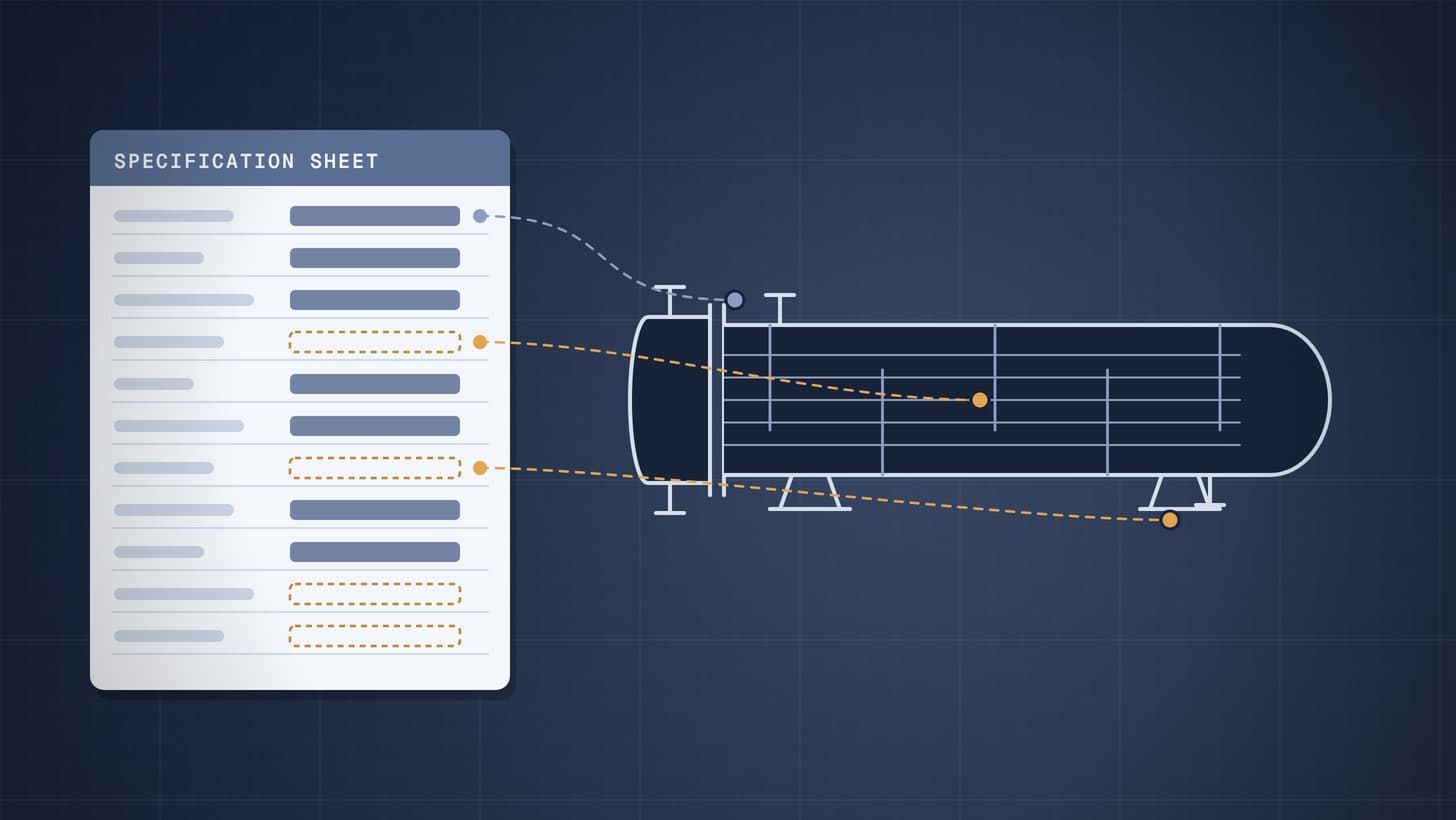
Heat Exchanger Datasheet Explained Line by Line (TEMA)
What each line of the TEMA shell and tube specification sheet means, which lines the buyer must fill, and which the thermal designer returns with the quote.
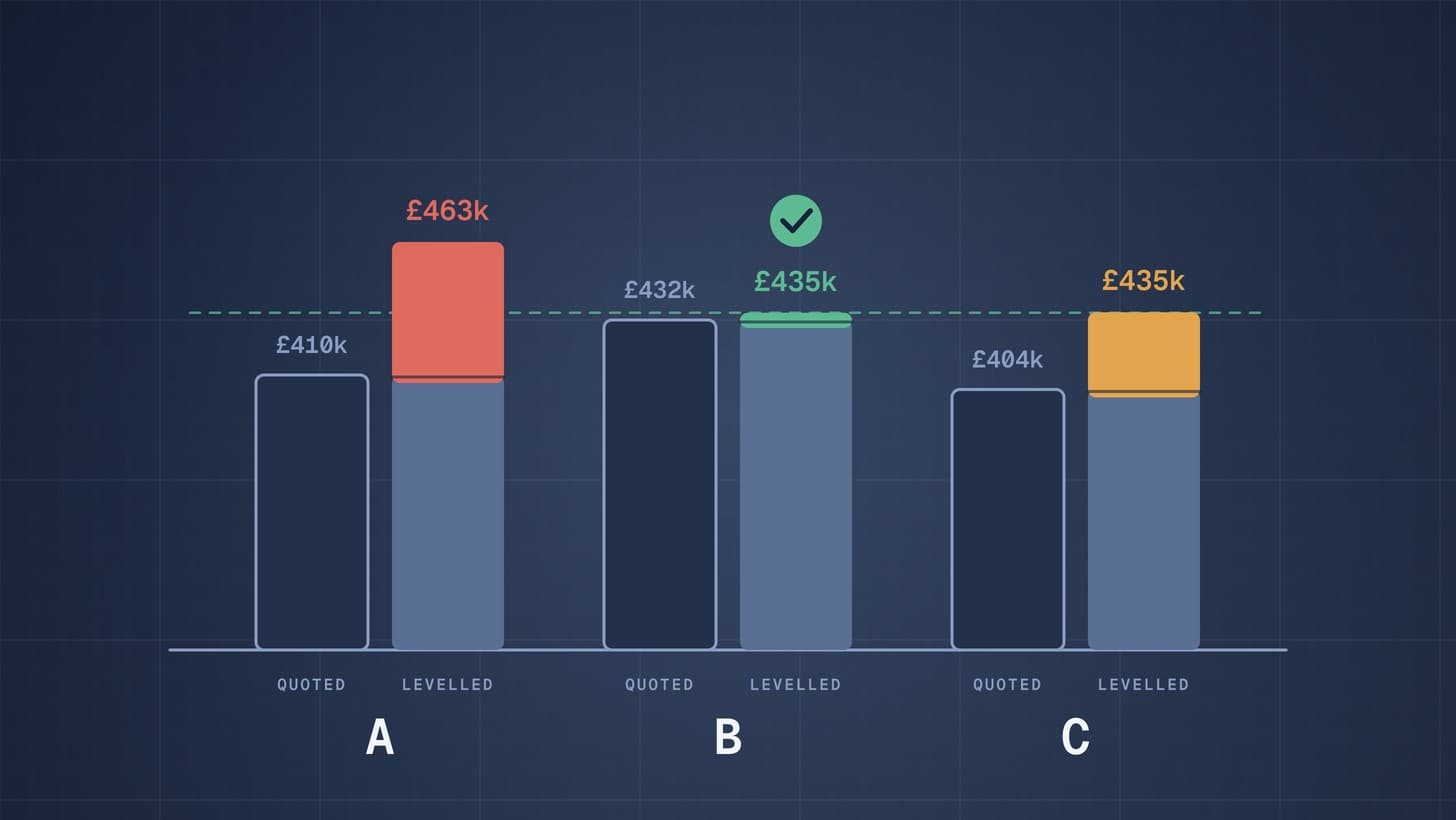
Commercial Bid Evaluation: Levelling Price, Terms and Exclusions
How to level technically accepted equipment bids onto one basis: exclusions, options, delivery, payment terms, currency, warranty and lifetime costs, with a worked table.
Pressure Vessel and Process Datasheets for Quotations
The difference between a process and a mechanical datasheet for vessels, the fields a fabricator needs to quote, and the omissions that cause requotes.