
EU Machinery Regulation 2023/1230: What Changes for Process Skids in January 2027
The Machinery Regulation replaces the Directive from 20 January 2027. What changes for skid buyers and builders: market placement, modifications, cybersecurity, digital instructions and the GB position.
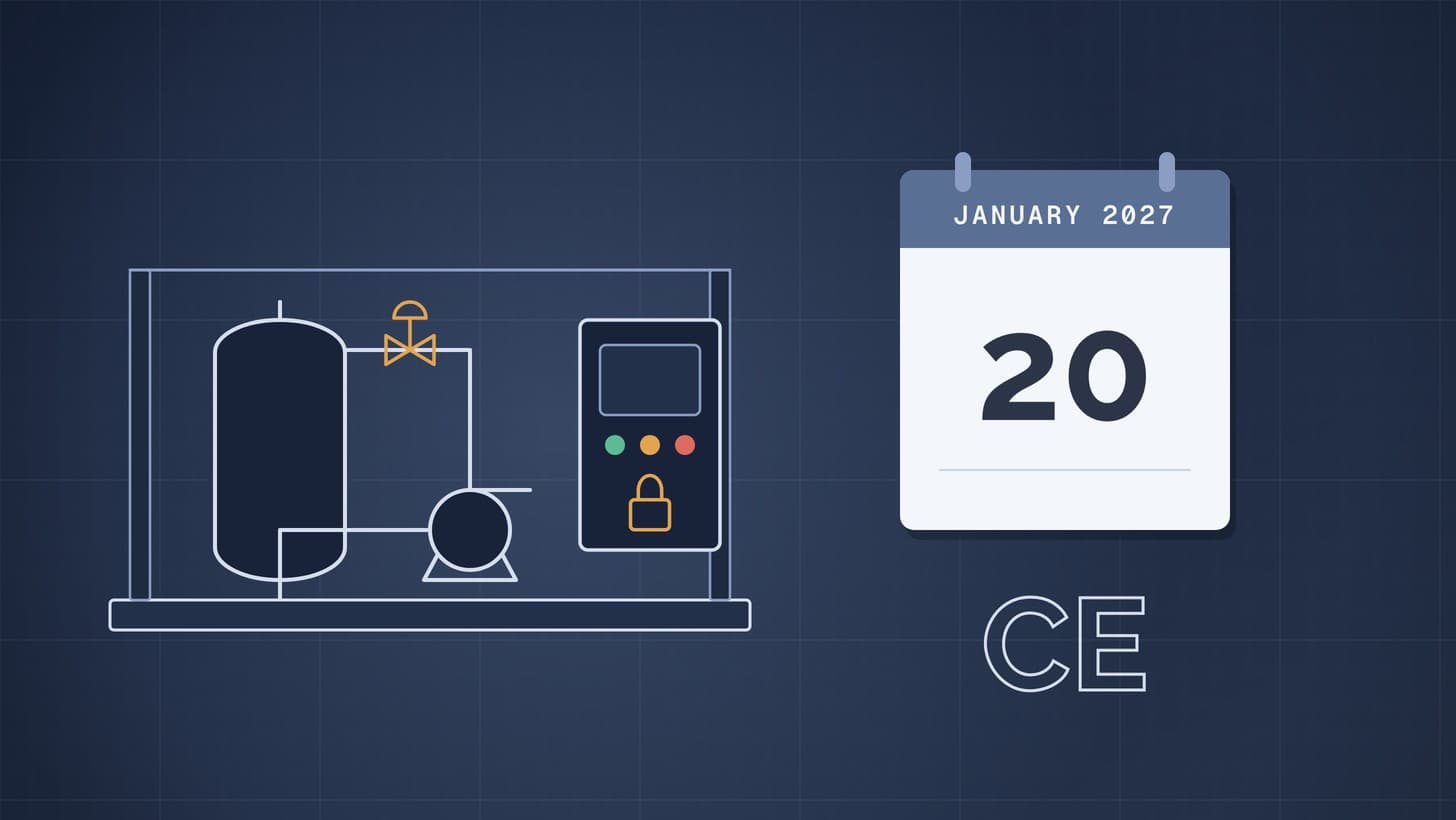
From 20 January 2027, Regulation (EU) 2023/1230 replaces the Machinery Directive 2006/42/EC across the EU [1]. For process skids, the headline is not a new safety philosophy but a set of sharper rules: software counts as a safety component, machines must be protected against cyber attacks that could affect safety, a "substantial modification" is now defined and makes whoever carries it out a manufacturer, instructions and declarations of conformity may be digital, and six categories of high risk machinery need a notified body [2] [3] [4].
The date that matters is when a machine is placed on the market, not when it is ordered. Machinery placed on the EU market before 20 January 2027 must comply with the Directive [5]; machinery first placed on the market from that date falls under the Regulation [6]. A skid ordered today for delivery on or after 20 January 2027 should be designed, documented and marked to the Regulation, and the contract should say so.
Why this matters now
| Date | What happens |
|---|---|
| 29 June 2023 | Regulation published in the Official Journal [3] |
| July 2023 | Regulation enters into force [5] [2] |
| 20 January 2024 | Provisions on notifying authorities and notified bodies apply [1] |
| 20 January 2027 | Regulation applies and replaces the Directive [1] |
Most skids now being quoted will be delivered close to, or after, the switch. A supplier that prices to the Directive and delivers in February 2027 hands the buyer a compliance problem at the worst moment.
Harmonised standards are also in transition. Existing standards were cited under the Directive; some may be cited unchanged under the Regulation, and others with restrictions where they do not address the new requirements [3]. Ask suppliers which standards they will rely on.
Join ChemCapital to streamline sourcing and connect with verified partners
Whether you're buying or supplying, ChemCapital gives you the tools to manage the complete procurement cycle in one platform.
What changes
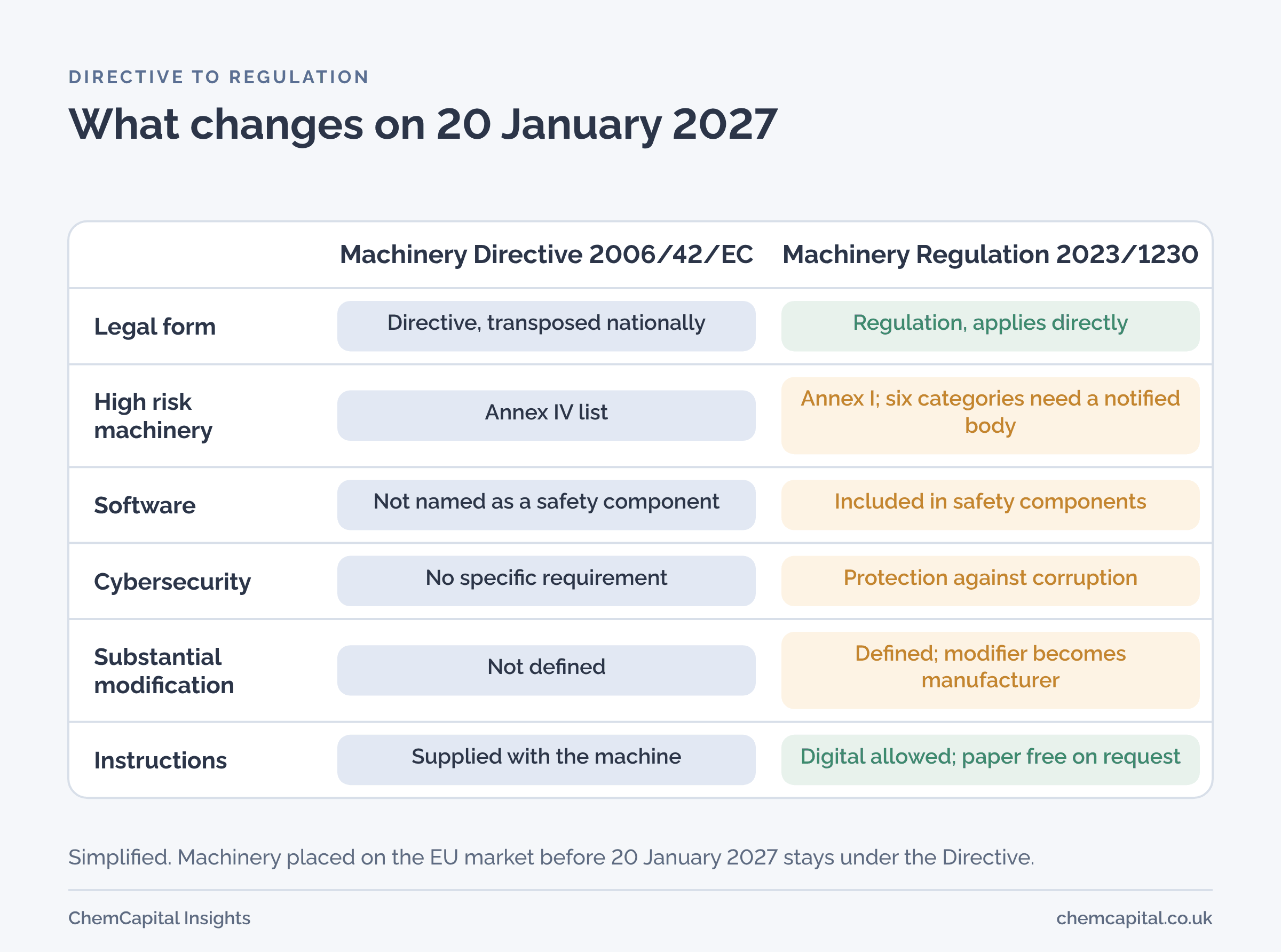
A regulation, not a directive. The Regulation applies directly in every member state, without national transposition, and aligns machinery with the EU's New Legislative Framework for products [3].
High risk machinery. Six categories, now listed in Annex I, require third party conformity assessment, and for these a harmonised standard no longer allows the manufacturer to self declare [2] [5]. Annex I includes safety components with self evolving behaviour that use machine learning to ensure safety functions, and machinery with such systems embedded [5]. Most process skids are not in these categories, and manufacturers can continue to assess their own conformity for most machinery [5], but check any skid with unusual safety functions.
Software and artificial intelligence. Software is now included in the definition of safety components, and artificial intelligence, connected equipment and robotics are treated as risk factors [2] [4]. Software that performs a safety function and is placed on the market separately is a safety component in its own right; safety software built into a skid is assessed as part of the machine.
Protection against corruption. A new essential requirement, "protection against corruption", means cyber threats must not be able to compromise a machine's safety functions; Pilz describes the countermeasures as mandatory rather than left to interpretation [2]. Manufacturers must take measures against interference, and against corruption, manipulation or theft of data [4]. For a skid with a PLC, remote access and a network connection, this is the biggest practical change.
Substantial modification. The Regulation defines a substantial modification as a change, by physical or digital means, made after the machine is placed on the market, which the manufacturer did not foresee or plan, and which may create a new hazard or make the existing safety concept insufficient. Software changes can qualify [3]. Whoever makes it becomes subject to a manufacturer's obligations, including a new conformity assessment [2] [4].
Partly completed machinery. It may be placed on the market only if it meets the relevant essential requirements, with assembly instructions [1]. Assembly instructions and the declaration of incorporation may be supplied digitally [2]. The definition of machinery also covers an assembly that is missing only the uploading of software [4], which matters to skids finished by software installation on site.
Digital instructions and declarations. Instructions may be supplied in digital form. If a user asks for paper at the time of purchase, the manufacturer must supply it free of charge within one month; digital instructions must stay available for the expected lifetime of the machine and at least 10 years; and the declaration of conformity can be reached through a web address or machine readable code [6] [2]. Where machinery is intended for, or foreseeably used by, non professional users, essential safety information must still be on paper [6] [4].
Importers. Importers must put their name and address on the machinery [4].
This is general information, not legal advice.
What it means for skid buyers
Write the regulation into the contract. If delivery could fall on or after 20 January 2027, require conformity with Regulation 2023/1230, the declaration of conformity under it, and the CE marking that goes with it. Do not rely on a quote that says only "CE marked".
Agree who is the manufacturer. On a skid built from bought in machines, the skid builder normally takes responsibility for the assembly. Our modular process skids buyer's guide covers the scope questions. Make sure the purchase order names the party that issues the declaration of conformity for the whole skid.
Ask about cybersecurity. How is the control system protected against unauthorised access? How does the supplier connect for remote support? How will security updates be handled without invalidating the safety assessment?
Plan for modifications. Changes after delivery, including software changes, can amount to a substantial modification and make you the manufacturer [2] [4]. Agree a process with the supplier for assessing and documenting changes during commissioning and afterwards.
Specify documents and formats. Decide whether you need paper instructions and ask for them at purchase, so the free of charge obligation applies [6]. Add the digital declaration, instructions and their web address to your vendor document requirement list.
Partly completed machinery. If a supplier delivers partly completed machinery for you to integrate, ask for the declaration of incorporation, the assembly instructions and a list of the essential requirements it meets, because the remaining ones become your responsibility as the integrator.
What it means for skid suppliers
- Price to the right law. Quotes for delivery after 20 January 2027 should state conformity with the Regulation.
- Review the risk assessment for software safety functions and for protection against corruption, including remote access [2].
- Check your standards against the Regulation, since some may be cited only with restrictions [3].
- Set up digital documentation that stays available for the machine's lifetime and at least 10 years, with a process to send paper copies within a month on request [6].
- Check Annex I for any product with self evolving safety functions or other high risk features [5].
The position in the UK
Great Britain does not adopt the EU Regulation. The UK government's February 2026 response to its call for evidence says it intends to legislate to continue recognising CE marking for machinery in Great Britain when parliamentary time allows, and to update the Supply of Machinery (Safety) Regulations 2008 with measures similar to the EU's while keeping them compatible, though not fully aligned. Northern Ireland applies the EU Regulation under the Windsor Framework [7]. If you sell skids into both markets, watch for the GB legislation and its dates.
Practical example
In this illustrative example, a UK based buyer orders a solvent recovery skid for its plant in Ireland at the end of September 2026. Fabrication takes 20 weeks, with factory acceptance testing in mid February 2027 and delivery at the end of the month. The supplier's quote says "CE marked to the Machinery Directive".
Because the skid will be placed on the EU market after 20 January 2027, the buyer asks for conformity with Regulation 2023/1230 instead [5] [6]. The supplier adds a review of its control system for protection against corruption, changes its remote support to site approved sessions, and moves its manuals to a portal that will stay available for at least 10 years. It prices the extra engineering at £7,800 on a £365,000 order, about 2.1%. The buyer also asks for paper instructions at the time of purchase, and agrees with the supplier that any software change during commissioning will be assessed against the definition of a substantial modification before it is made.
Without those changes, the skid would have arrived with a declaration under a law that no longer applied to it.
Where ChemCapital fits
ChemCapital sends one structured RFQ with line items and attachments, so the regulation, documents and cybersecurity questions reach every bidder in the same words. The AI quotation comparison extracts price, lead time, certifications and scope from each quote with the source text beside every field, and flags missing fields and scope differences; if you make conformity with the Regulation a mandatory requirement, a quote that fails it is flagged and left out of the ranking. After award, purchase orders are issued in the platform, suppliers confirm with their own reference and dates and post milestone updates, and decisions are logged with timestamps and the person who made them. See how it works.
Want every skid RFQ to state the right law from the start? Start free with ChemCapital.
Frequently asked questions
When does the EU Machinery Regulation apply?
Regulation (EU) 2023/1230 entered into force in July 2023 and applies from 20 January 2027, when it replaces the Machinery Directive 2006/42/EC. Some provisions, on notified bodies, applied from 20 January 2024. Machinery placed on the EU market before 20 January 2027 must comply with the Directive.
Does a skid ordered in 2026 but delivered in 2027 need to meet the new regulation?
What matters is when the machinery is placed on the market, not when it was ordered. Machinery first placed on the EU market from 20 January 2027 falls under the Regulation, so a skid delivered after that date should be designed and documented to it. Agree this in the contract.
What is a substantial modification under the Machinery Regulation?
A change made by physical or digital means after the machinery is placed on the market, which the manufacturer did not foresee or plan, and which can create new hazards or make the existing safety concept insufficient. Whoever makes a substantial modification takes on the obligations of a manufacturer, including a new conformity assessment.
Continue reading
Informational only, not procurement or legal advice. Cited names, frameworks, and statistics belong to their respective owners.
Join ChemCapital to streamline sourcing and connect with verified partners
Whether you're buying or supplying, ChemCapital gives you the tools to manage the complete procurement cycle in one platform.
Get started freeRelated articles
ATEX and DSEAR for Equipment Buyers: Zones, Categories and Ex Marking
How hazardous area zones set the equipment category you must buy, how to read an Ex marking such as II 2G Ex db IIB T4 Gb, why pumps and gearboxes count too, and what to put in the RFQ.
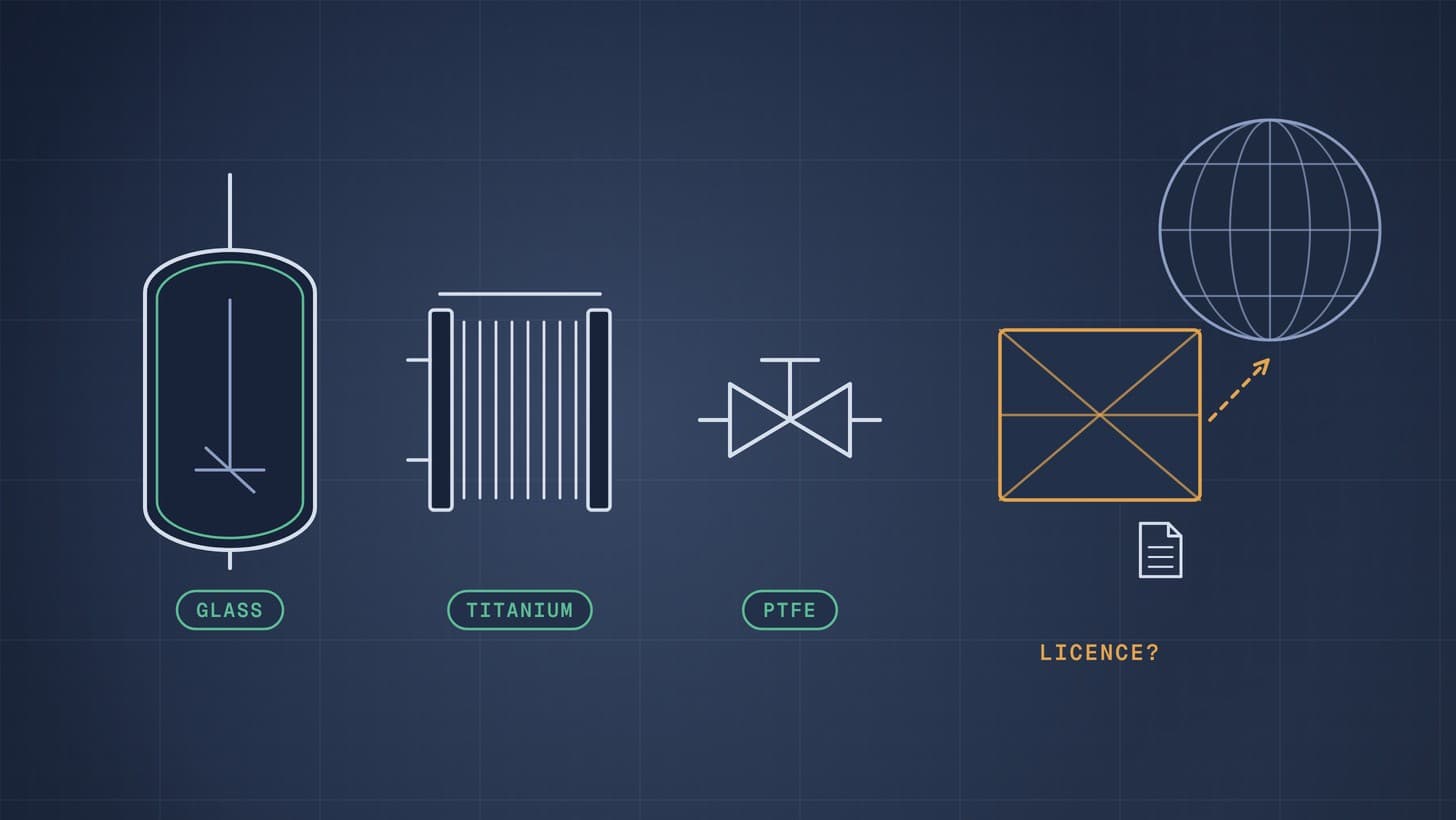
Export Controls on Chemical Process Equipment: A Guide for Suppliers
Which reactors, tanks, heat exchangers, columns, valves and pumps are controlled as dual use items, how materials and size decide it, when unlisted items still need a licence, and how to build it into quotes.
Single Source and Sole Source Justification for Equipment (Template)
The difference between sole source and single source, valid reasons in equipment buying, the evidence to attach, the risk of not testing the market, and a template.