
Process Equipment List: What to Include, with a Free Template
What a process equipment list is, the columns procurement actually needs, how to keep it under revision control, and how it turns into RFQ packages.
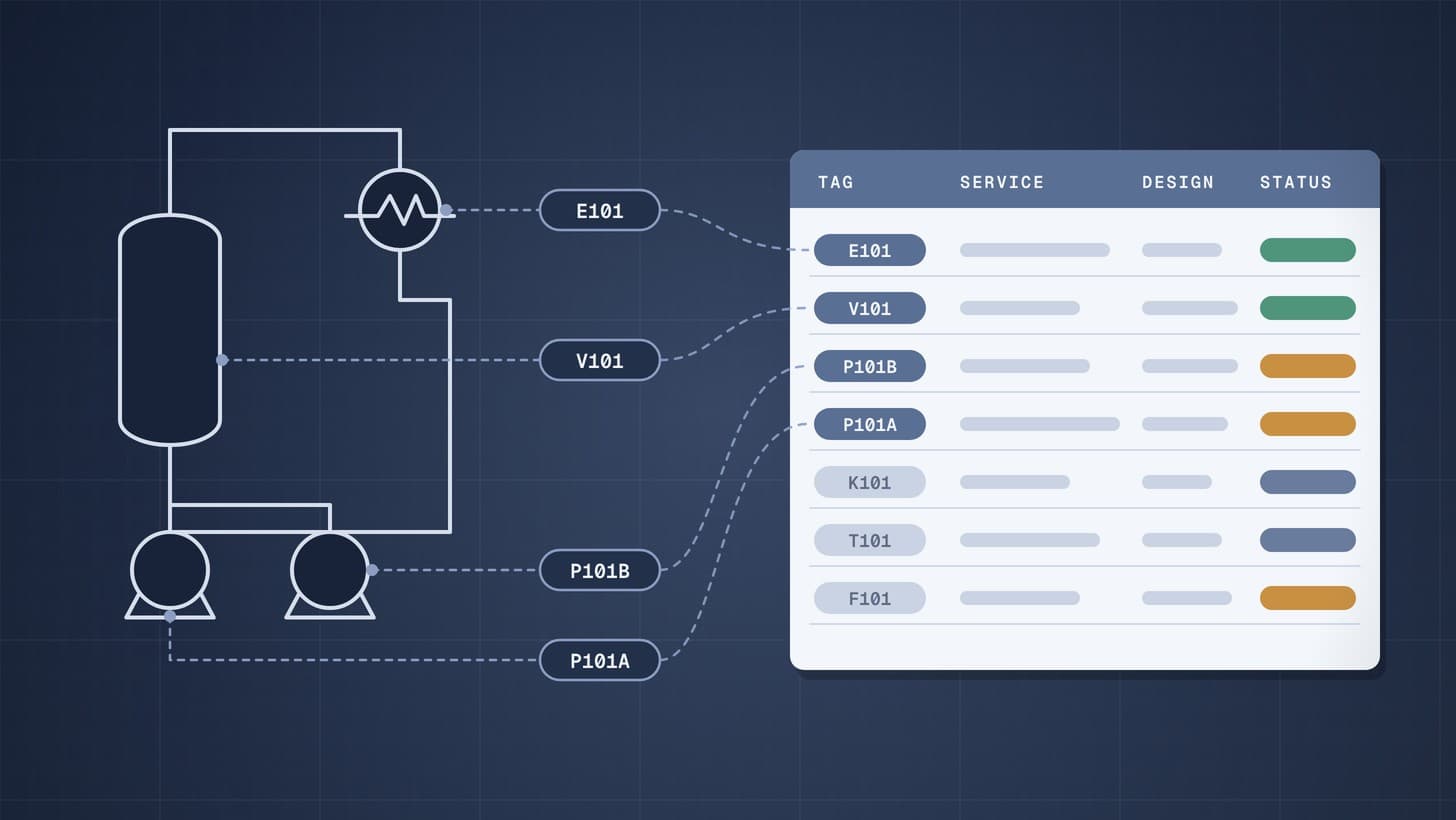
A process equipment list is a single table of every tagged item of equipment in a plant: pumps, vessels, heat exchangers, agitators, filters, packages and so on. Each row gives the tag, service, type, duty, design pressure and temperature, materials, size and driver rating, plus the package it will be bought in and its status. It is built from the process flow diagram (PFD) and the P&IDs, and procurement uses it to estimate cost, write datasheets and group items into RFQ (request for quotation) packages.
Some teams call it the equipment schedule. Whatever the name, it should be the one place where anyone can see what is being bought, against which drawing and at which revision.
Why this matters now
Design data is moving off paper. DEXPI, an exchange format for P&IDs backed by the German process engineering bodies, lets drawing tools pass the graphics, connections and attributes of each item in a form other software can read [1]. The oil and gas industry's CFIHOS project sets out how project information should be handed to the owner, and its data model underpins the JIP33 standard equipment datasheets [2]. Both point the same way: an equipment list with clean, consistent columns can feed estimating, purchasing and maintenance systems without retyping. A list kept as free text in a spreadsheet cannot.
Create and manage RFQs in minutes
ChemCapital handles the entire procurement cycle, from structured RFQs and supplier comparisons to formal purchase orders and delivery tracking.
How the list is built
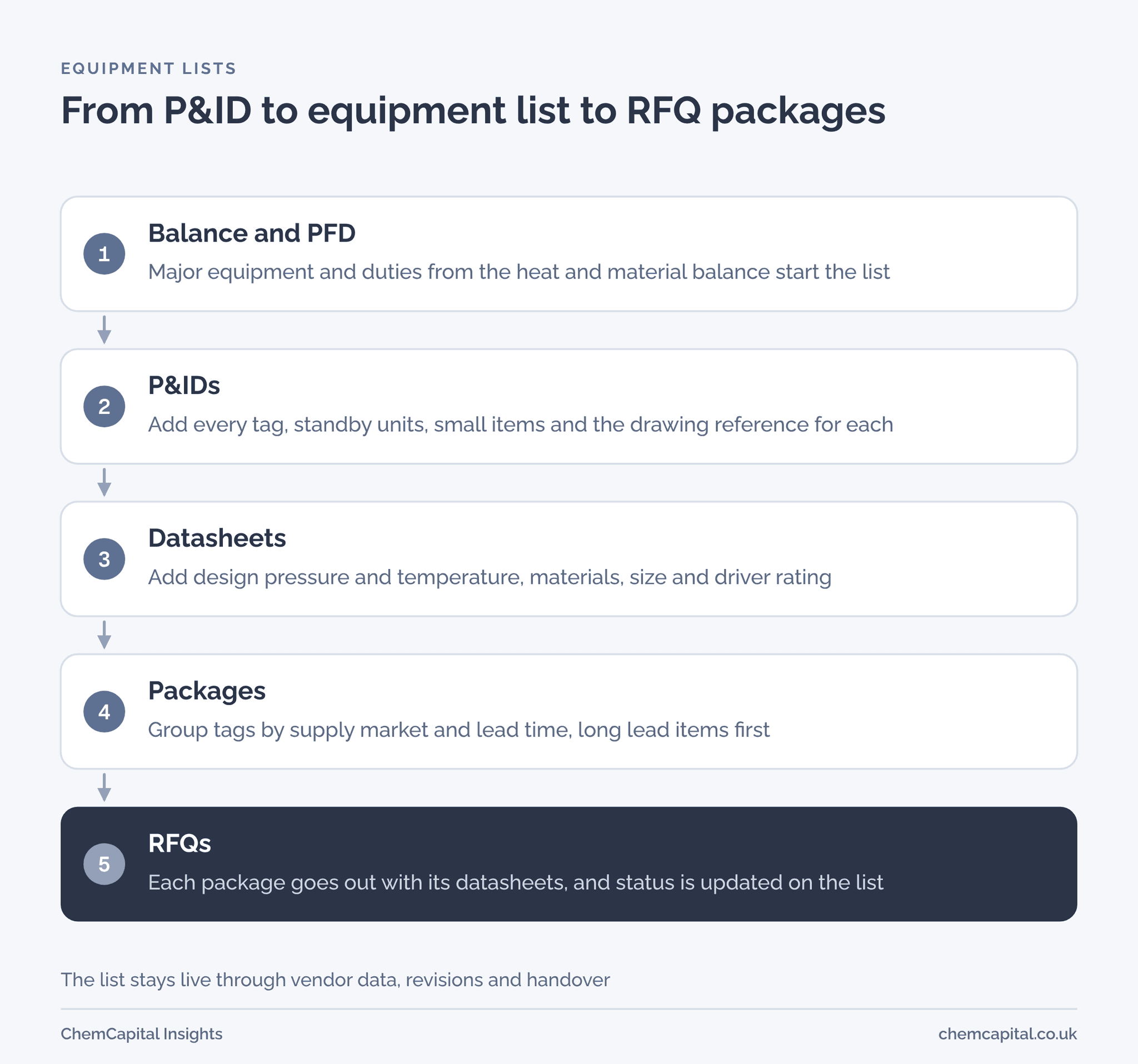
The first version comes from the heat and material balance and the PFD. It holds the major equipment and the duties that size it, which is enough for an early cost estimate.
The P&IDs then add every tag, including standby pumps, small filters and strainers, and the drawing each item appears on. The Process Industry Practices standard for P&IDs, PIC001, sets out what the equipment description on a drawing should carry for nine classes of equipment; for a pump, that includes the equipment number, service and capacity [3]. Our guide on how to read a P&ID shows where those descriptions sit.
Datasheets add design conditions and materials. A licensor's deliverable list issued with a 2025 tender by Bharat Heavy Electricals shows what a client expects at the pre bid stage: material groups for each item; diameter, length, internals and design conditions for columns and vessels; type, surface area and duty for exchangers; and type, head, flow and shaft power for pumps and compressors [4].
Finally, vendor data adds weights, motor ratings and final sizes, which feed the layout, the structure and the electrical load list.
The columns procurement needs
Every column should help someone design, estimate, buy or install the item. Here is a template with one illustrative filled row.
| Column | What it holds | Illustrative entry |
|---|---|---|
| Tag | Unique equipment number, matching the P&ID | P101A/B |
| Service | What the item does, in plain words | Solvent feed pump |
| Type | Equipment type and arrangement | Centrifugal, end suction |
| Quantity | Operating plus standby | 1 + 1 |
| P&ID reference | Drawing number and revision | PID 100 sheet 2, rev C |
| Duty | The sizing parameter for this type | 44 m³/h at 74 m head |
| Operating pressure and temperature | Normal conditions | 0.2 bar g suction, 40 °C |
| Design pressure and temperature | Mechanical design basis | 10 bar g, 80 °C |
| Material | Wetted or main material | 316L stainless steel |
| Size | Main dimensions or nominal size | 50 mm discharge |
| Driver rating | Motor or drive power | 15 kW |
| Weight | Empty and operating, once known | To be confirmed by vendor |
| Package | Procurement package reference | PK03 Pumps |
| Datasheet | Reference and revision | DS P101 rev B |
| Status | Preliminary, for enquiry, ordered, on hold | For enquiry |
| Long lead | Yes or no | No |
| Remarks | Holds and open points | Seal plan to be confirmed |
The duty column changes meaning by type: flow and head for pumps, duty and surface for exchangers, volume for tanks, power and speed for agitators. Write the units in the header so nobody mixes bar gauge and absolute or kW and horsepower.
Keep it under revision control
The equipment list changes more often than any drawing, so treat it like one. Give it a document number and a revision. Mark changed cells at each revision and keep a short revision log. Put a hold on any value still in doubt rather than leaving it blank, so a buyer knows not to quote against it.
The bigger risk comes after the project. The UK Health and Safety Executive lists accurate recording and monitoring of changes to plant and process among the factors for safe change [5]. An equipment list that is updated with every modification is one of the simplest ways to keep that record.
From list to RFQ packages
Group tags into packages by the market that supplies them: pumps from pump makers, shell and tube exchangers from fabricators, vessels from vessel shops, and skids from package suppliers. Then order the packages by lead time, so the slowest items go out first. Our article on CAPEX procurement strategy covers how to split packages across a whole project.
Each package goes out with its datasheets and a vendor data requirement list. The Journal of Petroleum Technology notes that this list of required vendor documents is issued as part of the vessel enquiry, and that vessel internals should be chosen early because their weights and loads affect the vessel design [6]. Update the status column as each RFQ goes out and each order is placed.
Practical example
In this illustrative example, the P&ID set for a solvent recovery unit shows 38 tagged items. The list sorts them like this.
| Package | Items | Notes |
|---|---|---|
| Pumps | 7 | Three duties with standby, plus one drum pump |
| Heat exchangers | 6 | Two in duplex stainless steel, flagged long lead |
| Vessels and tanks | 9 | Shop fabricated |
| Vacuum package | 1 | Long lead, goes out first |
| Agitators | 2 | Bought with the vessels they sit on |
| Small items | 13 | Filters, strainers, sight glasses |
| Total | 38 |
That gives five RFQs, because the agitators travel with the vessel package. The vacuum package and the two duplex exchangers go out in week one; pumps and vessels follow once their datasheets reach revision B.
Where ChemCapital fits
P&ID to RFQ builds the list from the design rather than by retyping it. It imports DEXPI files and reads equipment, instruments, valves and nozzles; it also takes existing Excel or CSV equipment lists, with column mapping that copes with non standard headings. You review each extracted tag, group accepted items into procurement packages and turn a package into a live RFQ in one click. When a drawing is revised, a side by side comparison shows what changed, and items you have already accepted carry over.
Ready to turn your equipment list into RFQ packages without retyping it? Start a free 14 day ChemCapital trial, with no credit card needed.
Frequently asked questions
What is a process equipment list?
It is a single table of every tagged equipment item in a plant, with its service, type, duty, design conditions, materials and size. It is built from the PFD and P&IDs and is used to estimate cost, write datasheets and group items into RFQ packages.
What columns should an equipment list have?
At minimum: tag, service, type, quantity, P&ID reference, duty, operating and design pressure and temperature, material, size, driver rating, package, datasheet reference and status. Add weight and a long lead flag once vendor data starts to arrive.
Is an equipment list the same as an equipment schedule?
Yes, the two names are used for the same document in most process projects. Some building services projects use equipment schedule for a list printed on the drawings themselves.
Informational only, not procurement or legal advice. Cited names, frameworks, and statistics belong to their respective owners.
Create and manage RFQs in minutes
ChemCapital handles the entire procurement cycle, from structured RFQs and supplier comparisons to formal purchase orders and delivery tracking.
Start for freeRelated articles
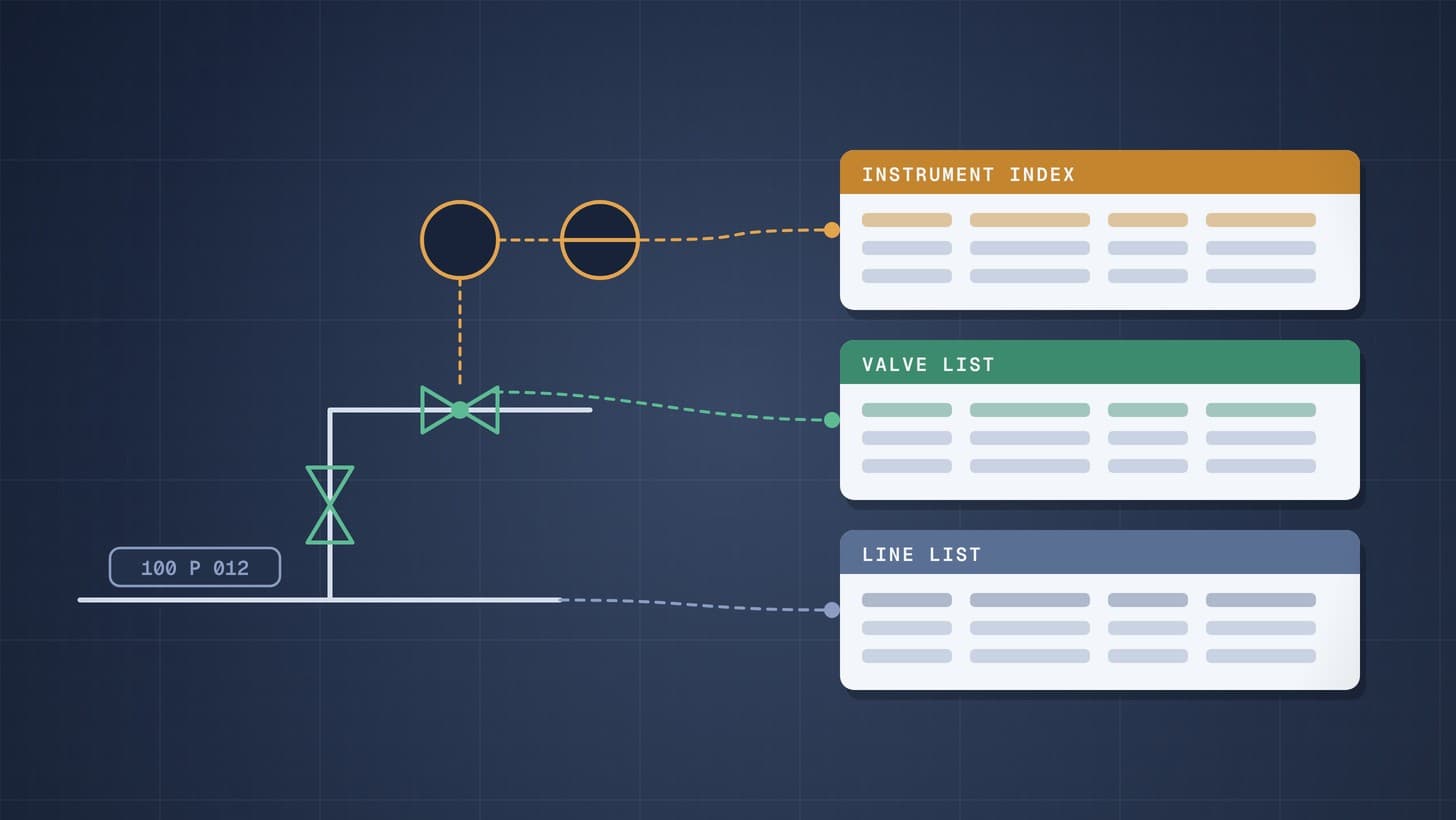
Line List, Valve List and Instrument Index Explained
The three engineering lists that sit beside every P&ID: what each contains, who owns it, how it is built, and how procurement turns it into purchase packages.
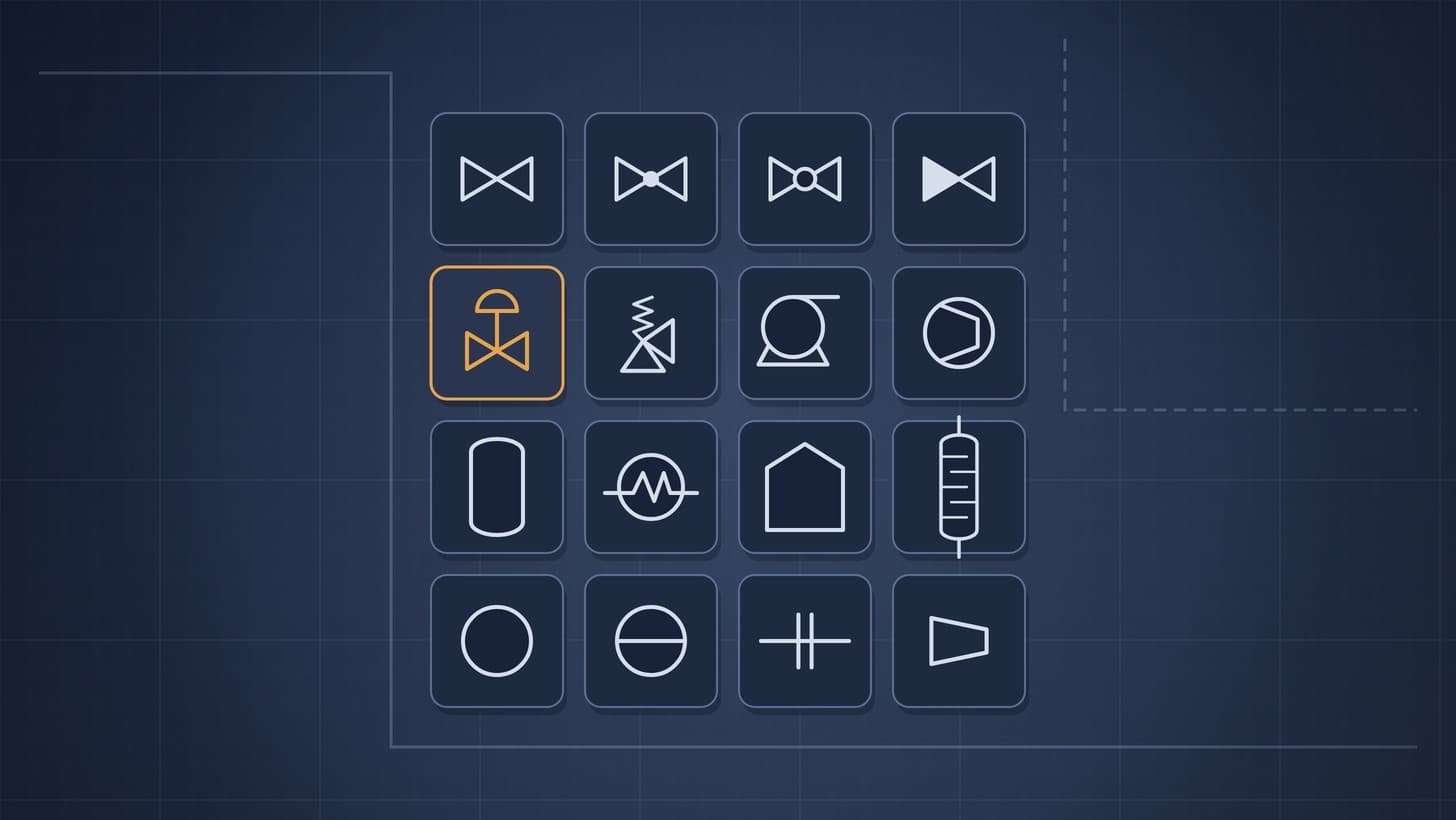
P&ID Symbols: Valves, Pumps, Vessels and Instruments
A plain reference to common P&ID symbols for lines, valves, pumps, vessels, heat exchangers and instruments, and what each tells a buyer about what must be quoted.
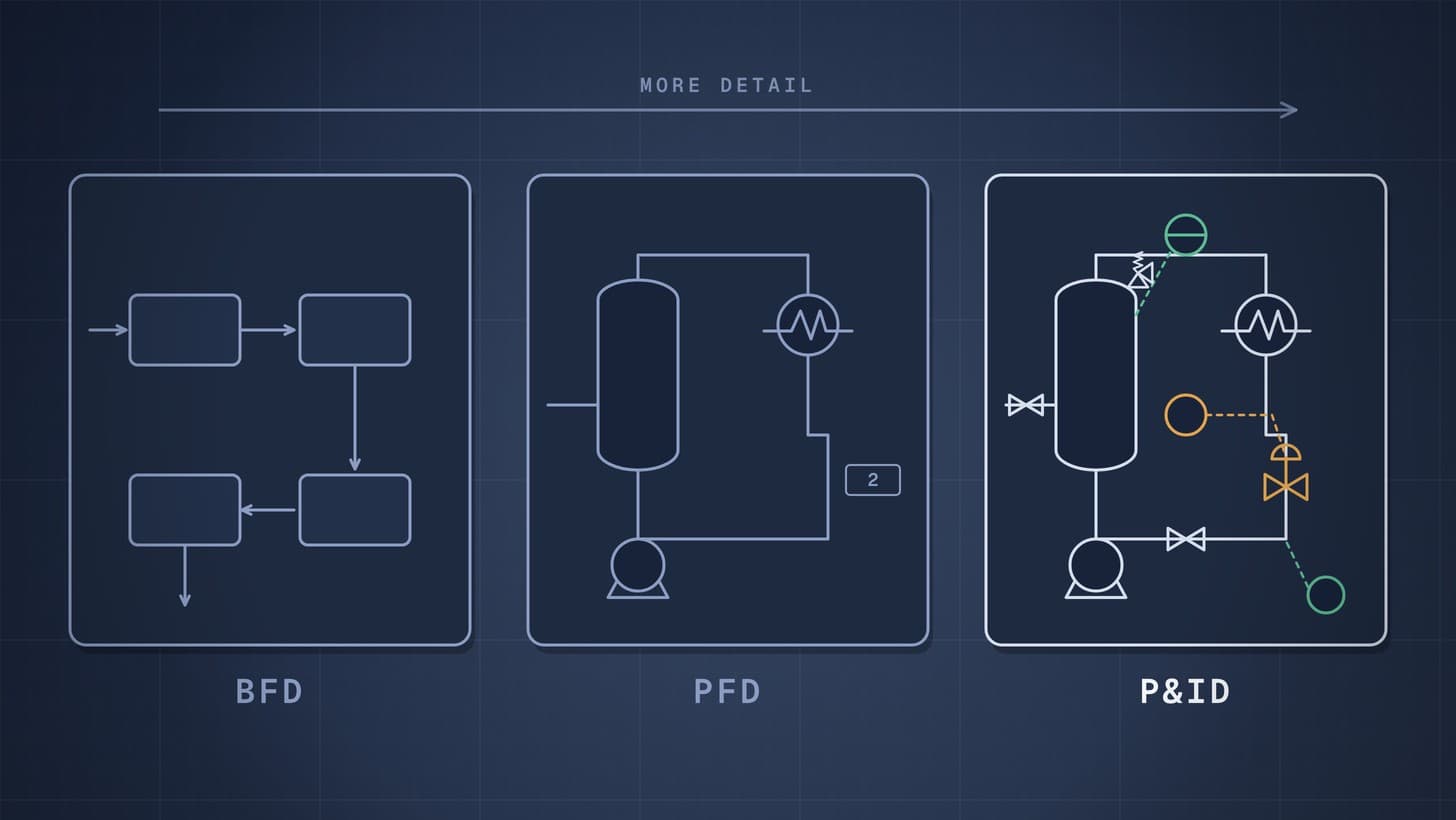
PFD vs P&ID vs Block Flow Diagram: Which Drawing a Quote Needs
What a block flow diagram, a PFD and a P&ID each show and leave out, when each exists, and which one a supplier needs to price equipment at each estimate stage.