
42 articles
Process Excellence
Articles on process excellence for industrial procurement teams.
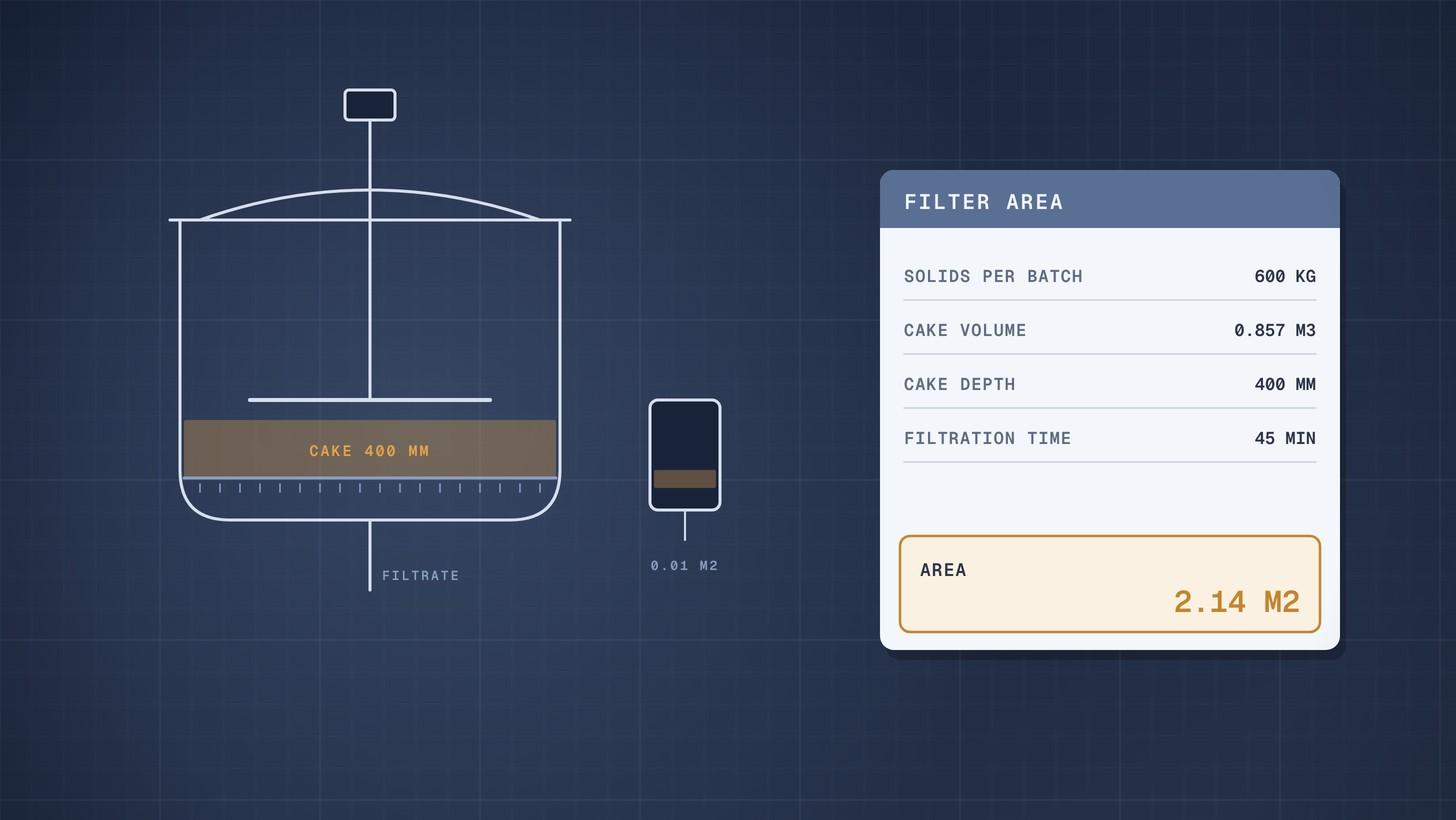
Filter Area Sizing: Worked Example
How to size a batch filter from cake volume and cake depth, read a lab filtration test and scale it to a nutsche or filter press.
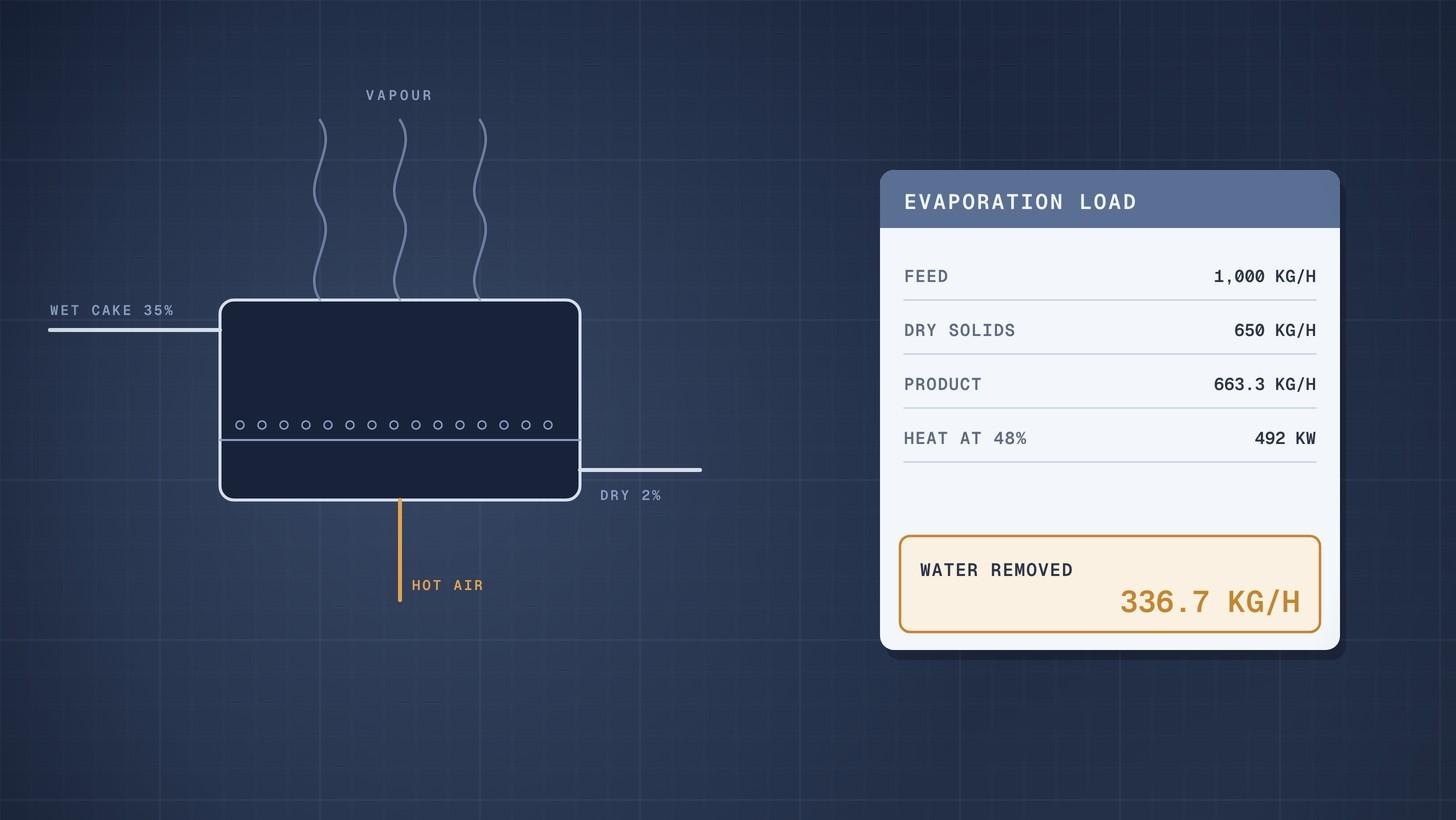
Dryer Evaporation Load: Worked Example
How to calculate a dryer's evaporation load from wet and dry basis moisture, then the minimum and real heat input, with a worked filter cake example.
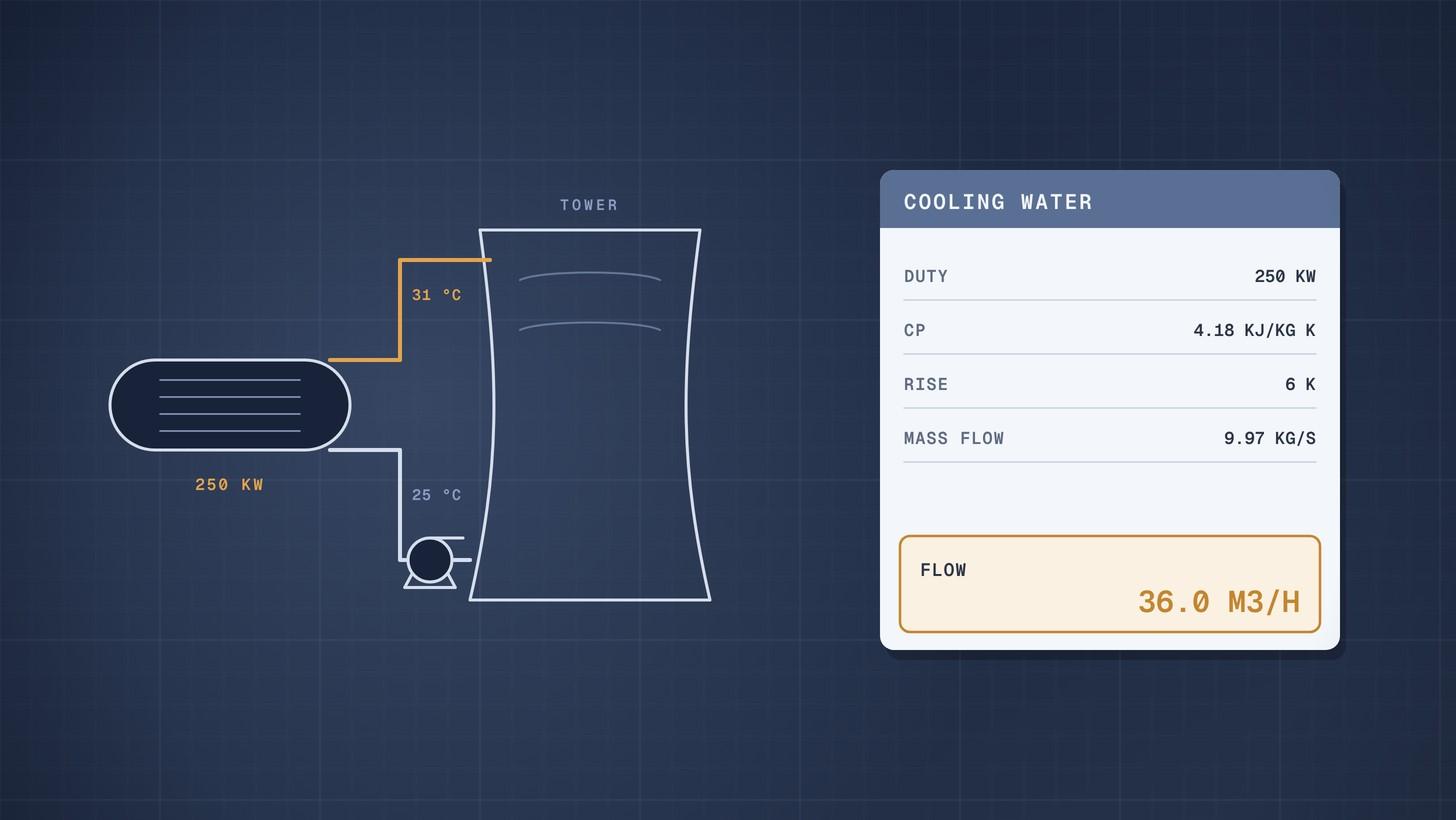
Cooling Water Flow Calculation: Worked Example
How to calculate cooling water flow from heat duty and temperature rise, then size the cooling tower circulation, evaporation and make up water.
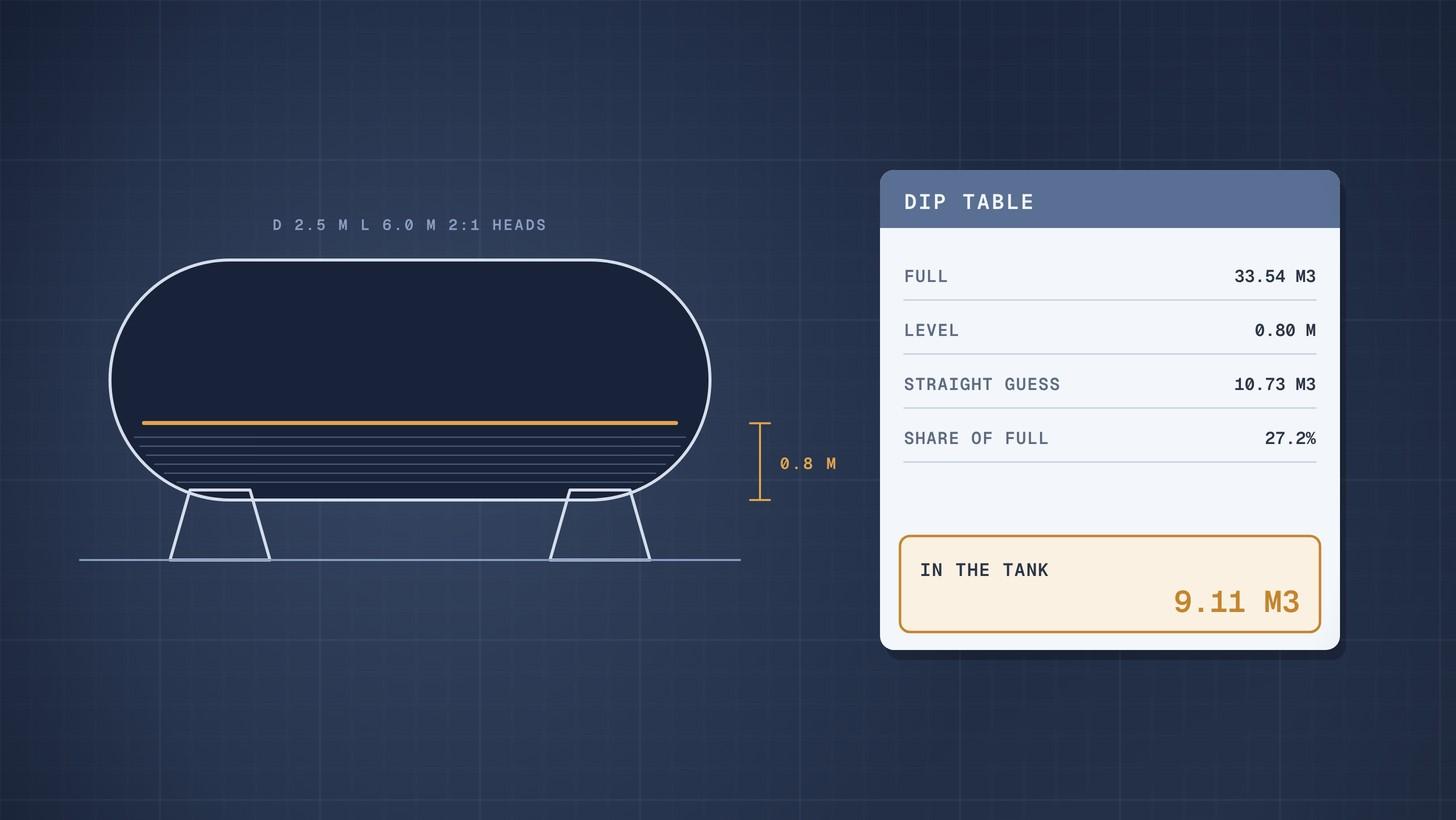
Horizontal Tank Volume When Partly Filled: Worked Example
How to calculate the volume of a partly filled horizontal tank with dished heads, with a worked example and a full dip table you can rebuild in a spreadsheet.
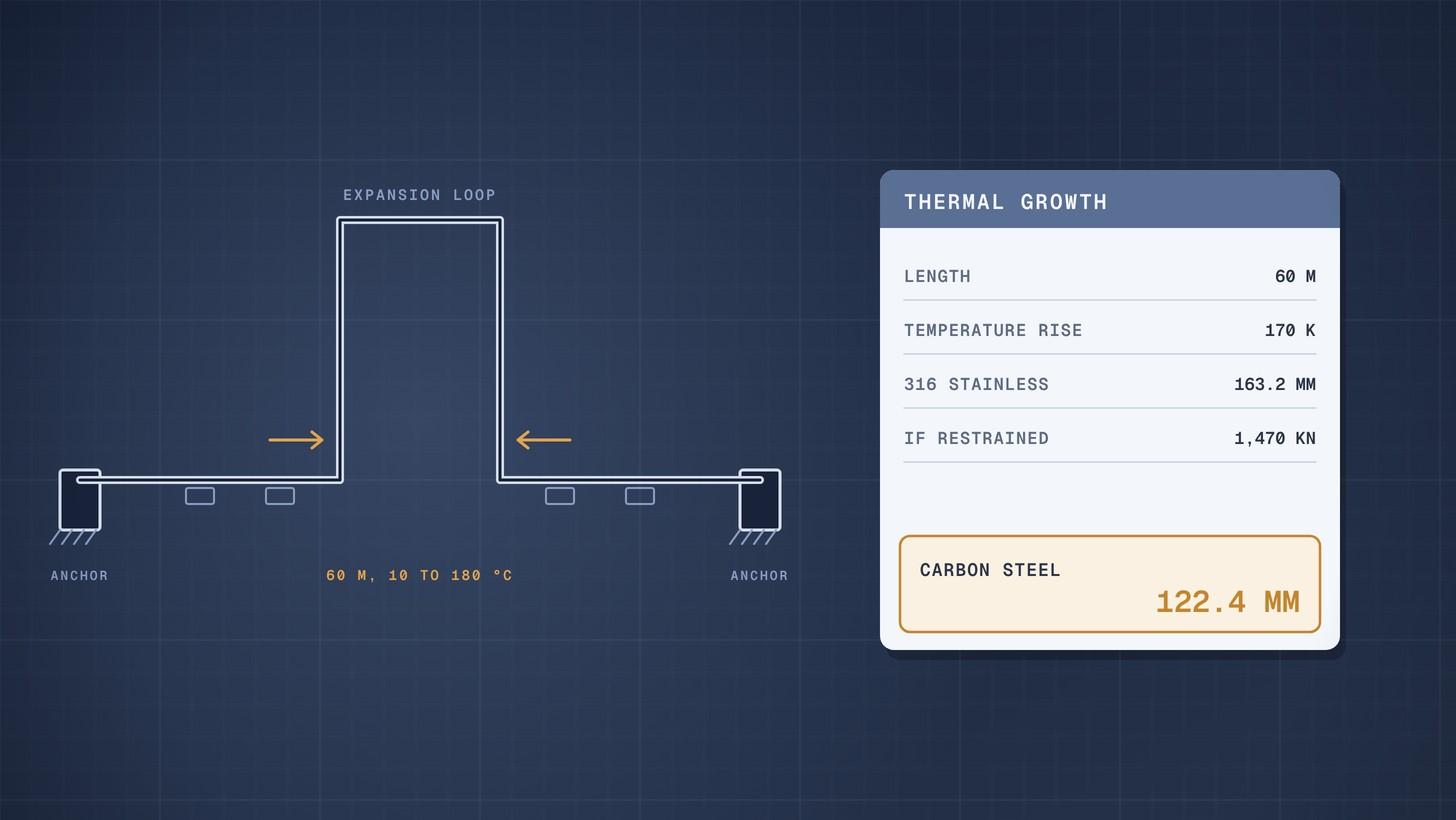
Pipe Thermal Expansion: Worked Example
How to calculate pipe thermal expansion for carbon and stainless steel, what restrained expansion does, and how loops and expansion joints absorb it.
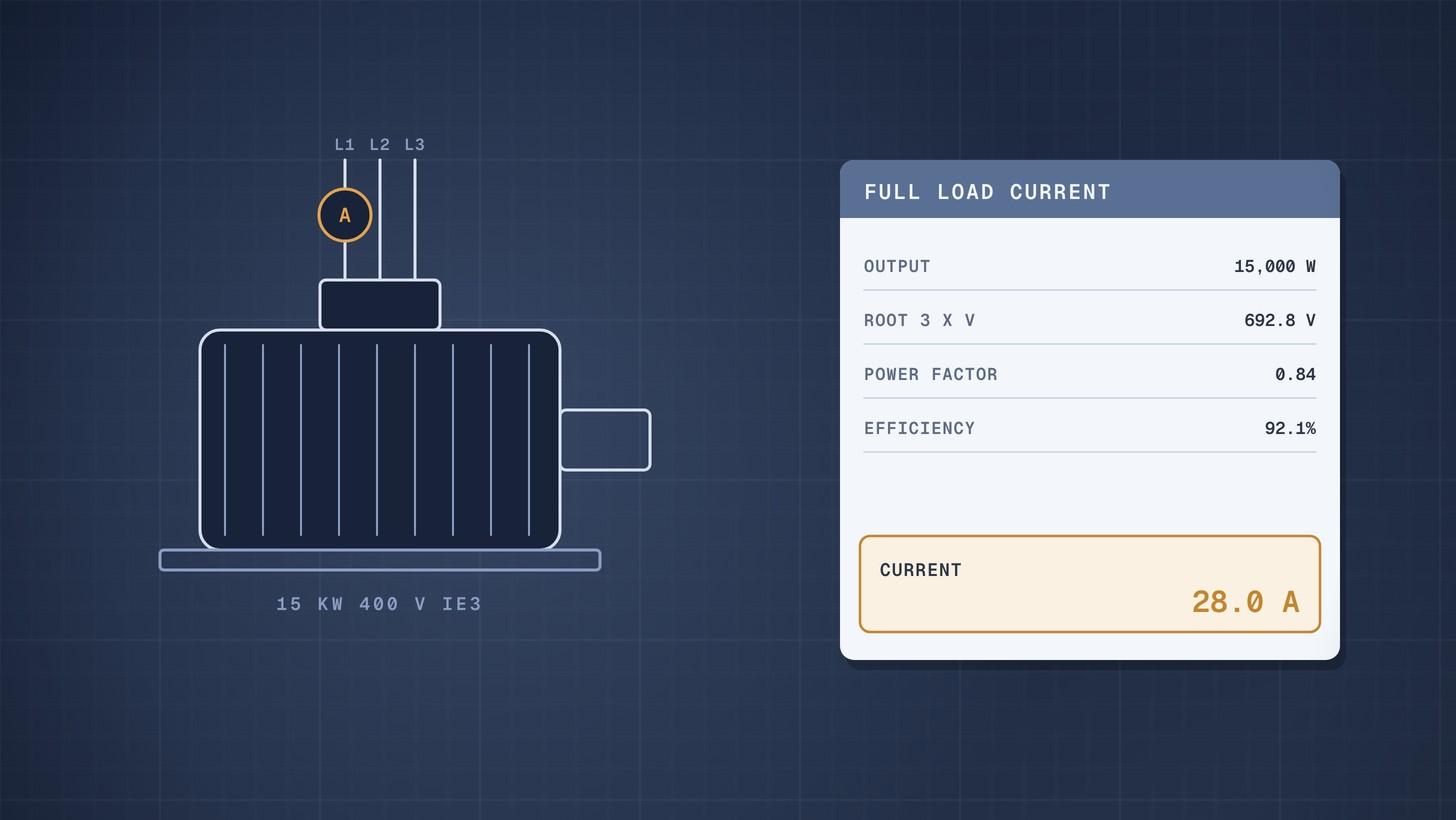
Motor Full Load Current: Three Phase Calculation Worked Example
How to calculate a three phase motor's full load current from output, voltage, power factor and efficiency, checked against a real 15 kW data sheet, plus starting current by starting method.
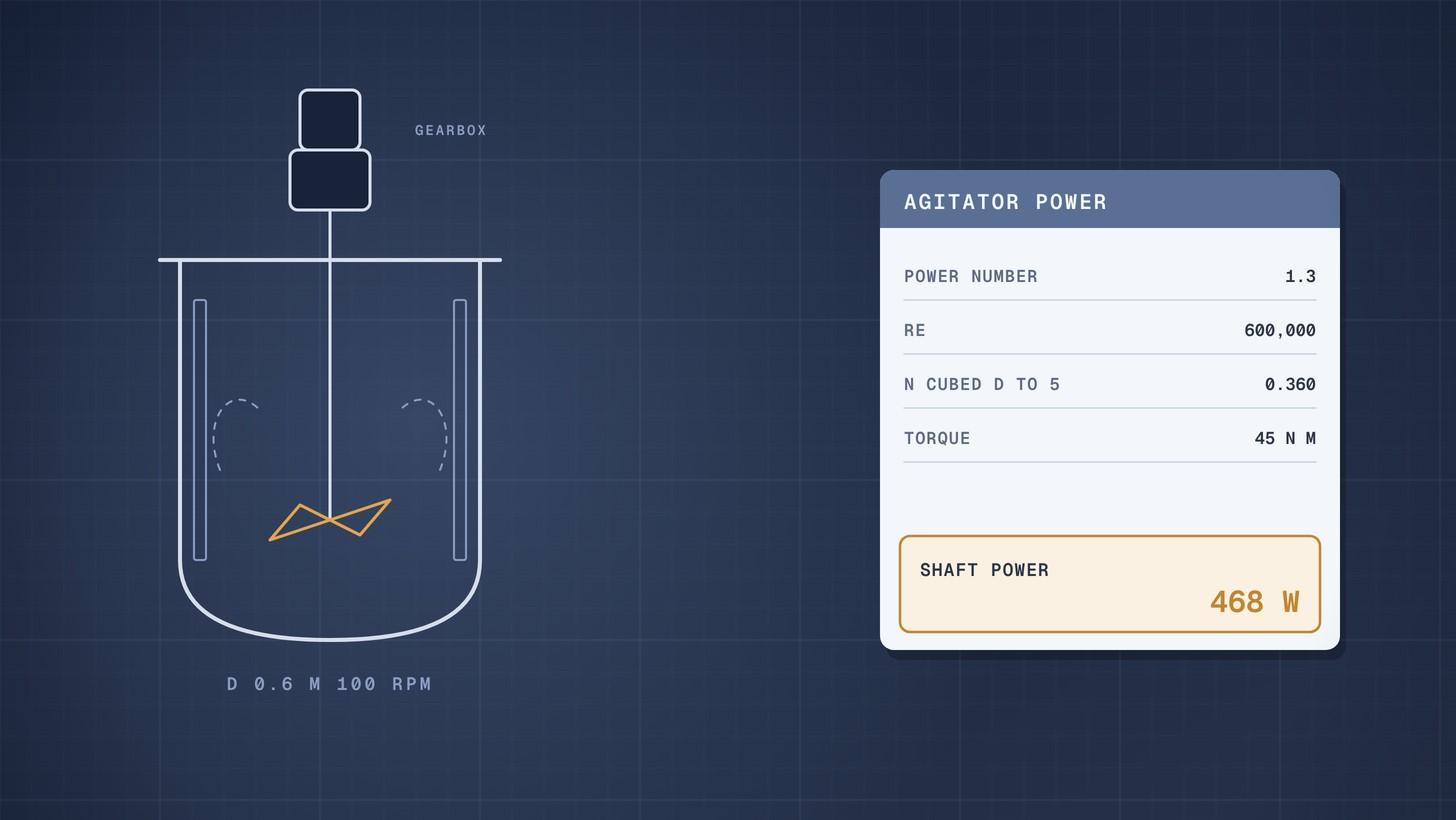
Agitator Power Calculation: Worked Example
How to calculate agitator power and torque from power number, speed and impeller diameter, how Reynolds number changes the answer, and what it means for the drive.
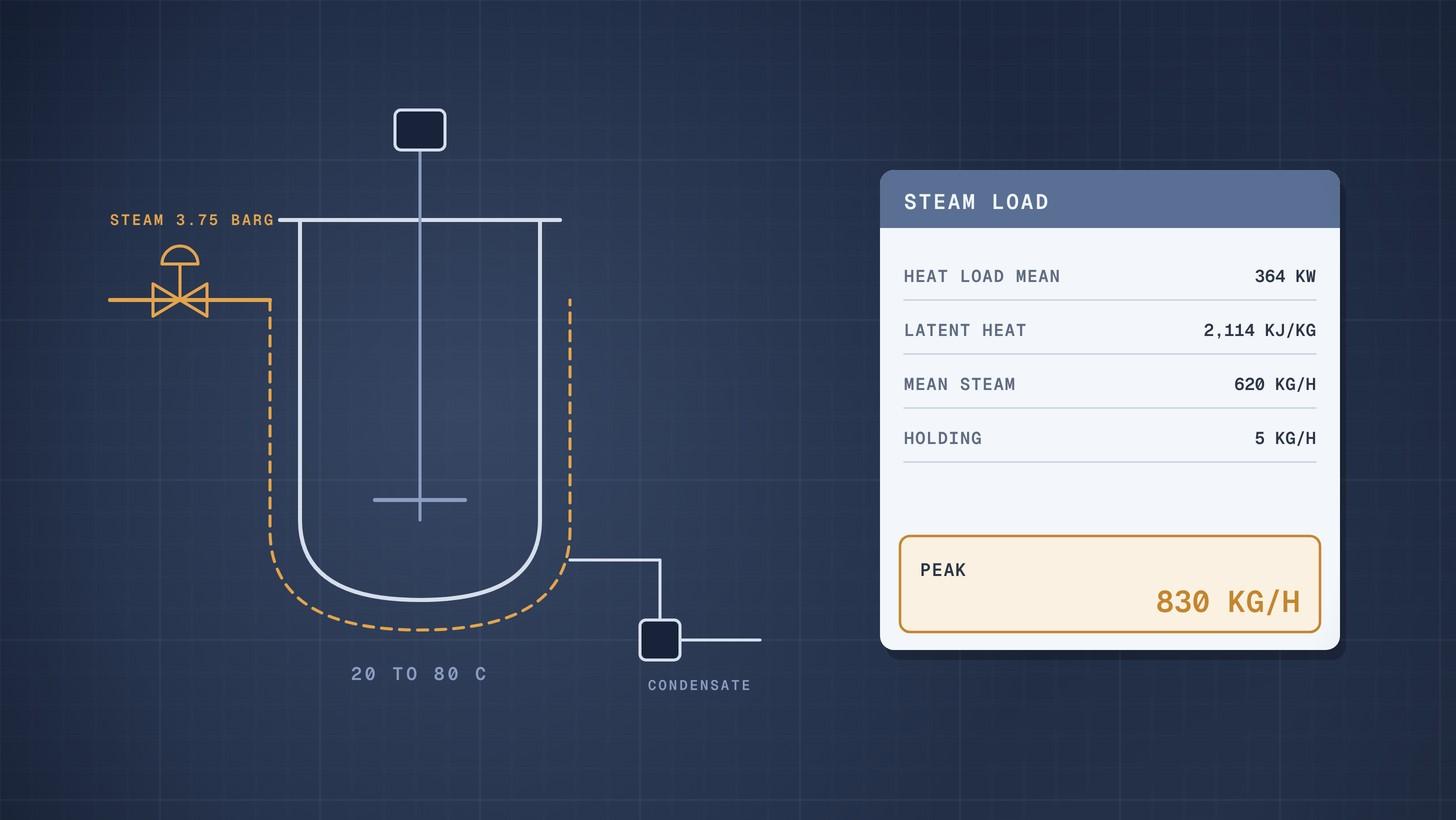
Steam Consumption for Heating a Vessel: Worked Example
How to calculate the steam needed to heat a jacketed vessel: heat load, latent heat, mean and peak steam demand and holding load, with what they mean for valves and traps.
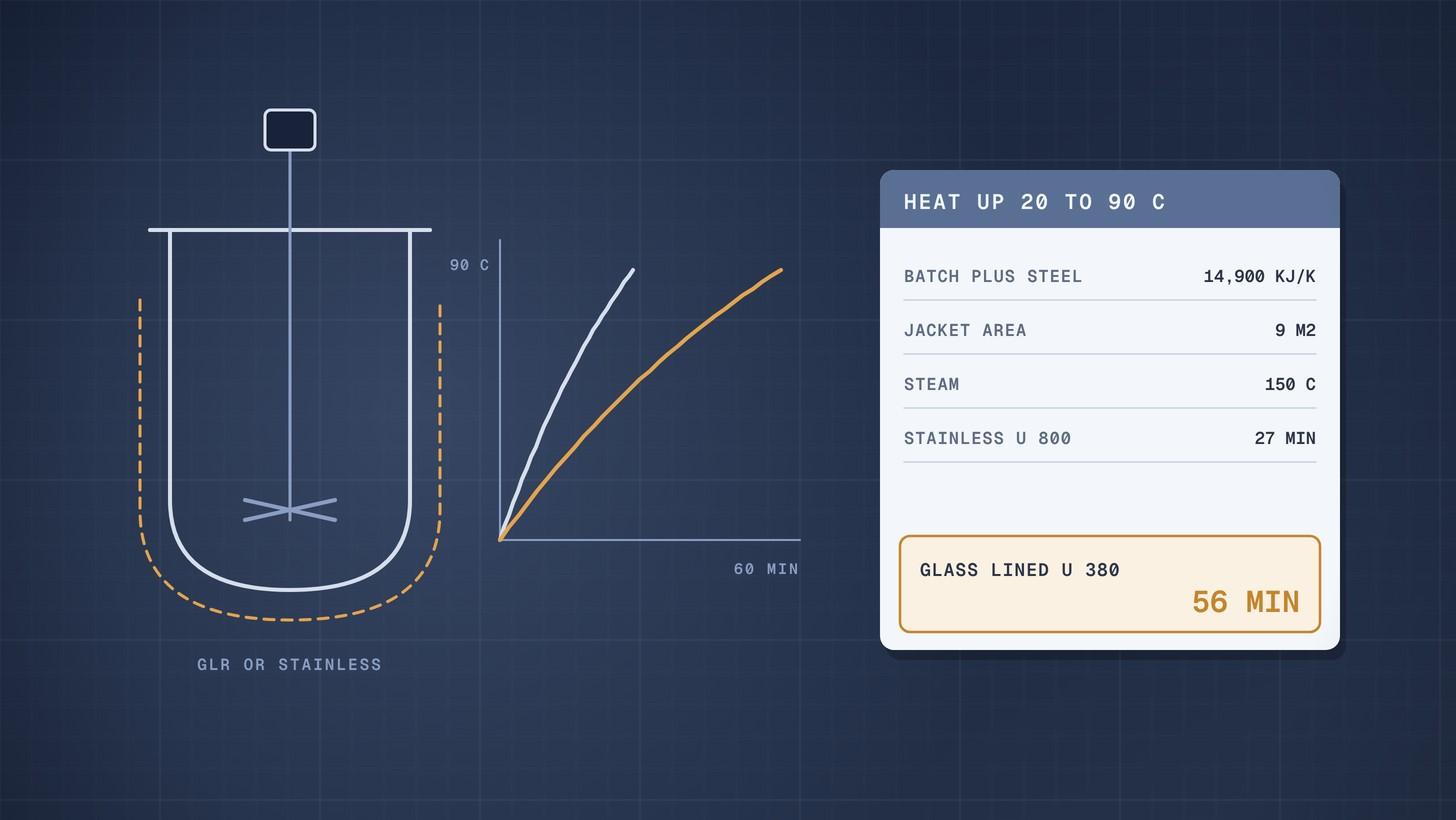
Jacketed Vessel Heating Time: Worked Example
How to calculate heat up and cool down times for a jacketed vessel or reactor, with steam and with cooling water, comparing glass lined and stainless steel.
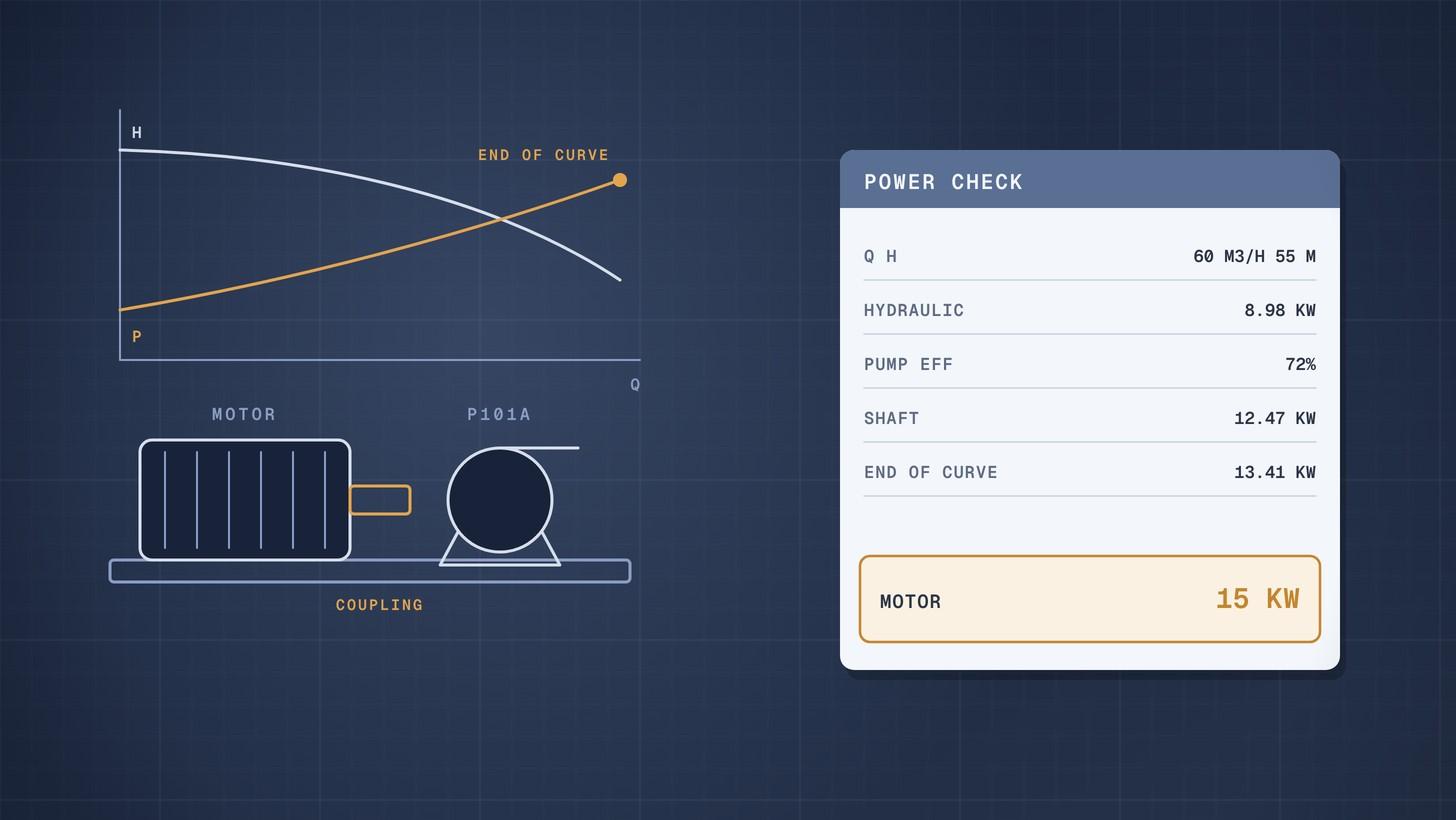
Pump Power Calculation: Hydraulic, Shaft and Motor Power Worked Example
How to calculate pump hydraulic power, shaft power and electrical input, and how to size the motor for the end of curve, worked through for a 60 m³/h water pump.
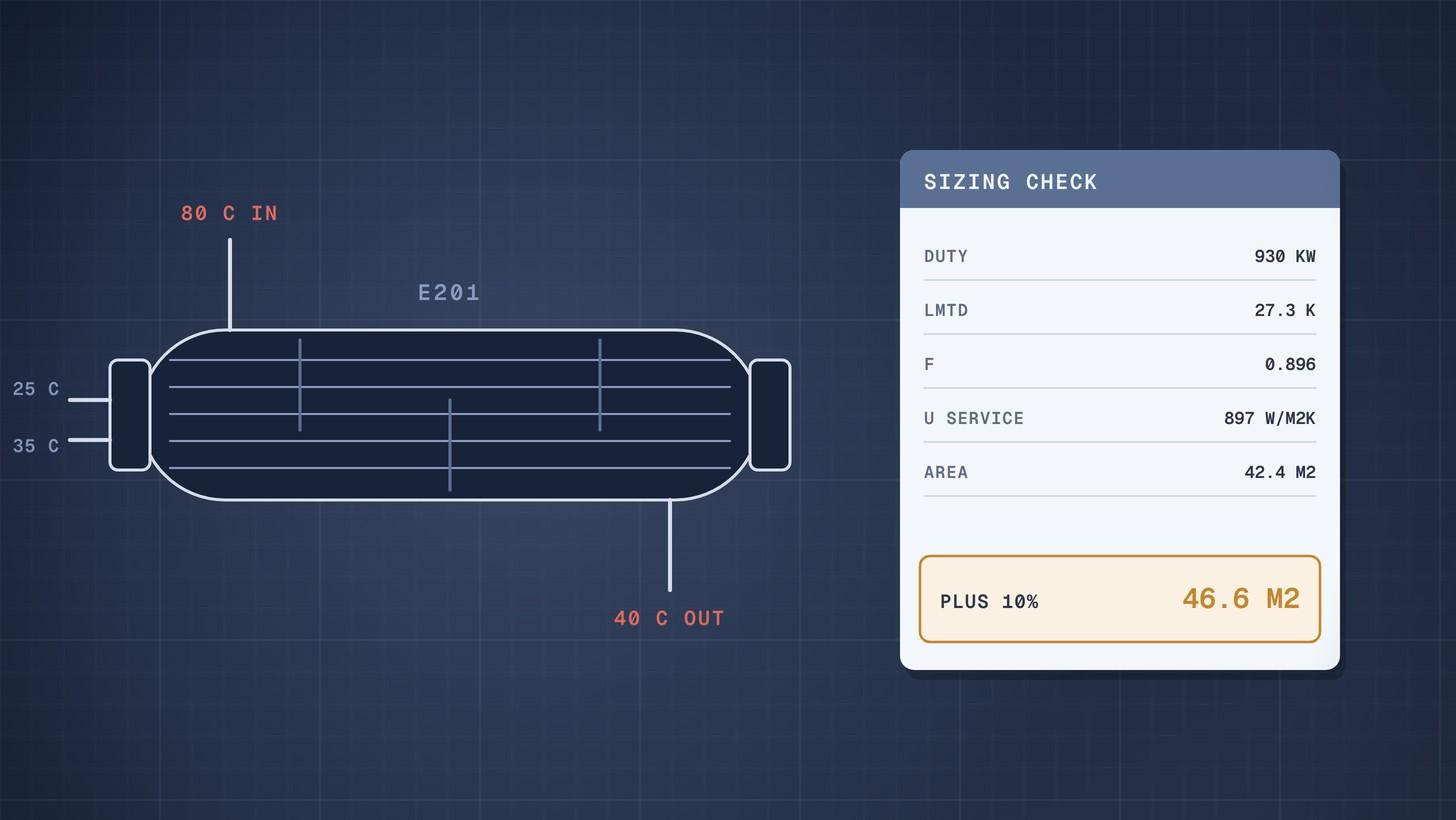
LMTD Calculation: Heat Exchanger Sizing Worked Example
How to calculate LMTD, the correction factor F and heat exchanger area, worked through for a water cooler, plus what a temperature cross does to the area.
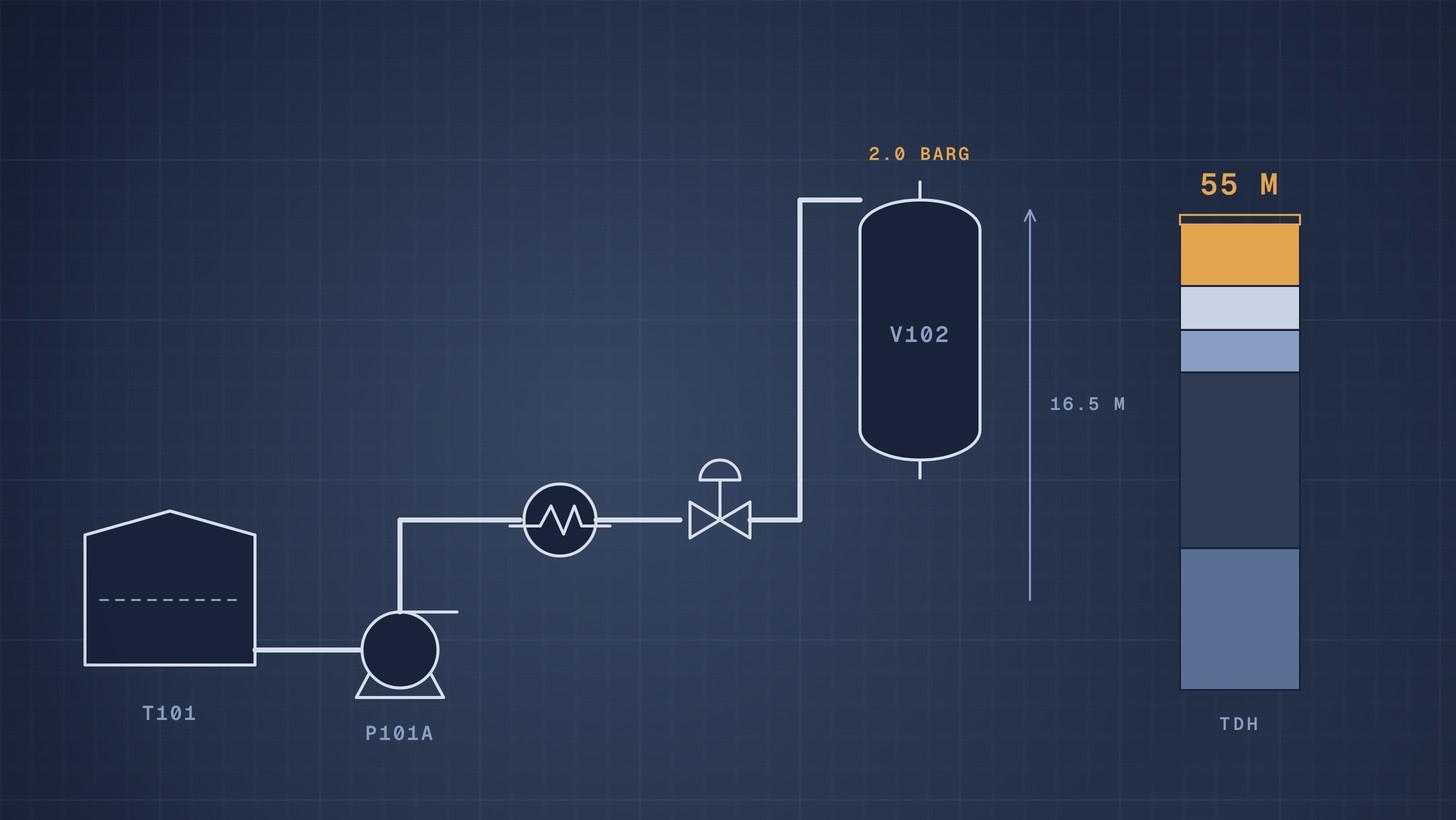
Total Dynamic Head Calculation: Pump Head Worked Example
How to calculate a pump's total dynamic head from static head, pressure difference, line losses and equipment drops, worked through to a rated head for a water transfer pump.
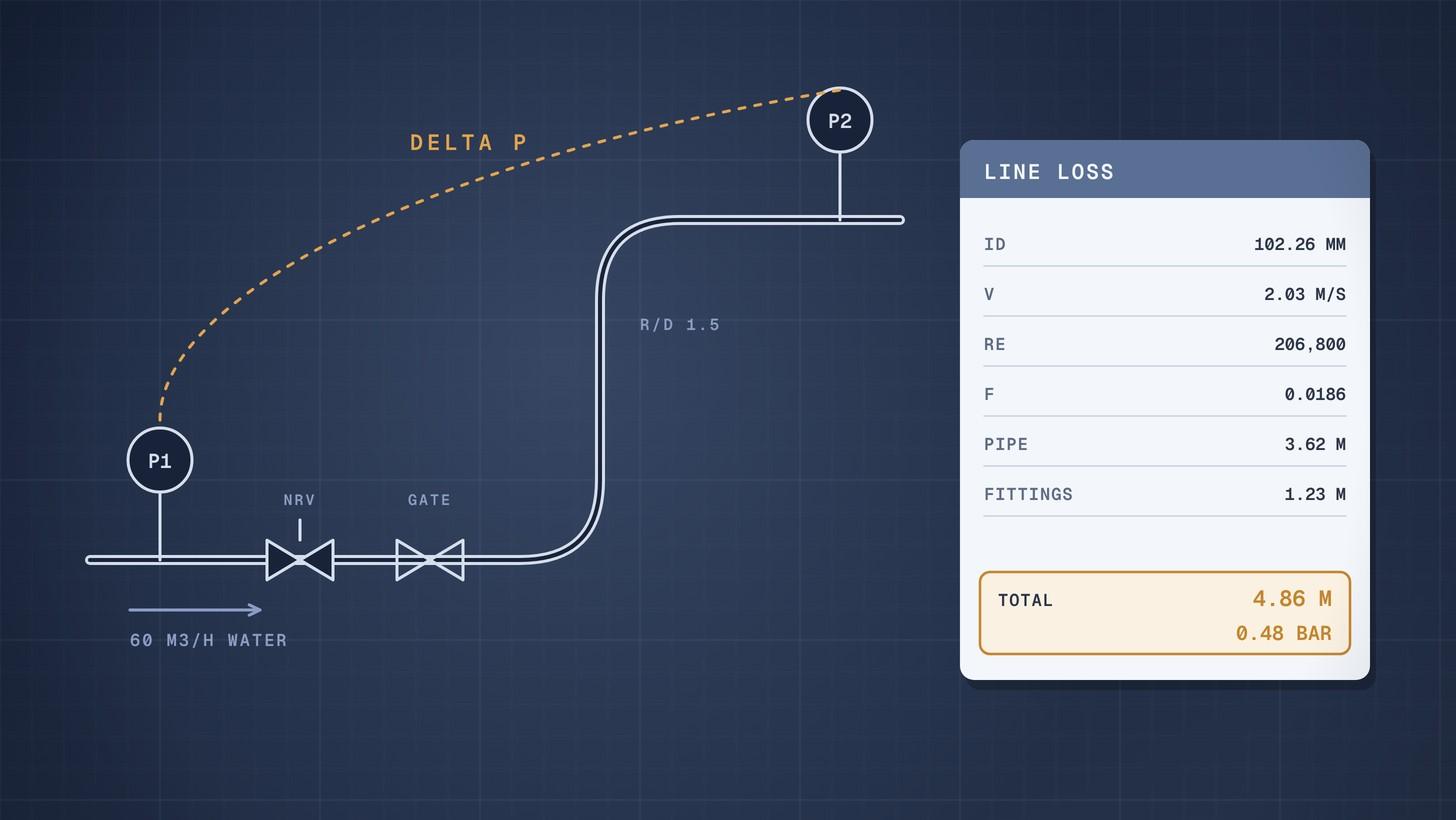
Pipe Pressure Drop Calculation: Darcy Weisbach Worked Example
How to calculate pressure drop in a liquid line with the Darcy Weisbach equation and K values, worked through for 60 m³/h of water in a 4 inch steel line.
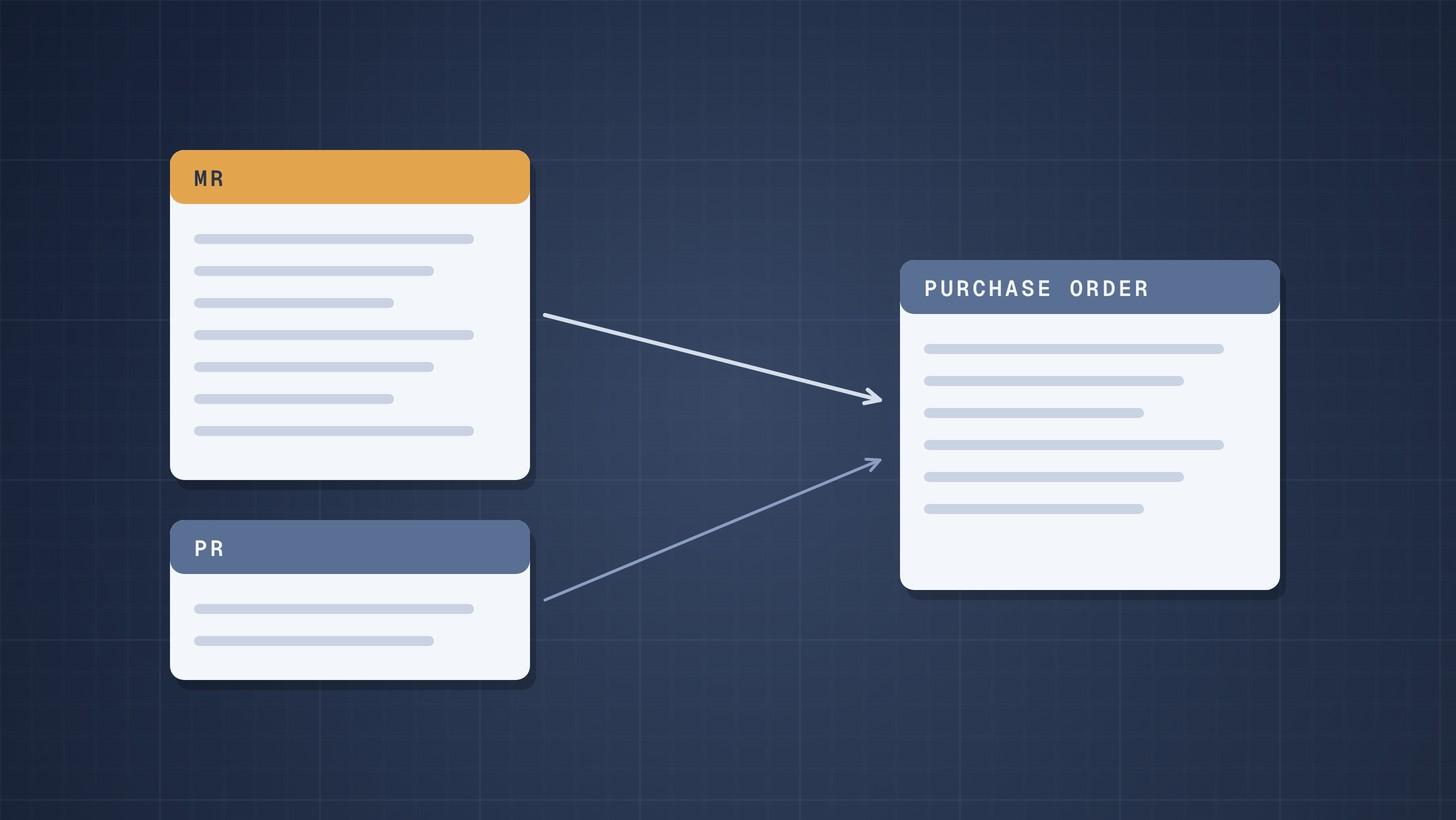
Material Requisition vs Purchase Requisition: The EPC Document Chain
On EPC projects the material requisition is the engineering document that defines what to buy; the purchase requisition is the internal approval to spend. Here is the full chain from MR to purchase order.
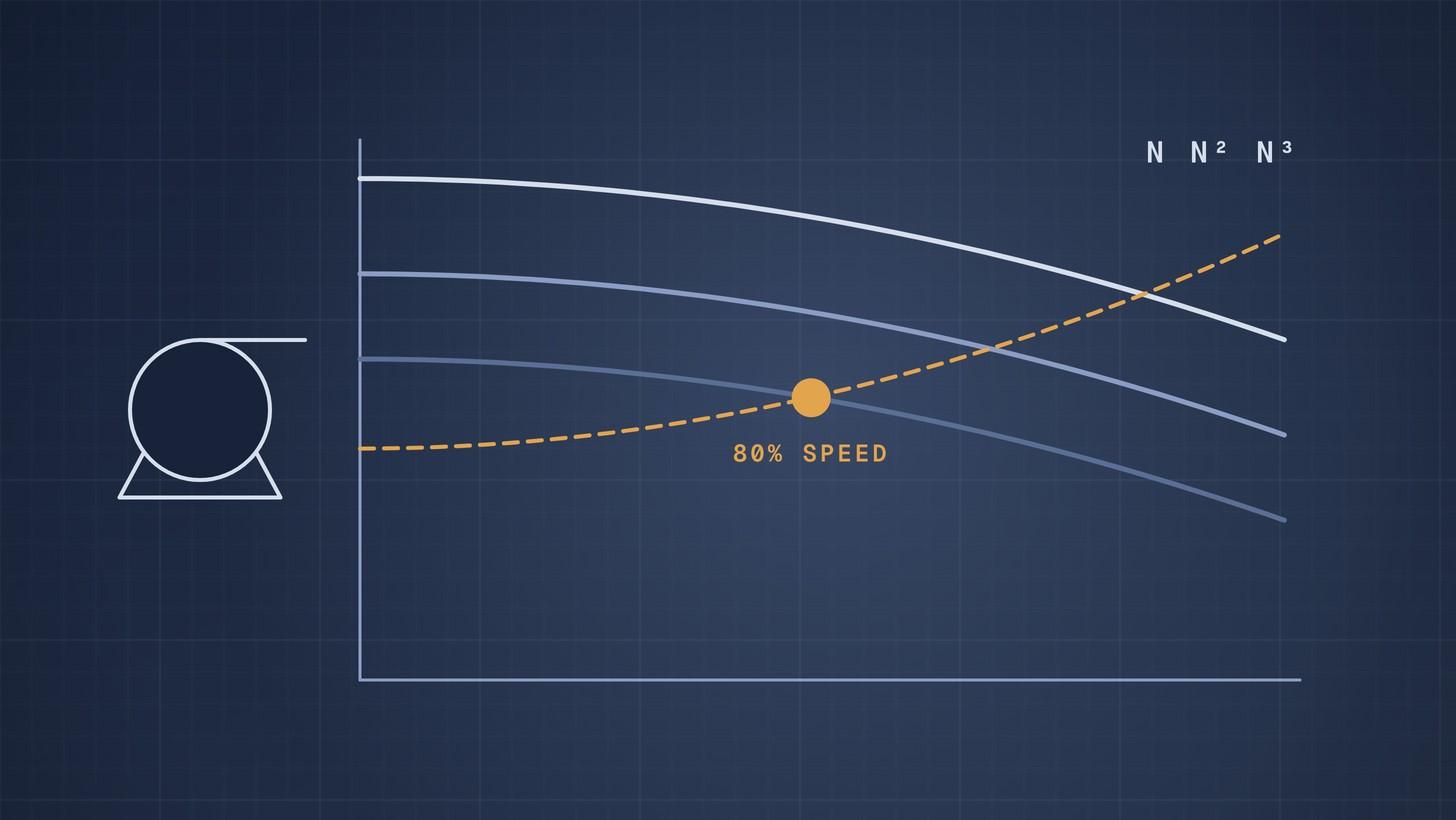
Pump Affinity Laws: Speed, Flow, Head and Power, With a Worked Example
The pump affinity laws say flow changes with speed, head with speed squared and power with speed cubed. Here is how to use them, where they break down with static head, and what they mean for motor size in a quote.
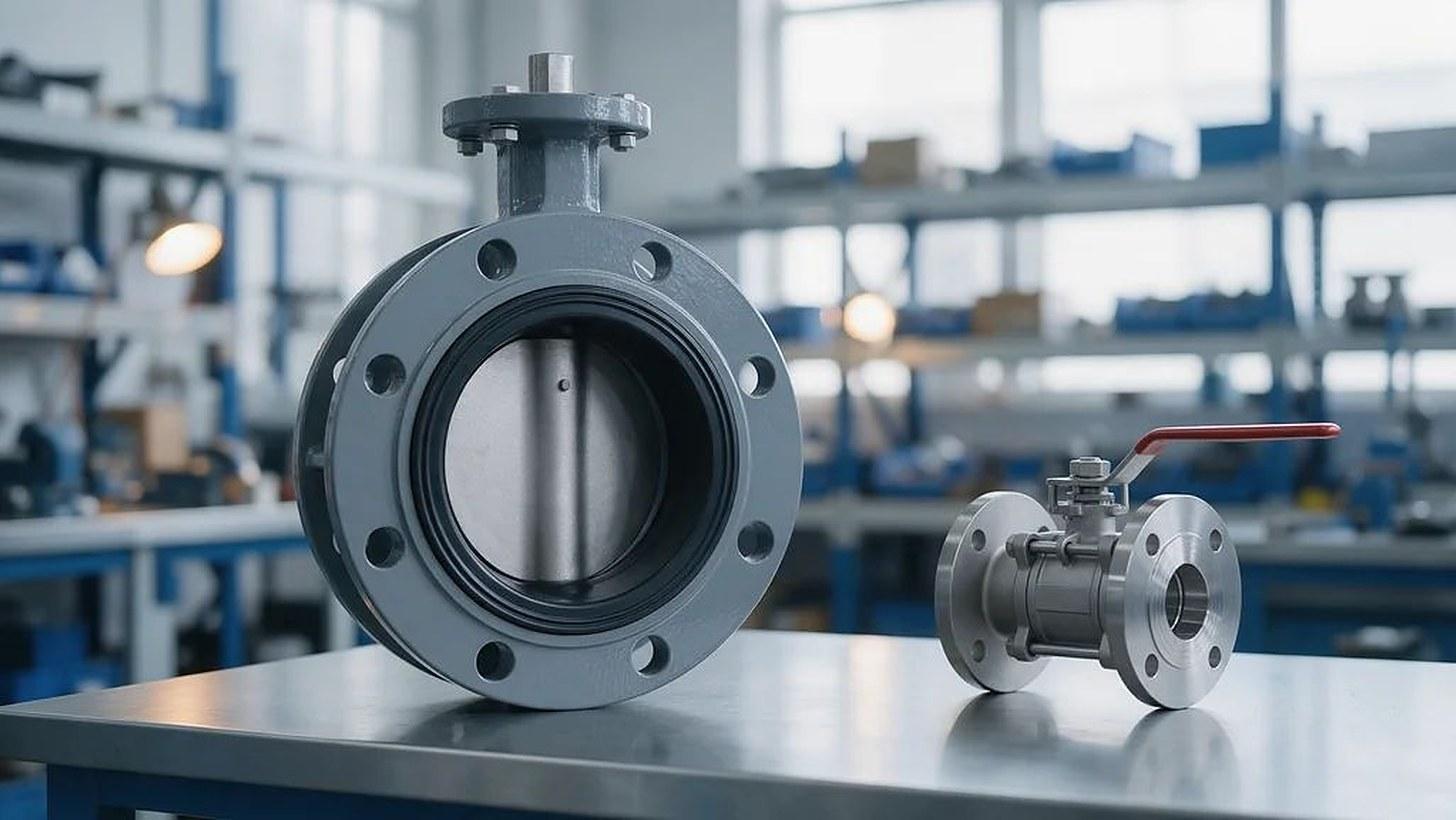
Ball Valve vs Butterfly Valve: How to Choose for Process Plant
Ball or butterfly valve? How they compare on shut off, pressure drop, size, weight, cost, throttling, actuation and cleaning, where each is used in process plant, and a worked cost example.
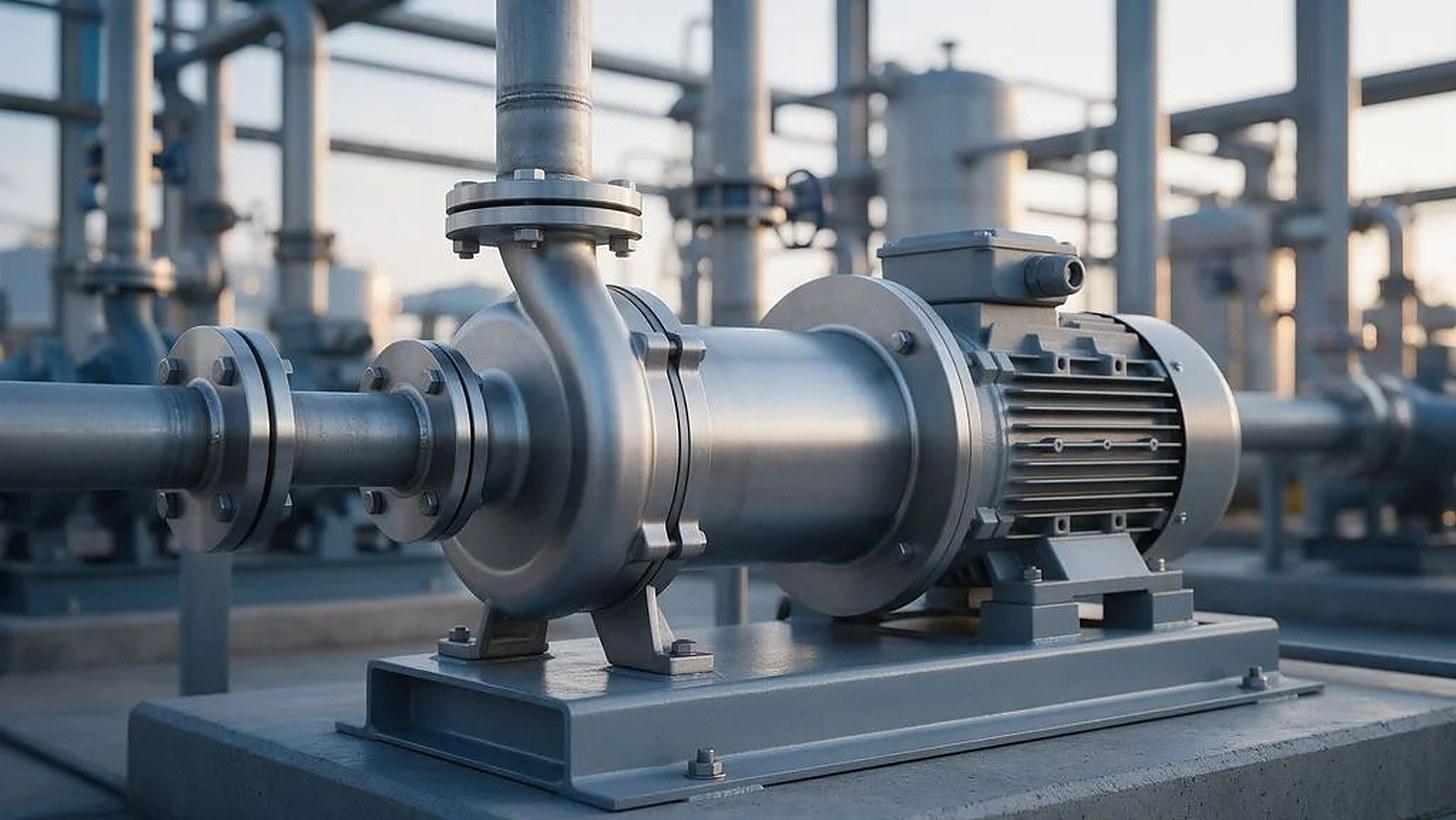
Magnetic Drive vs Mechanically Sealed Pumps for Chemical Service
Mag drive or sealed pump for a hazardous chemical? How each contains the liquid, where each fails (solids, dry running, decoupling, seal support), efficiency, monitoring, and what to put in the RFQ.
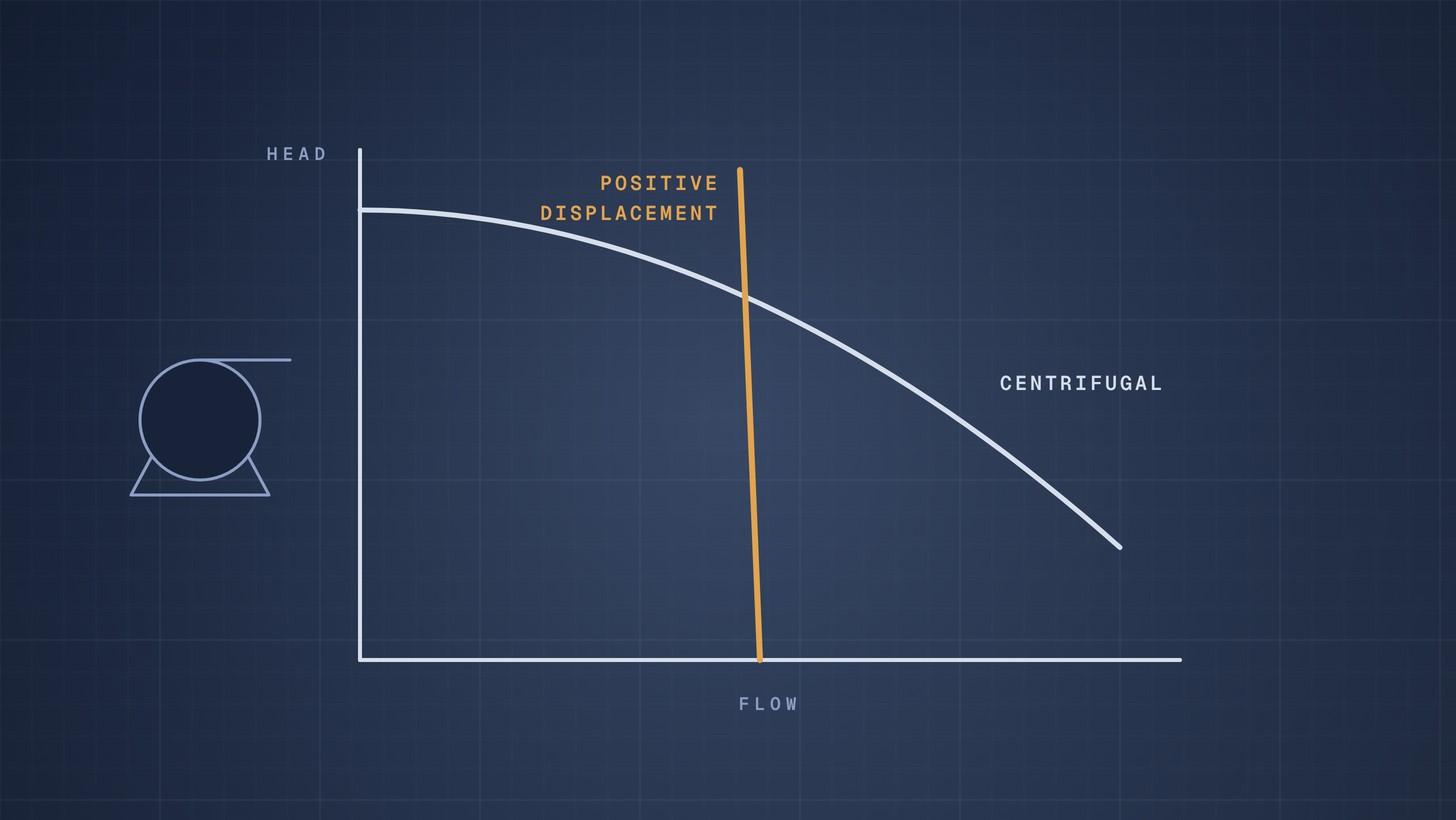
Centrifugal vs Positive Displacement Pumps: How to Choose
Centrifugal pumps suit thin liquids at steady duty; positive displacement pumps suit viscous, shear sensitive or metered duties. Here is how to choose before the RFQ.
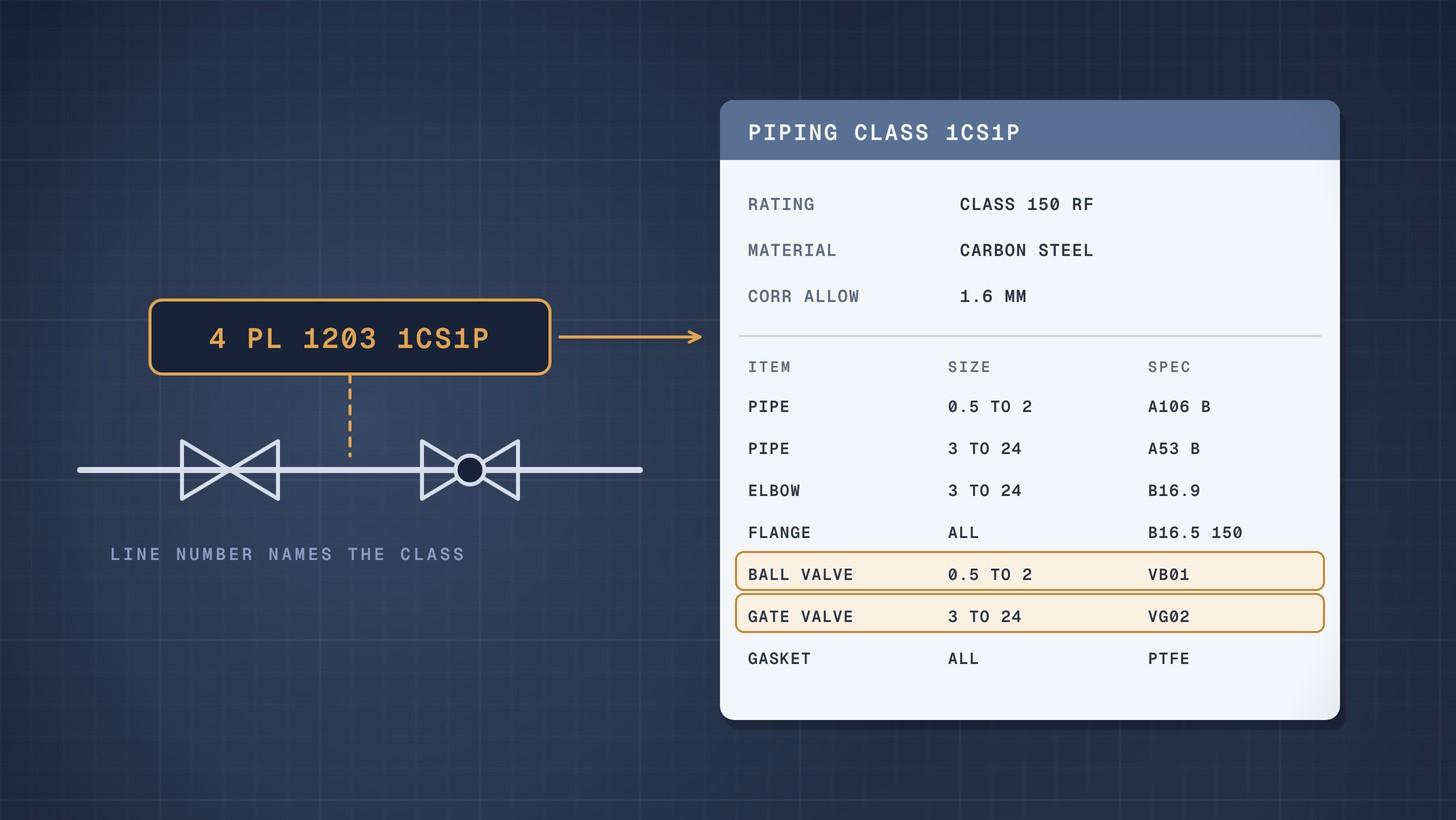
Piping Class Explained: Reading a Pipe Specification Before You Buy
A piping class is the project's rulebook for one service: rating, material, corrosion allowance and every allowed component by size. Here is how to read one before you buy valves and fittings.
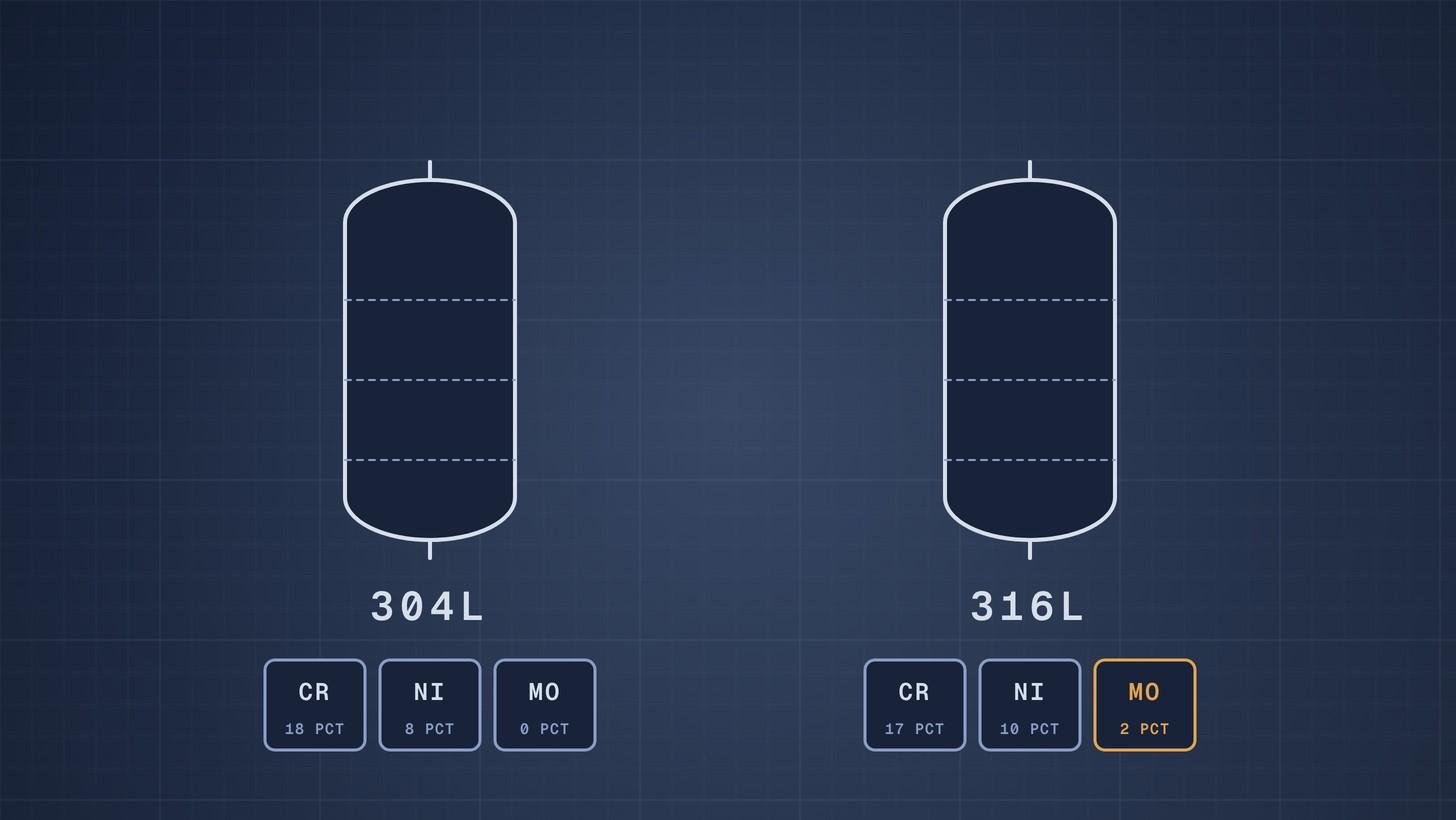
316L vs 304 Stainless Steel for Welded Process Equipment
316L costs more because of nickel and molybdenum, and earns it in chlorides. 304 is fine for plenty of duties. Here is how to choose for welded equipment, and what the price gap really is.
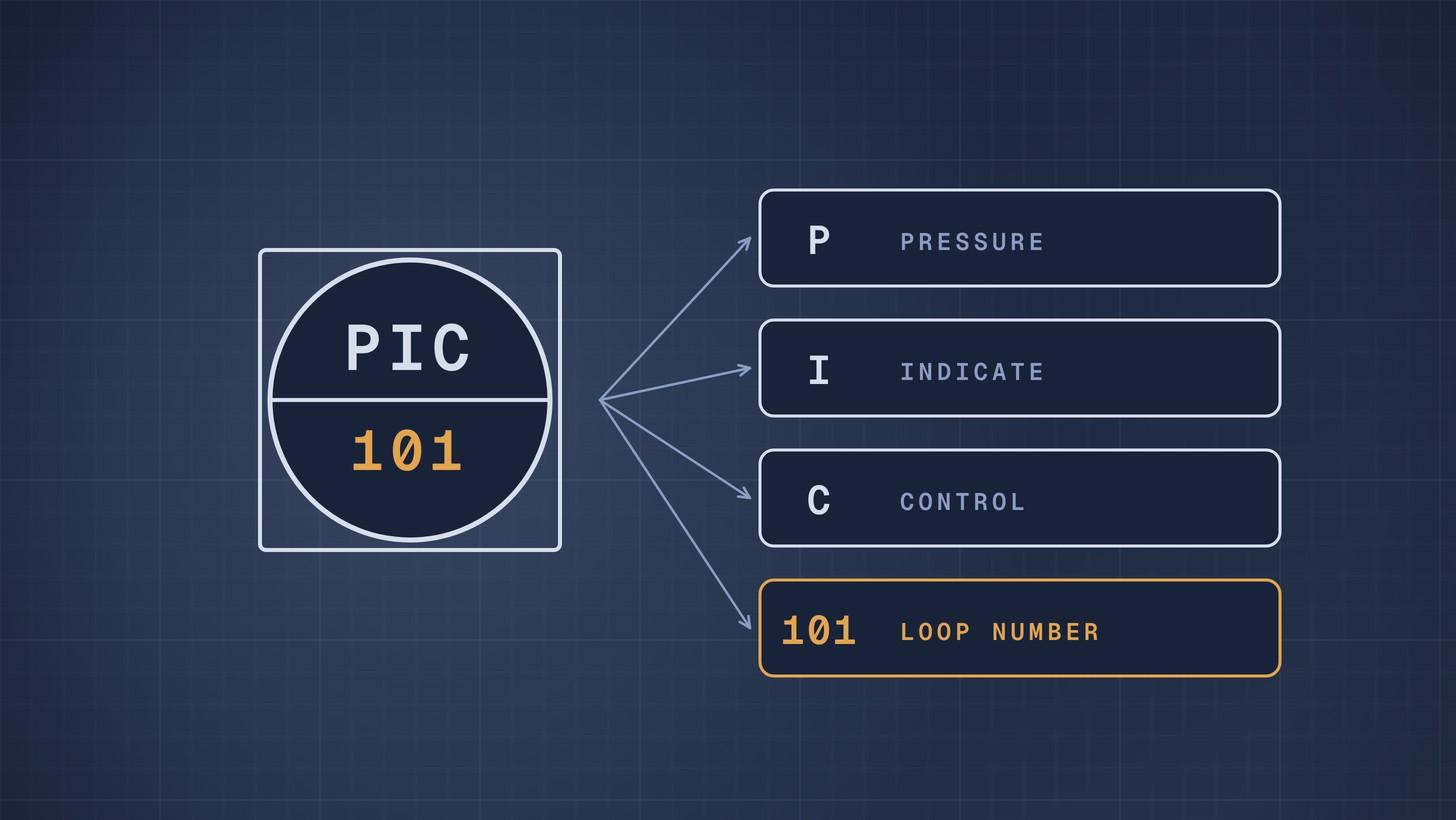
ISA 5.1 Instrument Tag Numbers Decoded
PIC 101, FT 201, LSHH 410: every instrument tag follows the same ISA 5.1 grammar. Here is how to decode it, with a table, and how to tell which tags become purchase lines.
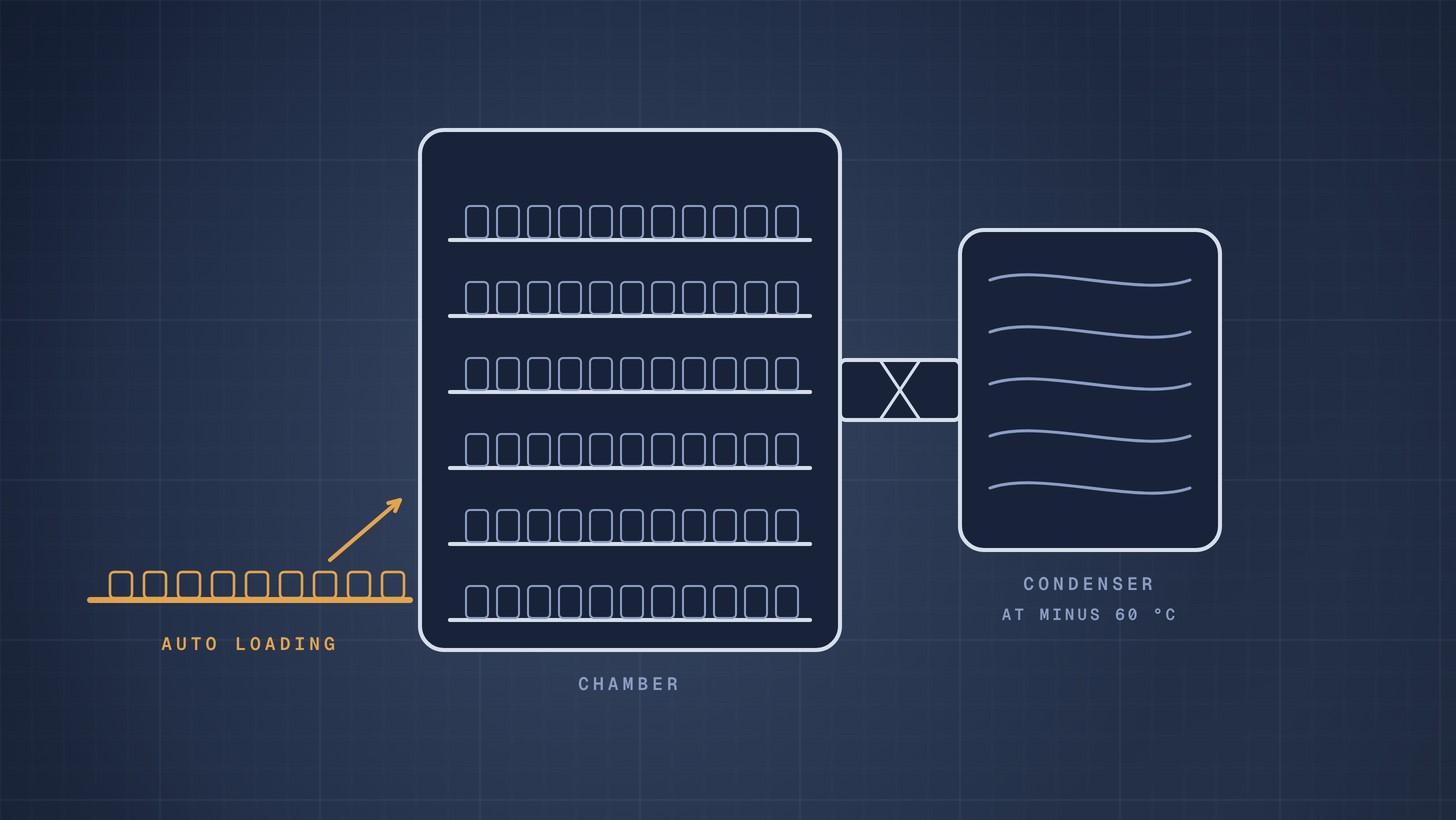
Pharmaceutical Freeze Dryers: What to Specify Before You Buy
A production freeze dryer is one of the most expensive and longest lead items in a sterile plant. Here is what to specify in the URS, what Annex 1 changed, and how to compare bids.
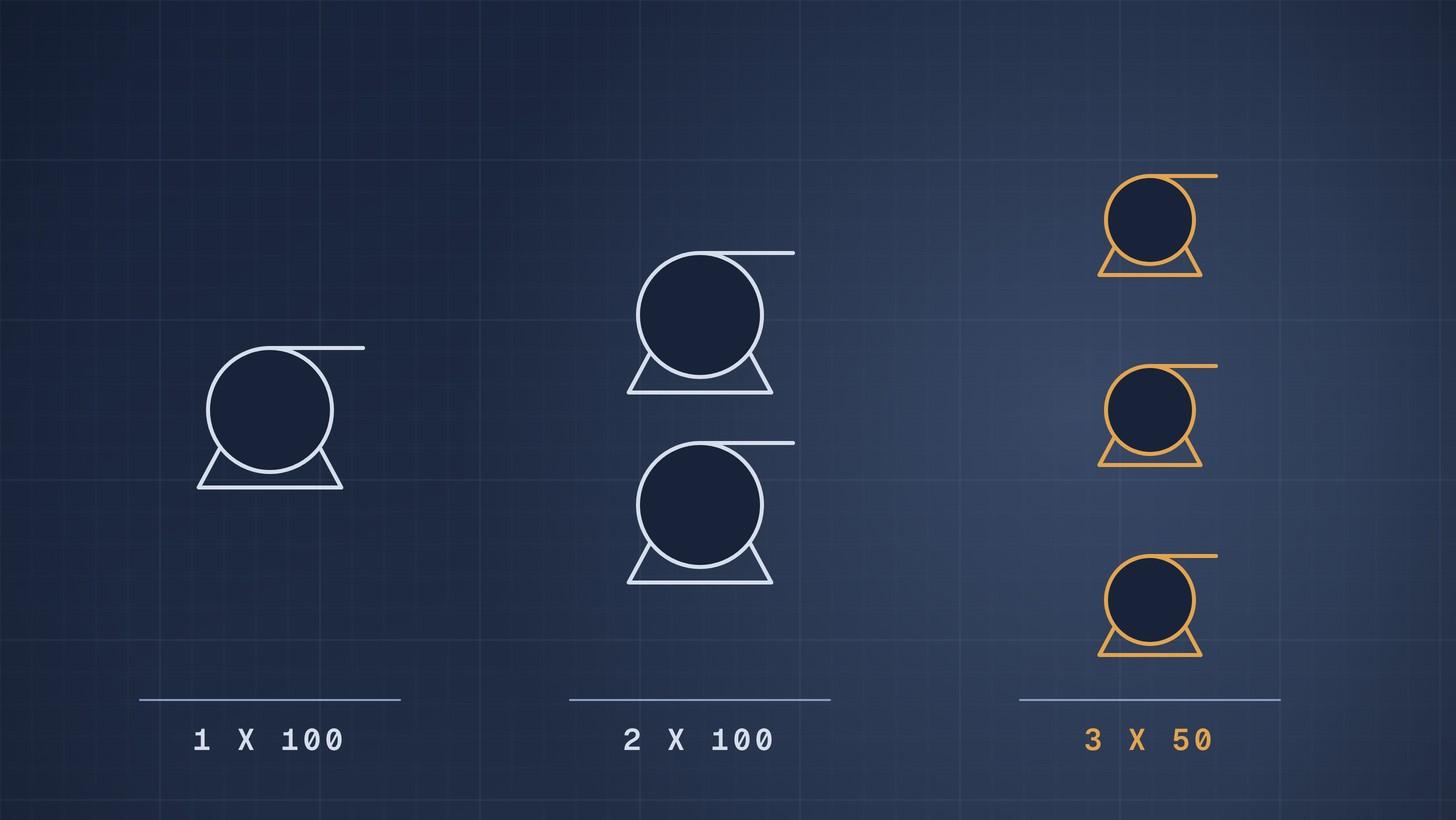
Sparing Philosophy: N+1, 2 × 100% and 3 × 50% for Pumps and Packages
Sparing decides how many pumps go on the equipment list and in the RFQ. Here is what N+1, 2 × 100% and 3 × 50% mean, with availability and cost worked through.
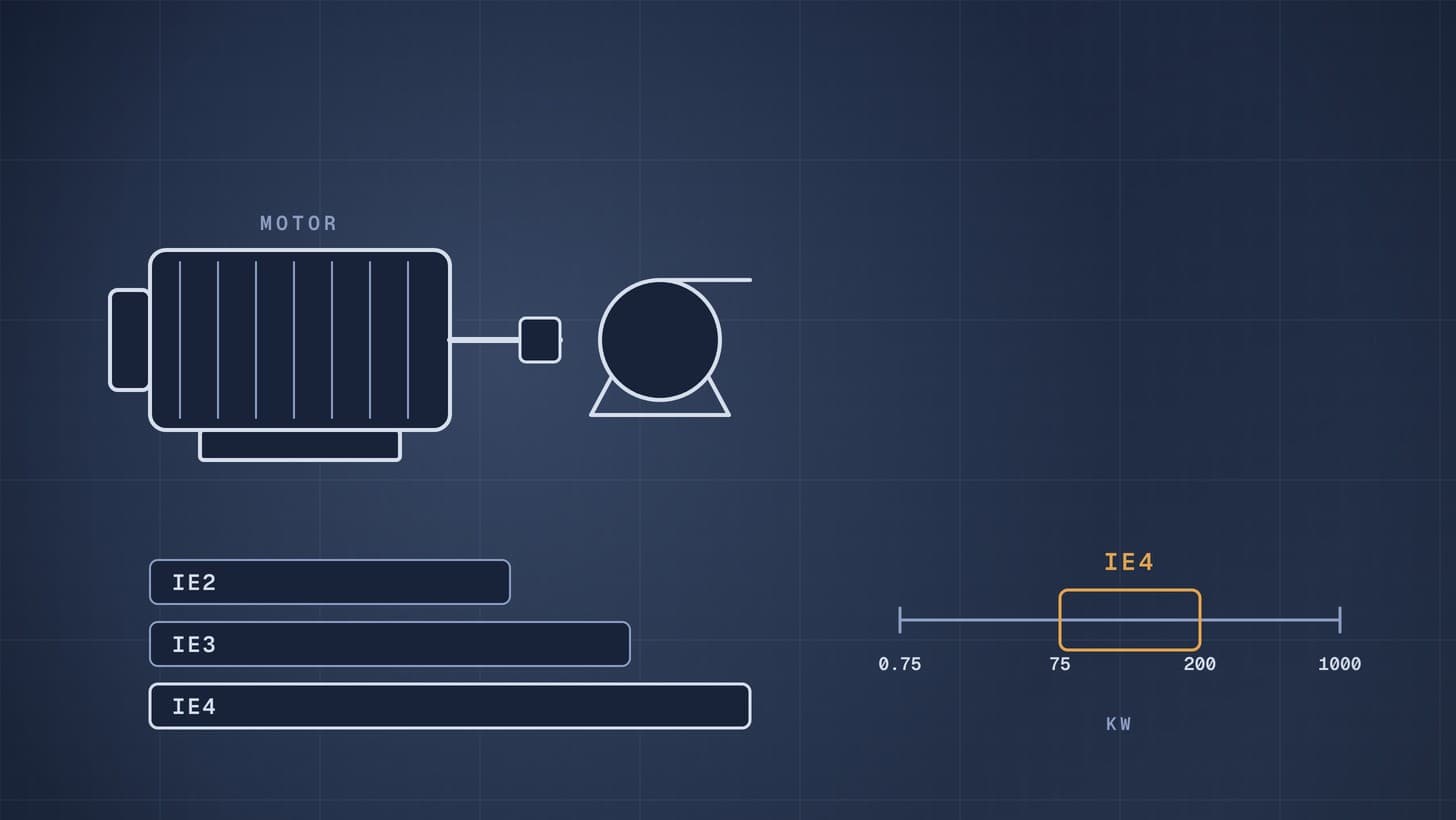
IE3 vs IE4 Motors: What EU 2019/1781 and the GB Rules Require
Which motor efficiency class the EU and GB ecodesign rules require by power and date, the exclusions that matter on chemical plants, and the running cost of IE3 against IE4.
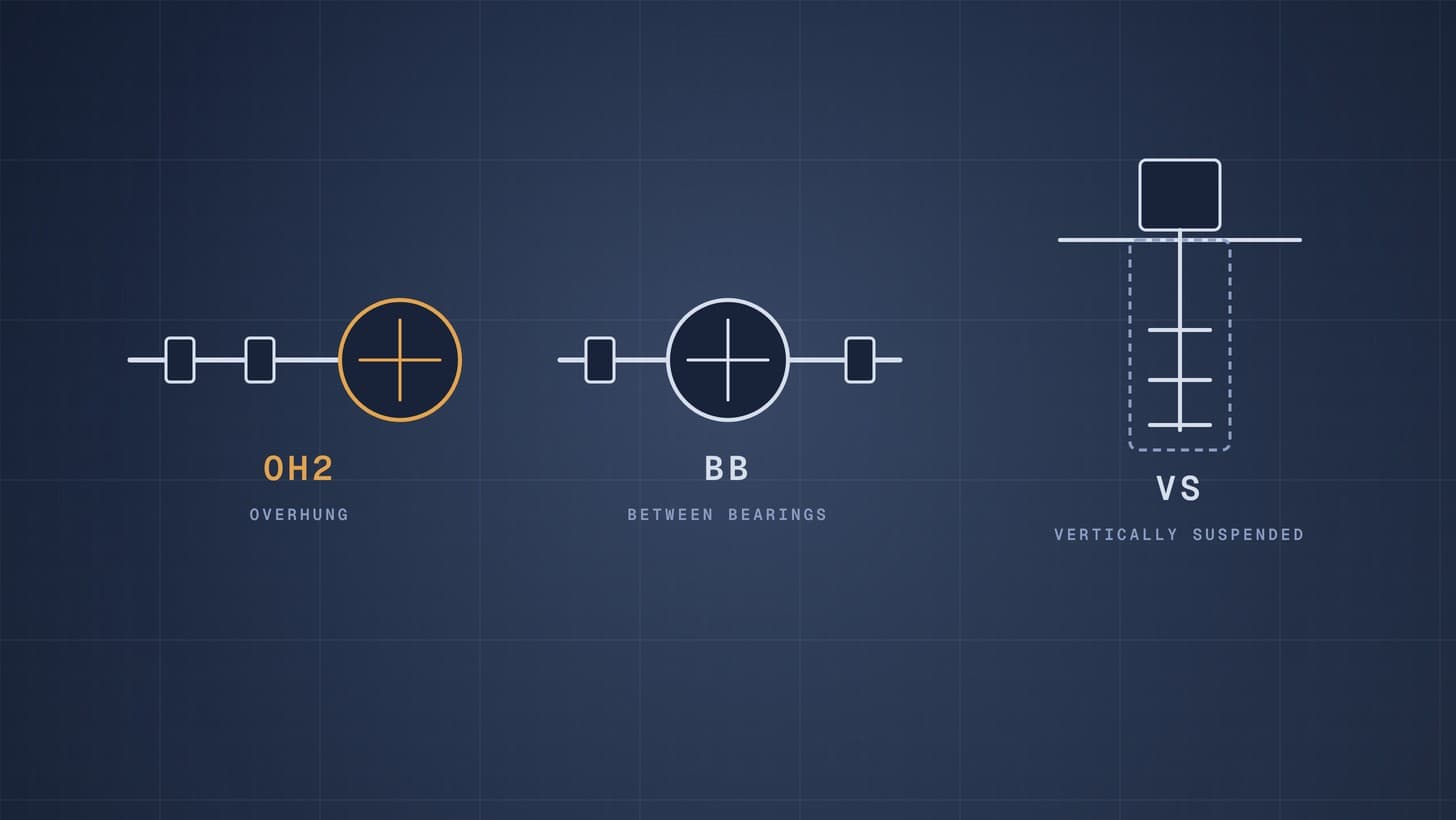
API 610 Pump Types Explained: OH, BB and VS (OH2, BB2, BB5 and More)
What each API 610 pump type means, from OH1 to VS7, what each suits, when API 610 applies at all, and how to use the type code in an RFQ so bids are comparable.
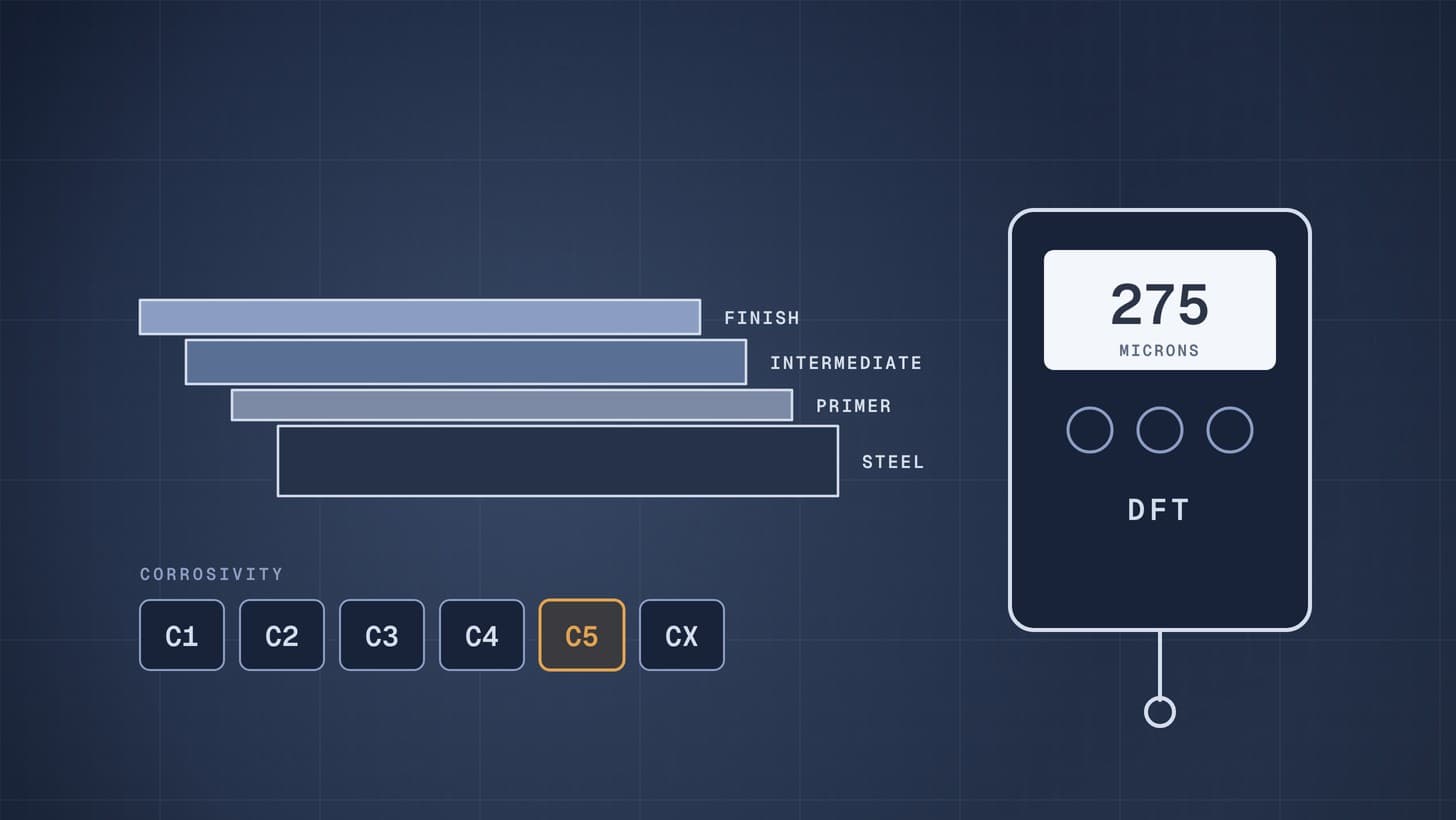
ISO 12944 Coating Specification for Process Equipment: C1 to CX Explained
How to choose the ISO 12944 corrosivity category and durability range, write the coating line in an RFQ, check dry film thickness to ISO 19840 and settle exclusions.
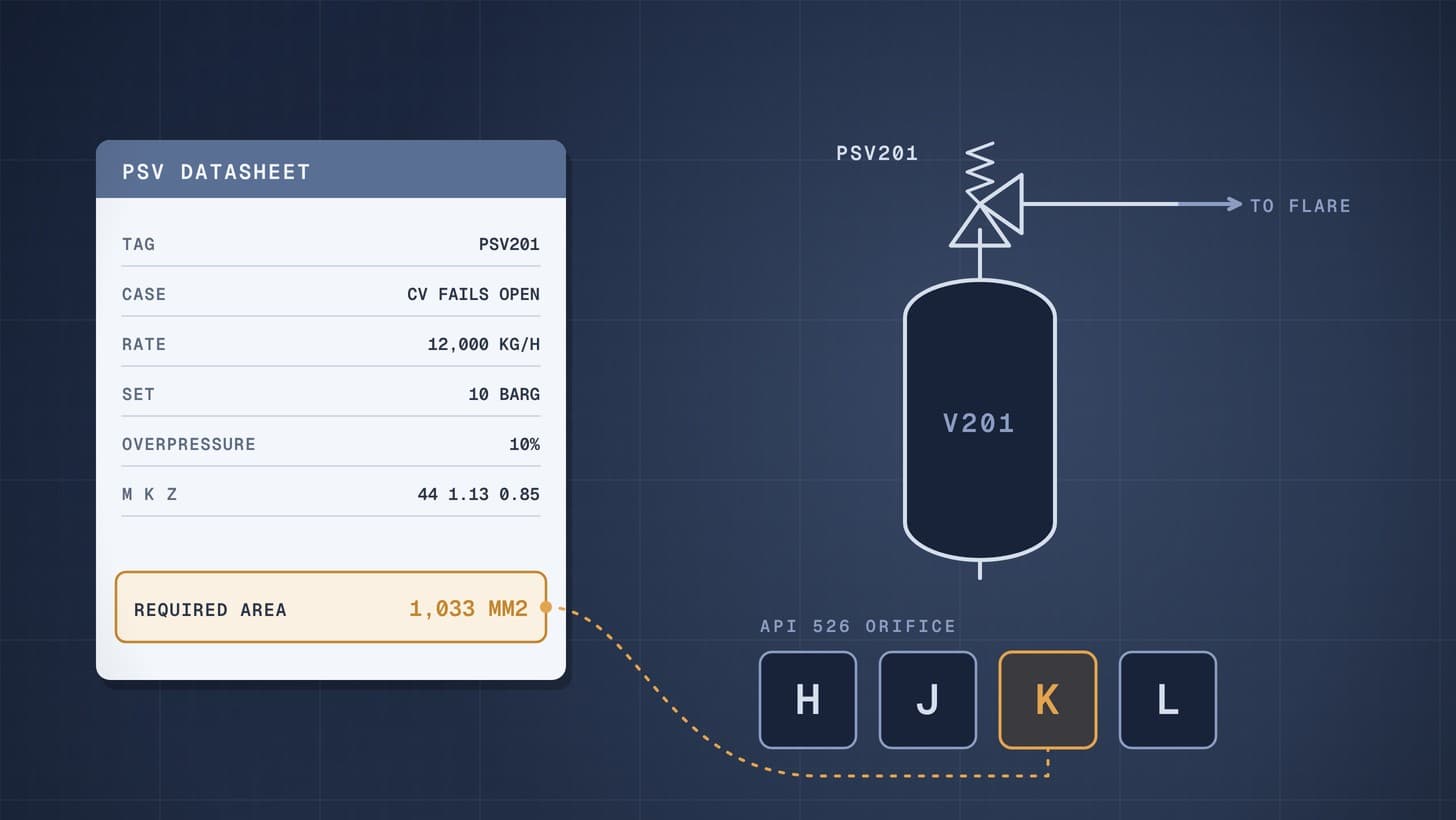
Relief Valve Sizing to API 520: Worked Examples and the PSV Datasheet
Two worked API 520 relief valve sizing examples, one gas and one liquid, how to pick the API 526 orifice letter, and the PSV datasheet fields every RFQ needs.
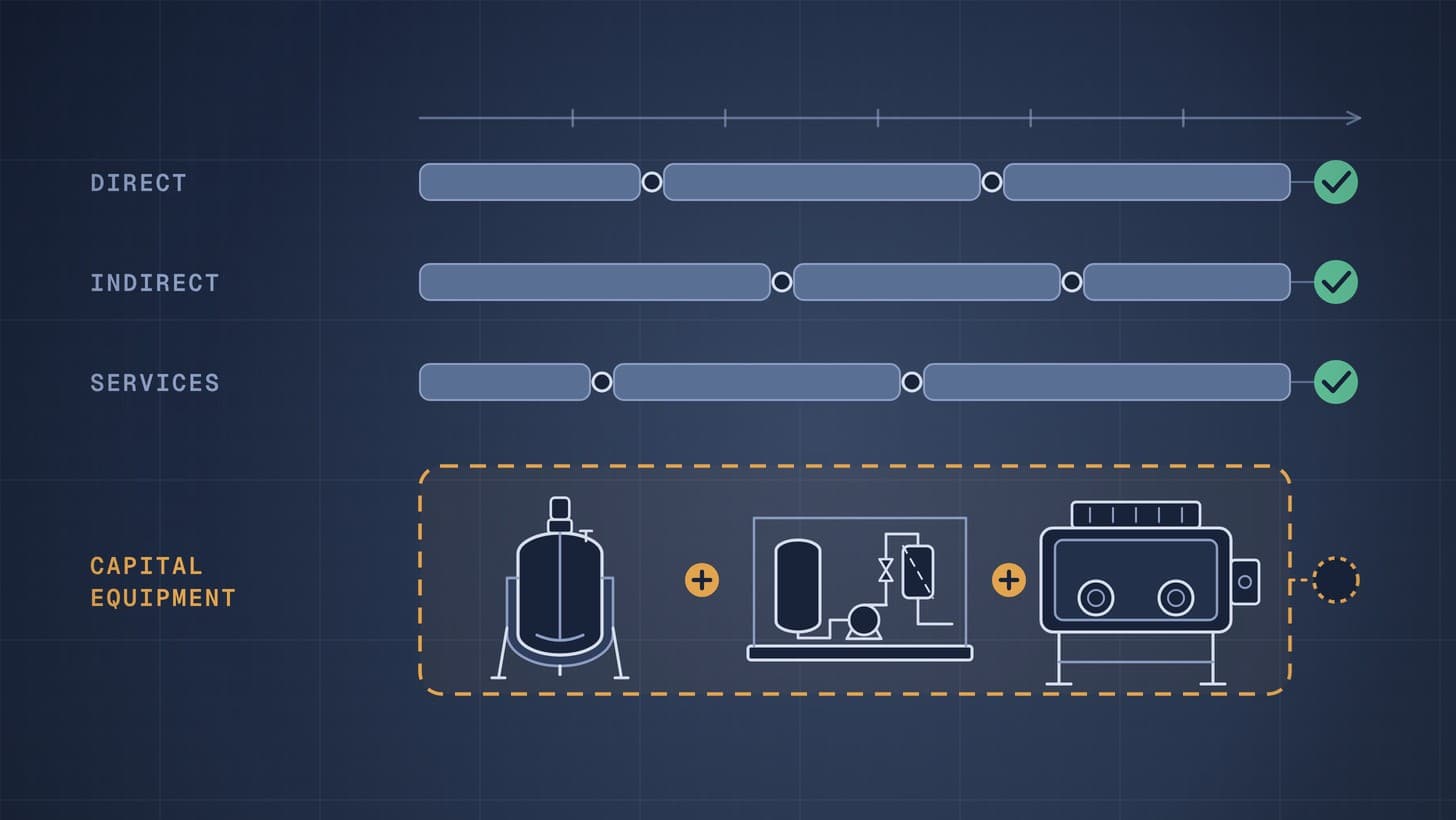
Pharma Procurement Transformation: Closing the Capital Equipment Gap
On our reading of BCG and McKinsey research, pharma procurement transformations often leave out capital equipment. Why the gap exists, how to close it under GMP, and a maturity checklist.
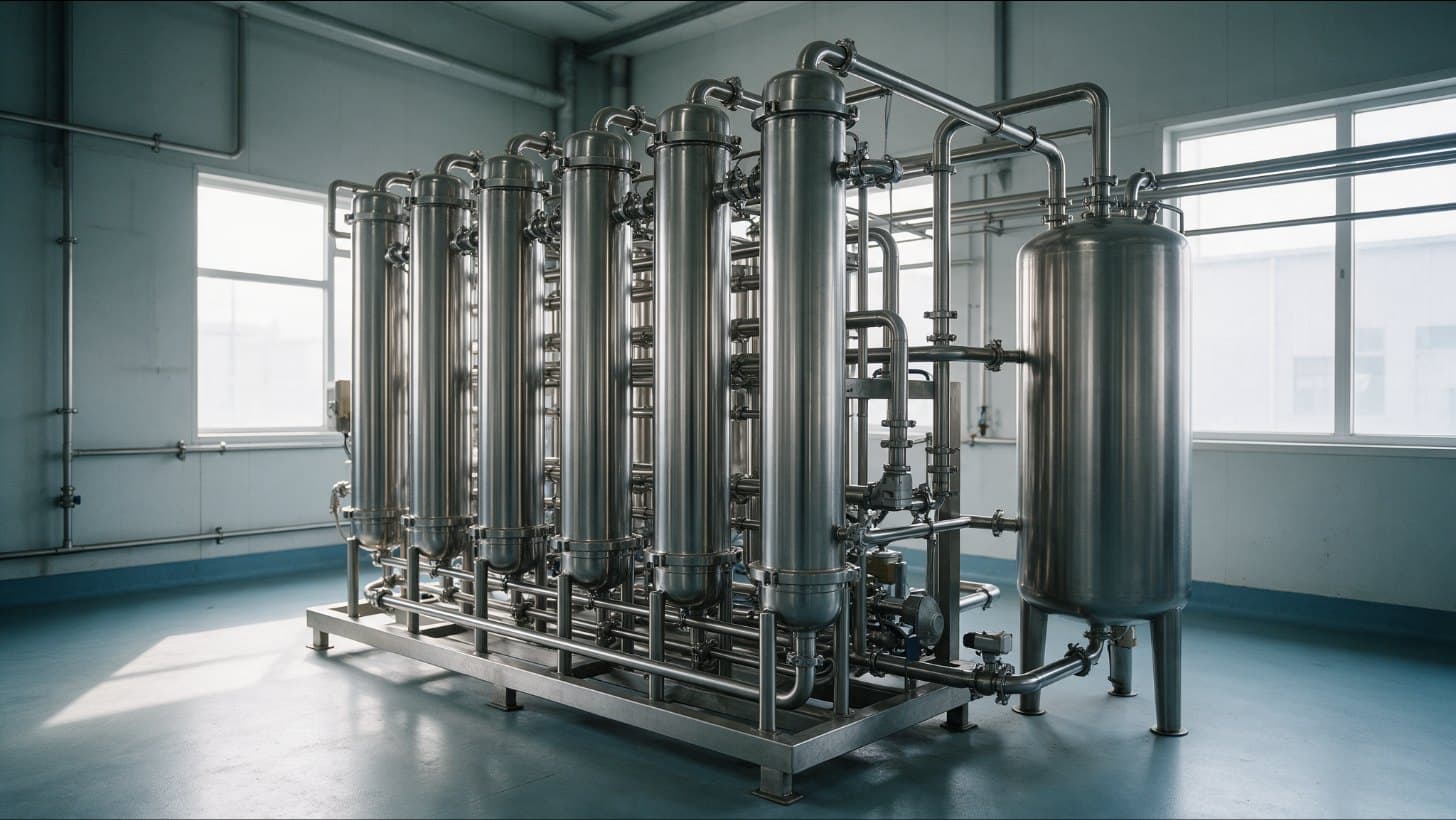
Pharmaceutical Water Systems: Buying Purified Water, WFI and Pure Steam Generation
Which water grade each use needs, how multiple effect distillation, vapour compression and membrane WFI compare on cost and risk, and what Annex 1 expects of the loop.
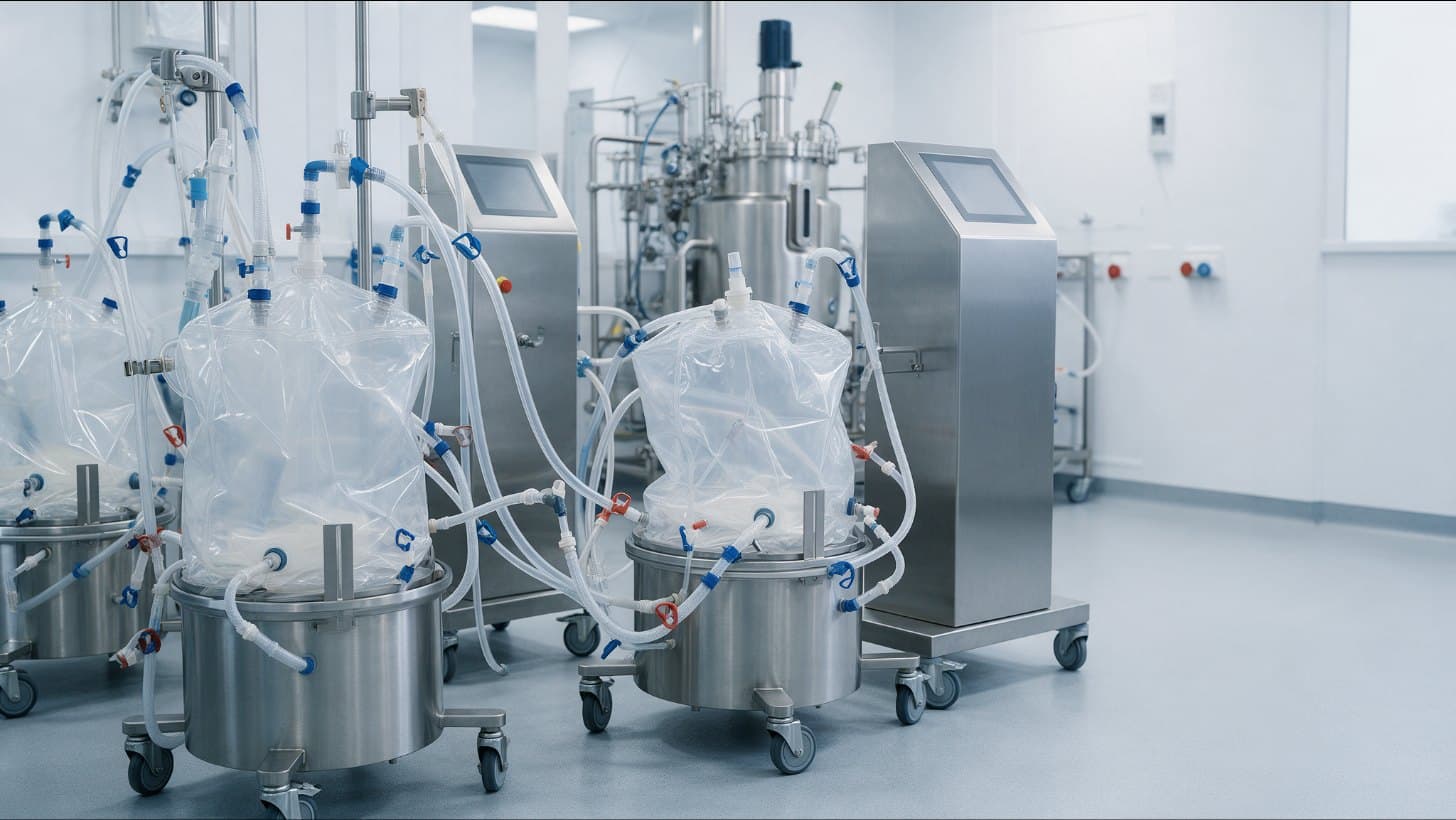
Single Use vs Stainless Steel Bioprocessing: How to Choose and What to Buy
Where single use beats stainless steel on cost, speed and footprint, where steel still wins, how to compare total cost, and how to buy without supply or leachables surprises.
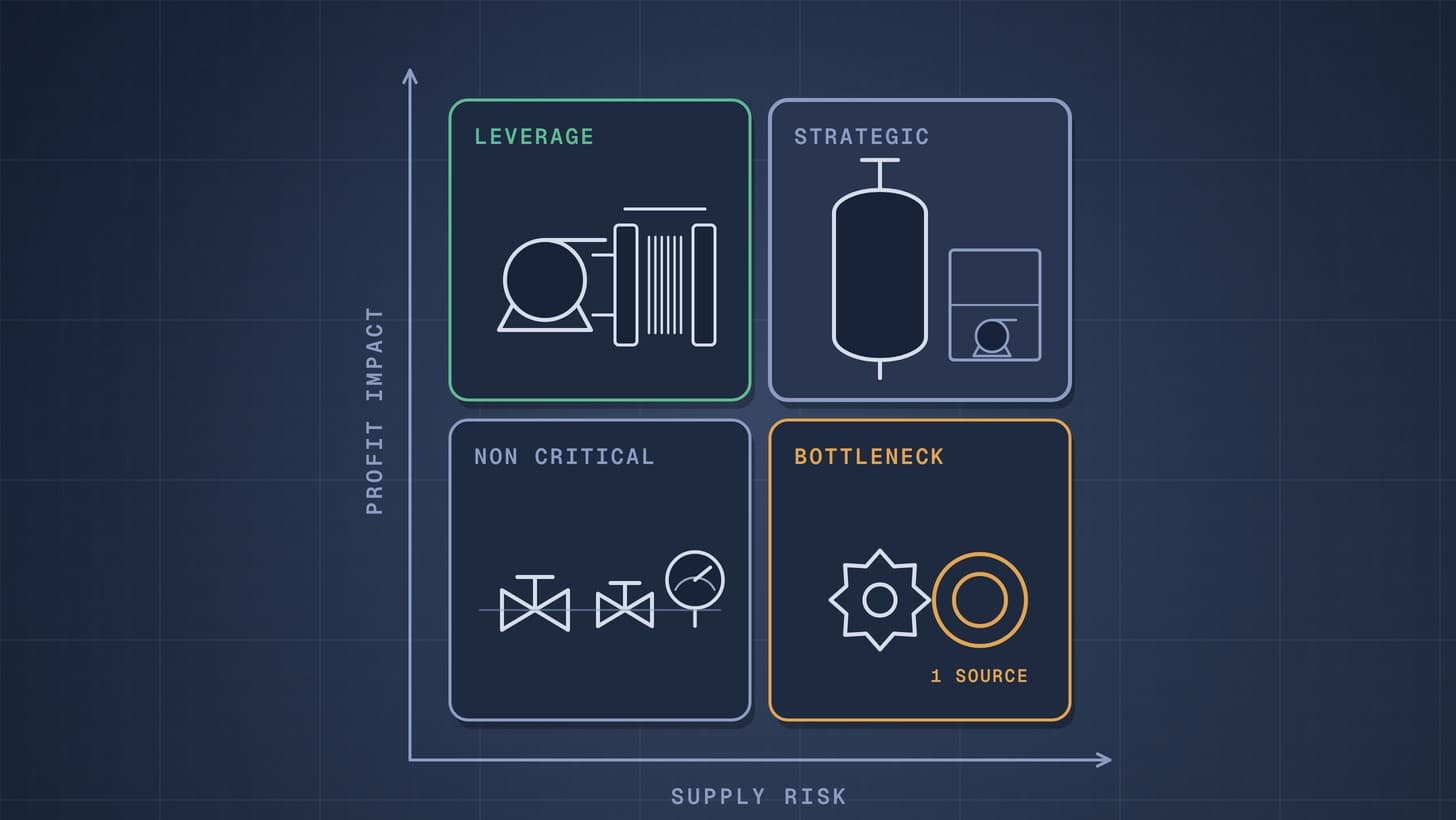
Category Strategy for Engineered Process Equipment: A Step by Step Method
How to build a category strategy for pumps, heat exchangers, vessels, valves and skids: spend and pipeline data, market analysis, Kraljic positioning, sourcing routes and a one page template.
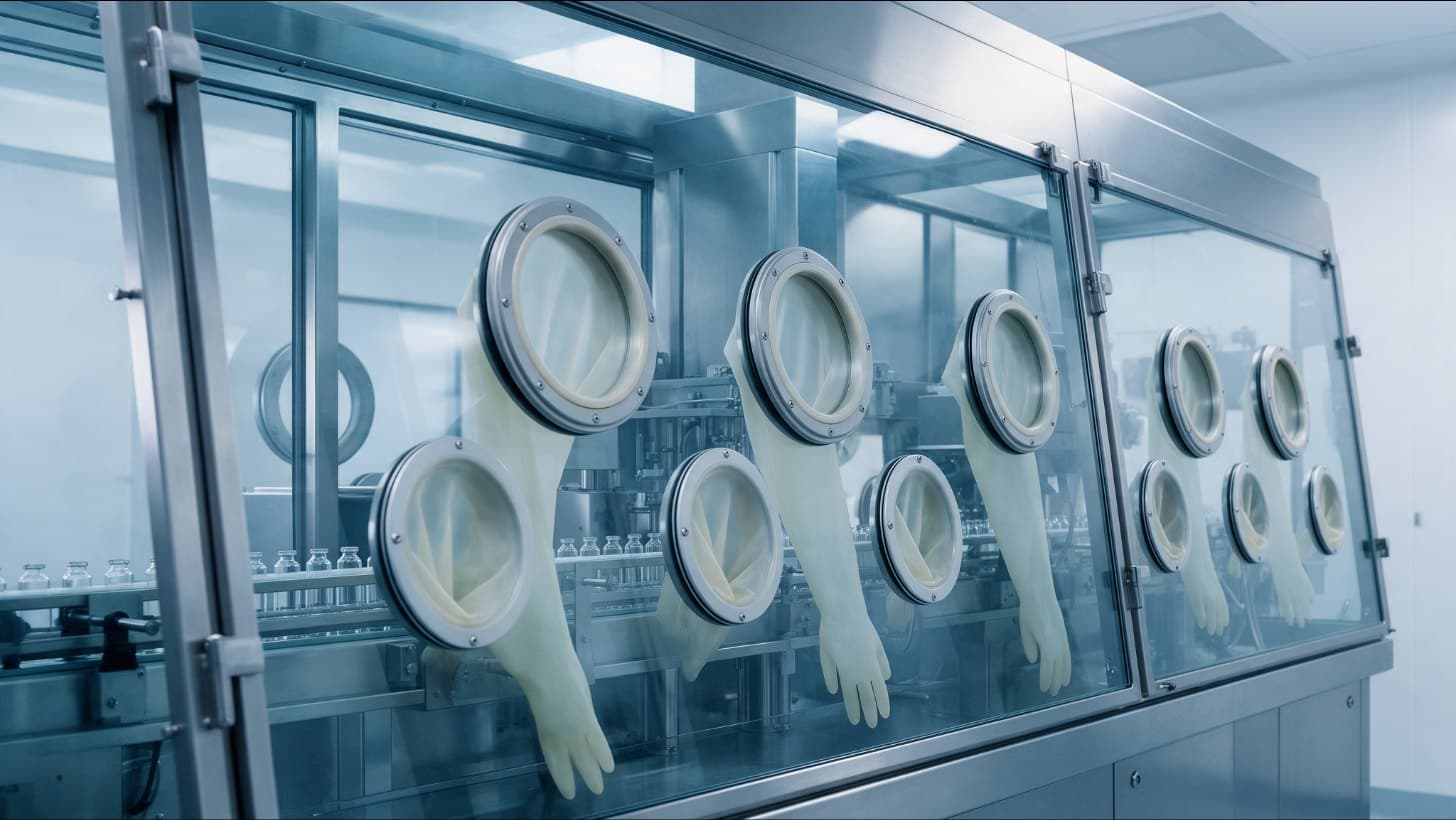
RABS vs Isolators: Choosing a Barrier System Under EU GMP Annex 1
How restricted access barrier systems and isolators differ on background grade, decontamination, gloves, changeover and cost under the 2022 EU GMP Annex 1, and what to ask suppliers before you choose.
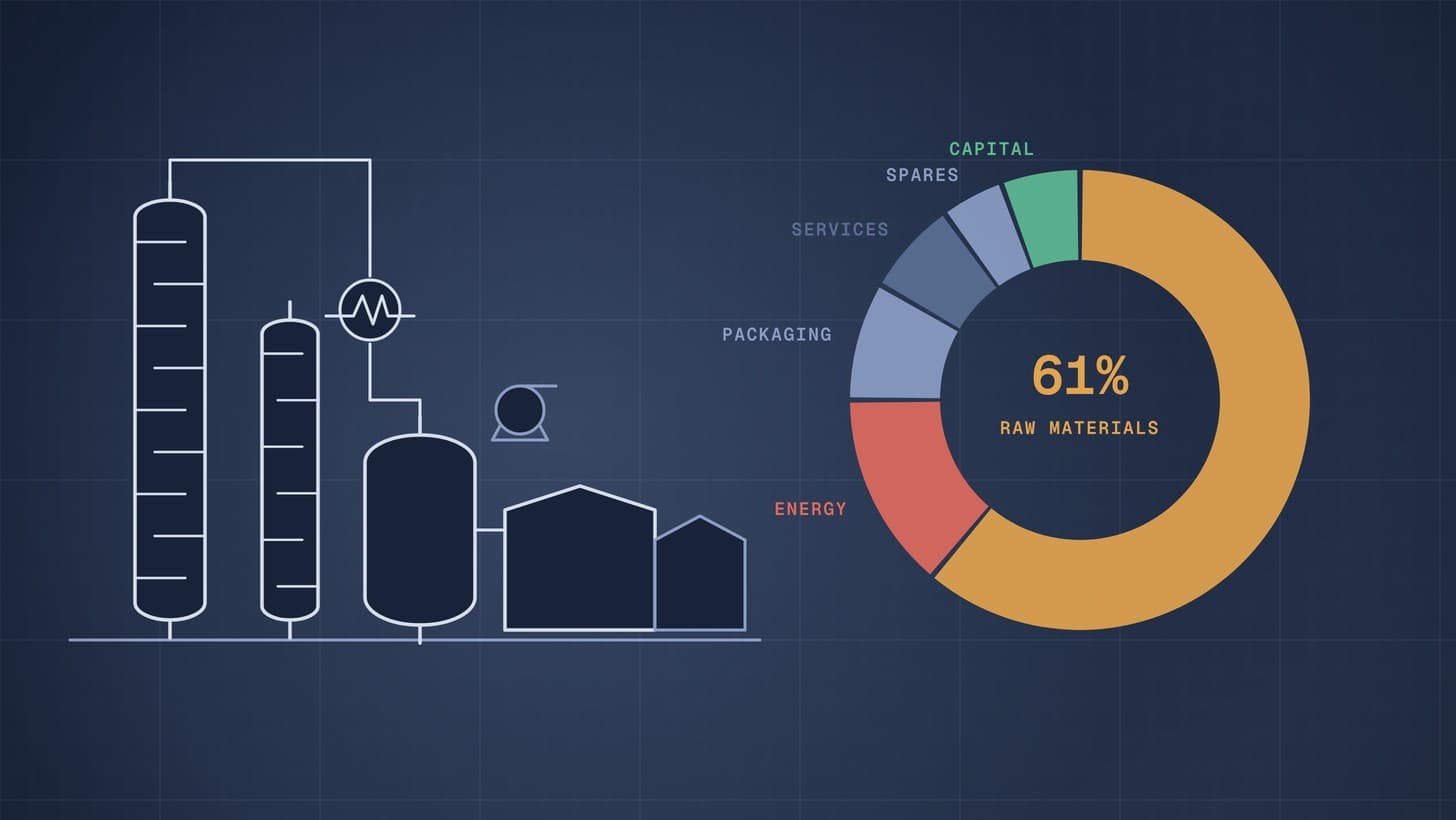
Procurement in the Chemical Industry: Categories, Risks and Capital Equipment
How chemical companies spend, from formula priced feedstocks to spares and capital equipment, where the savings and risks lie in each category, and what leading procurement teams do differently.
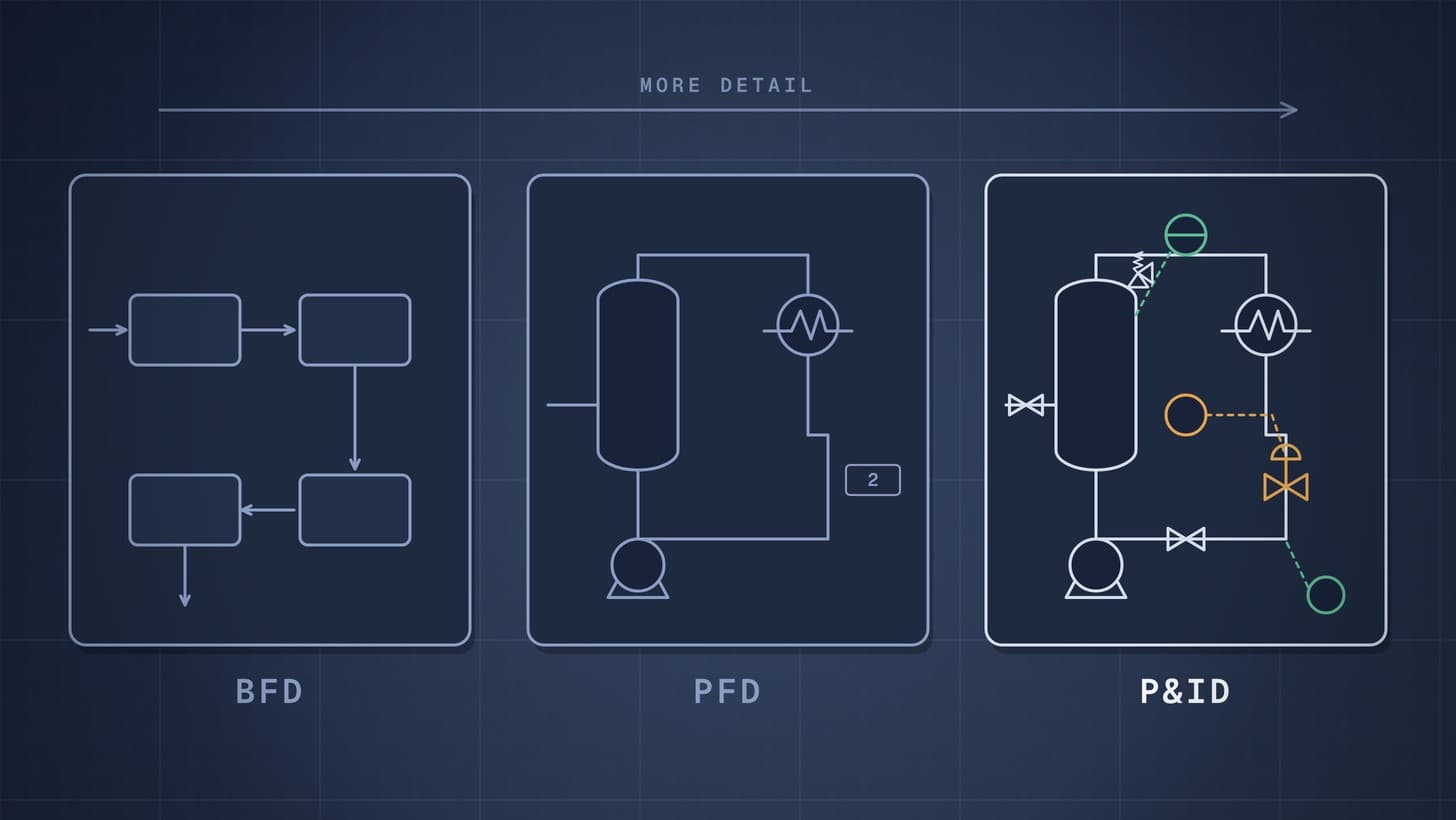
PFD vs P&ID vs Block Flow Diagram: Which Drawing a Quote Needs
What a block flow diagram, a PFD and a P&ID each show and leave out, when each exists, and which one a supplier needs to price equipment at each estimate stage.
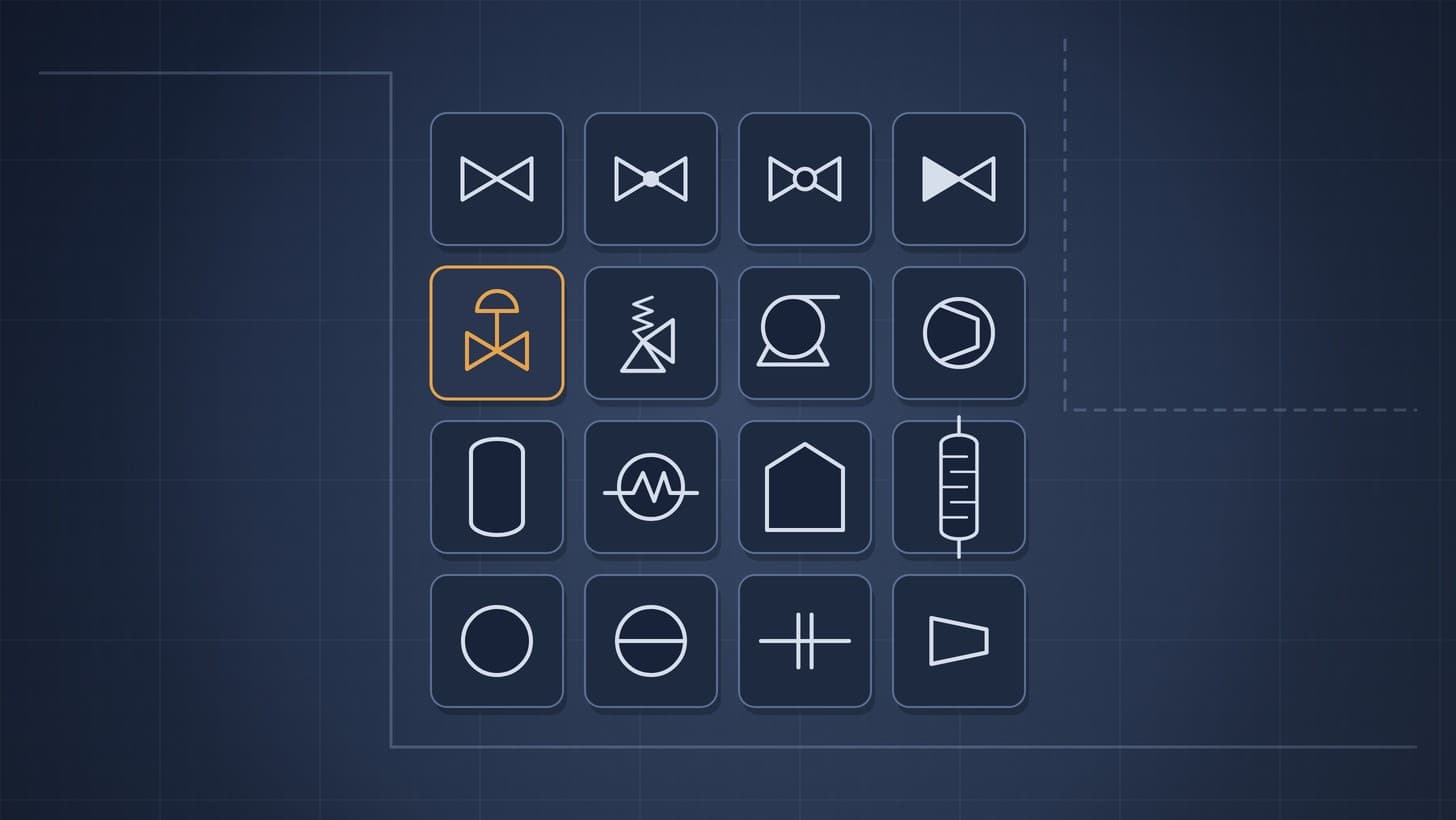
P&ID Symbols: Valves, Pumps, Vessels and Instruments
A plain reference to common P&ID symbols for lines, valves, pumps, vessels, heat exchangers and instruments, and what each tells a buyer about what must be quoted.
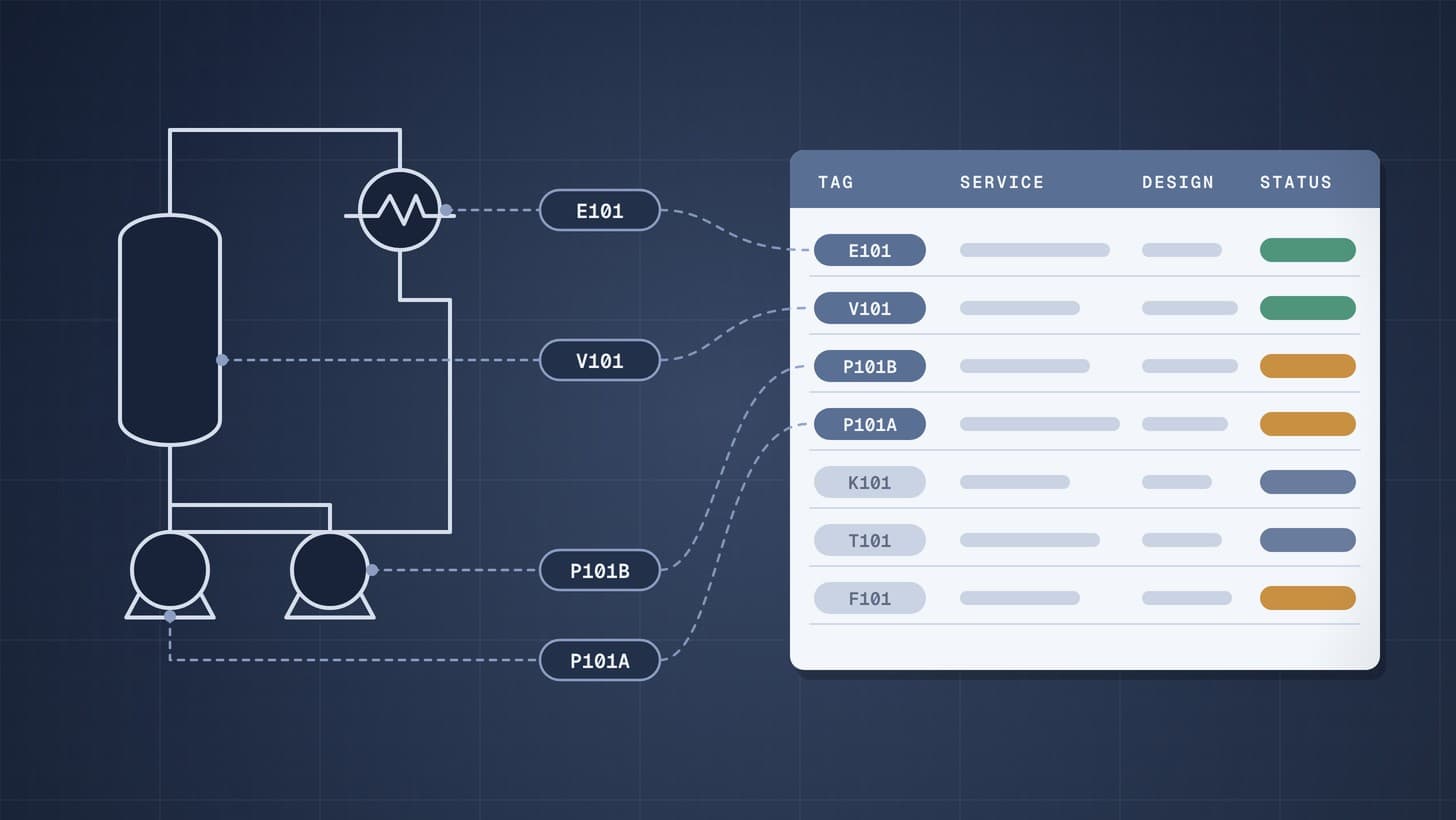
Process Equipment List: What to Include, with a Free Template
What a process equipment list is, the columns procurement actually needs, how to keep it under revision control, and how it turns into RFQ packages.
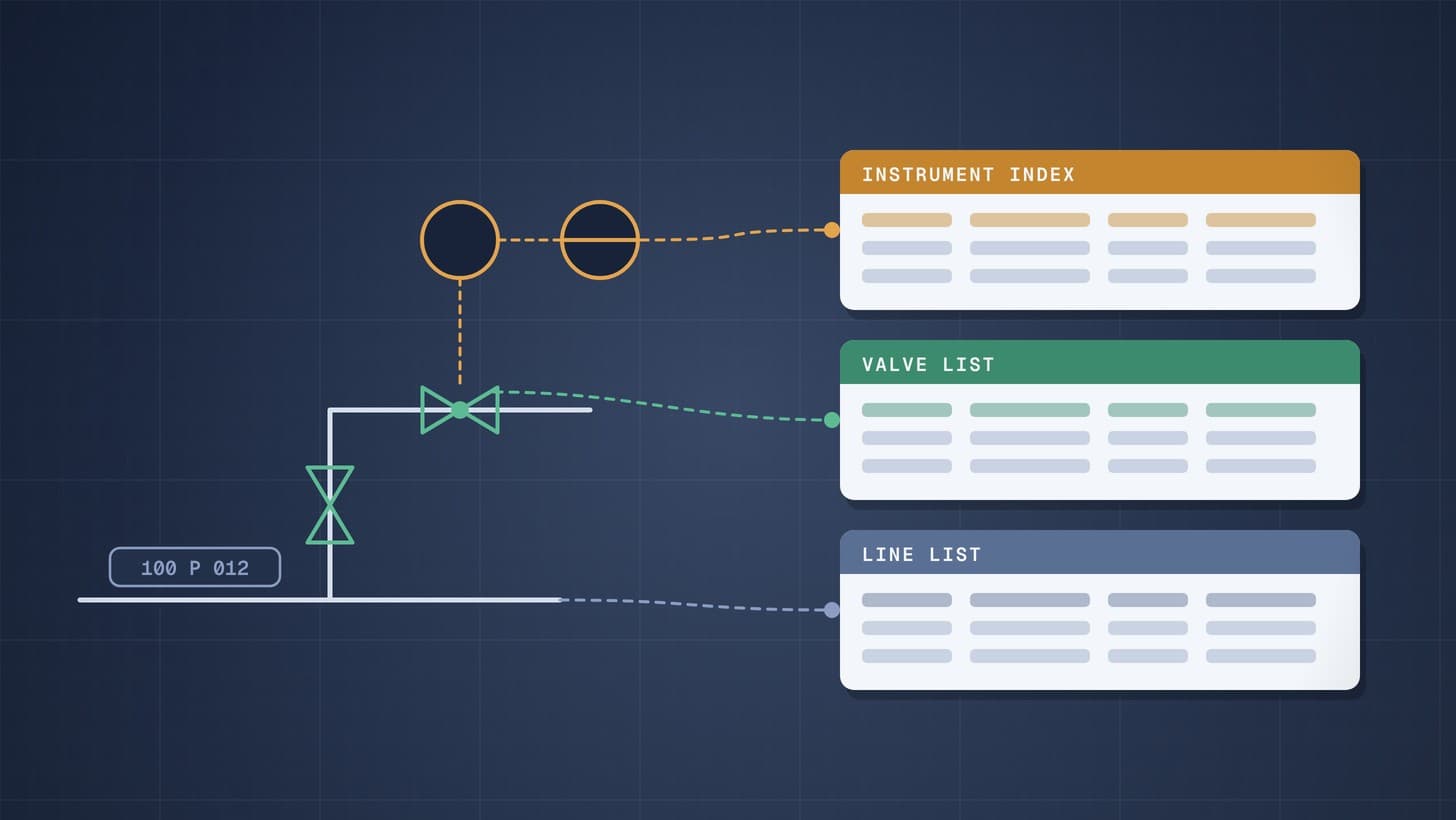
Line List, Valve List and Instrument Index Explained
The three engineering lists that sit beside every P&ID: what each contains, who owns it, how it is built, and how procurement turns it into purchase packages.
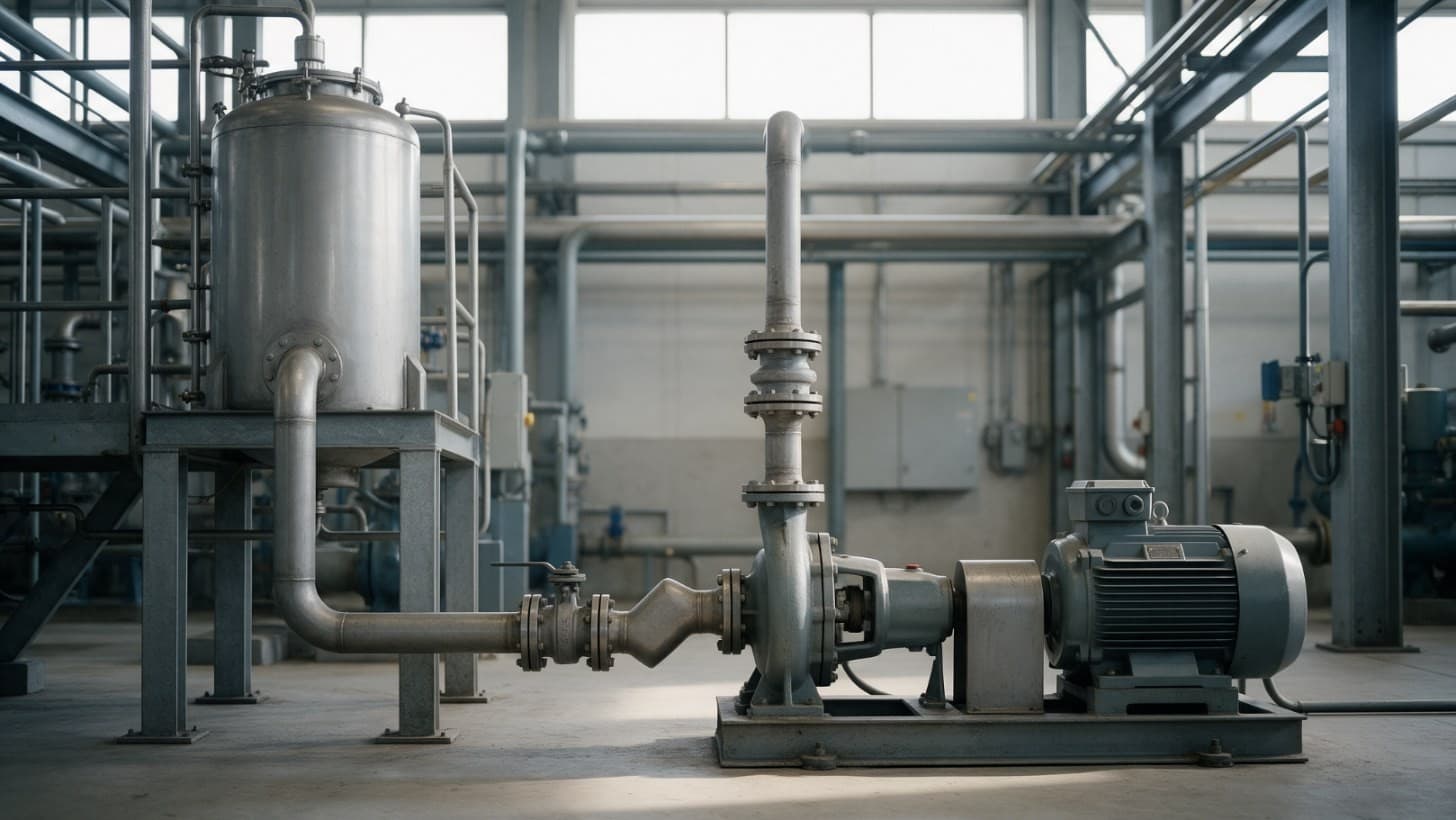
NPSH Explained: NPSHa vs NPSHr with a Worked Example
NPSHa is what your suction system gives a pump; NPSHr is what the pump needs. How to calculate NPSHa, what margin to ask for and how to check it on pump bids.
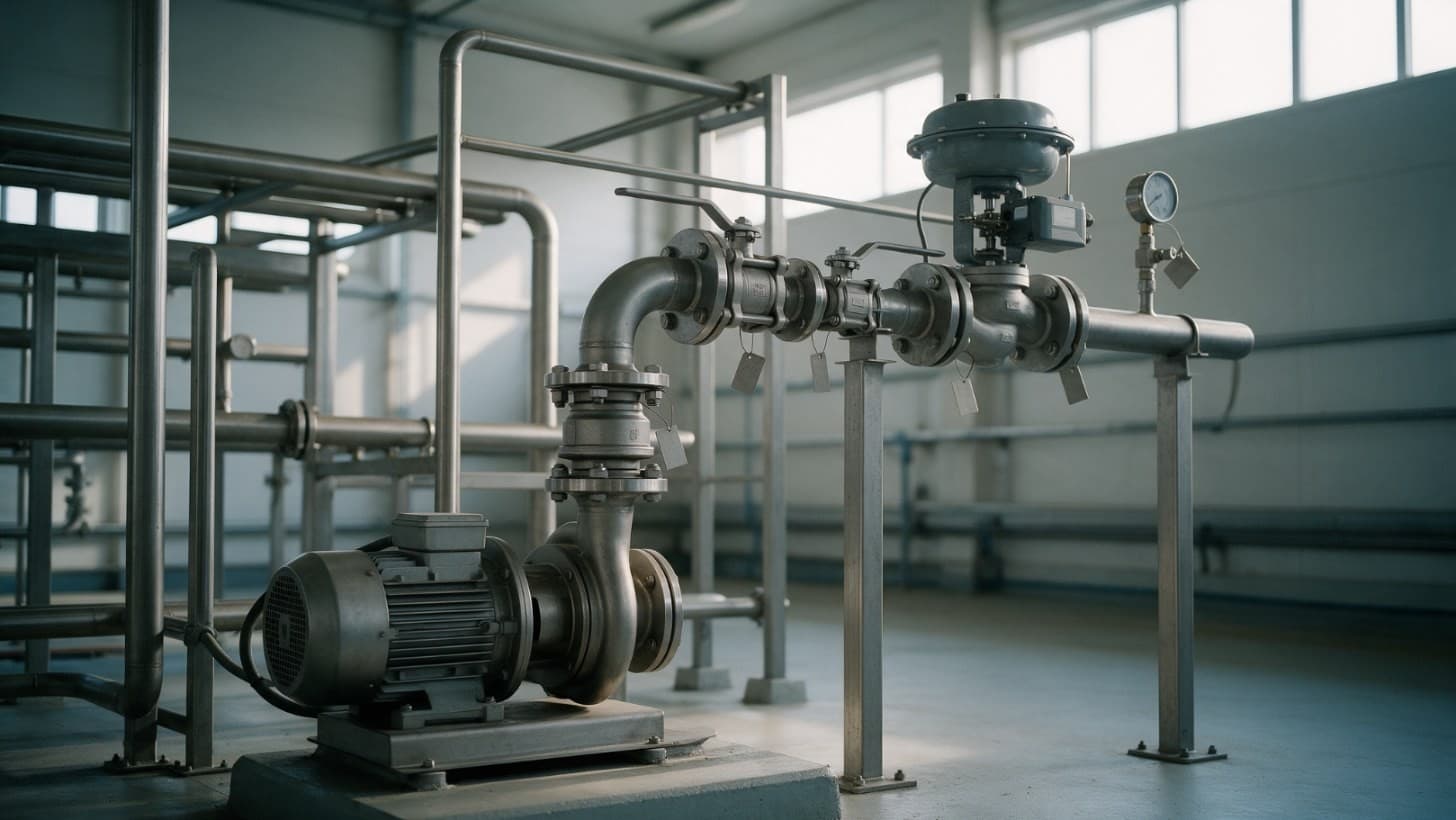
How to Read a P&ID: A Line by Line Guide for Engineers and Buyers
How to read a P&ID line by line: equipment tags, line numbers, valves and ISA instrument letters, and what a buyer takes from the drawing to build RFQs.
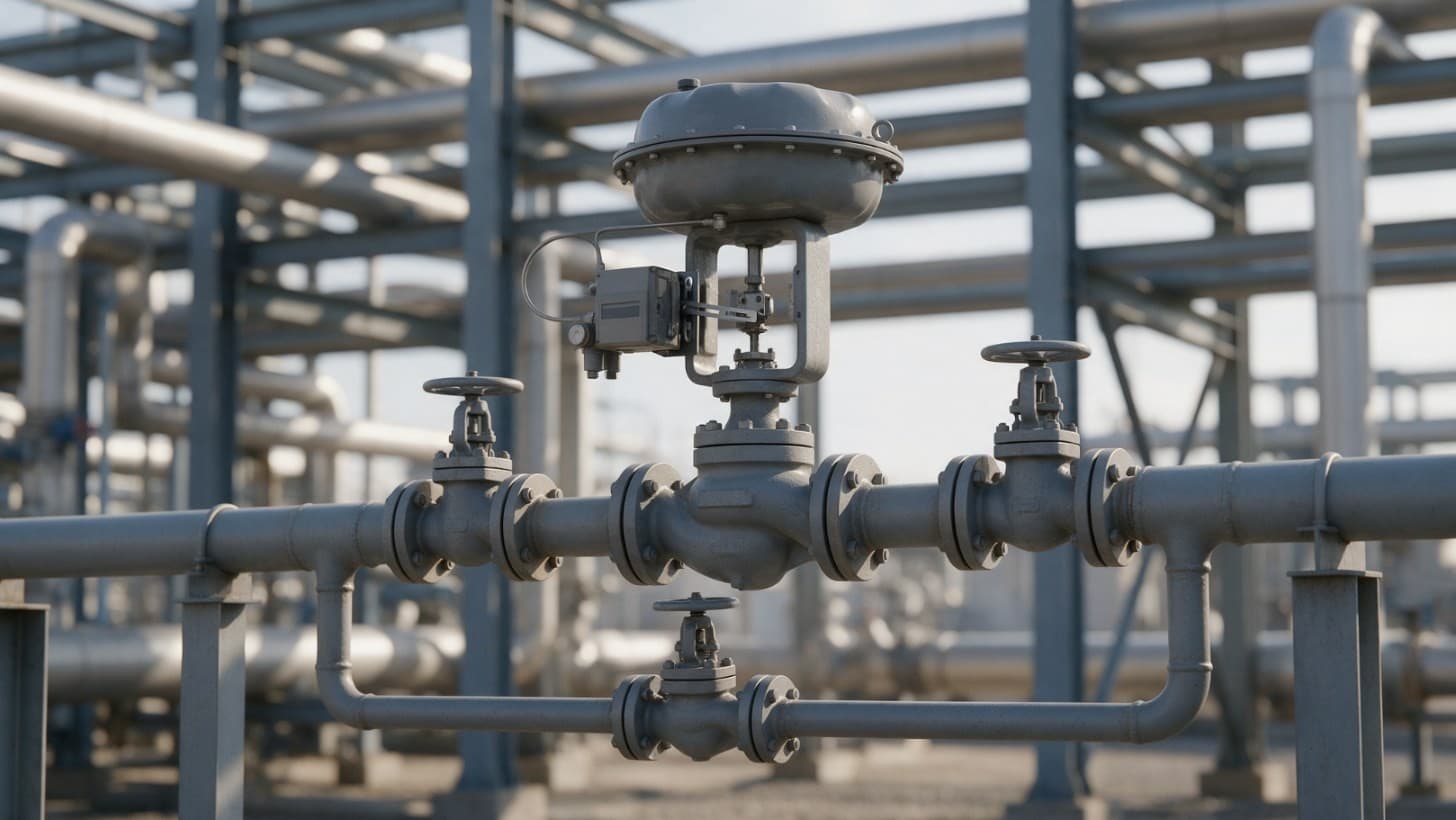
Control Valve Sizing: Kv and Cv Formula with a Worked Example
How to size a control valve for liquid: Kv and Cv defined, the sizing equation in metric and US units, choked flow checks, the datasheet a vendor needs and a worked example.

Technical Bid Evaluation for Process Equipment: Step by Step
A technical bid evaluation decides which bids meet your specification before prices are compared. The steps, who takes part, common mistakes and a pump example.
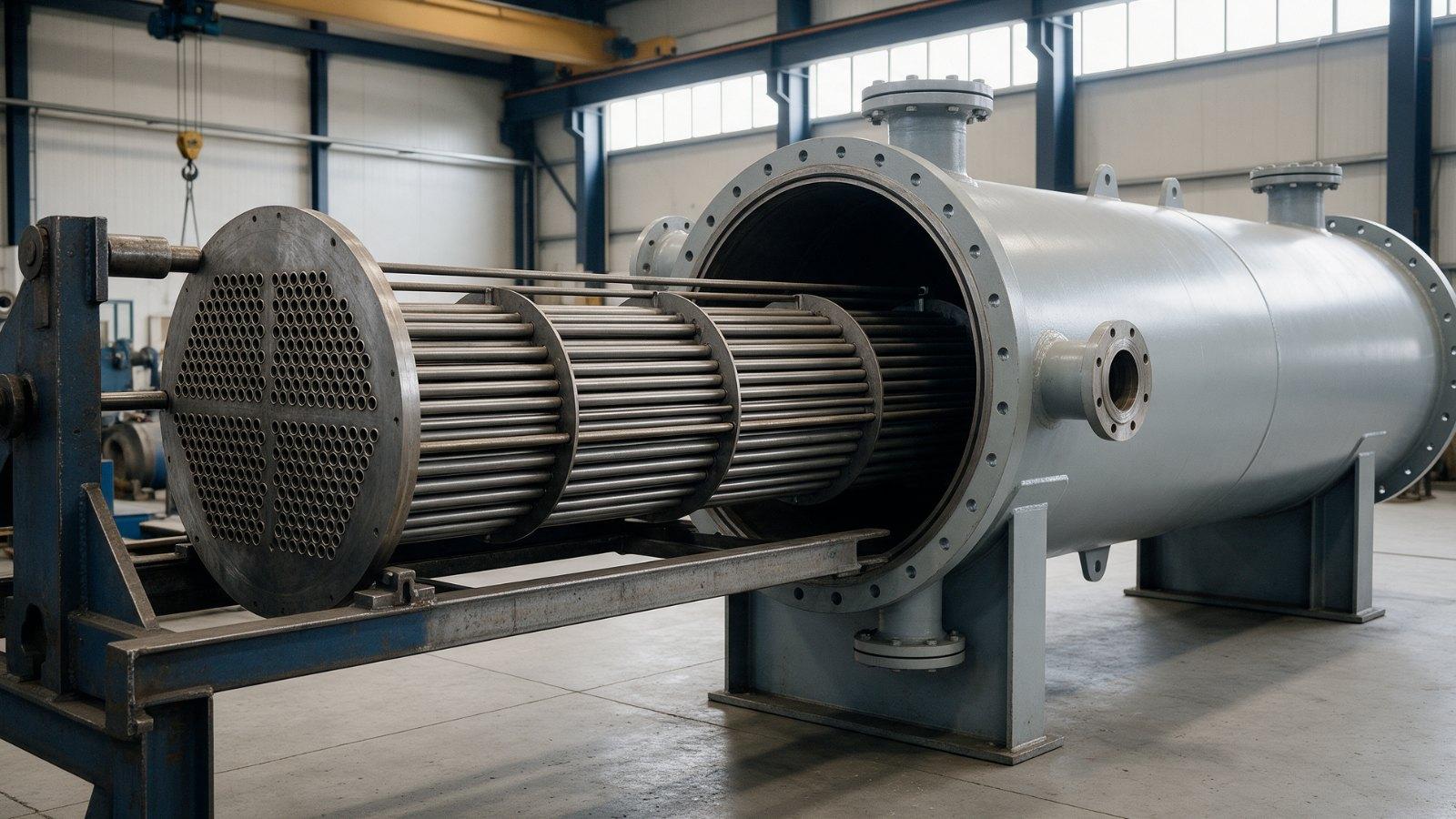
How to Compare Supplier Quotations and Choose the Right Bid
A structured framework for comparing supplier quotations beyond headline price: scope compliance, total cost of ownership, delivery risk, and commercial terms.