
Procurement in the Chemical Industry: Categories, Risks and Capital Equipment
How chemical companies spend, from formula priced feedstocks to spares and capital equipment, where the savings and risks lie in each category, and what leading procurement teams do differently.
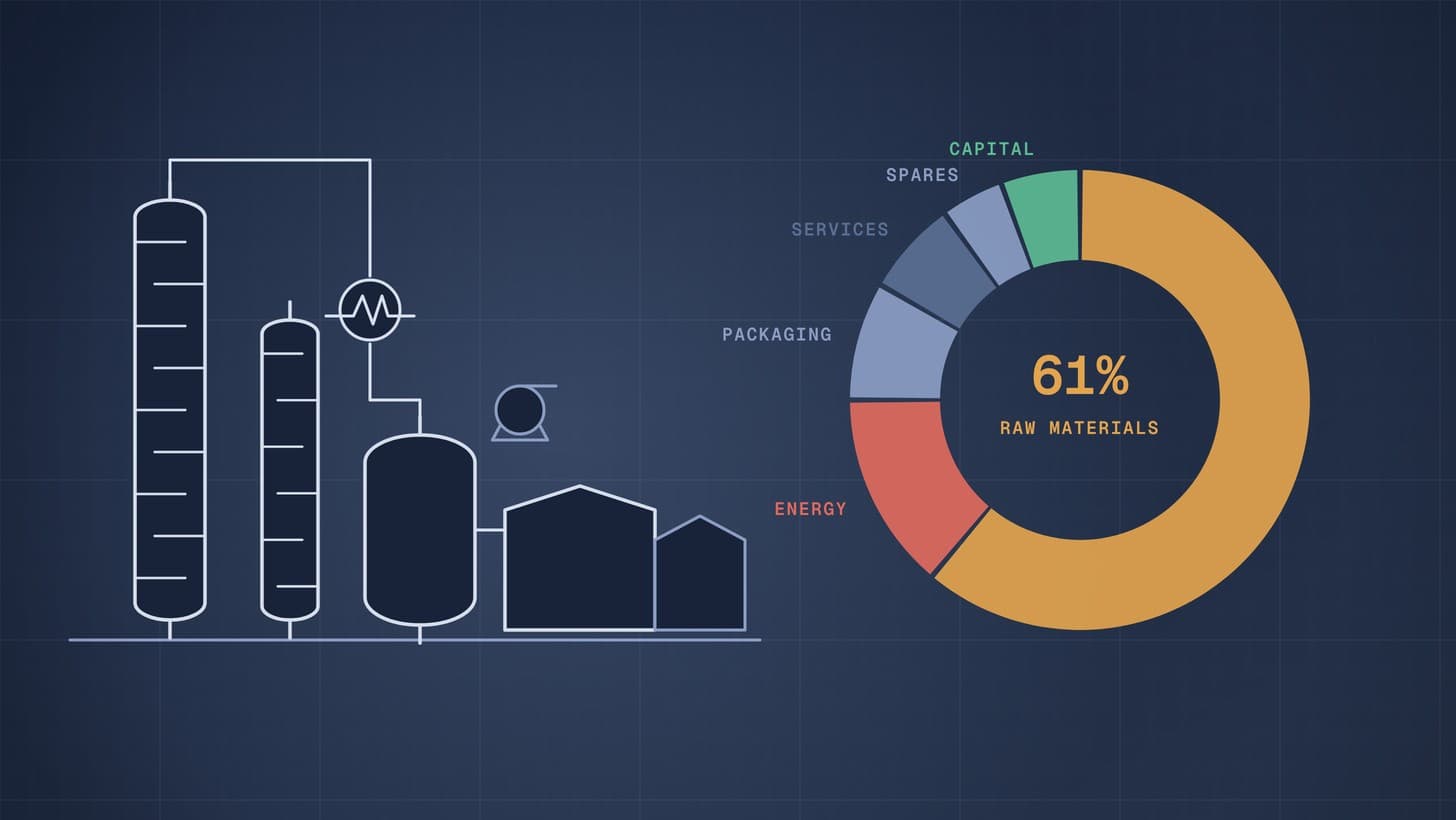
Procurement in the chemical industry is dominated by raw materials and energy, followed by the packaging, logistics, services, spares and capital equipment that keep plants running. Purchases make up roughly 20% to 60% of sales for specialty chemical makers and 50% to 80% for commodity producers [1], and raw materials alone account for 50% to 70% of production cost [2]. That makes procurement one of the largest levers on margin in the industry.
Good chemical procurement does three things well. It manages formula priced feedstock contracts against the right indices. It keeps critical, hard to qualify materials secure. And it buys capital equipment on whole life value rather than purchase price, because a plant lives with those choices for decades.
Why this matters now
European producers are under severe pressure. Cefic data reported by SCI in January 2026 show that closures since 2022 have removed about 9% of Europe's production capacity; announced closures rose from 2.9 million tonnes in 2022 to 17.2 million tonnes in 2025, while investment in new capacity fell from 2.7 million tonnes in 2022 to 0.3 million tonnes in 2025 to date. In half of closure cases, companies cited energy cost competitiveness as the main reason, and Europe's share of global chemical sales fell from 27% in 2004 to 13% in 2024 [3].
When margins are thin and fewer projects are approved, the cost of what a company buys, and the quality of each capital decision, matter more. Yet in 2016 McKinsey found that only about 6% of chemical companies qualified as purchasing leaders, with about 85% in the middle of the pack [1]. Its estimate was that cutting overall spend by 6% to 10% could raise EBIT by 3 to 5 percentage points where purchases are about half of sales [1].
Create and manage RFQs in minutes
ChemCapital handles the entire procurement cycle, from structured RFQs and supplier comparisons to formal purchase orders and delivery tracking.
The main spend categories
| Category | What it includes | How leading teams manage it |
|---|---|---|
| Strategic raw materials | A small number of feedstocks and commodities that make up a large share of spend | Index linked contracts checked against the market; regional cost curves and should cost models [1] [2] |
| Critical materials | Lower spend, but high risk from supply disruption or price swings | Early qualification of alternatives; long term contracts with price adjustment mechanisms [1] [4] |
| Specialty additives and packaging | Many items, grades and packaging variants | Harmonised specifications across sites; packaging and transport chosen on total cost [1] |
| Indirect spend | Facilities, IT and telecoms, office supplies | Competitive sourcing; McKinsey reports savings of up to about 30% [1] |
| Tail spend | Low value, low importance items | Bundled through fewer suppliers or distributors, with service charges checked [1] |
| Maintenance, repair and operations | Spares, consumables, routine services | Standard specifications and a defined spares list |
| Capital equipment and projects | Reactors, vessels, heat exchangers, pumps, skids, packages | Category strategy, structured RFQs, technical and commercial evaluation on whole life cost |
The top 10 to 20 products can make up half of a commodity producer's spend, while a specialty producer may buy thousands of additives and handle hundreds of packaging and labelling variants [1]. The approach has to fit the profile.
Where the savings are
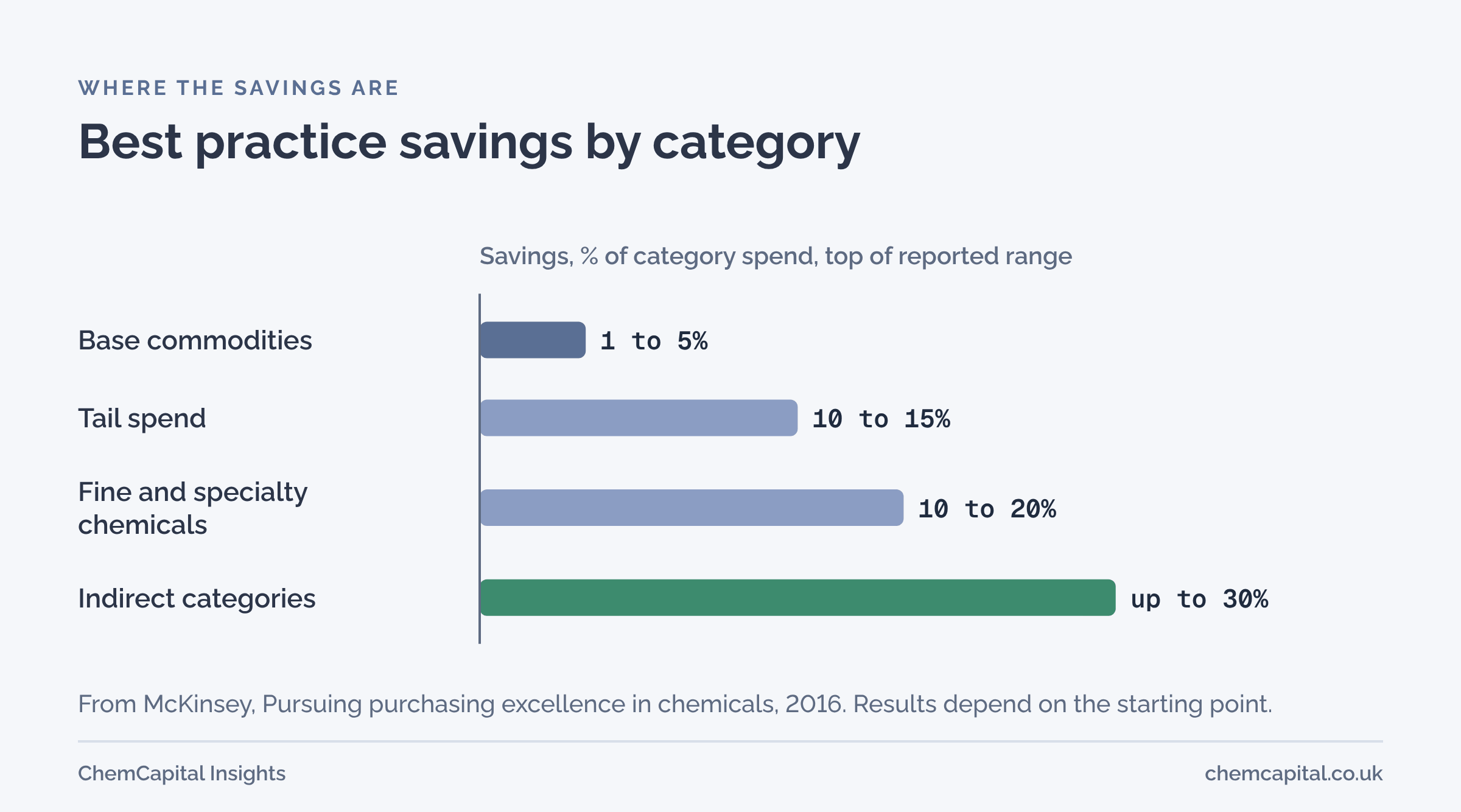
The opportunity differs sharply by category. McKinsey reported best practice savings of about 1% to 5% on base commodities, 10% to 20% on fine and specialty chemicals, up to about 30% on indirect categories, and 10% to 15% on tail spend, with tail programmes completed in three to six months [1]. A full transformation typically took two to three years [1].
Fix the formulas. Many chemical contracts are priced by formula against feedstock benchmarks, and the formulas drift. AlixPartners describes cases where the wrong benchmark or multiplier had been used, for example a benzene multiplier of 0.7 where 0.66 fitted the market, and reports price reductions of about 10% to 15% from realigning indices and multipliers without changing supplier [2]. McKinsey recommends measuring savings as the change in discount against the relevant index, so teams are neither credited nor blamed for market moves [1].
Use should cost and alternatives. AlixPartners lists six levers: should cost modelling, price formula optimisation, global and low cost country sourcing, supplier collaboration, supplier consolidation and specification discipline. In its cited cases, consolidating from four suppliers to two cut price by about 6%, and standardising specifications cut unit price by about 12% [2].
Pull technical and demand levers. Adjusting grades or product forms, harmonising specifications across sites, centralising inventories and sometimes stopping a purchase altogether can save more than negotiation alone [1].
Where the risks are
Qualification is slow. Qualifying a new supplier for a chemical is lengthy and complex, so R&D effort should go first to the qualifications with the most value [4]. A narrow supplier base also weakens negotiating leverage and raises disruption risk [4].
Prices move. Raw material costs move with geopolitics, crises and demand, and long term contracts with price adjustment mechanisms help manage exposure [4]. The same logic applies to equipment made from nickel bearing alloys; our guide to price adjustment clauses covers how to write them.
Regulation follows the substance. Under REACH, a downstream user must check that its uses and conditions of use are covered by the exposure scenarios in its supplier's extended safety data sheet. If they are not, the options are to ask the supplier to cover the use, implement the conditions in the scenario, substitute the substance, find a supplier whose safety data sheet covers the use, or prepare its own chemical safety report, normally within a year of receiving the safety data sheet [5]. A cheaper source of the same substance is only cheaper if its safety data sheet covers how you use it.
The organisation gets in the way. AlixPartners names five barriers: sourcing fragmented across sites and regions, too few people to finish the work, a bias towards incremental moves, no forum that forces cross functional decisions, and weak analytics and market intelligence [2].
Capital equipment: a different kind of category
Capital equipment is a small share of spend in most years but behaves differently from everything else. Each purchase is engineered to order, comparisons between bids are rarely like for like, and the result stays in the plant for decades. Three practices make the biggest difference:
- A category strategy for engineered equipment, so similar items are bought from a qualified panel with common specifications, rather than project by project. Our guide to capex procurement strategy sets out the approach.
- Structured RFQs and evaluation, so every bidder prices the same scope and quotes are compared on technical compliance, delivery and whole life cost.
- A record of past prices, normalised for inflation and exchange rates, so the next estimate starts from evidence rather than memory.
With investment in new capacity falling sharply in Europe [3], the projects that are approved carry more weight. Getting each one right is a procurement task as much as an engineering one.
Practical example
In this illustrative example, a specialty chemicals company has sales of £400 million and purchases of 45% of sales, or £180 million:
| Category | Annual spend |
|---|---|
| Raw materials | £110 million |
| Energy and utilities | £25 million |
| Packaging and logistics | £15 million |
| Indirect and services | £12 million |
| Maintenance, repair and operations | £8 million |
| Capital equipment | £10 million |
| Total | £180 million |
A 6% reduction on the £170 million of operating spend would be £10.2 million, or about 2.6% of sales, straight to operating profit; that is in line with McKinsey's estimate of 3 to 5 points from a 6% to 10% cut where spend is about half of sales [1]. Savings on the £10 million capital line arrive differently, through lower depreciation over the life of the assets and through how well those assets perform. In practice the gains come unevenly. Realigning the price formula on two feedstocks might deliver more than a year of hard negotiation on commodities, a tail spend programme can run in months [1], and the capital equipment line, though only £10 million, decides the energy use, reliability and maintenance cost of the assets bought with it for years to come.
Where ChemCapital fits
ChemCapital focuses on the engineered side of chemical procurement: process equipment, packages and the suppliers who make them. Supplier Discovery turns a description, RFQ or specification into a structured brief and searches the open web, showing each supplier with its source address and the product parameters found; certifications are shown as claimed, not verified. The AI quotation comparison extracts price, lead time, materials, certifications and scope from each quote, keeps the source text beside every field, and scores bids with weights you set across commercial, technical, delivery, compliance and risk. Project Costing keeps a library of past quotes and reprices them with exchange rates, CEPCI and other indices, showing every adjustment. See how ChemCapital supports chemical manufacturing.
Ready to bring the same discipline to capital equipment that you apply to raw materials? Start a free 14 day ChemCapital trial, with no credit card needed.
Frequently asked questions
How much of a chemical company's cost is purchased?
McKinsey puts purchases at roughly 20% to 60% of sales for specialty chemical makers and 50% to 80% for commodity producers, and AlixPartners puts raw materials at 50% to 70% of production cost. That makes procurement one of the biggest levers on margin in the industry.
How are chemical raw materials usually priced?
Many contracts use formulas linked to feedstock benchmarks. AlixPartners found formulas drifting out of line with the market over time and reported price reductions of about 10% to 15% from realigning indices and multipliers, without changing supplier. Measure performance against the index, not against last year's price.
Does REACH affect chemical purchasing?
Yes. Under REACH, a downstream user must check that its use and conditions of use are covered by the exposure scenarios in the supplier's extended safety data sheet, and act within a year of receiving it if they are not. Switching supplier means checking the new supplier's safety data sheet covers your use.
Continue reading
Informational only, not procurement or legal advice. Cited names, frameworks, and statistics belong to their respective owners.
Create and manage RFQs in minutes
ChemCapital handles the entire procurement cycle, from structured RFQs and supplier comparisons to formal purchase orders and delivery tracking.
Start for freeRelated articles
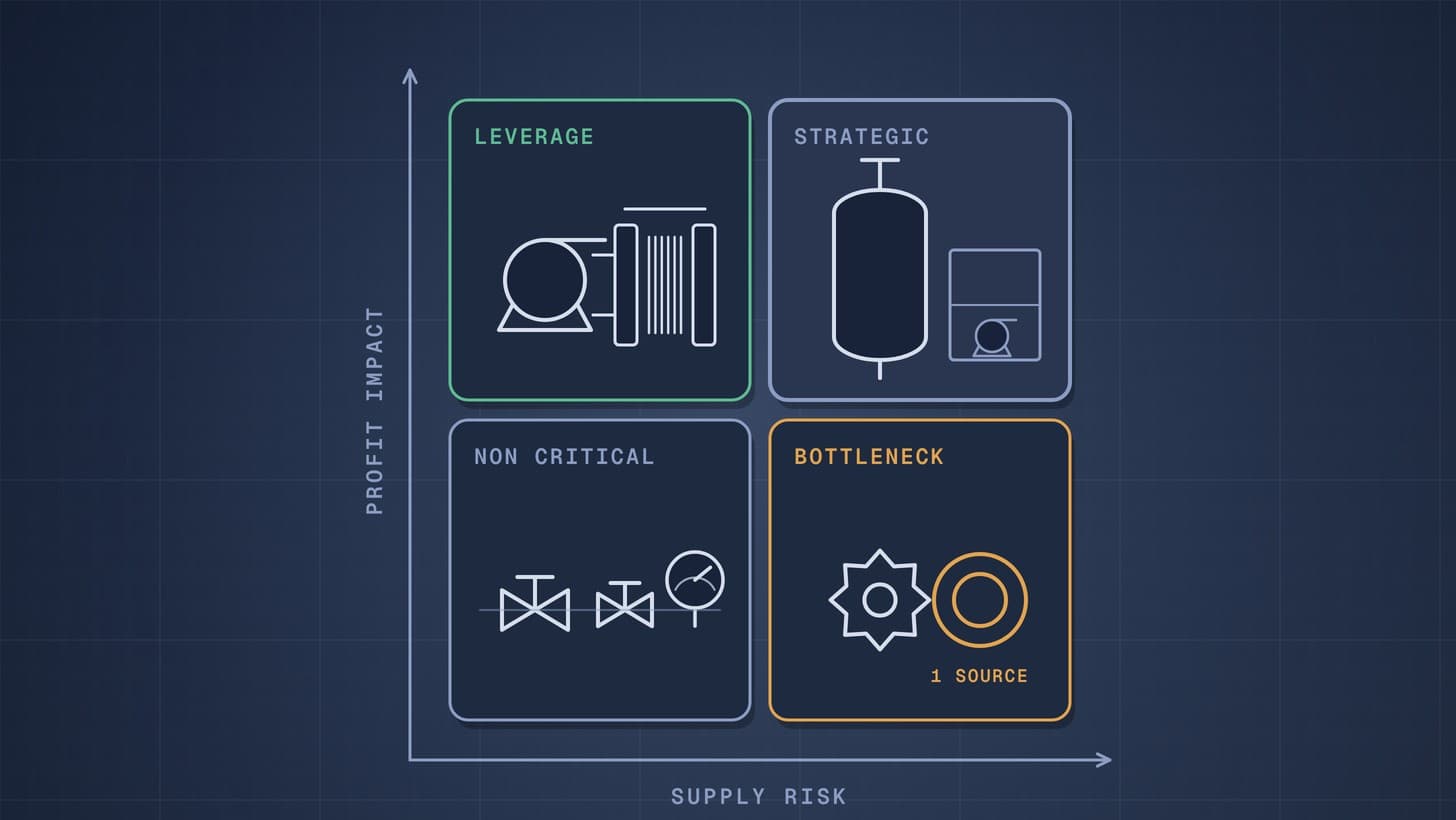
Category Strategy for Engineered Process Equipment: A Step by Step Method
How to build a category strategy for pumps, heat exchangers, vessels, valves and skids: spend and pipeline data, market analysis, Kraljic positioning, sourcing routes and a one page template.
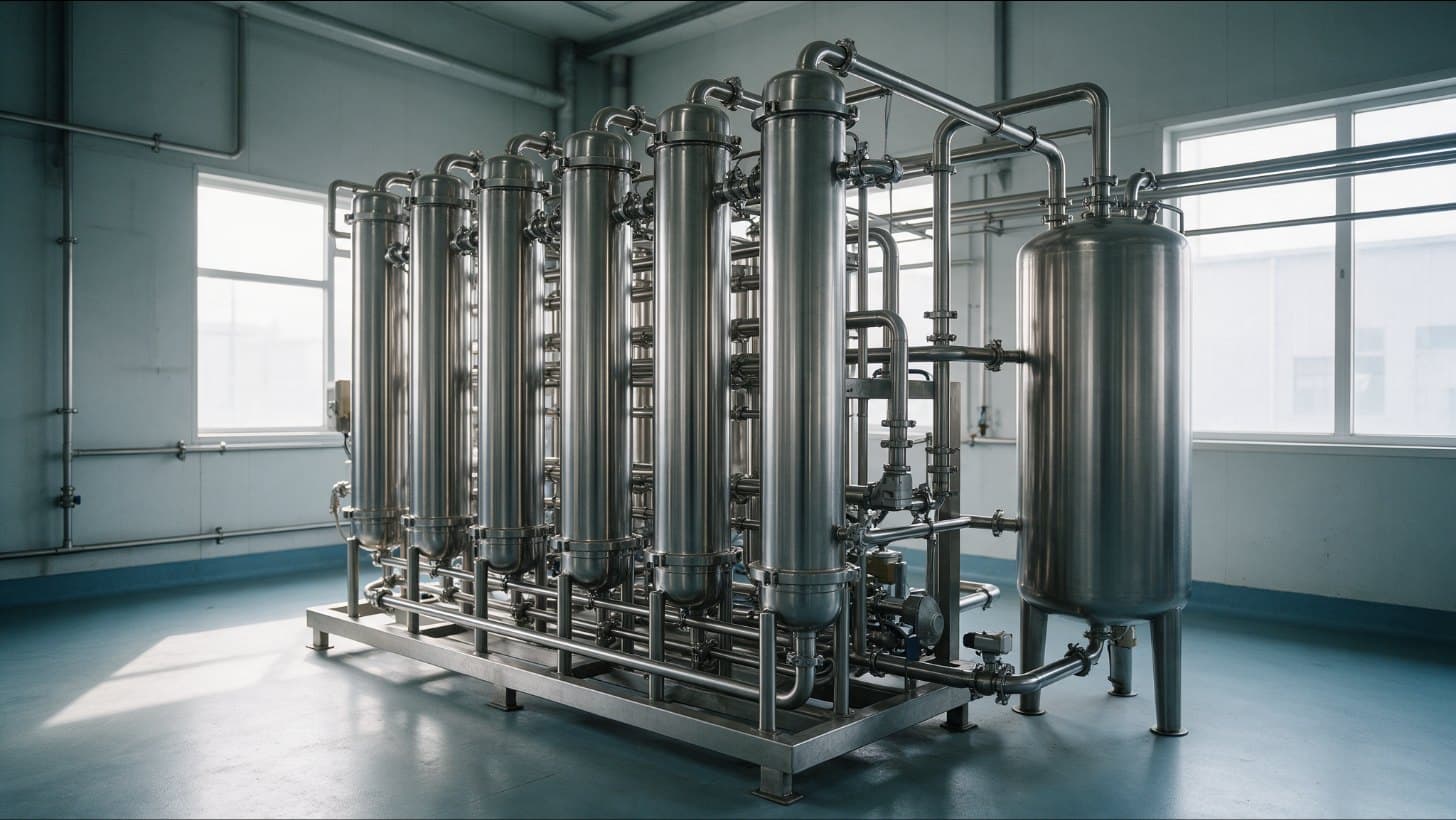
Pharmaceutical Water Systems: Buying Purified Water, WFI and Pure Steam Generation
Which water grade each use needs, how multiple effect distillation, vapour compression and membrane WFI compare on cost and risk, and what Annex 1 expects of the loop.
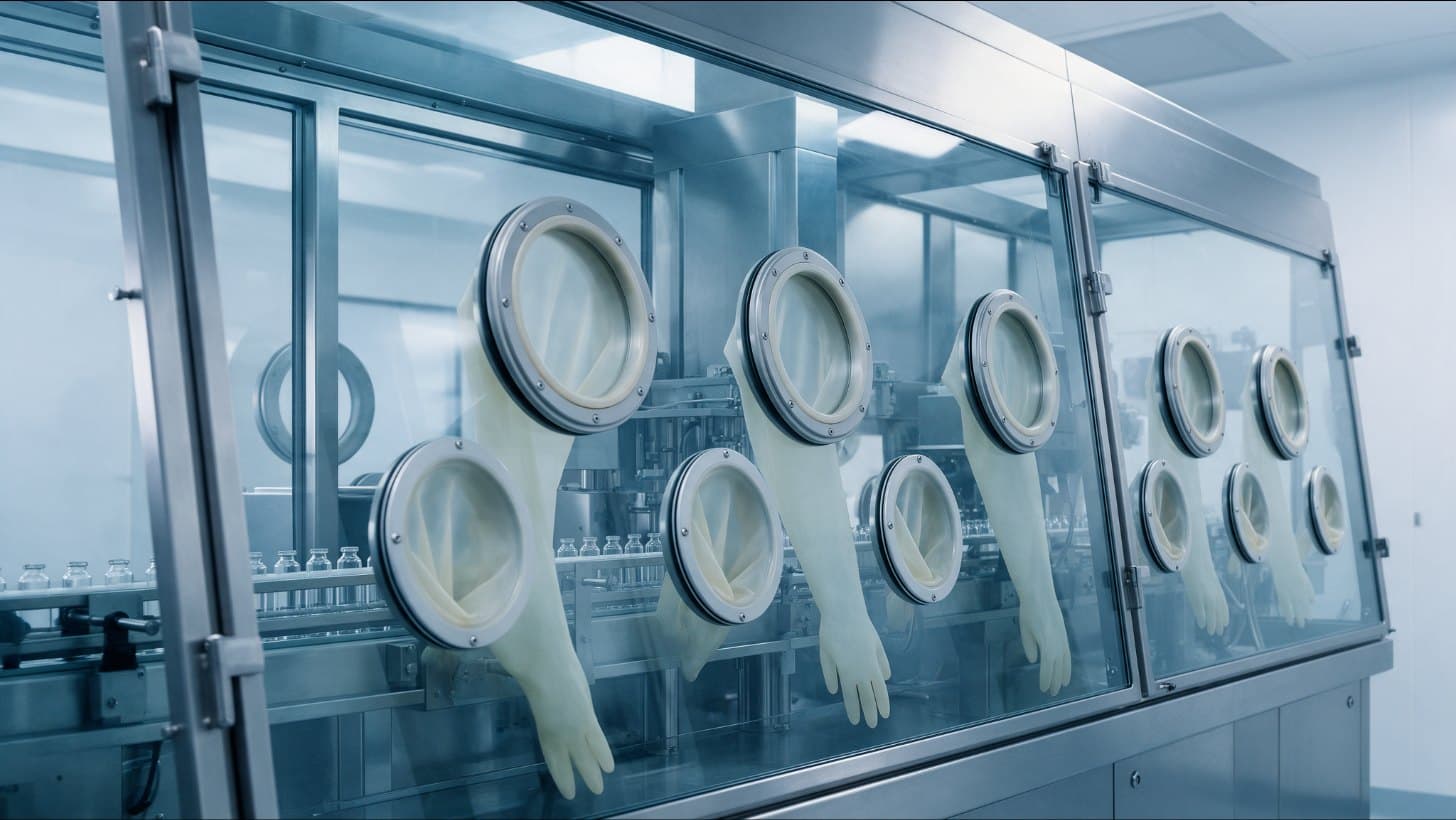
RABS vs Isolators: Choosing a Barrier System Under EU GMP Annex 1
How restricted access barrier systems and isolators differ on background grade, decontamination, gloves, changeover and cost under the 2022 EU GMP Annex 1, and what to ask suppliers before you choose.