
Pharmaceutical Water Systems: Buying Purified Water, WFI and Pure Steam Generation
Which water grade each use needs, how multiple effect distillation, vapour compression and membrane WFI compare on cost and risk, and what Annex 1 expects of the loop.
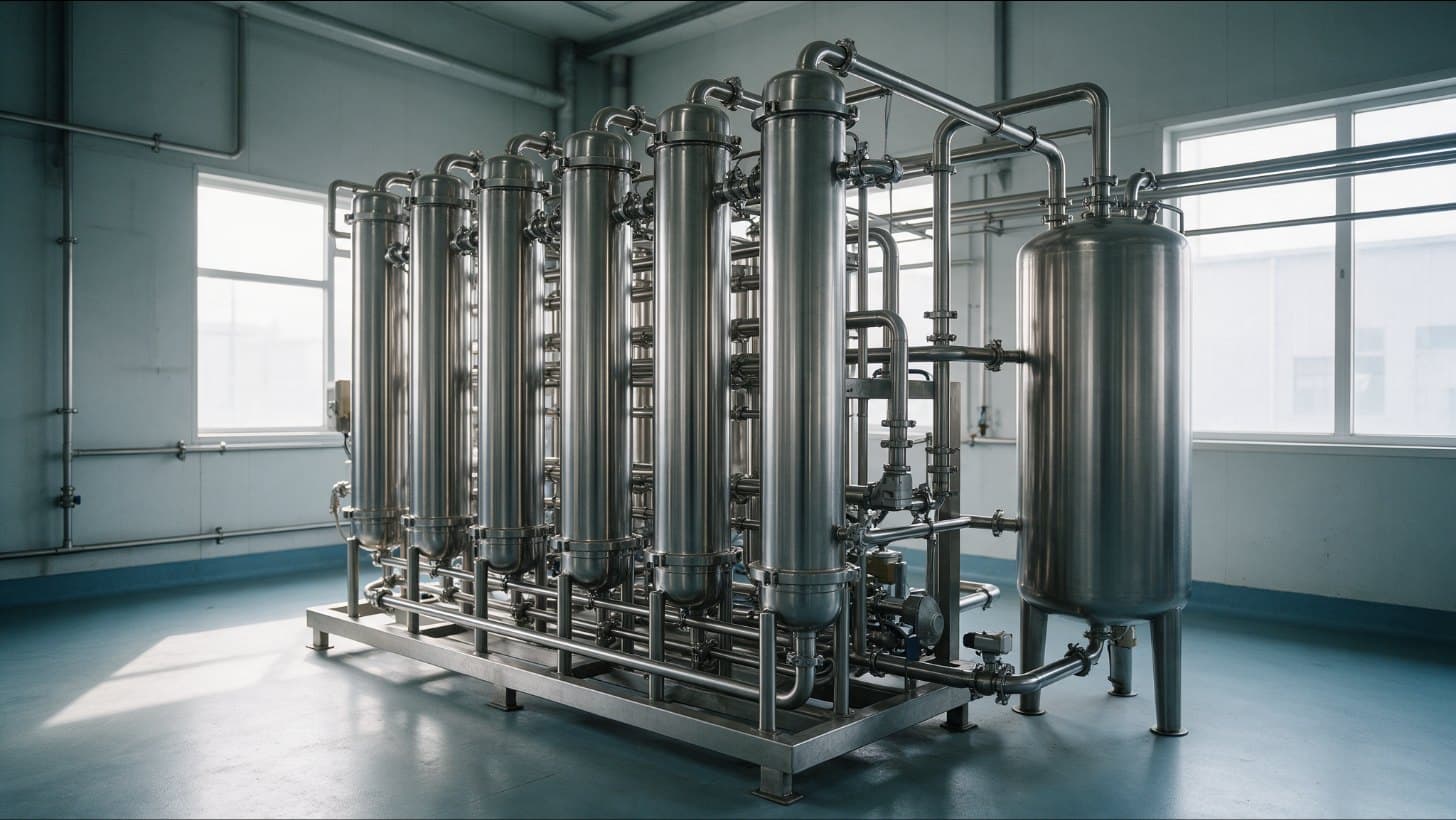
A pharmaceutical water system has three parts: pretreatment, which turns mains water into suitable feed water; a generator, which makes purified water or water for injections (WFI); and a storage and distribution loop, which delivers that water to every point of use without letting it deteriorate. The grade you need is set by the use. The EMA requires WFI for parenteral products and for the final rinse of equipment used to make sterile parenterals, and purified water for most non sterile products [1].
Since the revised European Pharmacopoeia monograph took effect in April 2017, WFI can be made in Europe by distillation or by a purification process equivalent to distillation, such as reverse osmosis combined with other techniques [2] [1]. That has opened a real choice between three generator technologies: multiple effect distillation, vapour compression distillation and membrane systems. They differ in capital cost, utilities, footprint and risk, and the cheapest to buy is not always the cheapest to own.
Why this matters now
The rules have been rewritten in the last few years. The EMA's guideline on the quality of water for pharmaceutical use took effect on 1 February 2021 [1]. The 2022 revision of EU GMP Annex 1 then set out detailed expectations for water systems: WFI produced by distillation or an equivalent process, stored and distributed in a way that minimises microbial growth, and monitored continuously for total organic carbon (TOC) and conductivity [3].
Energy matters too. CRB describes one facility that spent as much as half of its heating and cooling on producing WFI [4]. A water system runs every day for decades, so its utilities, consumables and maintenance usually outweigh its purchase price.
Create and manage RFQs in minutes
ChemCapital handles the entire procurement cycle, from structured RFQs and supplier comparisons to formal purchase orders and delivery tracking.
Which grade for which use
| Grade | Typical uses under the EMA guideline |
|---|---|
| Potable water | Early steps of active substance synthesis; must meet drinking water standards; not a pharmacopoeial grade |
| Purified water | Non sterile products such as oral preparations; later steps of active substance manufacture, depending on the step and the product |
| Water for injections | Parenteral products; final rinse of equipment for sterile parenterals; certain sterile or parenteral related active substance steps |
The guideline also covers water for the preparation of extracts, and refers to the Ph. Eur. monographs for WFI (0169) and purified water (0008) [1]. The main specifications look like this:
| Parameter | Purified water, Ph. Eur. | Purified water, USP | WFI, Ph. Eur. | WFI, USP |
|---|---|---|---|---|
| Conductivity | 4.3 µS/cm at 20 °C | 1.3 µS/cm at 25 °C | 1.1 µS/cm at 20 °C | 1.3 µS/cm at 25 °C |
| Total organic carbon | 0.5 mg/l | 500 ppb | 0.5 mg/l | 500 ppb |
| Aerobic bacteria | 100 CFU/ml | 100 CFU/ml, suggested | 10 CFU/100 ml | 10 CFU/100 ml, suggested |
| Bacterial endotoxins | Only for bulk water for dialysis | Not specified | 0.25 IU/ml | 0.25 EU/ml |
These figures are from a supplier's summary that cites Ph. Eur. 9.1 and USP 29 [5]; check them against the current editions you are bound by before they go into a specification.
How the system fits together
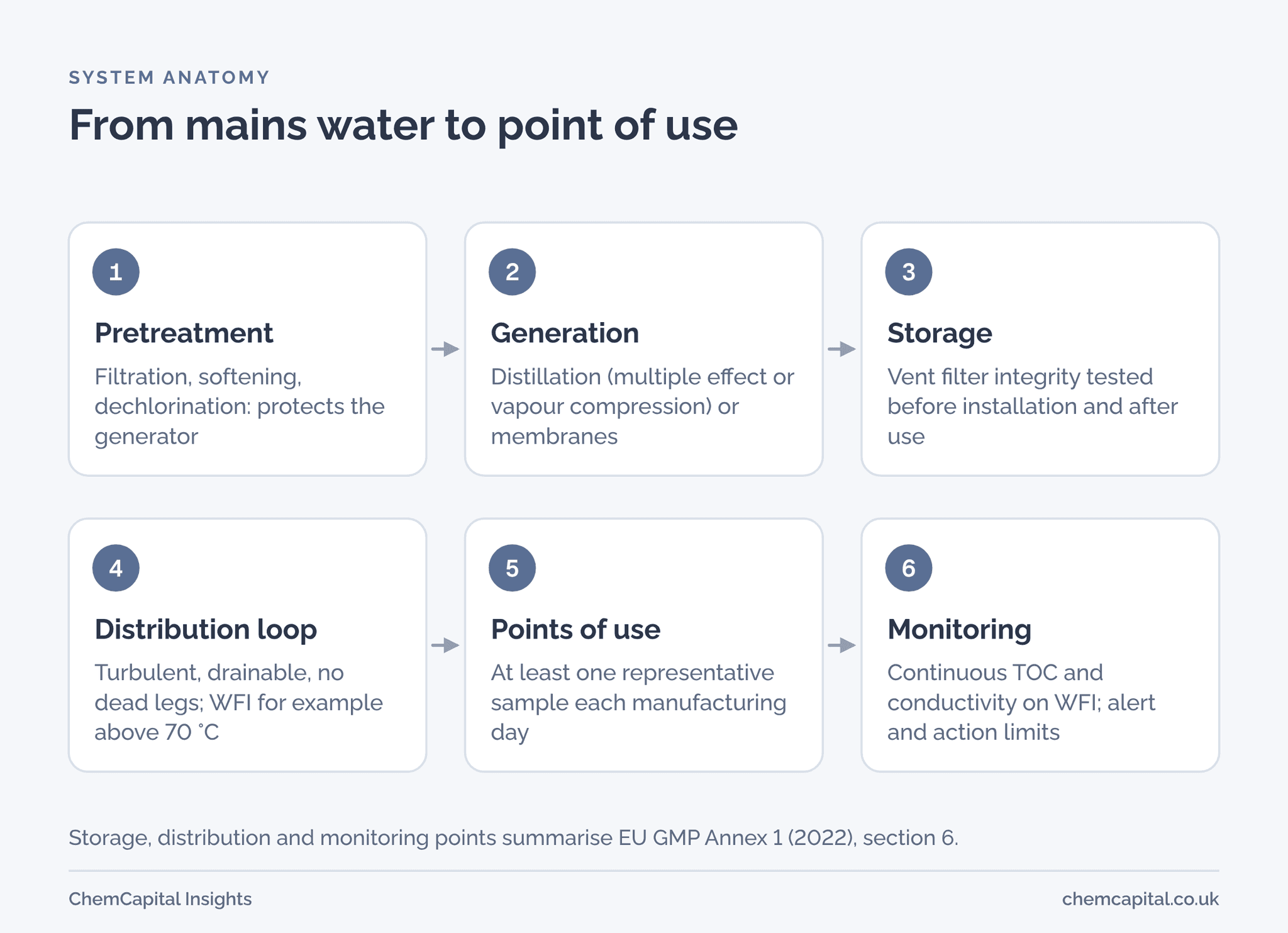
Every stage protects the next. Pretreatment protects the generator from scale, fouling and chlorine. The generator makes the water. Storage and distribution must then keep it at that quality, which is where most problems arise, because stagnant or lukewarm water grows biofilm.
Choosing a generator
| Multiple effect distillation | Vapour compression distillation | Membrane WFI | |
|---|---|---|---|
| Main energy | Plant steam, 60 to 80 psi at the first effect | Electric compressor | Electricity; heat mainly for sanitisation |
| Cooling water | Needed for the condensers | No separate condenser, so none | Not for generation |
| Feed water | Reverse osmosis and dechlorination first | Softened, dechlorinated water | Thorough pretreatment, including chlorine removal |
| Output | Hot | Hot or ambient | Ambient |
| Main demands and risks | Plant steam, cooling water and better feed water | More moving parts, in the compressor | Biofilm on membranes, which sheds endotoxin |
| Recognition | Pharmacopoeias worldwide | Pharmacopoeias worldwide | Ph. Eur. since 2017 and USP; not the Chinese Pharmacopoeia, according to CRB |
The utilities, feed water, output and moving parts entries are from MECO's comparison of the two distillation methods and CRB's review of membrane WFI [6] [4]. The FDA's inspection guide records endotoxin contamination traced to a malfunctioning feed water valve and level control in a still [7], a risk for any still, and the EMA's questions and answers on membrane WFI stress that biofilms are notoriously difficult to remove, so prevention matters most [8]. CRB notes that membrane WFI does not comply with the Chinese Pharmacopoeia [4], which matters if you export there; check the current edition.
For membrane WFI in Europe, the EMA expects pretreatment that removes organics, microbes and oxidisers; double pass reverse osmosis considered as added assurance; further steps such as electrodeionisation and ultrafiltration; routine sanitisation, generally above 75 °C for thermal methods, with ozone considered for loops and ultraviolet light to destroy residual ozone; online TOC at several risk based points; and rapid microbiological methods considered as part of the control strategy [8]. The pharmacopoeia also requires notice to the supervisory authority before a non distillation process is implemented [8].
Cost evidence is mixed. MECO, which makes distillation equipment, compared four designs rated at 1,500 litres an hour over 5,600 operating hours a year:
| Design | Capital, € ex works | Operation and maintenance, € a year |
|---|---|---|
| Multiple effect distillation, 4 effects, with reverse osmosis pretreatment | 673,900 | 177,957 |
| Membranes: reverse osmosis, electrodeionisation, ultrafiltration, ozone and ultraviolet | 513,480 | 101,200 |
| Vapour compression with softening and carbon filtration | 608,700 | 75,100 |
| Vapour compression with softening, carbon and ultrafiltration | 720,000 | 89,700 |
It concluded that vapour compression with softening and carbon filtration had the lowest total cost of ownership; the membrane system's capital saving was outweighed over time by higher replacement and labour costs, and it had the highest budgeted downtime, 714 hours [9]. CRB, which designs facilities, reports a case study in which a membrane system was roughly half the price of the other options, cut steam use by almost a third compared with multiple effect stills, and took less than half the floor area of distillation [4]. Both are credible sources with a point of view. The lesson for buyers is to model your own site: your feed water, your energy prices, your available steam and cooling water, and your markets.
Storage and distribution
Annex 1 sets the expectations for the loop [3]:
- Design: water flow should stay turbulent; pipework should slope for complete drainage; dead legs should be avoided.
- Temperature: WFI should be stored and distributed to minimise microbial growth, for example by constant circulation above 70 °C.
- Vent filters: hydrophobic vent filters on WFI tanks should be integrity tested before installation and after use.
- Sanitisation: to a predetermined schedule, and as a remedial action after results out of limit; chemical disinfection should be followed by a validated rinse.
- Monitoring: continuous TOC and conductivity on WFI systems; alert levels based on qualification data; every action limit excursion investigated; sampling covering all outlets, with at least one representative sample each day of manufacturing use.
Older FDA guidance still shapes design practice. Its inspection guide describes hot systems at 65 to 80 °C as self sanitising, cites a dead leg limit of no unused portion longer than six pipe diameters, a loose limit by modern hygienic design standards, recommends double tubesheet heat exchangers or a pressure differential to stop feed water leaking into distillate, and expects vent filter integrity testing [7]. Manufacturing Chemist adds that oversized systems with large reserve capacity tend to stand idle and stagnate, so size from a real consumption profile, and lists 316L stainless steel, PVDF and polypropylene as typical materials [10]. For stainless loops, surface finish and treatment matter; see our guide to passivation and electropolishing, and to diaphragm valves for points of use.
Pure steam
Pure steam is used in autoclaves, stopper processors and freeze dryers, and to sterilise vessels and pipework in place. It is generated from treated water without amines or hydrazines [11]. Annex 1 expects the steam generator to produce steam that meets defined chemical and endotoxin levels, with condensate that meets the WFI monograph, although microbial testing of condensate is not mandatory, and periodic checks of non condensable gases, dryness and superheat [3].
Those three properties matter because non condensable gases insulate the load and stop steam penetrating, wet steam carries less heat and wets the load, and superheated steam heats far less effectively than condensing steam. The usual reference is EN 285, as cited by ISPE in its 2015 edition: dryness above 0.95, no more than 3.5 ml of non condensable gas per 100 ml of condensate, and superheat below 25 °C when expanded to atmospheric pressure [11]. The ISPE article suggests chemistry and endotoxin testing quarterly, non condensable gases quarterly at first, and dryness annually for autoclave connections [11]. Ask the generator supplier to guarantee these at your steam demand, not just at an ideal test point.
What to put in the user requirements and RFQ
- Consumption profile: average and peak demand, by point of use, hot and ambient, and which points are used at the same time. It drives generator capacity, tank size and loop design [10].
- Feed water analysis: with seasonal variation, since it determines the pretreatment and the generator choice [10].
- Grade and pharmacopoeias: Ph. Eur., USP and any other market you supply.
- Technology: state it, or leave it open and ask each bidder to justify theirs.
- Utilities available: plant steam pressure, cooling water, electrical supply and drainage.
- Guaranteed performance: output at your feed water, water recovery, and utility consumption per cubic metre, so you can compare running costs.
- Sanitisation: method, temperature, frequency and the time the system is unavailable.
- Instrumentation: online TOC and conductivity locations, and how data is recorded and protected.
- Materials and finish: grades, surface finish, welding and passivation, with documentation.
- Consumables and spares: membrane replacement intervals and prices, compressor maintenance, and a recommended spares list.
- Qualification: factory and site acceptance testing, and the documents provided for qualification.
Practical example
In this illustrative example, a sterile injectables plant needs about 1,500 litres an hour of WFI and has three bids, one for each technology. To show the method, we use the figures from MECO's cost review above, which assume 5,600 operating hours a year [9] and add ten years of operation and maintenance to each capital price, without discounting.
| Design | Capital, € | 10 years of O&M, € | 10 year total, € |
|---|---|---|---|
| Multiple effect distillation | 673,900 | 1,779,570 | 2,453,470 |
| Membranes | 513,480 | 1,012,000 | 1,525,480 |
| Vapour compression, softening and carbon | 608,700 | 751,000 | 1,359,700 |
On capital alone, the membrane system wins by €95,220 over vapour compression. Over ten years, vapour compression costs €165,780 less than the membranes and about €1.1 million less than multiple effect distillation. The buyer then adds what the study left out: installation, its own energy prices, and the fact that its site has no spare cooling water capacity, which counts further against multiple effect distillation. One of its products is also exported to China, which, on CRB's account, rules out membrane WFI for that product unless the current Chinese Pharmacopoeia has changed [4]. The decision goes to vapour compression, with each bidder asked to restate utility consumption on the site's own feed water analysis before award.
Where ChemCapital fits
Water system bids vary widely in what they include: pretreatment, storage, loop, instrumentation, sanitisation equipment and qualification support. ChemCapital sends one structured RFQ with line items and attachments, so every bidder prices the same scope against the same consumption profile and feed water analysis. The AI quotation comparison extracts price, lead time, materials, certifications and scope from each quote, keeps the source text beside every field, and flags missing fields, unit mismatches and scope differences. You can weight scoring across commercial, technical, delivery, compliance and risk, and people make the final call. See how ChemCapital supports pharmaceutical manufacturing.
Ready to compare water system bids on total cost, not just price? Start a free 14 day ChemCapital trial, with no credit card needed.
Frequently asked questions
What is the difference between purified water and WFI?
Water for injections meets tighter limits, including a bacterial endotoxin limit of 0.25 IU per ml and a microbial limit of 10 CFU per 100 ml, against 100 CFU per ml for purified water in the Ph. Eur. figures. WFI is required for parenteral products and the final rinse of equipment for them; purified water is used for most non sterile products.
Can water for injections be made by reverse osmosis?
In Europe, yes, since the revised Ph. Eur. monograph took effect in April 2017: WFI may be made by reverse osmosis combined with other suitable techniques such as electrodeionisation and ultrafiltration, and the supervisory authority must be notified before implementation. CRB notes that membrane WFI does not meet the Chinese Pharmacopoeia, so check the current edition for every market you supply.
What temperature should a WFI loop run at?
EU GMP Annex 1 gives constant circulation above 70 °C as an example of how to minimise microbial growth, and the FDA's guide to high purity water systems describes hot systems at 65 to 80 °C as self sanitising. Ambient loops are possible but need a robust sanitisation and monitoring regime.
Continue reading
Informational only, not procurement or legal advice. Cited names, frameworks, and statistics belong to their respective owners.
Create and manage RFQs in minutes
ChemCapital handles the entire procurement cycle, from structured RFQs and supplier comparisons to formal purchase orders and delivery tracking.
Start for freeRelated articles
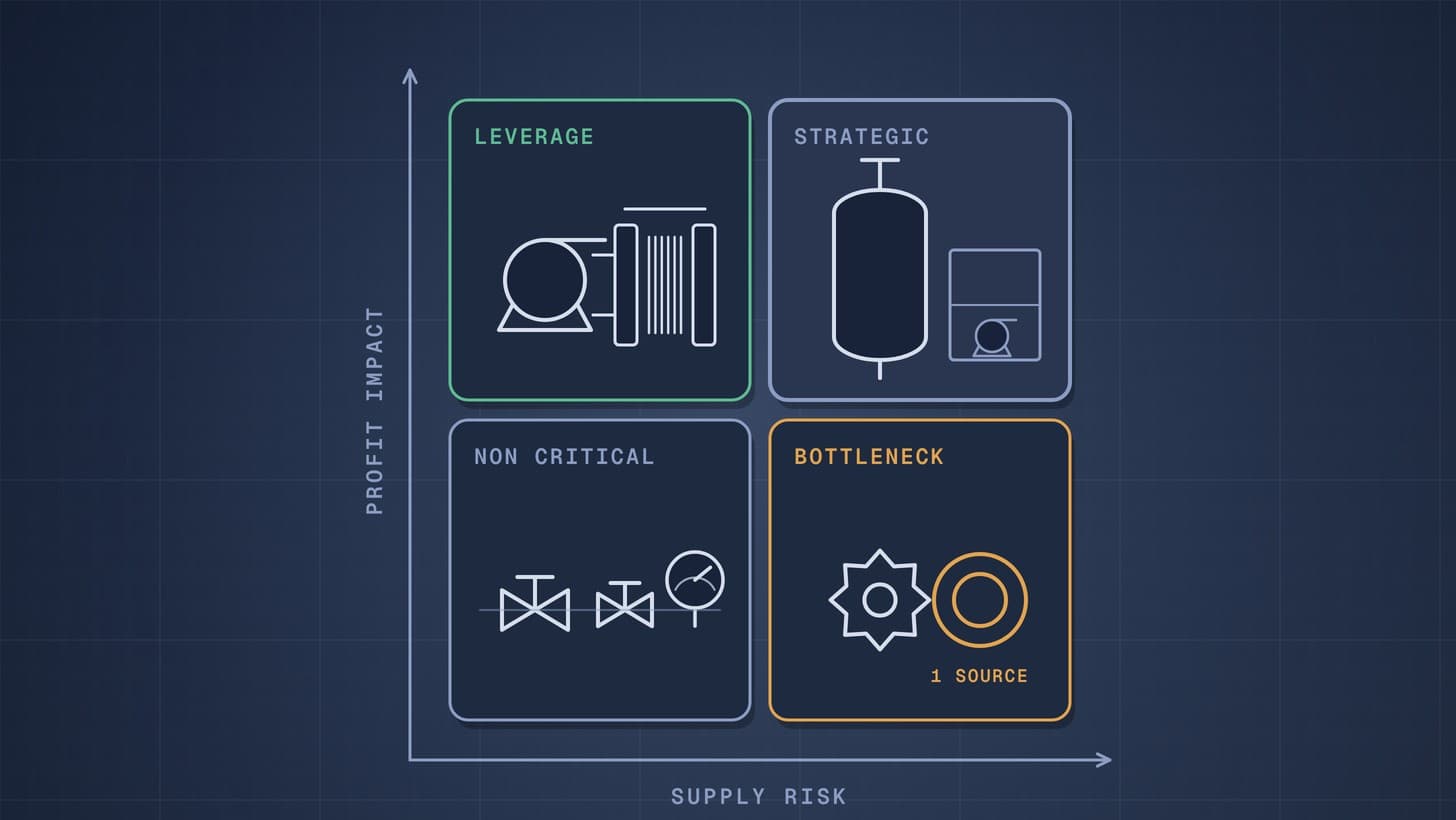
Category Strategy for Engineered Process Equipment: A Step by Step Method
How to build a category strategy for pumps, heat exchangers, vessels, valves and skids: spend and pipeline data, market analysis, Kraljic positioning, sourcing routes and a one page template.
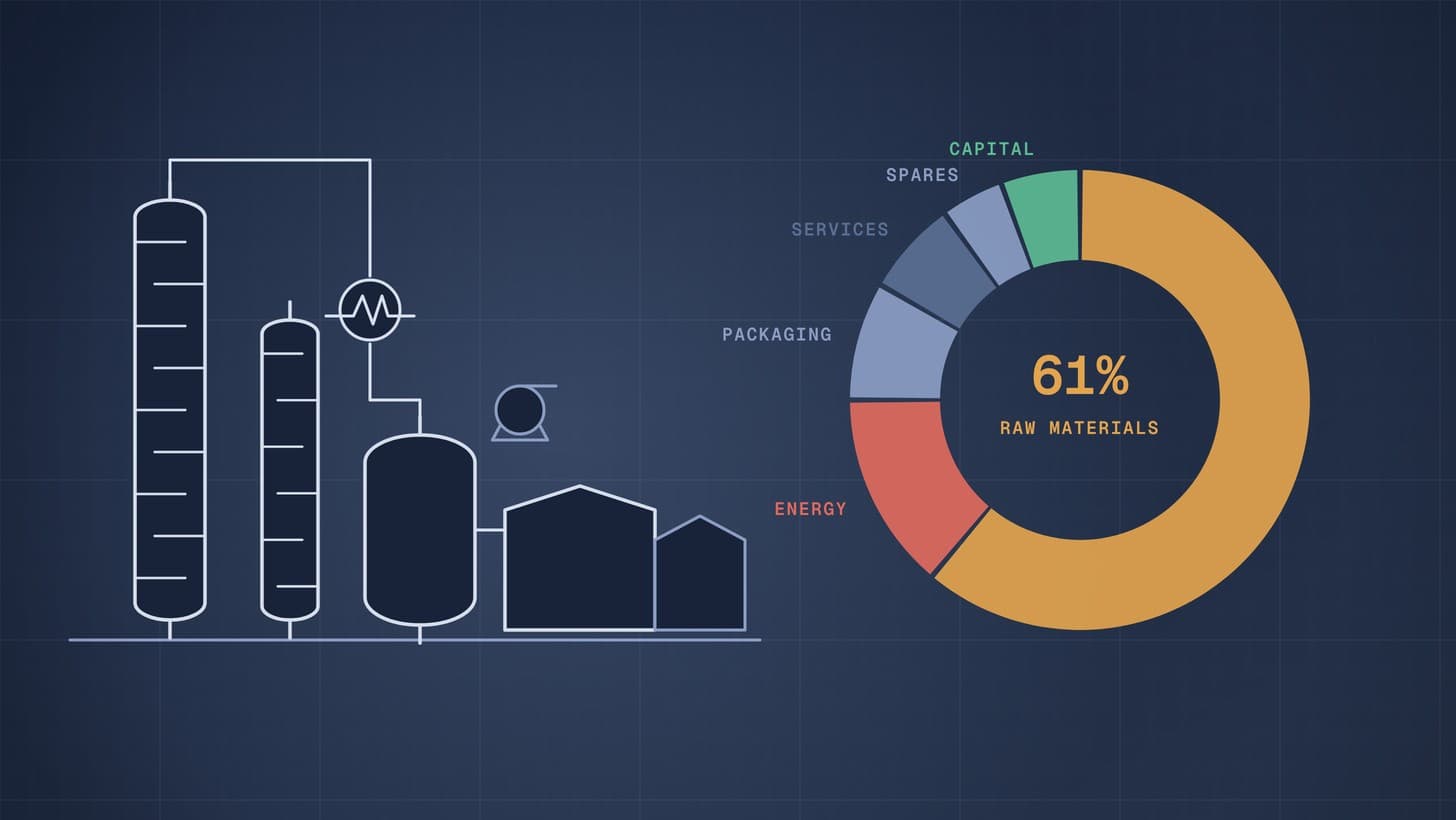
Procurement in the Chemical Industry: Categories, Risks and Capital Equipment
How chemical companies spend, from formula priced feedstocks to spares and capital equipment, where the savings and risks lie in each category, and what leading procurement teams do differently.
RABS vs Isolators: Choosing a Barrier System Under EU GMP Annex 1
How restricted access barrier systems and isolators differ on background grade, decontamination, gloves, changeover and cost under the 2022 EU GMP Annex 1, and what to ask suppliers before you choose.