
How to Ask for Feedback on a Lost Equipment Tender (With Email Template)
How equipment suppliers should ask for a debrief after losing a bid: when to ask, what to ask, what buyers can and cannot share, and how to use the answers. Includes a short email template.
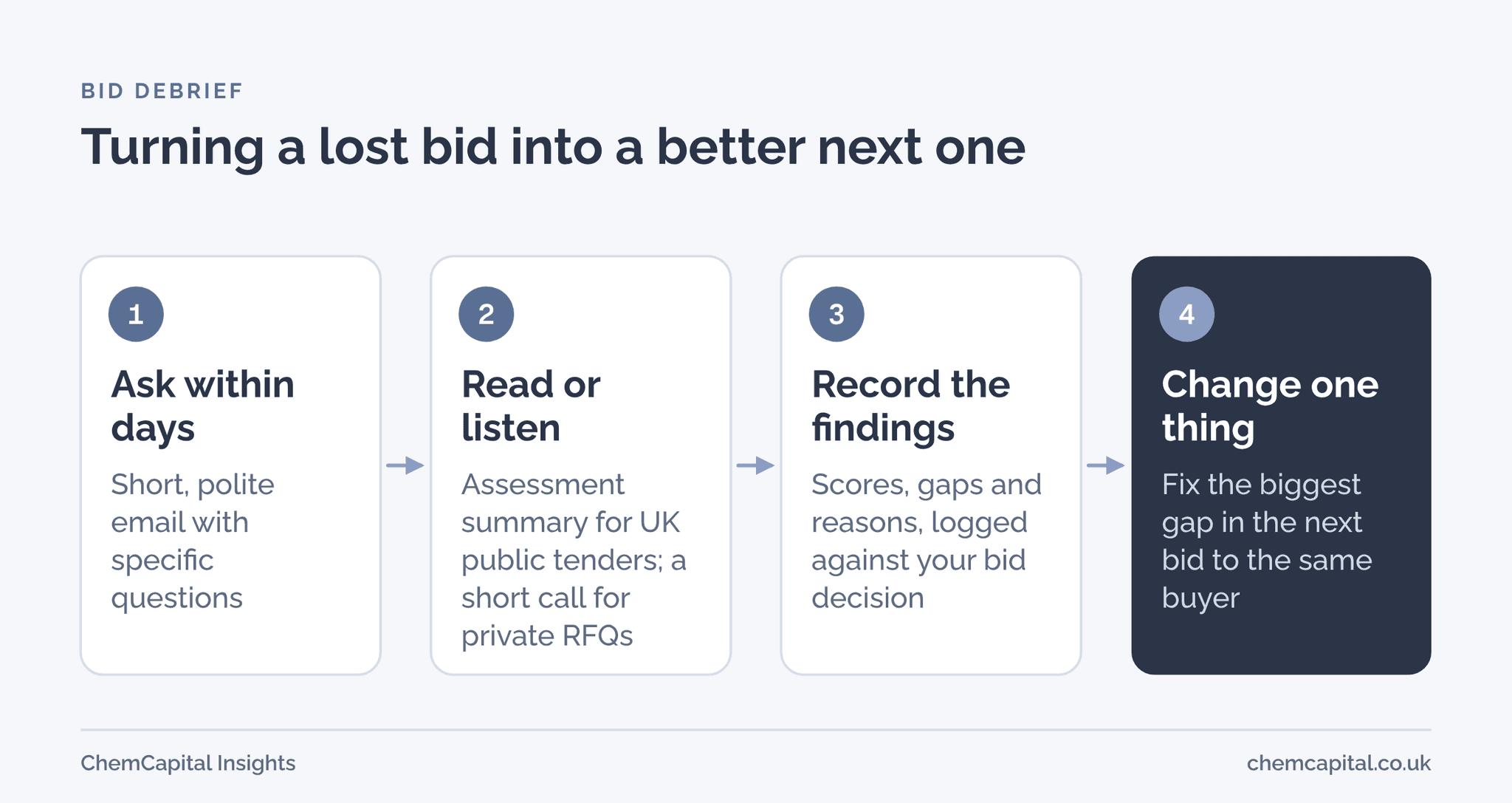
Ask for a debrief within a few days of hearing you lost, in a short, polite email that asks specific questions: how you scored against each criterion, how you compared with the winner on price and technical merit, and what would have made the difference. Public buyers in the UK must now give you a written assessment summary with your scores; private buyers are not obliged to, but many will talk if you ask well.
Why this matters now
A lost bid is expensive data. You have already paid for it with a week of estimating and engineering, and the debrief is the only way to get the return. Suppliers who ask, listen and adjust tend to find their next bid is sharper, and a well handled debrief often keeps you on the list for the next RFQ.
For UK public contracts the rules have also changed. Under the Procurement Act 2023, a buyer that ran a competitive tender must give every supplier whose tender was assessed an assessment summary before it publishes the contract award notice [1]. Publishing that notice starts a standstill period of at least 8 working days [2].
Access real procurement opportunities from global buyers
Join ChemCapital to get discovered by verified procurement teams across pharmaceutical, chemical, and industrial manufacturing.
What you can expect to be told
| Situation | What you get |
|---|---|
| UK public tender under the Procurement Act 2023 | A written assessment summary: your score for each criterion and sub criterion with an explanation, and the same information for the winning tender [1] |
| Framework call off or direct award | No statutory assessment summary, though buyers are encouraged to give similar feedback [1] |
| Private sector RFQ | Whatever the buyer is willing to share; ask for a short call |
Buyers will generally not share other bidders' prices, intellectual property or anything given to them in confidence [3] [4]. Under the Act, commercially sensitive details in the winning tender can be withheld, but each score must still be explained [1]. A debrief is not a complaint channel; if you think the process was unlawful, that is a different conversation, and for UK public contracts the standstill period is the time to raise it [2] [3].
The questions worth asking
Keep it to a handful. A good set, adapted from a widely used list of debrief questions [5]:
- How did our offer score on each criterion, and overall?
- How did we compare with the successful bid on price, and on technical merit?
- Were there any compliance issues or deviations that cost us points?
- Was our offer easy to evaluate, or did the evaluators have to search for information?
- What one change would most have improved our position?
- Is there anything about our company or product you would like to know before the next RFQ?
If price was the deciding factor, ask whether your scope was heavier than the winner's, for example more spares, more documentation or a longer warranty. If you scored lower technically, ask which section fell short. Our guide to writing a deviation list covers the most common technical point loss.
Email template
Subject: Request for feedback, [RFQ or tender reference]
Dear [name],
Thank you for letting us know the outcome of [reference]. We were disappointed not to be selected, and we would value your feedback so we can serve you better next time.
Could you share how our offer scored against each criterion, how it compared with the successful bid on price and technical content, and anything that would have strengthened it? A short call of 15 to 20 minutes at your convenience would be ideal, or a written reply if that is easier.
We would also welcome the chance to quote again on future requirements.
Kind regards, [name, role, company, phone]
Send it within a few days, while the evaluation is fresh. Keep the tone neutral. Never argue with the result on the call; listen, thank them and write it down.
Practical example
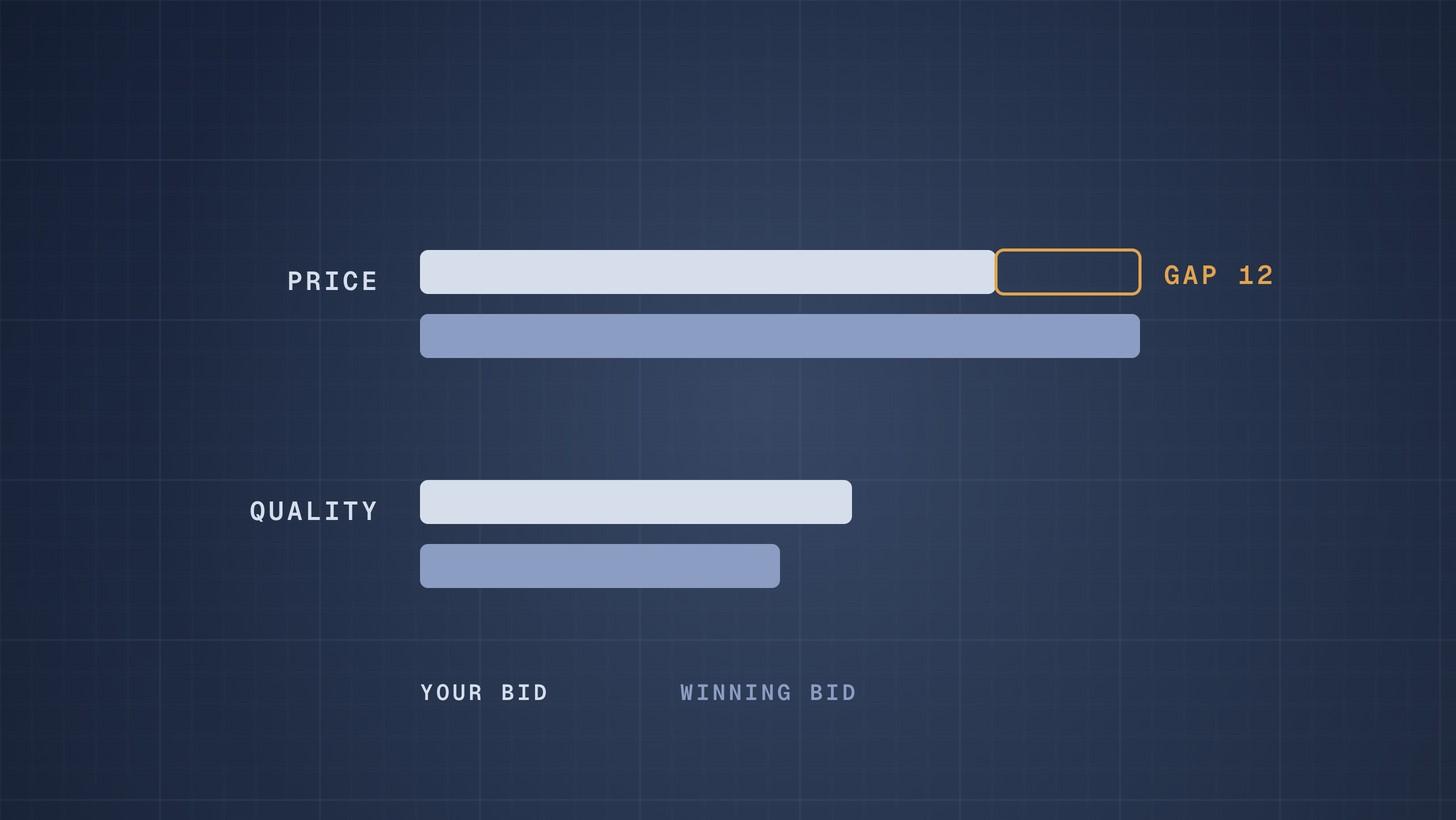
Illustrative figures. A pump supplier loses a public tender scored 60% price and 40% quality. The assessment summary shows:
| Your bid | Winning bid | |
|---|---|---|
| Price score (out of 60) | 48 | 60 |
| Quality score (out of 40) | 36 | 30 |
| Total | 84 | 90 |
The lowest price scored full marks, and your 48 means your price was 25% above it, because 60 divided by 1.25 is 48. You won on quality by 6 points but lost on price by 12. The lesson is not to cut quality. It is to look at what drove the 25%: perhaps a heavier spares package, a stainless baseplate nobody asked for, or a conservative margin. Our guide to pricing an engineered equipment quote covers where the money goes.
Use what you learn
- Log every debrief against the bid or no bid score you gave the opportunity, so over time you learn which scores actually win.
- Change one thing in the next bid to the same buyer, and tell them you did.
- Share patterns with your sales and engineering teams every quarter, not just the individual results.
- Follow up a few weeks later with something useful, not a sales pitch; our guide on following up a quotation has examples.
Where ChemCapital fits
The surest way to win more is to quote for buyers who need exactly what you make. A free ChemCapital listing puts your products in front of procurement teams searching through Supplier Discovery, so more of the RFQs you receive are ones you can win. See what suppliers get from ChemCapital.
Ready to receive RFQs that fit what you make? List your company on ChemCapital. It is free to start.
Frequently asked questions
How do I ask for feedback after losing a tender?
Within a few days, send a short, polite email thanking the buyer, asking how you scored against each criterion and against the winner, and requesting a 15 to 20 minute call or a written reply.
Do UK public buyers have to give feedback on a lost bid?
Under the Procurement Act 2023, a buyer running a competitive tender must give each assessed supplier an assessment summary with its scores and explanations, and the winning tender's, before the contract award notice. Framework call offs and direct awards are excluded.
Will the buyer tell me the winner's price?
Usually not. Other bidders' prices and confidential information are generally withheld, but buyers can tell you whether you were competitive on price.
How long is the standstill period under the Procurement Act 2023?
At least 8 working days, starting on the day the contract award notice is published.
Continue reading
Informational only, not procurement or legal advice. Cited names, frameworks, and statistics belong to their respective owners.
Access real procurement opportunities from global buyers
Join ChemCapital to get discovered by verified procurement teams across pharmaceutical, chemical, and industrial manufacturing.
List your companyRelated articles
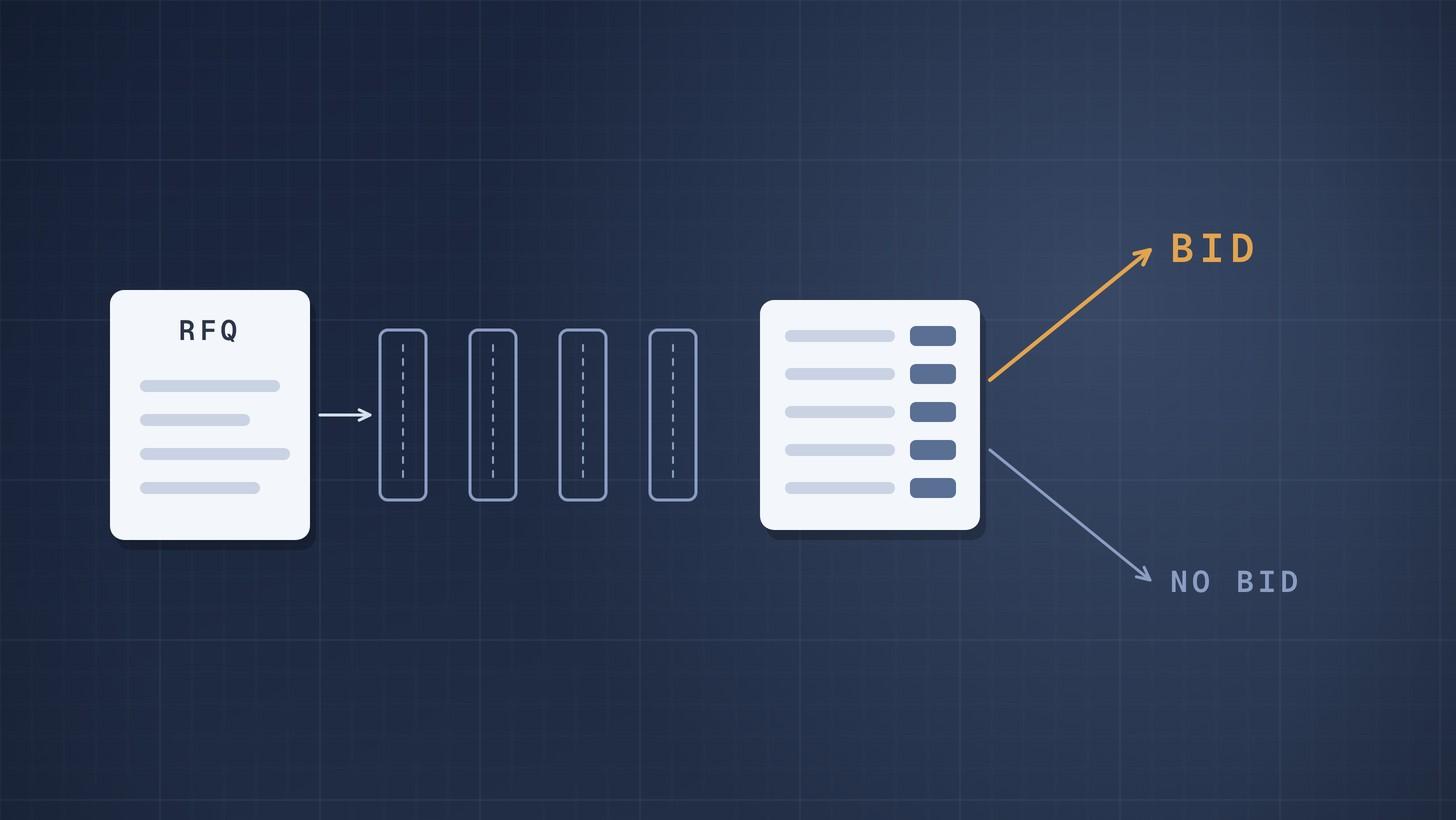
Bid or No Bid? A Scorecard for Engineered Equipment RFQs
A simple bid or no bid scorecard for equipment suppliers: the gates to check first, seven weighted criteria, a worked example and a template you can copy.
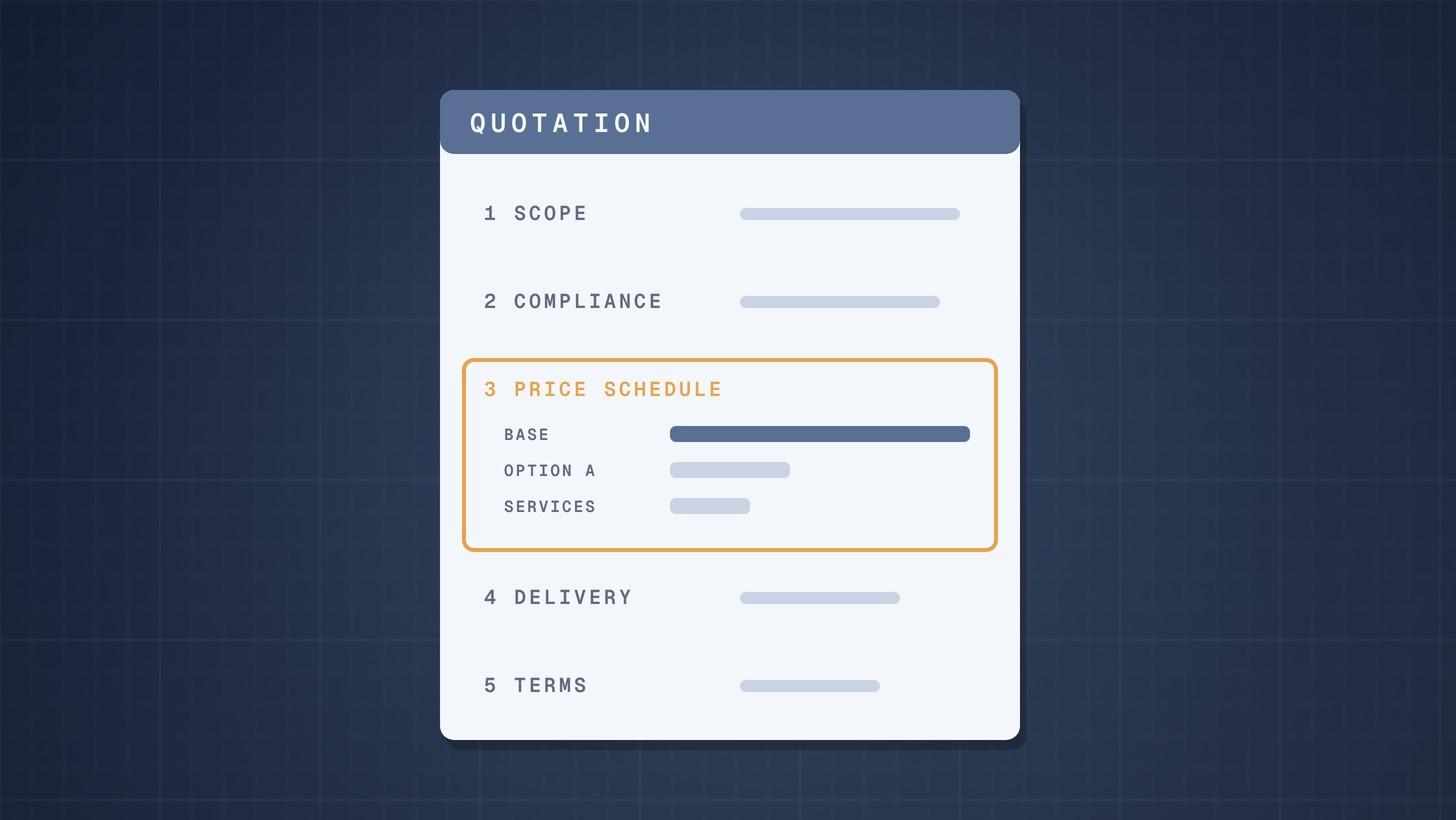
Equipment Quotation Template: A Proposal Buyers Can Compare
A ten section quotation template for engineered equipment suppliers: cover letter, scope and battery limits, compliance and deviations, price schedule, delivery, commercial terms, exclusions and documents.
RFQ vs RFP vs RFI: Which to Send for Engineered Equipment
RFI, RFP or RFQ? When each fits an engineered equipment purchase, what each must contain, how they are evaluated, and how to use them in sequence, with a worked example.