
Equipment Quotation Template: A Proposal Buyers Can Compare
A ten section quotation template for engineered equipment suppliers: cover letter, scope and battery limits, compliance and deviations, price schedule, delivery, commercial terms, exclusions and documents.
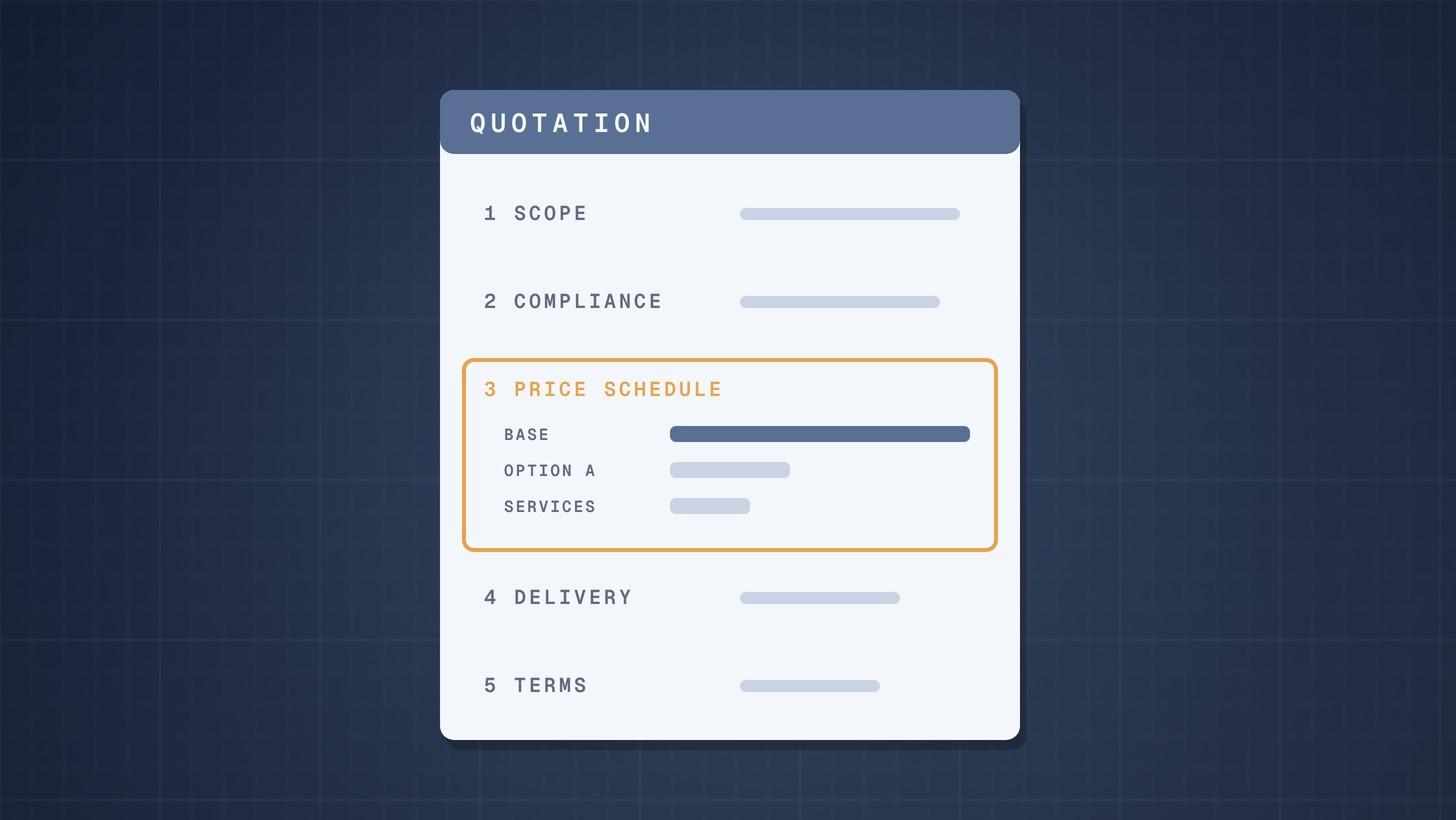
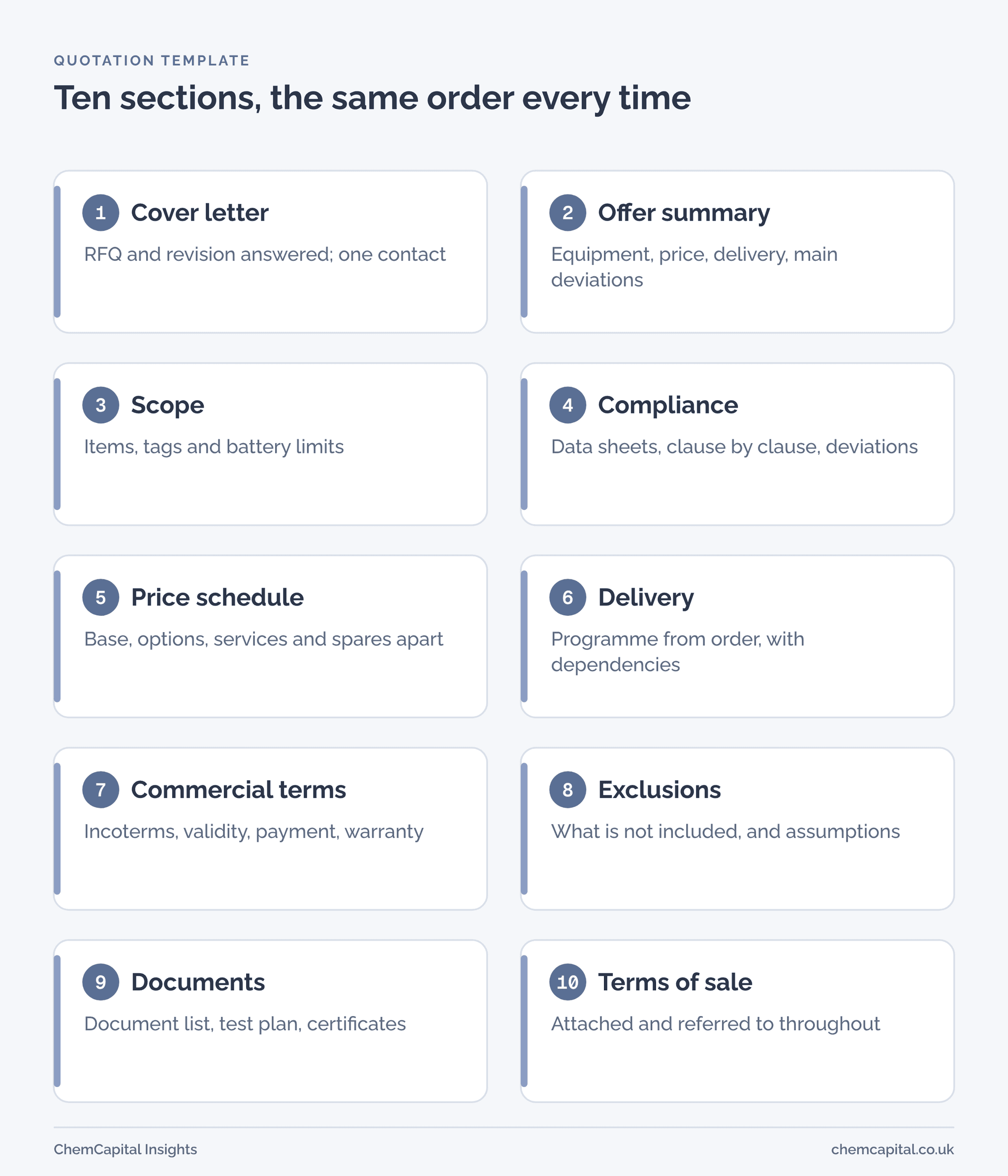
A good equipment quotation lets the buyer compare you with other bidders in minutes. Use the same structure every time: a short cover letter, a summary of the offer, scope of supply and battery limits, technical compliance with deviations declared, a price schedule that separates base price, options and services, delivery, commercial terms (Incoterms, validity, payment, warranty), exclusions, and a document list. The template below gives each section and sample wording.
Free download: equipment quotation template (Word, 7 pages). Ready to fill in, free to use, no sign up needed.
Why structure matters to the buyer
Buyers evaluate quotations in two passes. Engineers check technical compliance first; Projectmaterials notes that a technically non compliant bid is disqualified regardless of price, and only bids that pass go on to the commercial comparison [1]. Buyers then put the commercial terms side by side, because, as Projectmaterials puts it, "Vendors rarely quote on identical commercial terms" [2]. They convert everything to one Incoterms basis, one currency and comparable payment terms, and add costs for anything you excluded [2].
If your quotation makes each of those steps easy, the evaluator spends their time on your offer rather than on finding things in it. If it does not, they send technical queries, guess, or set you aside. Our guide on how suppliers win more RFQs covers bid strategy; this article covers the document itself.
Access real procurement opportunities from global buyers
Join ChemCapital to get discovered by verified procurement teams across pharmaceutical, chemical, and industrial manufacturing.
The template, section by section
| Section | What it contains | Sample wording |
|---|---|---|
| 1. Cover letter | Who you are, what you offer, the RFQ number and revision you answer, validity, single contact | "We are pleased to submit quotation Q2731 in response to RFQ 4471 revision B." |
| 2. Offer summary | One page: equipment, key performance, price total, delivery, main deviations | "One CIP skid, three tank, 15 m³/h, price £189,800 DAP site, delivery 20 weeks from approved drawings." |
| 3. Scope of supply | Every item supplied, with tag numbers; battery limits drawn or listed | "Supply ends at the outlet flange of valve V104. Interconnecting pipework is by others." |
| 4. Technical compliance | Completed data sheets; a clause by clause compliance statement; deviations and clarifications | "Compliant with specification S210 revision C except as listed in the deviation list, section 4.3." |
| 5. Price schedule | Base price, options, services, spares and freight, each priced separately | See the example below |
| 6. Delivery | Programme from order: drawings, approval, manufacture, FAT, shipping | "Drawings for approval 3 weeks after order; delivery 20 weeks after drawing approval." |
| 7. Commercial terms | Incoterms rule and place, currency, validity, payment, warranty, price adjustment | "DAP buyer's site, Incoterms 2020. Valid 60 days. Payment 30/30/30/10." |
| 8. Exclusions and assumptions | What is not included and what you assumed | "Excludes civil works, site installation and power supply to the panel." |
| 9. Documents and quality | Document list with timing; inspection and test plan; certificates | "Manufacturer's data book 4 weeks after delivery." |
| 10. Terms and conditions | Your terms, attached, and how they apply | "This quotation is subject to our terms of sale attached." |
Want this as a file? Download the equipment quotation template (Word, 7 pages).
Cover letter and summary
Keep the cover letter to half a page. Name the RFQ document and revision you have priced; one EPC procedure has the evaluator check that quotations are based on the correct issue of the requisition and its reference documents [3]. A one page summary then gives the evaluator the answer before the detail: what you offer, how it performs, what it costs, when it arrives and where it differs from the specification.
Scope and battery limits
Most disputes after award come from scope. List every item with its tag number, and define the battery limits, the physical points where your supply ends: a flange, a terminal, a cable gland. Say who supplies what across each limit. A small sketch of the skid boundary often saves pages of text.
Technical compliance and deviations
Return the buyer's data sheets completed, not your own brochure. Then give a clause by clause compliance statement against the specification. Avoid blanket statements: Projectmaterials lists a blanket compliance statement, instead of confirming each required standard, among the common reasons bids fail technical evaluation [1]. Put every difference in a deviation list; our guide to the deviation list in an equipment bid shows the format.
Price schedule
Price the base scope, options, services and spares on separate lines, so the buyer can match your scope to other bids without asking. Our article on pricing an engineered equipment quote covers how to build the numbers; the schedule is how you present them. If a price is subject to adjustment, for example a stainless steel surcharge, say so on the schedule, not only in the terms.
Alternatives
If you believe a different design would serve the buyer better, for example your standard pump instead of the specified make, offer it as a priced alternative alongside a compliant base offer, never instead of one. State what changes, why it is better or cheaper, and what the buyer gives up. A compliant base keeps you in the evaluation; the alternative gives the buyer a reason to talk to you. An offer that only contains the alternative risks failing technical evaluation before anyone reads the benefits.
Delivery
Give a programme, not a single number. "16 weeks" means little unless the buyer knows when the clock starts and what it depends on. State the time from order to drawings for approval, the buyer's approval period you have assumed, manufacture, factory acceptance test and shipping. If long lead bought out items, such as a large pump or a control panel, drive the date, say so. A delivery that depends on a buyer action, like drawing approval, protects you later if that action is late.
Commercial terms
Incoterms. Name the rule, the place and the edition, for example DAP buyer's site, Incoterms 2020. The ICC's 2020 rules include seven for any mode of transport, such as EXW, FCA, DAP and DDP, and four for sea and inland waterway, such as FOB and CIF [4]. Our guide to Incoterms for process equipment explains which to use.
Validity. State how long the price stands and what happens after. Buyers treat validity as pass or fail [2], so check the RFQ asks for and match it.
Payment and warranty. State milestones and the warranty period and its start. If you do not, the buyer will assume its own terms, and those rarely favour you.
Exclusions and assumptions
List what you excluded and what you assumed: utilities available, access, site services, third party inspection costs. The buyer will add a cost for each exclusion when normalising bids [2], so an unclear exclusion can cost you more on paper than the item itself.
Documents and quality
List the documents you will deliver and when: drawings for approval, final drawings, manuals, certificates and the data book. Include your inspection and test plan or say when it will follow. Buyers' engineers review quality documentation alongside the offer; one EPC procedure has the evaluator review the vendor's quality manual together with past experience of that vendor [3]. Name the certificates you will provide, for example material certificates to EN 10204 3.1, and any third party inspection you have included.
Terms and conditions
Attach your terms of sale and refer to them on the quotation. Under English law, when buyer and seller each trade on their own terms, the "last shot" rule often decides whose terms apply, and in Butler Machine Tool v Ex Cell O a seller lost its price escalation clause because it signed the buyer's acknowledgement slip [5]. HCR Law suggests referring to your terms on every pre contract document and following through with your order acknowledgement [5]. This is general information, not legal advice; check the current text before you rely on it.
Practical example: the price schedule
Illustrative figures. A supplier quotes a three tank CIP skid.
| Line | Description | Price |
|---|---|---|
| 1 | CIP skid as specified, including control panel and FAT | £186,000 |
| 2 | Delivery DAP buyer's site, Incoterms 2020 | £3,800 |
| Base total | Lines 1 and 2 | £189,800 |
| Option A | Second supply pump, installed standby | £14,500 |
| Option B | Commissioning spares as per attached list | £6,200 |
| Service rate | Site commissioning engineer, per day | £950 |
| Total with both options | Base plus A and B | £210,500 |
The evaluator can now compare like with like. If another bidder includes a standby pump in its base price, the buyer simply adds option A to yours. Without separate lines, the buyer has to ask, or guess.
Formatting that helps the evaluator
- One file, numbered sections. Follow the template order every time, so repeat customers know where to look.
- Keep the buyer's numbering. If the RFQ asks for a technical and a commercial envelope, or an unpriced technical copy, provide exactly that.
- Data sheets in their native format. If the buyer sent a spreadsheet, return the spreadsheet as well as a PDF.
- No marketing in the technical section. Reference lists and case studies go in an appendix.
- Same numbers everywhere. A price in the summary that differs from the schedule raises doubts about everything else.
If you are the buyer
Send suppliers your preferred structure with the RFQ, including the price schedule format and the list of options you want priced separately. You will get offers that line up, fewer technical queries and a faster evaluation.
Before you send it
- Does every section answer the RFQ revision you name?
- Are all data sheets completed in the buyer's format?
- Is every deviation in the deviation list, and nowhere else only?
- Do the price schedule, summary and cover letter show the same totals?
- Are validity, Incoterms, payment and warranty stated?
- Has someone other than the author read it?
Where ChemCapital fits
Buyers using ChemCapital receive and compare quotations in a structured way, so clear, well organised offers are easier to evaluate. A free supplier profile on Supplier Discovery also lets buyers find you before the RFQ goes out. See what suppliers get from ChemCapital.
Ready to receive RFQs you can answer well? List your company on ChemCapital. It is free to start.
Frequently asked questions
What should an equipment quotation include?
A cover letter, offer summary, scope of supply and battery limits, technical compliance with completed data sheets and a deviation list, a price schedule, delivery programme, commercial terms, exclusions, a document list and your terms of sale.
How should I lay out the price schedule?
Price the base scope, freight, options, services and spares on separate lines, with a base total and a total with options, so the buyer can match your scope to other bids.
Why do buyers reject quotations?
Common reasons are technical non compliance, blanket compliance statements instead of clause by clause answers, missing data sheets or certificates, unclear scope and exclusions, and expired or missing validity.
How long should a quotation be valid?
As long as the RFQ asks for. Buyers often treat validity as pass or fail, so state it clearly and say what happens to the price after it expires.
Continue reading
Informational only, not procurement or legal advice. Cited names, frameworks, and statistics belong to their respective owners.
Access real procurement opportunities from global buyers
Join ChemCapital to get discovered by verified procurement teams across pharmaceutical, chemical, and industrial manufacturing.
List your companyRelated articles
How to Follow Up an Equipment Quotation: Timing and 3 Email Templates
When to follow up an engineered equipment quote, three short email templates that help the buyer rather than chase them, and how to read silence during evaluation.

RFQ Template for Process Equipment (Free Excel and Word Layout)
An RFQ template built for engineered equipment rather than office goods, laid out as tables you can copy into Excel or Word, with an illustrative filled example.
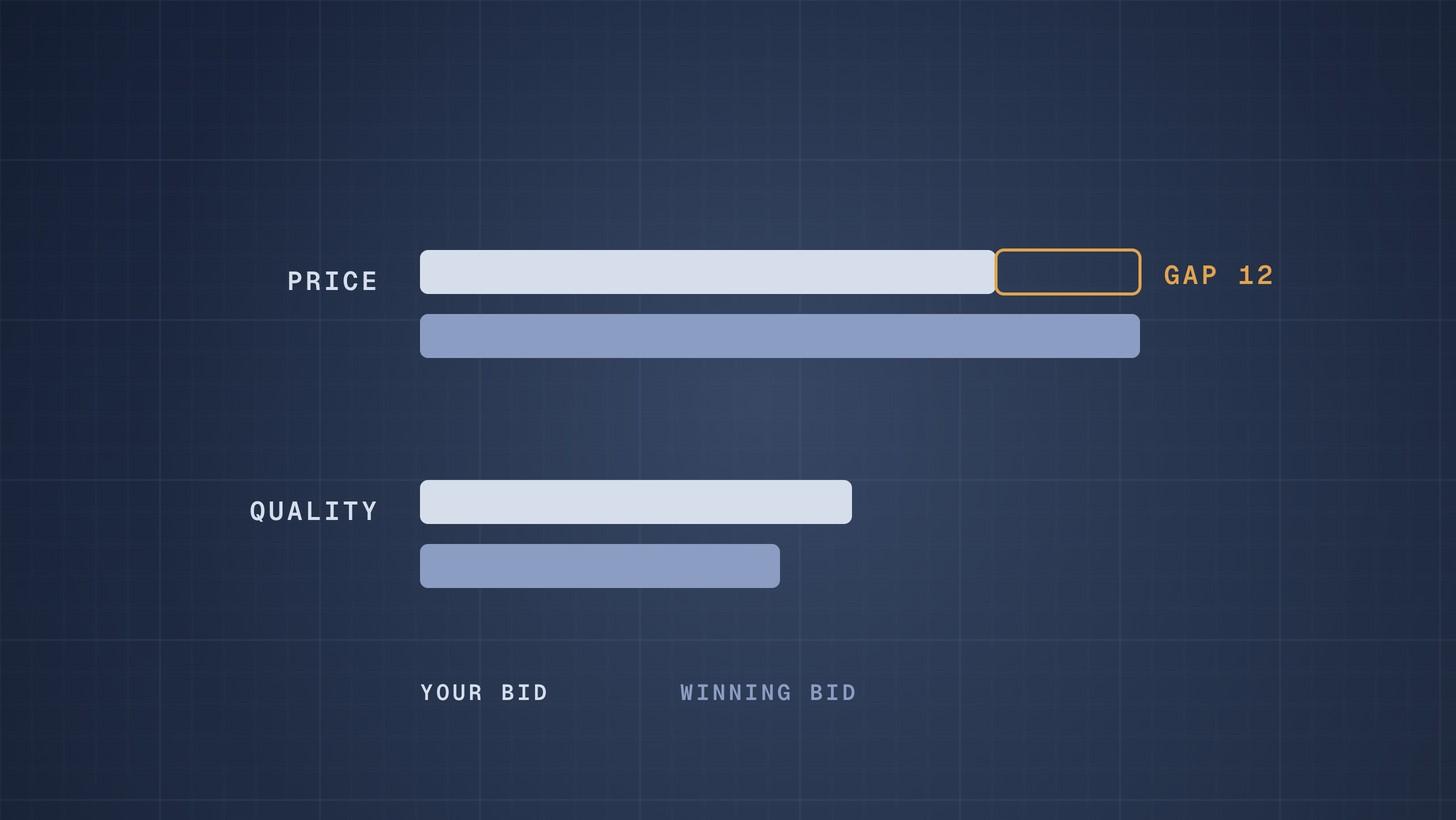
How to Ask for Feedback on a Lost Equipment Tender (With Email Template)
How equipment suppliers should ask for a debrief after losing a bid: when to ask, what to ask, what buyers can and cannot share, and how to use the answers. Includes a short email template.