
How to Price an Engineered Equipment Quote: Cost Build Up, Margin and Escalation
A worked cost build up for a process skid in pounds: materials with alloy surcharge, fabrication and engineering hours, bought out items, risk, margin versus markup, escalation and validity.
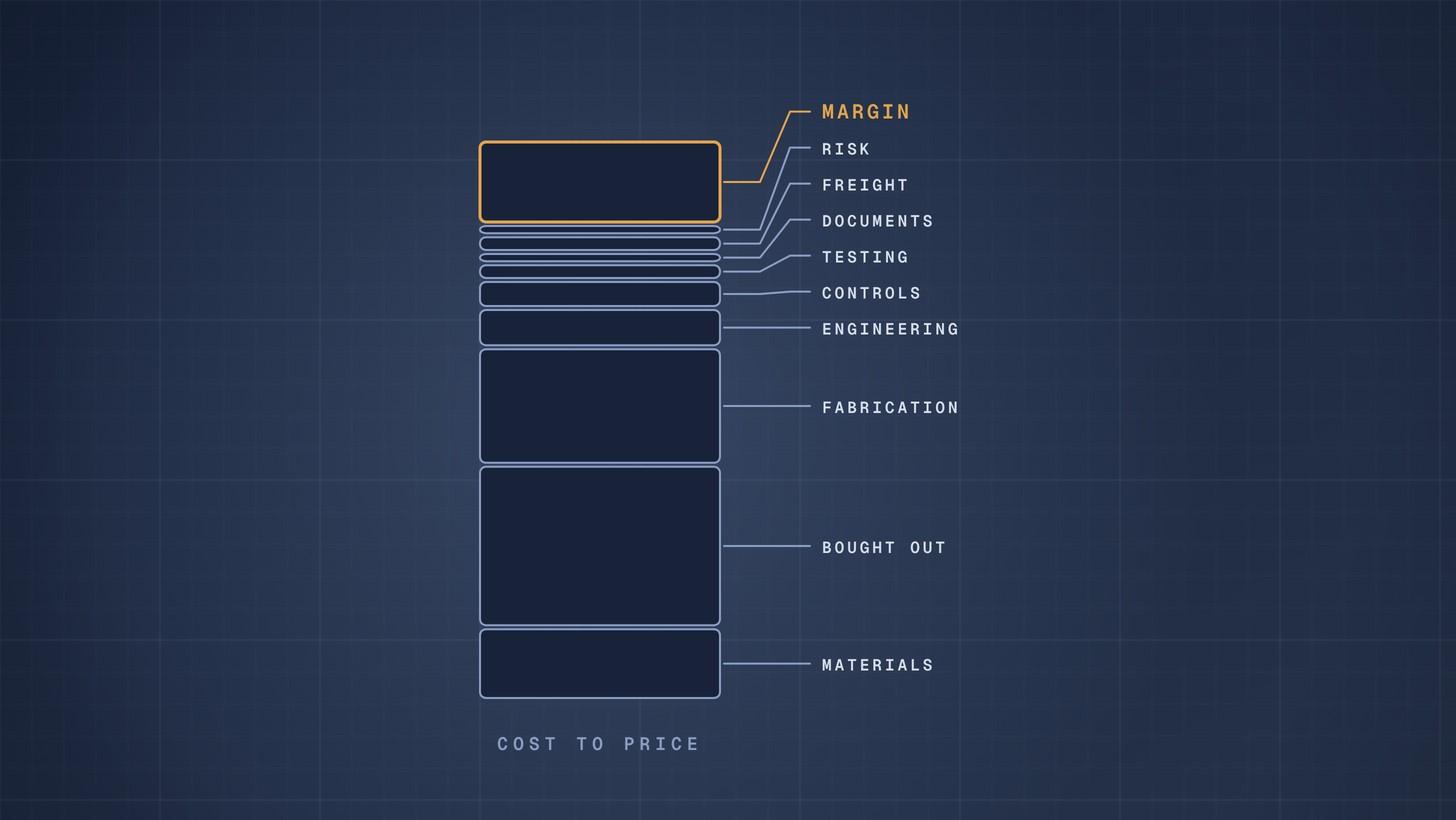
To price an engineered equipment quote, build the cost from the bottom up: materials at today's base price plus alloy surcharge, bought out items from held supplier quotes, fabrication, engineering and controls hours at fully loaded rates, testing, documentation, packing and freight, then a specific risk allowance, then margin. Finally, decide how long the price holds and how it moves if materials or labour change before delivery. Margin is a share of the selling price, not a markup on cost; mixing the two is the most common way to give money away.
Below is the full build up for a process skid, in pounds, with the numbers worked through.
Why this matters now
Material prices move monthly. Stainless producers price as a negotiated base price, plus extras for non standard sizes, plus an alloy surcharge that passes alloy cost changes along the chain, usually published monthly from an average of alloy costs over a period before delivery [1]. As of May 2026, Outokumpu's European surcharge was €2,247 per tonne for 304 and €3,818 per tonne for 316L [2]. A quote held for 90 days on a stainless skid carries a real risk that is easy to miss.
Escalation matters as much. AACE notes that in volatile times escalation may be the largest cost account in an estimate, and that it covers uncertain changes in technical, economic and market conditions over time, of which inflation is only one part [3]. A sales engineer who prices today's cost for a delivery nine months away is betting the margin on stable prices.
Access real procurement opportunities from global buyers
Join ChemCapital to get discovered by verified procurement teams across pharmaceutical, chemical, and industrial manufacturing.
The cost build up, layer by layer
| Layer | What to include | Where the number comes from |
|---|---|---|
| Materials | Plate, pipe, fittings, flanges, by grade and weight, with cutting allowance | Mill or stockist price: base plus extras plus alloy surcharge [1] |
| Bought out items | Pumps, valves, instruments, motors, panels | Written quotes from your suppliers, with their validity dates |
| Fabrication | Cutting, forming, welding, assembly, finishing | Hours from similar jobs, at a fully loaded workshop rate |
| Engineering | Design, drawings, calculations, document reviews | Hours by deliverable, at engineering rate |
| Controls and software | Panel design, PLC and HMI, FDS | Hours by function count |
| Testing | Pressure test, FAT, consumables, witness time | Hours plus consumables |
| Documentation | Data book, manuals, certificates | Hours |
| Packing and freight | Export packing, transport, insurance | Quotes, matched to the Incoterm |
| Risk | Specific, listed uncertainties | Your risk register for this bid |
| Margin | Profit on the selling price | Your pricing policy |
Three rules keep the build up honest. Use hours from real past jobs, not hope. Use fully loaded rates, so overheads are recovered through the hours rather than forgotten. And take bought out prices from written quotes with validity dates that cover your own quote's validity.
Our article on rapid plant cost estimates for sales engineers covers the earlier, budget stage. This build up is for a firm quote; see budgetary quote versus firm quote for the difference.
Practical example: a CIP skid in pounds
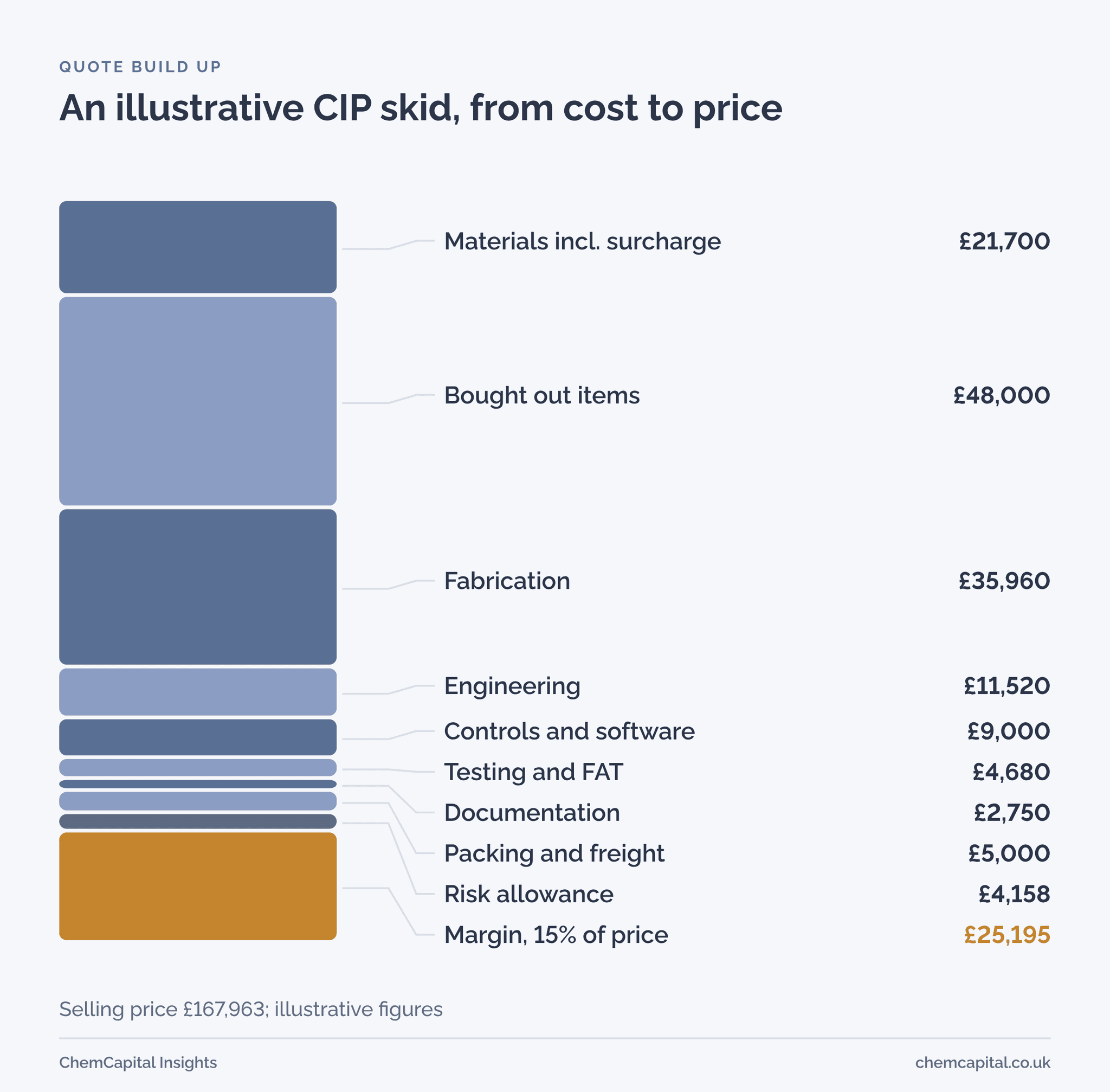
Illustrative figures for a 316L CIP skid, delivery ex works in nine months.
| Line | Basis | £ |
|---|---|---|
| Stainless materials | 3.5 t at £6,200 per t including surcharge | 21,700 |
| Bought out items | Pumps, valves, instruments from held quotes | 48,000 |
| Fabrication | 620 h at £58 | 35,960 |
| Engineering and drawings | 160 h at £72 | 11,520 |
| Controls and software | 120 h at £75 | 9,000 |
| Testing and FAT | 60 h at £58 plus £1,200 consumables | 4,680 |
| Documentation | 50 h at £55 | 2,750 |
| Packing | Export case | 1,800 |
| Freight and insurance | To the buyer's site | 3,200 |
| Direct cost | 138,610 | |
| Risk allowance | 3% of direct cost, for listed risks | 4,158 |
| Total cost | 142,768 | |
| Margin | 15% of selling price | 25,195 |
| Selling price | Cost divided by 0.85 | 167,963 |
The quote goes out at £168,000. Every figure here is an assumption for illustration; your own rates, hours and prices replace them.
Fully loaded rates: where overheads go
An hourly rate that only covers wages loses money on every job. A loaded rate recovers wages, employment costs and a share of the overheads that keep the workshop running: rent, power, supervision, quality, maintenance, insurance and sales.
Illustrative build for the £58 workshop rate used below. A welder costs £21 an hour in wages. Employer costs such as pension contributions, national insurance, holidays and training add about 30%, giving £27.30. The workshop's annual overheads of £1.2 million spread over 40,000 productive hours add £30 an hour. The loaded rate is £57.30, rounded to £58.
Two cautions. Use productive hours, not paid hours, because time spent waiting, cleaning and in training is still paid. And review the rate at least once a year: if the order book shrinks, the same overheads spread over fewer hours, and last year's rate quietly stops covering them.
Bought out items: price the effort, not just the item
Bought out pumps, valves and instruments are often the largest single block of cost, and the easiest to underprice. Beyond the supplier's price, they bring procurement time, expediting, receiving inspection, document collection for the data book, and warranty you pass on to the buyer. Many suppliers add a handling percentage to bought out items for that reason. Whatever you choose, apply it consistently and check that the item's warranty from your supplier lasts at least as long as the warranty you give.
Margin is not markup
If you add 15% to cost, you get a 13% margin, not 15%. On this skid, 15% markup gives £164,184, which is a margin of 13.0% on price. Pricing for a 15% margin gives £167,963. The difference is £3,779 on one job, simply from using the wrong formula.
| Method | Formula | Price | Margin on price |
|---|---|---|---|
| 15% markup on cost | £142,768 × 1.15 | £164,184 | 13.0% |
| 15% margin on price | £142,768 ÷ 0.85 | £167,963 | 15.0% |
Agree internally which one your pricing policy means, and put the formula in the costing sheet so nobody has to remember. The same confusion appears in discounts: a 5% discount off a 15% margin price removes a third of the profit, not a twentieth.
What margin is right depends on your market, risk and order book, not on a published number. For reference only, the UK regulator of single source defence contracts set a baseline profit rate of 9.10% for 2026/27, up from 8.56%, as the starting point for regulated contract profit [4]. Competitive commercial work can sit above or below that; the point is to set your target deliberately.
Risk: list it, do not hide it
A blanket percentage on every line hides what you are worried about. List the specific risks instead, price each one, and keep the list with the quote. For the skid above, the 3% might cover a first time welding procedure qualification, a buyer's document review that may need extra rounds, and a bought out pump with a quote that expires before you can order.
If a risk is large and unclear, such as an undefined control philosophy, do not bury it in the price. Raise it as a clarification or a provisional sum. Our guide to the deviation list in an equipment bid shows how to declare assumptions the buyer can see.
Escalation and validity
Your price is only valid while your costs are. Decide two things before you send it.
Validity. State how long the price holds, and make it shorter than the validity of your own bought out quotes. Thirty to sixty days is common for stainless equipment; quote longer only if you have covered the material risk.
How the price moves after that, or before delivery. For long deliveries, use a price adjustment clause linked to published indices rather than a guess. In the UK, BEAMA publishes contract price adjustment formulae for mechanical and electrical plant, built on labour cost indices and materials indices, for both home and export work [5]. The Office for National Statistics publishes producer price indices for UK manufacturers each month, the next release being on 18 November 2026 [6]. AACE's recommended practice 58R 10 sets out principles for estimating escalation with indices, and 68R 11 adds Monte Carlo simulation for the uncertainty [3]. Our article on price adjustment clauses gives the formula structure.
For the skid, two illustrative movements before delivery:
| Movement | Calculation | Effect |
|---|---|---|
| Stainless surcharge rises £300 per tonne before you buy | 3.5 t × £300 | £1,050 |
| 4% wage increase applies to the 40% of labour falling after January | £62,710 × 40% × 4% | £1,003 |
| Total | £2,053, about 8% of the margin |
Neither is dramatic alone. Together they take 8% of the profit, and in a volatile year they could take far more. Either cover them in the price, shorten the validity, or agree an adjustment clause.
Price options and alternatives separately
Keep the base price for exactly what the buyer asked for, then list options and alternatives as separate lines. Typical options for a skid are commissioning spares, two year spares, site acceptance test support, operator training, extended warranty and a spare pump. Price each one from its own build up, with its own validity.
Alternatives are different: a cheaper material, a different pump type or a shorter delivery at a premium. Offer them openly with the reason and the effect on price and programme. Buyers comparing several bids need to see your compliant price first, so they can compare like with like; an alternative buried in the base price makes your bid look non compliant or hard to evaluate.
Separate pricing also protects margin. When a buyer negotiates, options give you something to adjust without cutting the price of the core scope.
Payment terms belong in the price
Cash has a cost. A skid that takes nine months to build ties up materials, labour and bought out items long before the final invoice. Milestone payments, such as an advance on order and stages at materials, FAT and delivery, reduce what you have to finance. If the buyer asks for 100% on delivery, price the financing cost into the quote, or offer a lower price for better terms. Either way, make the trade visible rather than absorbing it.
Check the quote before it goes
- Does every line have a source: a quote, a past job or a rate sheet?
- Do bought out quotes outlast your own validity?
- Is the alloy surcharge month stated?
- Is margin calculated on price, not cost?
- Are risks listed, and large ones declared as clarifications?
- Are exclusions, Incoterm, delivery time and payment terms written in the offer?
Five minutes on this list saves the awkward call after award, and it is the same list a good buyer will use to check your offer.
Common pricing mistakes
- Pricing from the last job's total. Totals hide differences in scope, grade and documentation. Price from the build up every time.
- Forgetting documentation and testing. Data books, FAT and certificates take real hours. Pharma and EPC buyers want more of them.
- Using bought out quotes that expire first. If your pump supplier's quote lapses in 30 days and yours runs 90, you carry their price risk.
- Mixing currencies without a rule. If bought out items are in euros and your quote in pounds, state the exchange rate assumed.
- No record of assumptions. Six weeks later, nobody remembers why the hours were 620. Keep the build up with the quote.
If you are the buyer
A supplier who shows a clear build up, states validity and offers an index linked adjustment is usually pricing honestly. A suspiciously low price with long validity and no adjustment clause may be heading for change orders.
Where ChemCapital fits
Pricing well starts with good cost data. ChemCapital's Project Costing builds estimates from a library of real quotes, so you can sense check your own build up against what similar equipment has cost before.
Ready to quote with confidence and reach buyers who value a clear price? List your company on ChemCapital. It is free to start.
Frequently asked questions
How do you price an engineered equipment quote?
Build it from the bottom: materials with alloy surcharge, bought out items from held quotes, fabrication, engineering and controls hours at loaded rates, testing, documentation, packing and freight, then a listed risk allowance and margin. Then set validity and an escalation rule.
What is the difference between markup and margin?
Markup is a percentage added to cost; margin is profit as a percentage of the selling price. A 15% markup gives only a 13% margin. To achieve a 15% margin, divide cost by 0.85.
How long should an equipment quote be valid?
Commonly 30 to 60 days for stainless equipment, and never longer than the validity of your own bought out quotes unless you have covered the material risk or agreed a price adjustment clause.
How do you handle steel price changes in a quote?
State the alloy surcharge basis and month, keep validity short, or agree an index linked price adjustment clause, for example using BEAMA formulae or producer price indices.
Should a quote include contingency?
Include a specific risk allowance for listed uncertainties rather than a blanket percentage on every line. Large, unclear risks are better declared as clarifications or provisional sums.
Continue reading
Informational only, not procurement or legal advice. Cited names, frameworks, and statistics belong to their respective owners.
Access real procurement opportunities from global buyers
Join ChemCapital to get discovered by verified procurement teams across pharmaceutical, chemical, and industrial manufacturing.
List your companyRelated articles
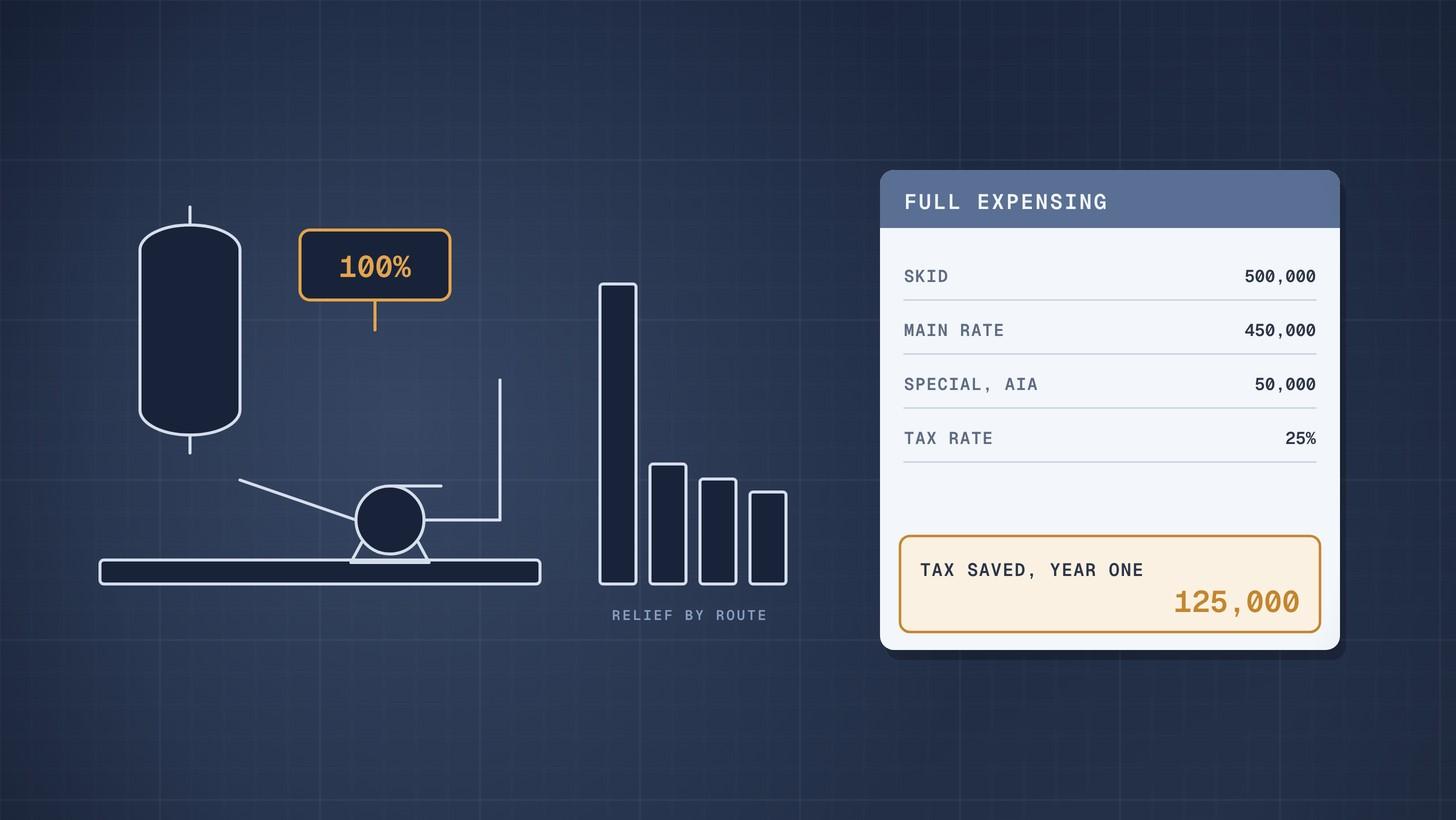
Full Expensing for Plant and Machinery: Worked Example (UK)
How full expensing, the annual investment allowance, first year allowances and writing down allowances apply to a £500,000 process skid, with the November 2026 rates.
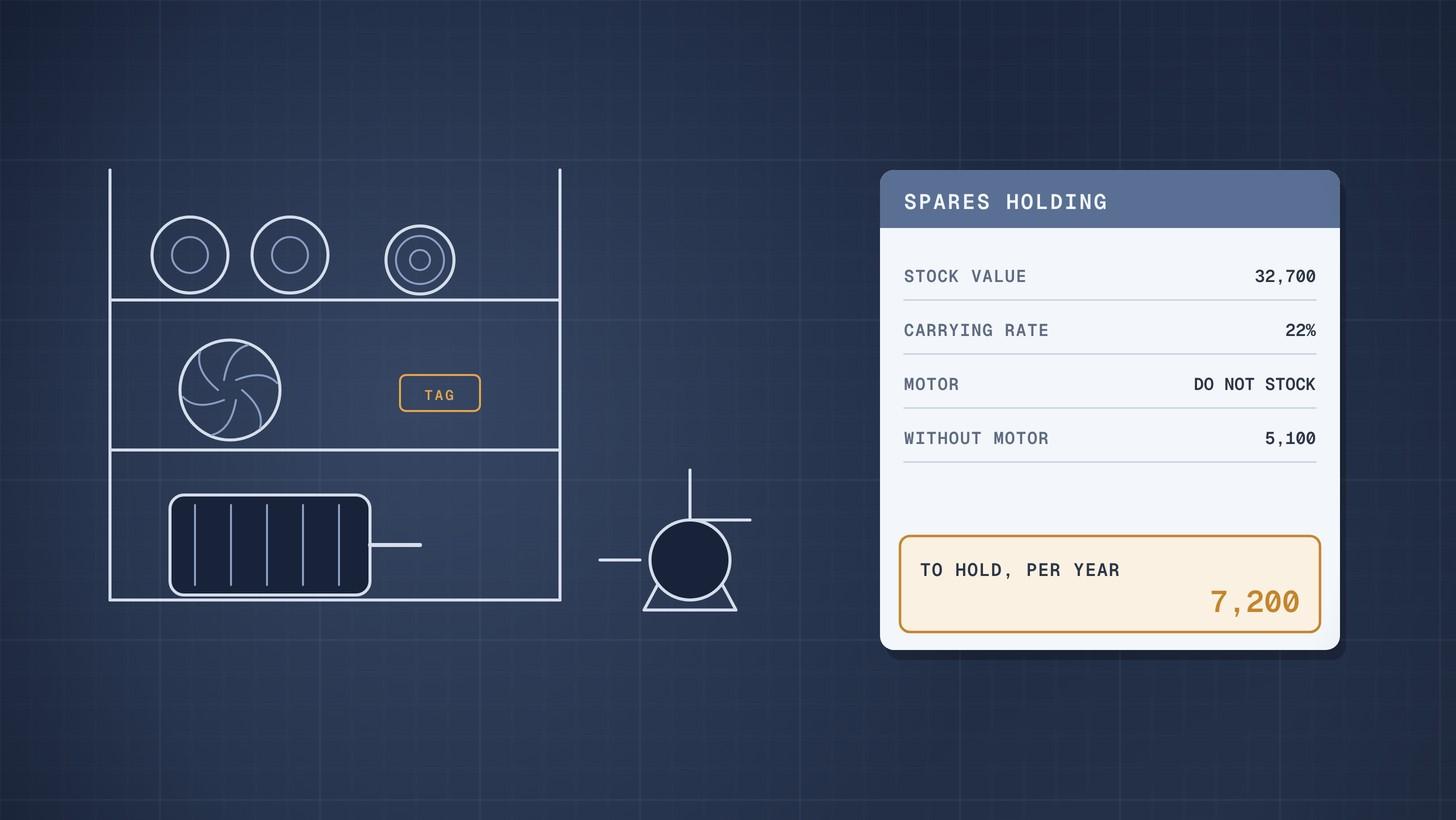
Spare Parts Carrying Cost: Worked Example
How to calculate the yearly carrying cost of spare parts, build your own carrying rate and decide which items on a recommended spares list are worth stocking.
Pump Total Cost of Ownership: Worked Example
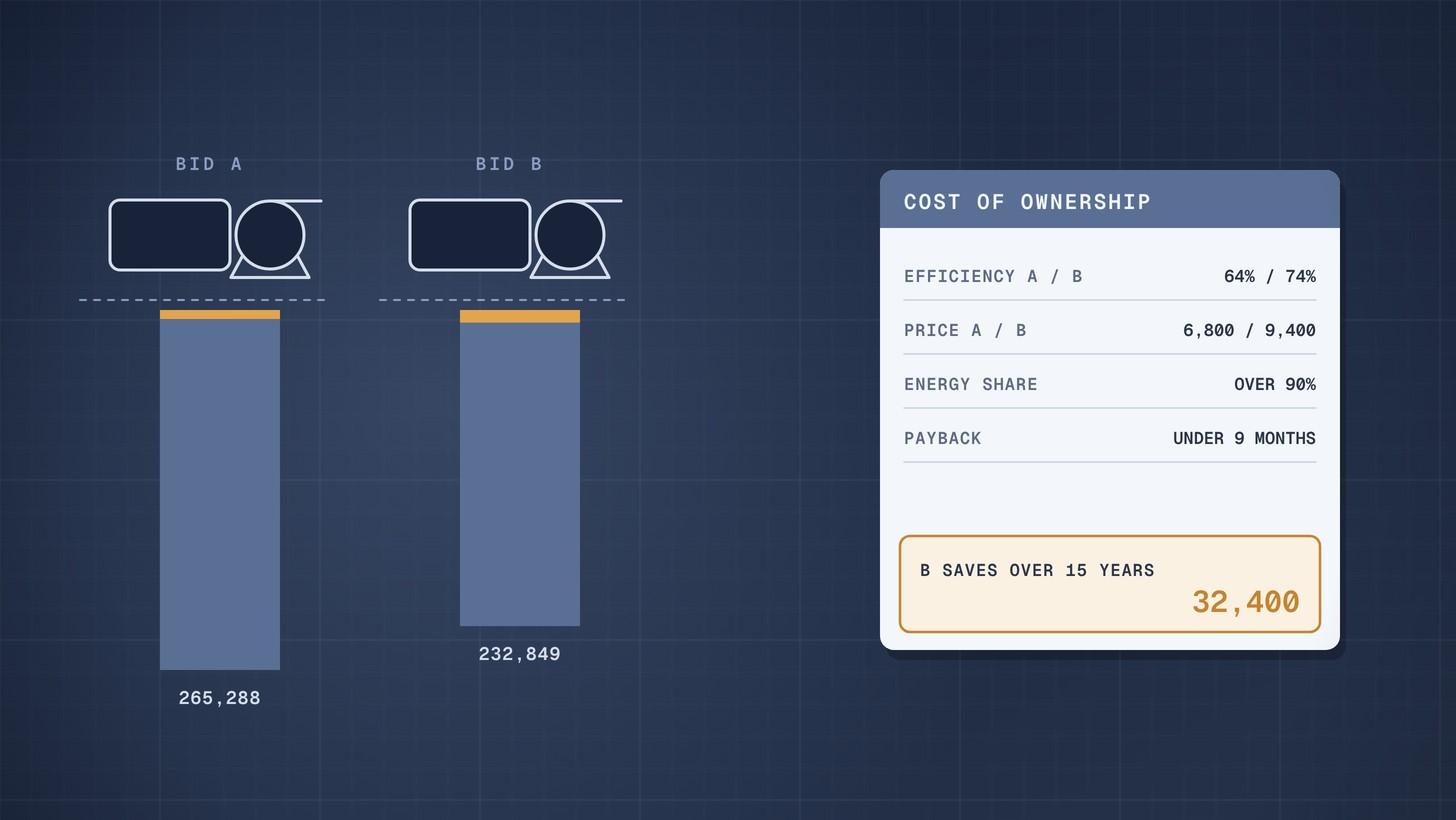
How to calculate a pump's total cost of ownership with the Hydraulic Institute and Europump life cycle cost method, comparing two bids over 15 years in present value.