
EPC Contractor Vendor Registration: How to Get on the Vendor List
How EPC contractors register and qualify equipment vendors, what to prepare, and how to get onto the owner's approved vendor list as well as the contractor's.
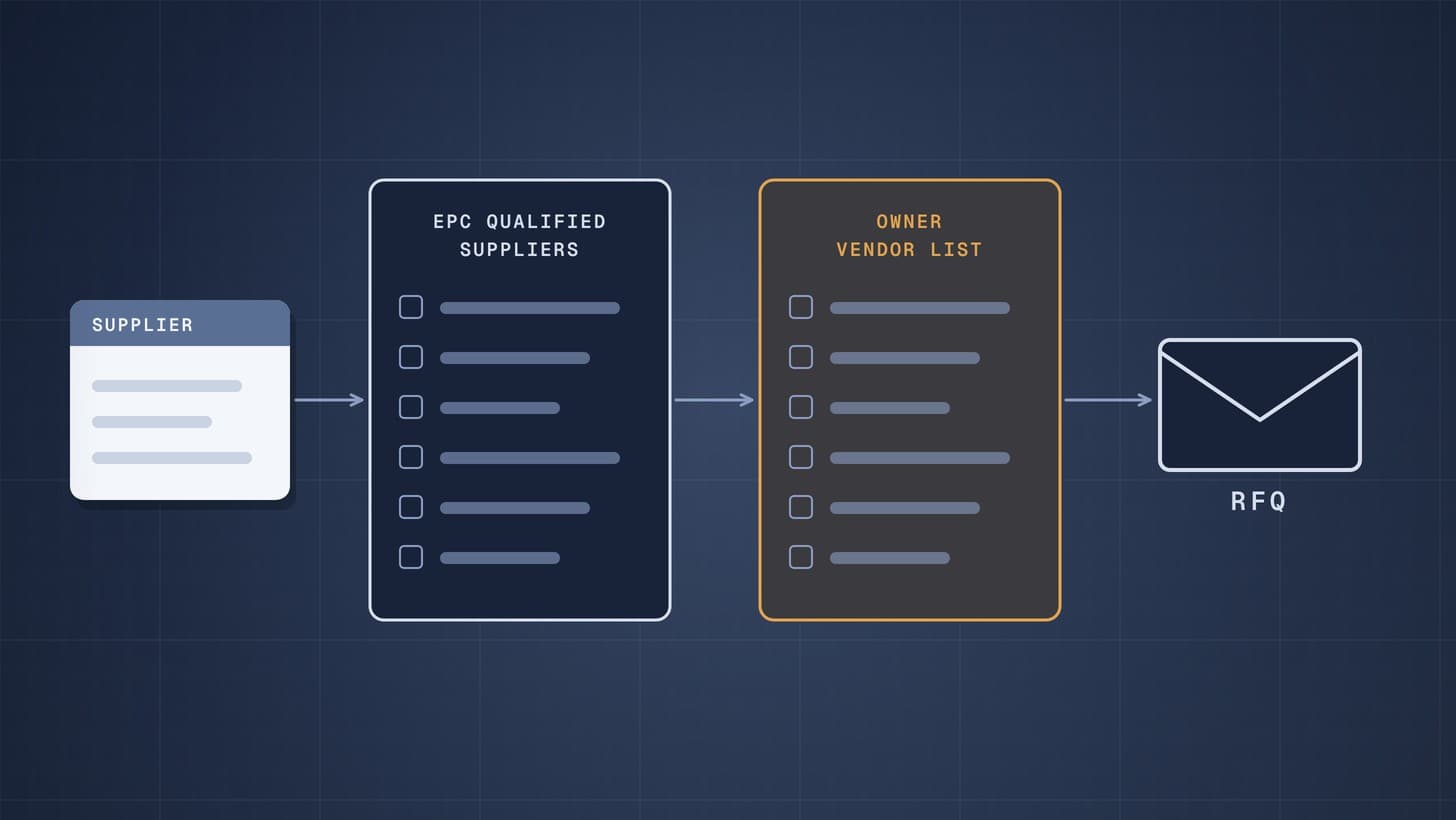
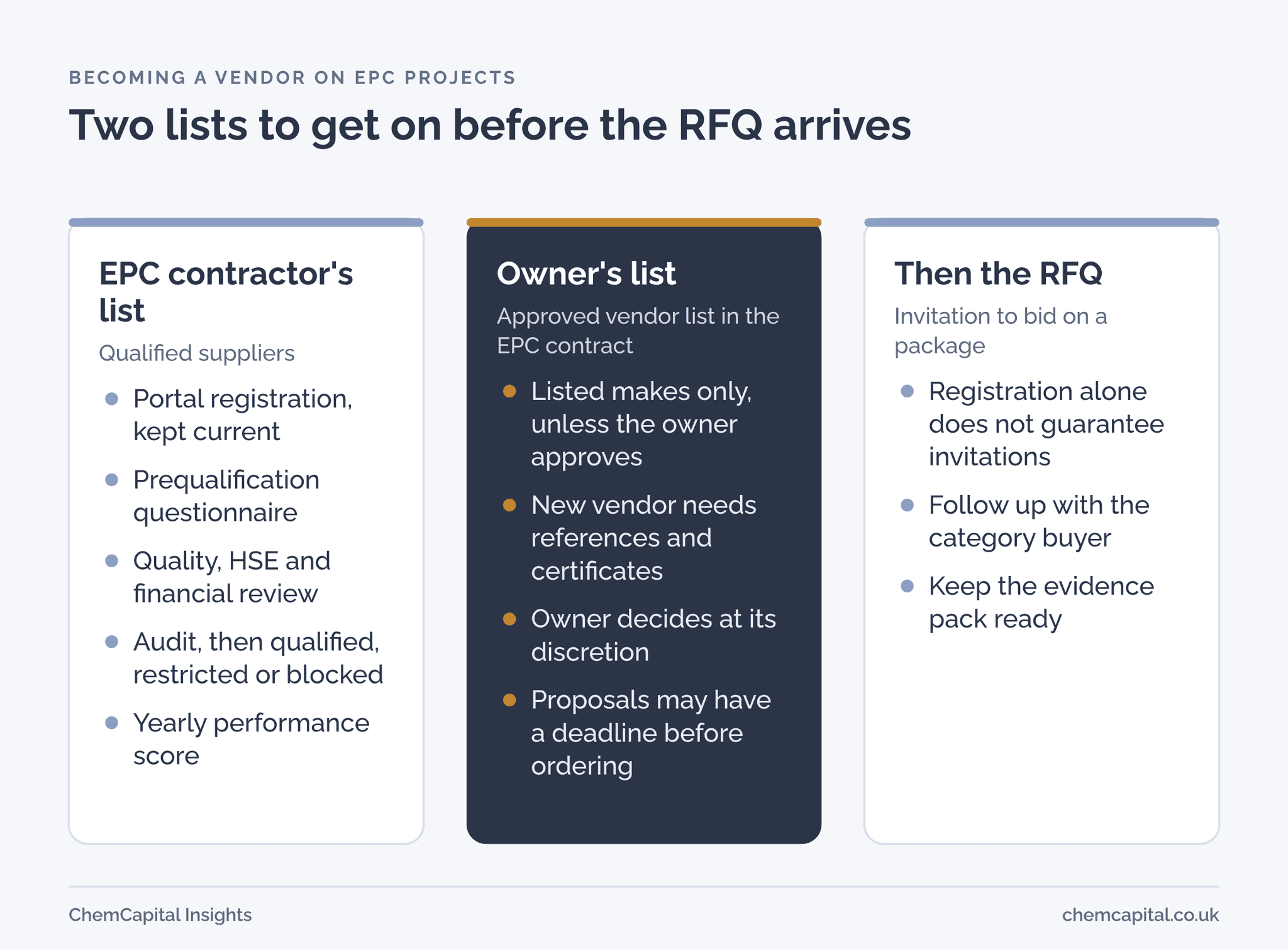
To become a vendor for an EPC contractor, you register on its supplier portal, complete its prequalification questionnaire (company, quality, safety, financial and compliance), pass whatever audit it asks for, and then get invited to bid on specific packages. On most process plant projects you also need to be acceptable to the end client, because the owner may fix an approved vendor list in the EPC contract and the contractor cannot buy outside it without the owner's approval.
So there are two lists to get on, not one. This guide explains how EPC contractors register and qualify vendors, using their own published procedures, what to prepare, and how to get onto the client's list as well.
Why this matters now
On an EPC project the contractor buys the equipment, but it does not buy freely. The contractor's procurement team needs vendors it has already qualified, and the owner's contract often limits which makes may be used. A strong product with no registration and no listing never reaches the bid list.
The published procedures of large contractors show how controlled this is. One contractor's supplier handbook says plainly that a purchase order cannot be placed with an unqualified supplier, because its ERP system blocks it [1]. Another says that completing general or project specific prequalification does not guarantee participation in any request for proposal [2]. Registration is the entry ticket, not the order. For how EPC and EPCM roles differ on who buys, see our guide to EPC vs EPCM.
Access real procurement opportunities from global buyers
Join ChemCapital to get discovered by verified procurement teams across pharmaceutical, chemical, and industrial manufacturing.
How EPC contractors register and qualify vendors
The steps vary by contractor, but the published examples follow the same pattern.
1. Portal registration. You create a supplier record on the contractor's portal. One US contractor's process asks for a DUNS number, business size and classification, and capabilities such as credit rating, bonding capacity, bid range and business focus. Insurance, annual sales, recent work experience and safety statistics are optional, and you must keep the record current [2]. A European contractor names EPC Business and the Ariba Network as its collaboration interfaces for suppliers [3].
2. Prequalification questionnaire. Standard documents in one published process include a contractor questionnaire, an environmental compliance questionnaire, a safety and health questionnaire and requests for safety rating data [2]. Our supplier qualification questionnaire guide covers how to answer them well.
3. Quality, safety and financial review. The contractor reviews your quality management system and your safety history [2]. Another contractor bases supplier selection partly on an audit of financial strength and long term stability [3].
4. Audit and approval. One handbook sets out the sequence: a supplier questionnaire with supporting documents, a financial health assessment and a signed non disclosure agreement go to a monthly supplier review board. After acceptance, a quality and HSE audit (on site, desktop, or by certification record), a technical audit if needed and a first order inspection complete qualification [1]. Suppliers are then rated qualified, restricted (allowed limited orders while qualification is completed) or blocked [1]. Special processes such as welding, NDE, heat treatment and painting need separate qualification by the contractor's specialists before work starts [1].
5. Ongoing performance. Qualification is not permanent. The same handbook measures on time delivery and quality, combines them into a yearly supplier performance indicator shared with suppliers, carries out process verification visits and issues corrective action requests when non conformities are found [1].
The client's approved vendor list
Owners can attach an approved vendor list, sometimes called a makers list, to the EPC contract. Published tender documents show how strict it can be.
In one 2026 power sector EPC tender, the owner says its list must be followed very strictly. The final make is subject to owner or consultant approval during detailed engineering. To propose a vendor not on the list, the bidder needs the owner's prior approval, backed by references, performance certificates, work completion certificates and test certificates, and the owner decides at its sole discretion [4]. Listing a sub vendor does not relieve the contractor of responsibility for performance [4].
Another owner's list allows the contractor to propose extra sub vendors after award, but only if they are submitted at least 90 days before the ordering date or the start of manufacturing. It also asks the contractor to check each listed vendor's current status and capacity before using it [5].
What this means for you as a vendor:
- Get listed by the owner, not only the contractor. If the client's list names three makes for your product and you are not one of them, the contractor's buyer may not be able to buy from you without owner approval.
- Make it easy for the contractor to propose you. Have a pack of references, performance certificates and test certificates ready to go [4].
- Move early. A 90 day window before ordering [5] disappears fast on a long lead item.
For the regulated end of the market, our guide on how to get on an approved vendor list in pharma goes into owner qualification in more depth.
What to prepare
| Item | What to have ready |
|---|---|
| Company record | Legal details, ownership, business classification, credit and financial statements |
| Capability statement | Products, size ranges, materials, codes, factory capacity, lead times |
| Quality | Certificates, quality manual, special process qualifications (welding, NDE, painting) |
| HSE | Policy, statistics, safety ratings where asked, environmental compliance |
| Compliance | Code of conduct acceptance, anti bribery, trade controls, data privacy |
| References | Recent projects with client, contractor, scope and contact; performance and completion certificates |
| Test evidence | Type test and inspection certificates for key products |
| Audit readiness | A host plan for an on site or desktop audit |
ChemCapital's AI Supplier Discovery finds suppliers by capability, so a complete listing that matches this pack helps buyers find you when they are building a long list.
Practical example
Illustrative. A UK maker of agitated vessels wants to supply a European EPC contractor on a pharmaceutical project in Ireland.
Month 1: it registers on the contractor's portal and completes the questionnaire, attaching its quality certificates, welding procedure qualifications and three references. Month 2: the contractor's desktop audit closes with two minor findings, both answered within a fortnight. The maker is rated restricted until its first order inspection.
At the same time, it learns the owner's makers list names two vessel suppliers, not including it. It sends the contractor a ready pack for owner approval: references for similar vessels, performance certificates from two previous clients and its test records. The contractor submits it 100 days before the planned order date, inside the owner's window. The owner adds the maker to the list for this project, and an RFQ follows.
Common mistakes
- Registering and waiting. Registration does not create invitations; follow up with the category buyer.
- An out of date portal record. Contractors expect you to keep it current [2].
- Ignoring the owner. Being qualified by the contractor does not put you on the client's list.
- Thin references. Owners decide on evidence; send certificates, not adjectives.
- Falling for impersonation. One contractor warns that fraudsters send fake purchase orders and banking instructions in its name [6]. Check before you act.
Keeping your status once you have it
Qualification decays if you ignore it. Renew certificates before they expire and update the portal when they do. Answer corrective action requests with a root cause, not an apology; the handbook quoted above expects suppliers to investigate root causes and put corrective actions in place [1]. Watch your delivery and quality record, because that is what feeds the yearly performance score [1]. A supplier that drops to restricted or blocked status loses bids it never sees.
If you are the EPC buyer
Tell vendors what your qualification involves and how long it takes, and point them to the owner's list early. When you want to propose a new vendor to the owner, ask the vendor for the evidence pack described above and submit it inside the contract's window. A wider qualified list gives you more competition on every package, and a vendor who has already passed your audit costs far less to bring in than one found in a hurry when a listed maker cannot deliver.
Where ChemCapital fits
Getting on EPC and owner lists takes evidence and persistence. Keep your pack current and make it easy for every buyer to see what you make.
Ready to put your capabilities in front of buyers building their long lists? List your company on ChemCapital. It is free to start.
Frequently asked questions
How do I become a vendor for an EPC company?
Register on the contractor's supplier portal, complete its prequalification questionnaire covering company, quality, safety, financial and compliance information, pass any audit, and then follow up with the category buyer for your products. Registration alone does not guarantee invitations to bid.
What is a client approved vendor list on an EPC project?
It is the owner's list of acceptable makes, often attached to the EPC contract. The contractor must buy listed makes unless the owner approves another, usually on evidence such as references, performance certificates and test certificates.
How long does EPC vendor qualification take?
It depends on the contractor and the audit needed. One published handbook routes new suppliers through a monthly review board, then a quality and HSE audit and a first order inspection before full qualification, with a restricted status allowing limited orders in the meantime.
What documents do EPC contractors ask vendors for?
Typically company and financial details, quality certificates and special process qualifications, health and safety records, compliance declarations, references with performance or completion certificates, and test evidence for key products.
Continue reading
Informational only, not procurement or legal advice. Cited names, frameworks, and statistics belong to their respective owners.
Access real procurement opportunities from global buyers
Join ChemCapital to get discovered by verified procurement teams across pharmaceutical, chemical, and industrial manufacturing.
List your companyRelated articles

Design Qualification (DQ) for GMP Equipment: What It Is and What the Vendor Provides
Design qualification is the documented check that a proposed equipment design meets the URS and GMP before it is built. Here is where DQ sits in EU GMP Annex 15, what evidence the vendor supplies, and a DQ checklist.
Requirements Traceability Matrix for GMP Equipment: From URS to PQ
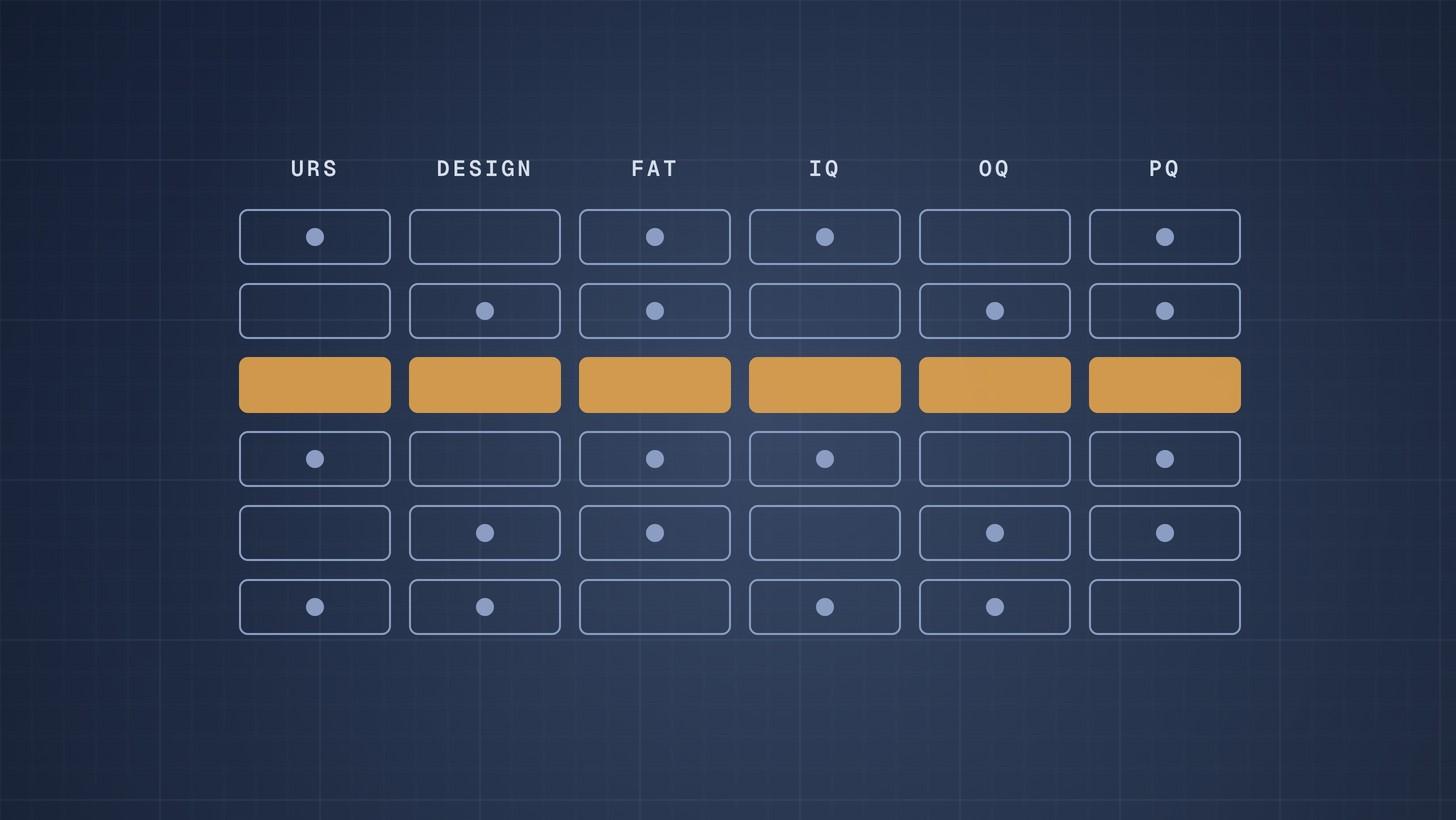
A requirements traceability matrix links every URS line to the design document that meets it and the test that proves it, from DQ through FAT, SAT, IQ, OQ and PQ. Here is how to build one, with a template.
How to Prepare for a Customer Quality Audit as an Equipment Manufacturer
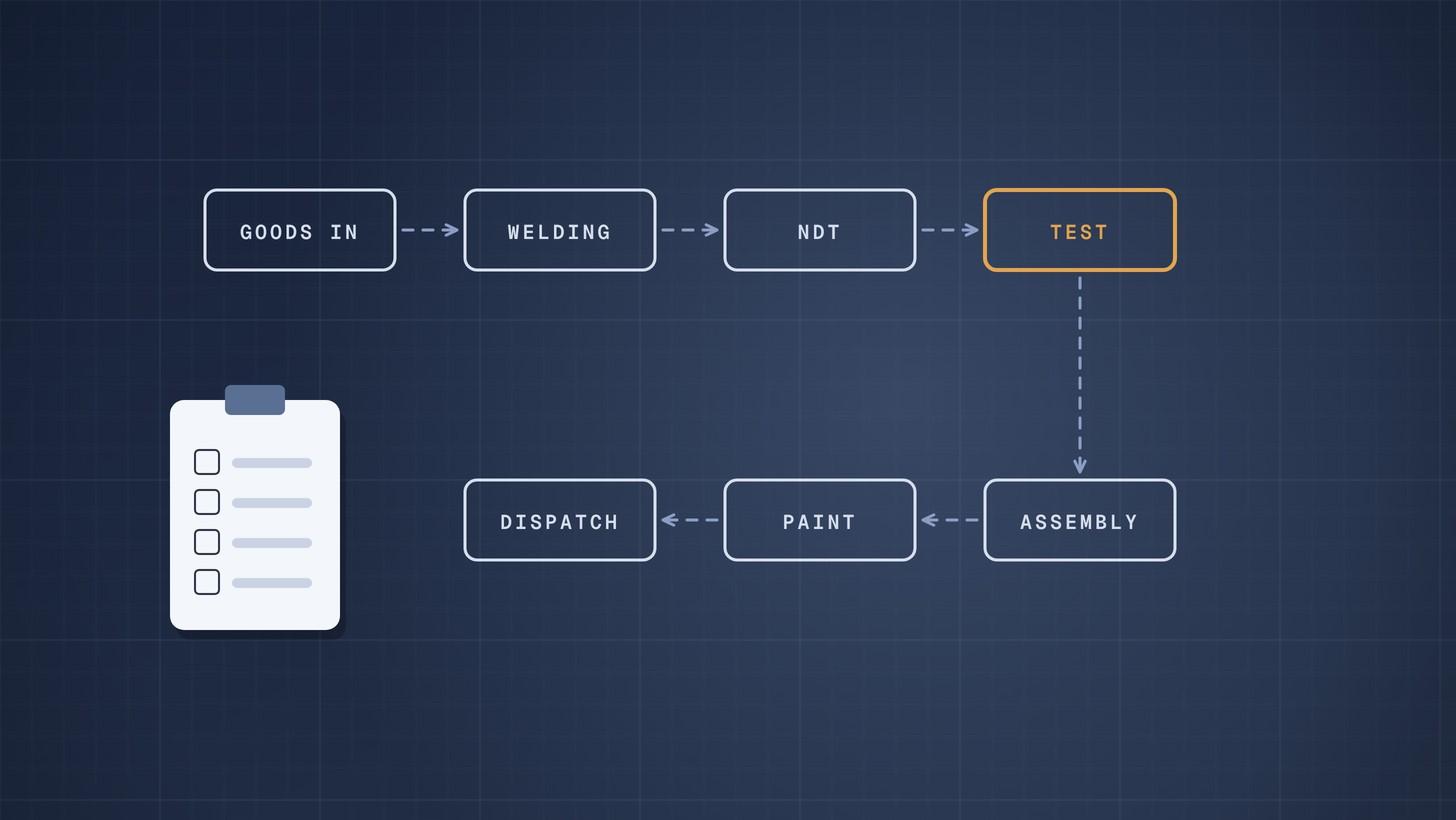
A practical guide for equipment makers facing a customer or vendor audit: the documents to have ready, how to run the walk through, the findings auditors raise most often and how to close them properly.