
How to Find Tenders for Pumps, Valves and Process Equipment
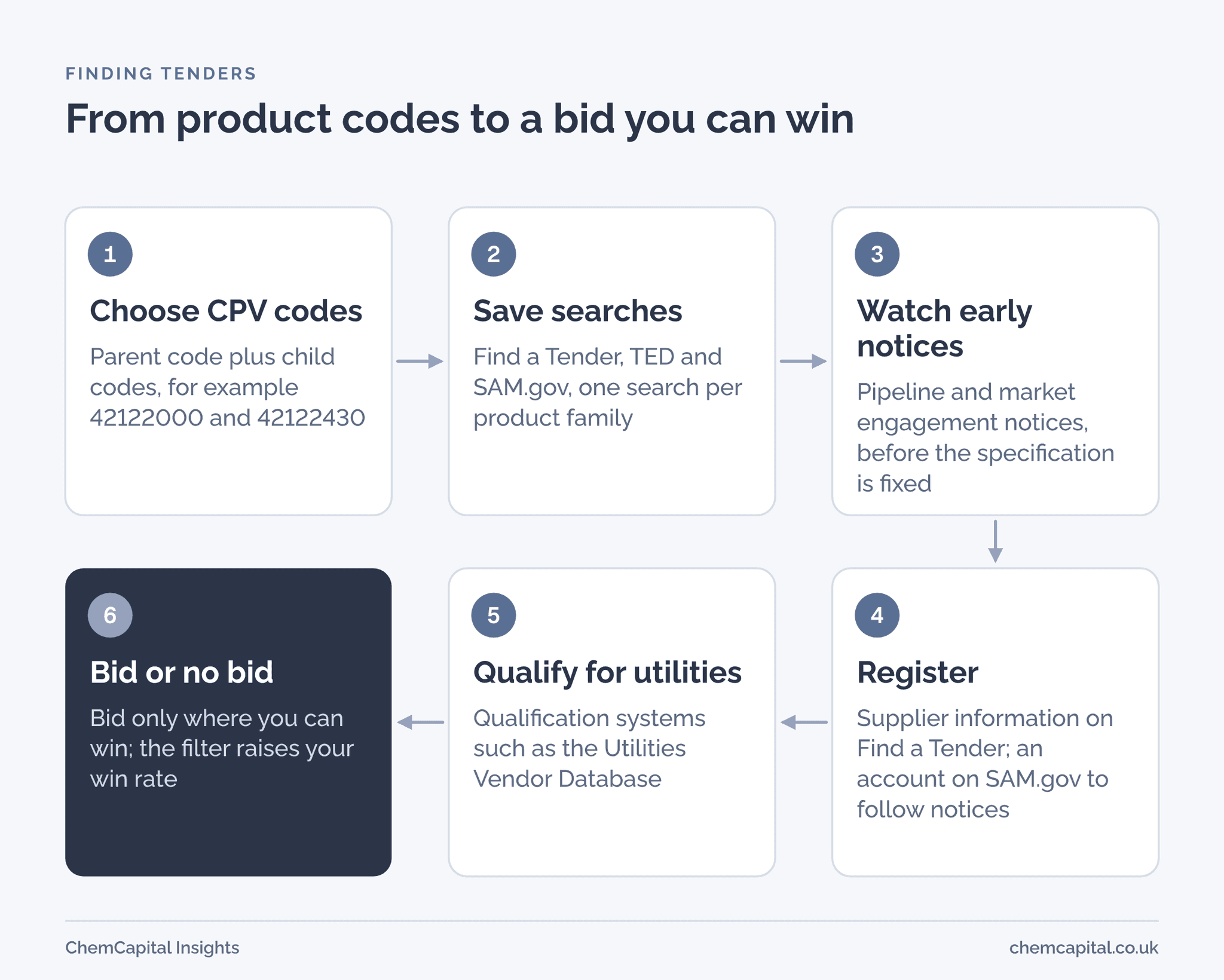
Public tenders for process equipment are published free on Find a Tender in the UK, TED in the EU and SAM.gov in the US. Here is how to set alerts with the right CPV codes and where utility frameworks fit.
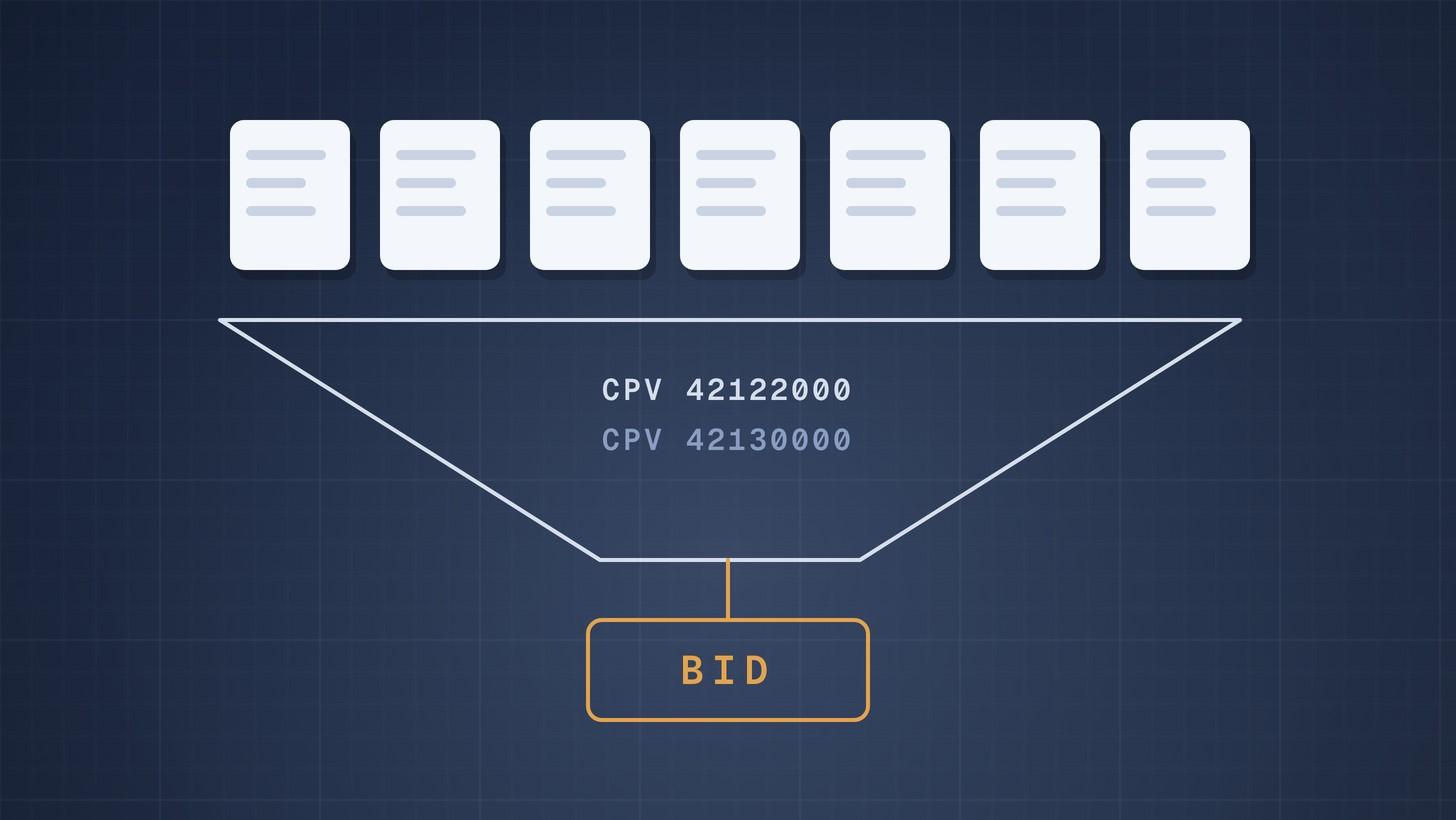
Public sector tenders for pumps, valves and process equipment are published free of charge: on Find a Tender in the UK, on TED for the European Union and on SAM.gov in the United States. Set up a saved search on each with the right product codes, read the early market engagement notices as well as the tenders, and register with the utility qualification schemes your target buyers use.
Why this matters now
The UK changed where notices go. Under the Procurement Act 2023, contracting authorities publish their procurement notices in one place, the central digital platform known as Find a Tender, and anyone can read them [1]. Find a Tender now replaces Contracts Finder for below threshold procurements; Contracts Finder stays only for procurements that began under the old rules [2]. If your alerts still point at Contracts Finder alone, you are missing new opportunities.
Public buyers are a real market for equipment makers: water and wastewater, energy, health, defence and research all buy pumps, valves, skids and instruments. Most of it is tendered openly.
Access real procurement opportunities from global buyers
Join ChemCapital to get discovered by verified procurement teams across pharmaceutical, chemical, and industrial manufacturing.
The free official portals
| Portal | Region | What you find | Cost |
|---|---|---|---|
| Find a Tender | United Kingdom | All notices under the Procurement Act 2023, above and below threshold [1] | Free |
| Contracts Finder | United Kingdom | Older procurements started under the previous rules [2] | Free |
| TED | European Union | Tenders above EU thresholds, run by the EU Publications Office [3] | Free |
| SAM.gov | United States | Federal contract opportunities [4] | Free |
Find a Tender. It is a noticing system only. You read the notice there, then the buyer runs the tender through its own eSender or portal [2]. Below threshold tender notices appear when a central government buyer, including NHS trusts, expects to spend £12,000 or more including VAT, or other authorities £30,000 or more [5]. To bid on covered procurements you register and store your core supplier information on the platform, which only the authorities you choose can see [1]. Registration is not required for below threshold work [2].
TED. Tenders Electronic Daily is the EU's official database of procurement notices. It is free to search and read, every notice carries CPV codes, and you can save searches and set basic notifications [3]. Publication is mandatory above the EU thresholds, which from 1 January 2026 are €140,000 for central government goods and services, €216,000 for sub central authorities and €432,000 for utilities, net of VAT [3]. Smaller contracts appear on national portals.
SAM.gov. You can search US federal opportunities without signing in. To follow an opportunity you need an account, and followed notices trigger emails when amendments are added, dates change or the notice is cancelled, with a choice of immediate, daily or weekly emails [4].
Set alerts with CPV codes
Keyword searches miss notices written in procurement language. The Common Procurement Vocabulary, used on TED and on UK notices, classifies what is being bought with numeric codes [3]. Useful starting codes for process equipment suppliers [6]:
| CPV code | Covers |
|---|---|
| 42122000 | Pumps |
| 42122230 | Metering pumps |
| 42122430 | Centrifugal pumps |
| 42130000 | Taps, cocks, valves and similar appliances |
| 42131120 | Gate valves |
| 42131140 | Pressure reducing, control, check or safety valves |
Search on the parent code (for example 42122000) to catch buyers who code loosely, then add the specific codes. Add keywords for what buyers write in titles, such as "pumping station", "dosing", "MEICA" or "framework". Save one search per product family so the alerts stay readable. Review the codes every quarter, because buyers code the same purchase in different ways.
Read a notice in five minutes
Most notices can be screened quickly if you read them in the same order every time.
- What is being bought. The title, the CPV codes and the short description. A pump notice inside a large civil works contract usually means you are a subcontractor, not the bidder.
- Lots. Many equipment tenders are split into lots by product or region. You can often bid for one lot only.
- Value and duration. An estimated value and a framework term tell you whether the work justifies the bid effort.
- Procedure and deadlines. Note the date for clarification questions as well as the submission deadline. Questions asked late often go unanswered.
- Where the tender runs. The notice links to the buyer's own portal, where you register to download documents [2].
- Selection criteria. Turnover, insurance, accreditations, references. If you cannot meet a minimum requirement, stop here.
- Award criteria. The split between price and quality, and how whole life cost is scored.
Log each screened notice, even the ones you reject, with the reason. After six months the log shows which buyers and lot types you actually win, and your saved searches can be tightened to match.
Read the early notices, not just the tenders
The best time to influence a tender is before it is written. Under the Procurement Act, authorities that spend £100 million or more a year are required to publish pipeline notices giving an 18 month view of planned procurements of £2 million or more, and authorities publish a preliminary market engagement notice when they plan to talk to the market [2]. Responding to market engagement is how a supplier makes sure the specification does not exclude its technology. Our UK and Ireland process projects and 2027 project pipeline articles cover private sector projects you will not see on any portal.
Utility frameworks and qualification systems
Water, gas and electricity companies often buy through frameworks and supplier qualification systems rather than one off tenders. The Utilities Vendor Database, run by Achilles, is a qualification system that subscribing utilities use to choose which suppliers to invite to regulated procurements, mainly in electricity, gas and water, plus ports, airports and postal services [7]. Suppliers register, pay an annual subscription and complete a prequalification questionnaire, and some higher risk categories also need an audit [7].
If you are not registered when a utility refreshes its framework, you may be locked out for years. Track framework renewal notices with the same CPV alerts, and keep your registration documents ready; our vendor registration form guide lists what buyers ask for.
Frameworks run for several years, so the renewal is the opportunity. A utility often runs market engagement months before the tender itself, and suppliers who respond early can shape the lot structure and the technical requirements. Note the expiry date of every framework in your sector and set a reminder a year ahead.
Practical example
Illustrative figures. A valve maker sets saved searches on Find a Tender and TED for 42130000 and its child codes, plus "pumping station".
| Step | Per month | Per year |
|---|---|---|
| Notices in the alerts | 40 | 480 |
| Relevant to its products and regions | 6 | 72 |
| Bids submitted after a bid or no bid review | 2 | 24 |
| Wins at a 25% win rate | 0.5 | 6 |
At about four working days per bid, that is 96 days of bid effort a year, or 16 days per contract won. The numbers show why the filter matters: a sharper bid or no bid decision raises the win rate more cheaply than more bids. Our guide on how suppliers win industrial contracts covers what happens after you decide to bid.
Do not ignore private buyers
Public portals show only part of the market. Pharmaceutical, chemical and food manufacturers, and the EPC contractors who buy for them, rarely publish tenders. They search for suppliers directly, increasingly with AI tools, and send RFQs to the ones they find.
Getting onto those lists works differently from public tendering. EPC contractors keep approved vendor lists by equipment category and refresh them at the start of each large project; our guide to EPC contractor vendor registration explains the process. Owner operators qualify suppliers through questionnaires and audits before the first RFQ arrives. In both cases, being easy to find and quick to qualify matters more than watching a portal.
Where ChemCapital fits
ChemCapital brings private buyers' RFQs to you. With a free listing, procurement teams find your products through Supplier Discovery and send enquiries and RFQs straight to your inbox. See what suppliers get from ChemCapital.
Ready to add private sector RFQs to your public tender pipeline? List your company on ChemCapital. It is free to start.
Frequently asked questions
Where can I find tenders for pumps and valves?
Free official portals: Find a Tender in the UK, TED for the European Union and SAM.gov for US federal work. Utilities often buy through frameworks and qualification systems such as the Utilities Vendor Database.
Is Contracts Finder still used in the UK?
Only for procurements that started under the previous rules. Under the Procurement Act 2023, new notices, including below threshold tenders, are published on Find a Tender.
What is the CPV code for pumps?
42122000 covers pumps, with child codes such as 42122430 for centrifugal pumps and 42122230 for metering pumps. Valves sit under 42130000.
Do I need to register to see UK public tenders?
No. Anyone can read notices on Find a Tender. Suppliers bidding for covered procurements register and store their core supplier information on the platform; registration is not required for below threshold work.
How do I get tender alerts for free?
Save searches with your CPV codes and keywords on each portal and turn on email notifications. On SAM.gov you can also follow individual opportunities to be told about amendments.
Continue reading
Informational only, not procurement or legal advice. Cited names, frameworks, and statistics belong to their respective owners.
Access real procurement opportunities from global buyers
Join ChemCapital to get discovered by verified procurement teams across pharmaceutical, chemical, and industrial manufacturing.
List your companyRelated articles
AMP8 for Equipment Suppliers: How Water Companies Buy, 2025 to 2030
AMP8 is the 2025 to 2030 investment period for water companies in England and Wales, with £104bn approved. Here is how the money is spent, how water companies buy through frameworks and delivery partners, and how equipment suppliers get in.
Framework Agreements for Pumps, Valves and Instruments: When They Beat Project Buying
A frame agreement for pumps, valves or instruments pays off when you buy the same types repeatedly. Here is when it beats project by project buying, what to put in it, and a worked example.
How to Get Your Equipment Specified by Engineers on Process Projects
On process projects the specification and the vendor list decide who gets the RFQ. Here is how specifications are built, from industry standards to owner specs and datasheets, and what equipment makers do to get on them.