
Vendor Registration Forms: What Buyers Ask Equipment Suppliers For
The company, tax, bank, insurance, certificate and compliance details buyers ask for when registering an equipment supplier, why they ask, and a checklist to build your pack.
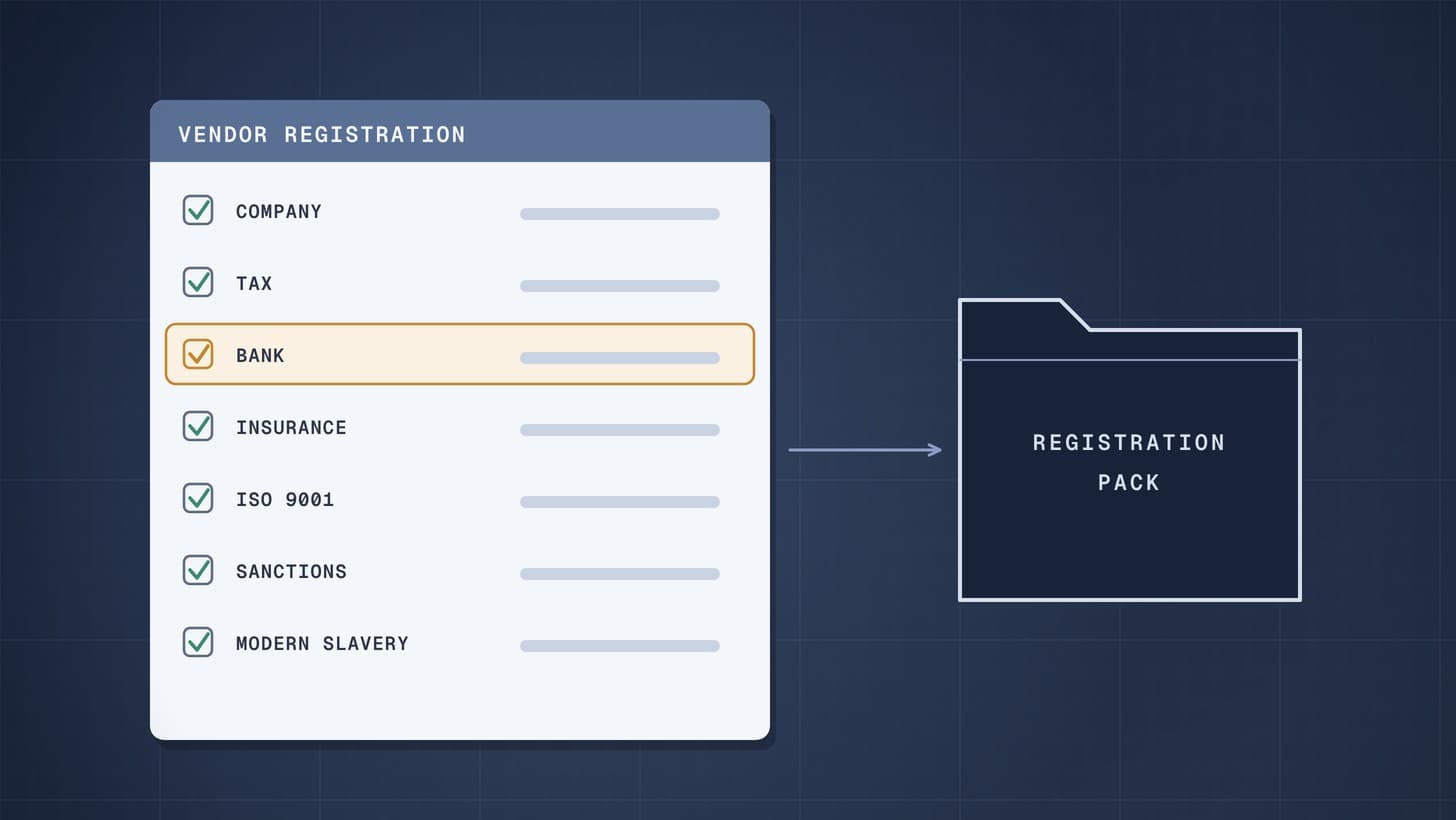
A vendor registration form is how a buyer's company sets you up as a supplier it can pay: legal name and company number, address, VAT and tax details, bank details on a signed bank letter, insurance certificates, quality certificates such as ISO 9001, sanctions and compliance declarations, and often a modern slavery statement. Until it is complete and approved, your purchase order cannot be raised or your invoice cannot be paid.
Free download: supplier registration pack (Word, 7 pages). Ready to fill in, free to use, no sign up needed.
Most equipment suppliers fill in dozens of these a year, each slightly different. The fastest suppliers keep a ready registration pack and answer the same way every time. This guide lists what buyers ask for, why, how they check it, and gives a checklist you can build your pack from.
Why this matters now
Registration has become a gate rather than a formality. Three things drive that.
First, public buyers in the UK now use a common system. Under the Procurement Act 2023, suppliers store their core business information on the central digital platform, Find a Tender, and share it with the buyer when they bid. That information includes basic details such as the Companies House number and VAT number, recent annual accounts, connected persons with influence or control, and any exclusion grounds. The platform is free to use [1].
Second, payment fraud. Criminals pose as regular suppliers and email customers asking them to change the bank details they pay into. In 2018 alone, UK firms lost almost £93 million to invoice and mandate fraud, according to UK Finance [2]. So buyers now insist on a bank letter and call to confirm any change.
Third, compliance checks on suppliers now cover sanctions, modern slavery and the authenticity of certificates, and each one adds a line to the form.
Access real procurement opportunities from global buyers
Join ChemCapital to get discovered by verified procurement teams across pharmaceutical, chemical, and industrial manufacturing.
What buyers ask for, and why
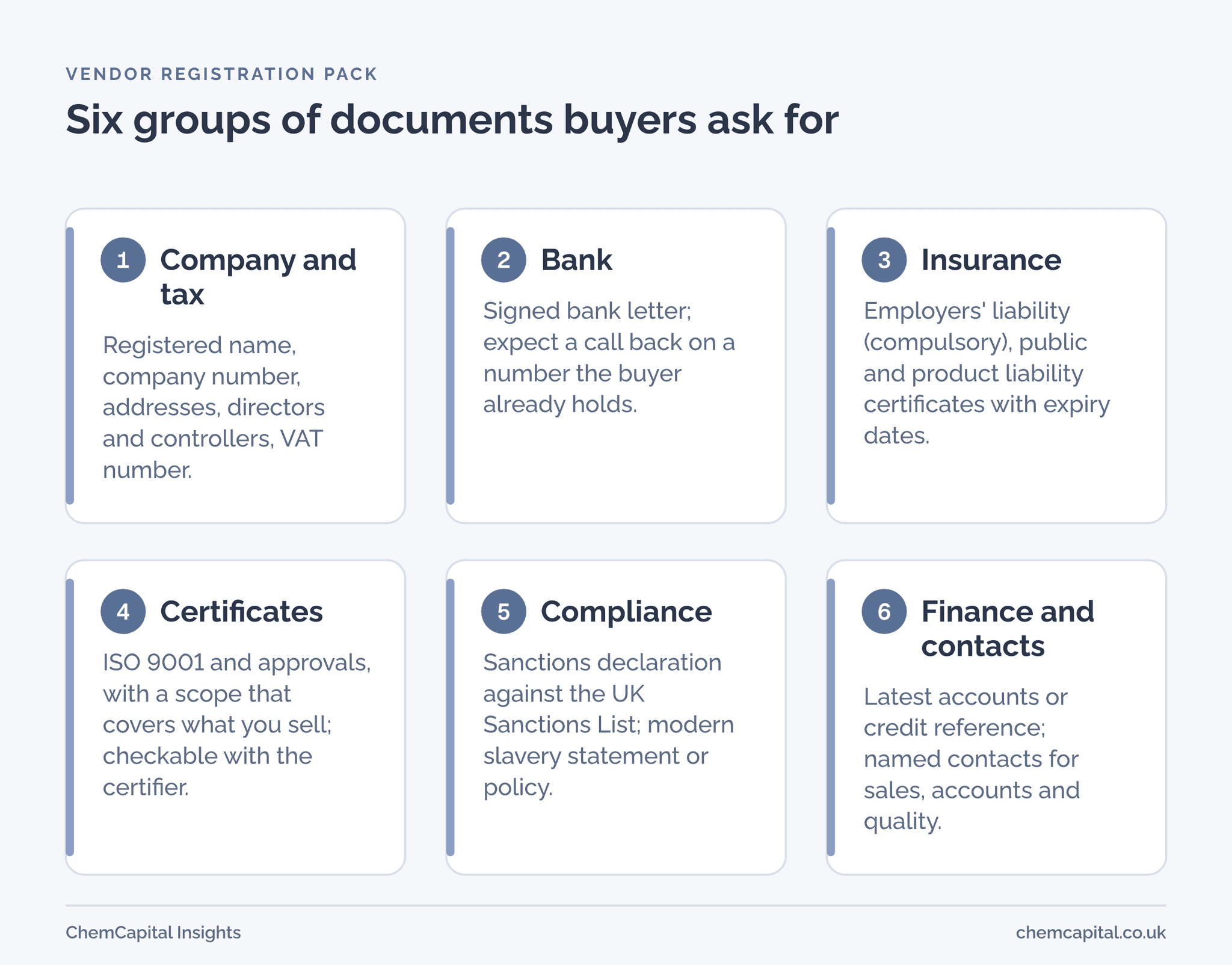
Company details. Registered name, trading name, company number, registered and trading addresses, website, and the names of directors and anyone with significant control. Expect them to be checked against Companies House or your local register. Make sure the name on your form matches your invoices and bank account exactly.
Tax. VAT number, and for overseas suppliers the local tax registration.
Bank details. Account name, sort code and account number or IBAN and SWIFT code, on a letter from your bank or on your letterhead signed by a director. UK Finance advises businesses to confirm account details by phone or in person before paying, and not to use contact details given in the email [2]. Expect the buyer to call you, and give them a named contact on a landline or main switchboard.
Insurance. Employers' liability insurance is compulsory for employers in Great Britain [3]. Buyers of engineered equipment often also ask for public liability and product liability, and sometimes professional indemnity if you do design. Send the current certificates showing insurer, policy number, limit of indemnity and expiry date.
Quality and other certificates. ISO 9001, and where relevant ISO 14001, ISO 45001, PED or ASME approvals, and welding certifications. Buyers are advised to check that a certificate is genuine. UKAS suggests checking that the certification body is accredited for that scope, then confirming the certificate with the certification body itself. IAF CertSearch is a useful start, but it is not complete [4]. Make sure your certificate's scope covers what you are selling.
Sanctions and export controls. A declaration that you, your owners and your key suppliers are not subject to sanctions. From 28 January 2026 the UK Sanctions List is the single authoritative source of UK designations; the older OFSI Consolidated List is no longer updated [5]. OFSI's guidance for importers and exporters tells businesses to screen partners, contractors and banks, and to consider whether a company is owned or controlled by a designated person [6]. If your equipment may be dual use, expect questions on that too; see our guide to dual use export controls for chemical equipment.
Modern slavery. Section 54 of the Modern Slavery Act 2015 requires an annual statement from organisations that carry on business in the UK, supply goods or services and have a turnover of £36 million or more. The statement is approved by the board, signed by a director and linked from the homepage [7]. Smaller suppliers are often asked for their policy anyway; say whether you are required to publish, and send what you have.
Health, safety and environment. Policy statements, accident statistics, and for site work, method statements and training records.
Financial standing. Recent accounts or a credit reference. Public buyers can ask for annual accounts through the central digital platform [1].
This is general information, not legal advice; check the current text before you rely on it.
Build your registration pack
Keep one folder, owned by one person, reviewed every quarter. Most of it is reused for every buyer.
Want this as a file? Download the supplier registration pack (Word, 7 pages).
| Item | Document | Keep current by |
|---|---|---|
| Company details | Certificate of incorporation, register extract, list of directors and persons with significant control | Update when directors change |
| Tax | VAT registration certificate | Check annually |
| Bank | Signed bank letter or letterhead confirmation | Reissue if details change |
| Insurance | Employers', public and product liability certificates | Renew before expiry |
| Quality | ISO 9001 certificate and scope; other approvals | Note each expiry date |
| Sanctions | Signed declaration; record of your own screening | Review when owners change |
| Modern slavery | Statement or policy | Annual |
| Health and safety | Policy and recent statistics | Annual |
| Finance | Latest filed accounts | When filed |
| Contacts | Sales, accounts receivable, quality, named director | Update on staff change |
Add a one page company summary with your capabilities, typical lead times and the standards you build to. Buyers who are qualifying you as well as registering you will ask for it. Our supplier qualification questionnaire guide covers that deeper stage.
The same summary works on your ChemCapital supplier listing, where buyers can see your products and send an enquiry before they ever send a registration form.
Common reasons registrations stall
- Name mismatches. The company name differs between the form, the bank letter and the invoice.
- Expired certificates. An insurance or ISO certificate that ran out last month.
- Unsigned bank letters. Or bank details sent in an email with no letter.
- Scope gaps. An ISO 9001 certificate that covers distribution but not manufacture.
- No named contact. Accounts teams need someone to call when an invoice is queried.
When you cannot tick a box
Not every supplier holds every certificate. A small machine shop may not have ISO 9001, and a new company may not have three years of accounts. Do not leave the line blank or tick it anyway. Say what you do have: a documented quality procedure, an inspection record for each job, a willingness to host a supplier audit, a parent company guarantee or a bank reference. Buyers can often approve a supplier with conditions, such as extra inspection on the first order, if the answer is honest and specific. A blank line, or a claim that does not survive a check, ends the registration.
Practical example
Illustrative only. A UK fabricator with a turnover of £8 million wins its first order from a large chemicals company. The buyer's form asks for 14 items, including a modern slavery statement.
The fabricator sends its pack the same day. On modern slavery it states that, with turnover below £36 million, it is not required to publish a section 54 statement [7], and attaches its policy and supplier code. On sanctions it signs the declaration and notes that it screens its own suppliers against the UK Sanctions List [5]. The buyer's accounts team calls the switchboard to confirm the bank details. Registration is approved within the week and the purchase order follows.
A competitor that started collecting documents after receiving the form waited three weeks for an insurance certificate and a bank letter. Same order book, slower cash.
If you are the buyer
Ask only for what you will check, and say why you need it. Accept a standard pack where you can, and use the central digital platform data for public contracts [1]. Verify bank details by phone on a number you already hold [2], and confirm certificates with the certification body [4]. See also how to get on an approved vendor list in pharma.
Where ChemCapital fits
A complete, current registration pack makes you easy to buy from. Put the same facts in front of buyers before they ask.
Ready to make it easy for buyers to find and onboard you? List your company on ChemCapital. It is free to start.
Frequently asked questions
What is a vendor registration form?
It is the form a buyer uses to set you up as a supplier it can order from and pay. It usually asks for company details, tax registration, bank details on a signed letter, insurance certificates, quality certificates and compliance declarations such as sanctions and modern slavery.
What documents are needed for supplier registration?
Typically a certificate of incorporation or register extract, VAT registration, a signed bank letter, employers', public and product liability insurance certificates, ISO 9001 or other certificates, a sanctions declaration, a modern slavery statement or policy, health and safety policy and recent accounts.
Do small suppliers need a modern slavery statement?
Section 54 of the Modern Slavery Act 2015 applies to organisations carrying on business in the UK with a turnover of £36 million or more. Smaller suppliers are not required to publish one, but buyers often ask for a policy, so say whether you are in scope and send what you have.
Why do buyers ask for a bank letter?
To protect both sides from invoice and mandate fraud, where criminals pose as a supplier and ask for payments to go to a different account. UK Finance advises confirming account details by phone or in person, using contact details you already hold.
Continue reading
Informational only, not procurement or legal advice. Cited names, frameworks, and statistics belong to their respective owners.
Access real procurement opportunities from global buyers
Join ChemCapital to get discovered by verified procurement teams across pharmaceutical, chemical, and industrial manufacturing.
List your companyRelated articles
Design Qualification (DQ) for GMP Equipment: What It Is and What the Vendor Provides
Design qualification is the documented check that a proposed equipment design meets the URS and GMP before it is built. Here is where DQ sits in EU GMP Annex 15, what evidence the vendor supplies, and a DQ checklist.
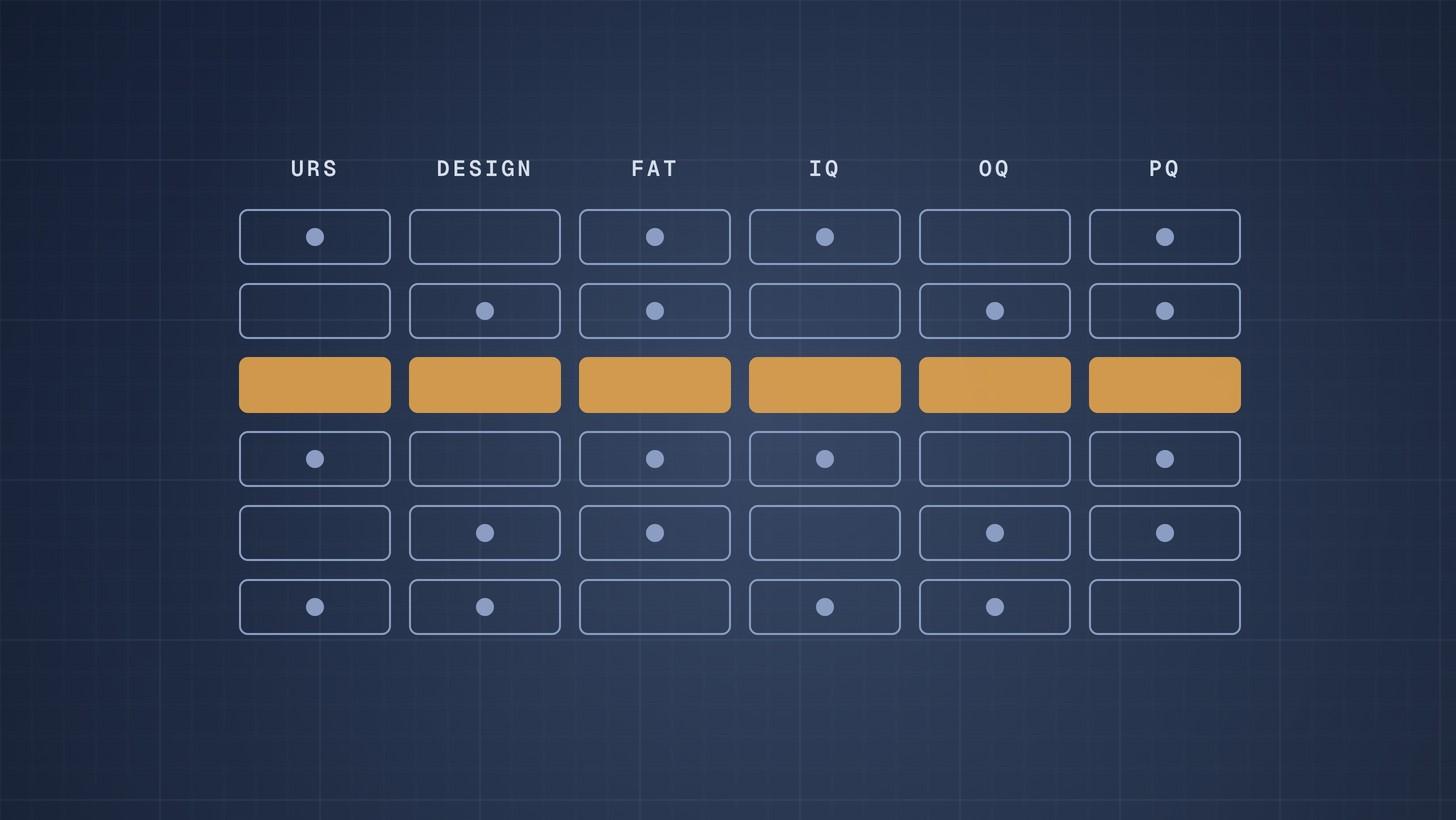
Requirements Traceability Matrix for GMP Equipment: From URS to PQ
A requirements traceability matrix links every URS line to the design document that meets it and the test that proves it, from DQ through FAT, SAT, IQ, OQ and PQ. Here is how to build one, with a template.
How to Prepare for a Customer Quality Audit as an Equipment Manufacturer
A practical guide for equipment makers facing a customer or vendor audit: the documents to have ready, how to run the walk through, the findings auditors raise most often and how to close them properly.