
IQ OQ PQ Explained: What to Require from Equipment Vendors
DQ, IQ, OQ and PQ explained from the buyer's side: what EU GMP Annex 15 expects, what the equipment vendor should supply, and how to write it into the purchase order.
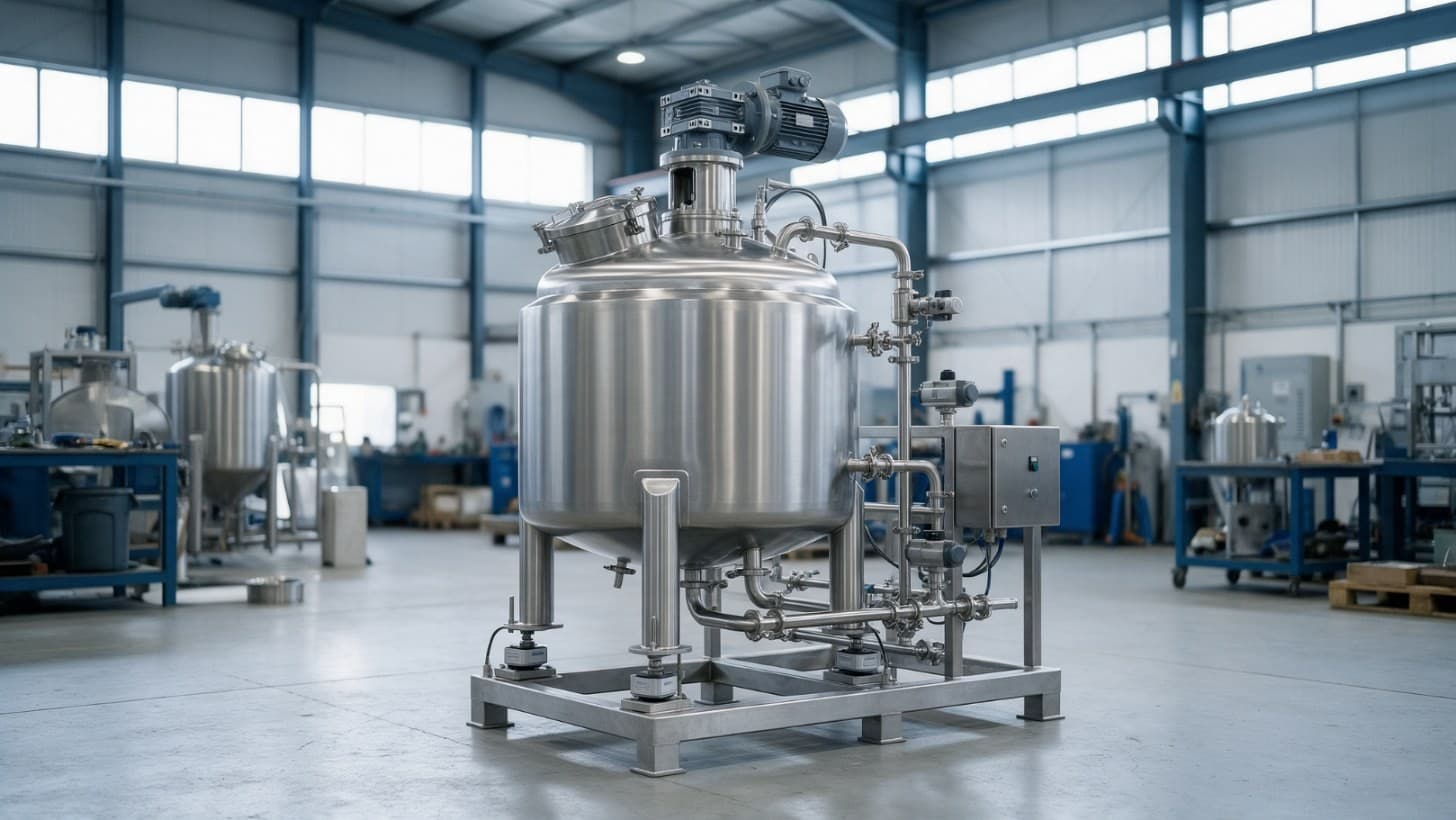
IQ, OQ and PQ are the three documented checks that show equipment used under good manufacturing practice (GMP) was installed as specified (installation qualification), works as intended across its operating ranges (operational qualification) and performs reliably in the real process (performance qualification). They are normally preceded by design qualification (DQ), a documented check that the design meets the user's requirements. Under EU GMP Annex 15 the regulated manufacturer owns qualification [1]. In Great Britain, the Human Medicines Regulations 2012 keep the EU GMP guidelines as they stood before the Brexit transition period ended, which includes the 2015 Annex 15, unless replacement guidance is published under the Regulations [2].
So the vendor supplies much of the evidence and you approve it. Put in the purchase order: design documents you can check against your user requirement specification (URS), an approved factory acceptance test (FAT), a documentation package for IQ, and OQ protocols and site days if you plan to use them. PQ and the final approval stay with you.
Why this matters now
A revision of Annex 15 is under way. The current text came into operation on 1 October 2015 [1]. A concept paper dated 19 January 2026, agreed by the EMA's GMP and GDP Inspectors Working Group and by PIC/S, the cooperation scheme between GMP inspectorates, proposes a targeted revision. Its main aim is to make Annex 15 apply to manufacturers of active substances, including the expectations on URS, FAT, site acceptance testing (SAT) and DQ to PQ, and on validation work they contract out. It would also align the text with ICH Q9(R1) on quality risk management. A draft for consultation is planned for December 2026 and publication by the European Commission in April 2028 [3].
Nothing changes yet. In Great Britain a revised EU annex would not apply automatically: the existing guidelines stay in force unless replacement guidance is published, after consultation [2]. Sites making active substances, and their vendors, would be most affected.
Inspection is the other reason. The MHRA inspects sites for GMP compliance [4], and FDA guidance says the quality unit must approve the qualification plan and report [5]. A missing material certificate or unsigned FAT record becomes the owner's finding, not the vendor's.
Join ChemCapital to streamline sourcing and connect with verified partners
Whether you're buying or supplying, ChemCapital gives you the tools to manage the complete procurement cycle in one platform.
DQ, IQ, OQ and PQ in plain words
Annex 15 treats qualification as a life cycle from the URS to the end of the equipment's use, with the URS as the reference point throughout [1].
| Stage | Question it answers | Evidence the guidance describes |
|---|---|---|
| DQ | Does the proposed design meet the URS? | Documented review of the design against each URS requirement |
| FAT and SAT | Does it work at the vendor's works, and again after delivery? | Tests at the vendor before shipping, supplemented on site |
| IQ | Was it built and installed as specified? | Installation checked against drawings and specifications; supplier instructions and maintenance requirements collected; instruments calibrated; materials verified; manuals and spare parts lists checked |
| OQ | Does it work across the expected operating ranges? | Tests at upper and lower limits or worst case; controls, alarms and switches tested |
| PQ | Does it perform reliably in the real process? | Runs with production materials, qualified substitutes or simulated product, under conditions simulating intended use |
WHO guidance says each stage should normally be completed before the next, though a documented assessment can allow conditional approval to proceed. It adds that in some cases only IQ and OQ may be needed, while major equipment and critical utilities may need every stage [6]. Annex 15 allows a combined installation and operational qualification (IOQ), and in some cases PQ may run alongside OQ or process validation [1].
The FDA's 2011 process validation guidance covers the same ground in Stage 2: choosing materials and operating principles, verifying the build and installation against the design, and verifying operation in all anticipated operating ranges. Equipment PQ is not the same as process performance qualification (PPQ), which confirms the process design [5].
What the vendor supplies and what stays with you
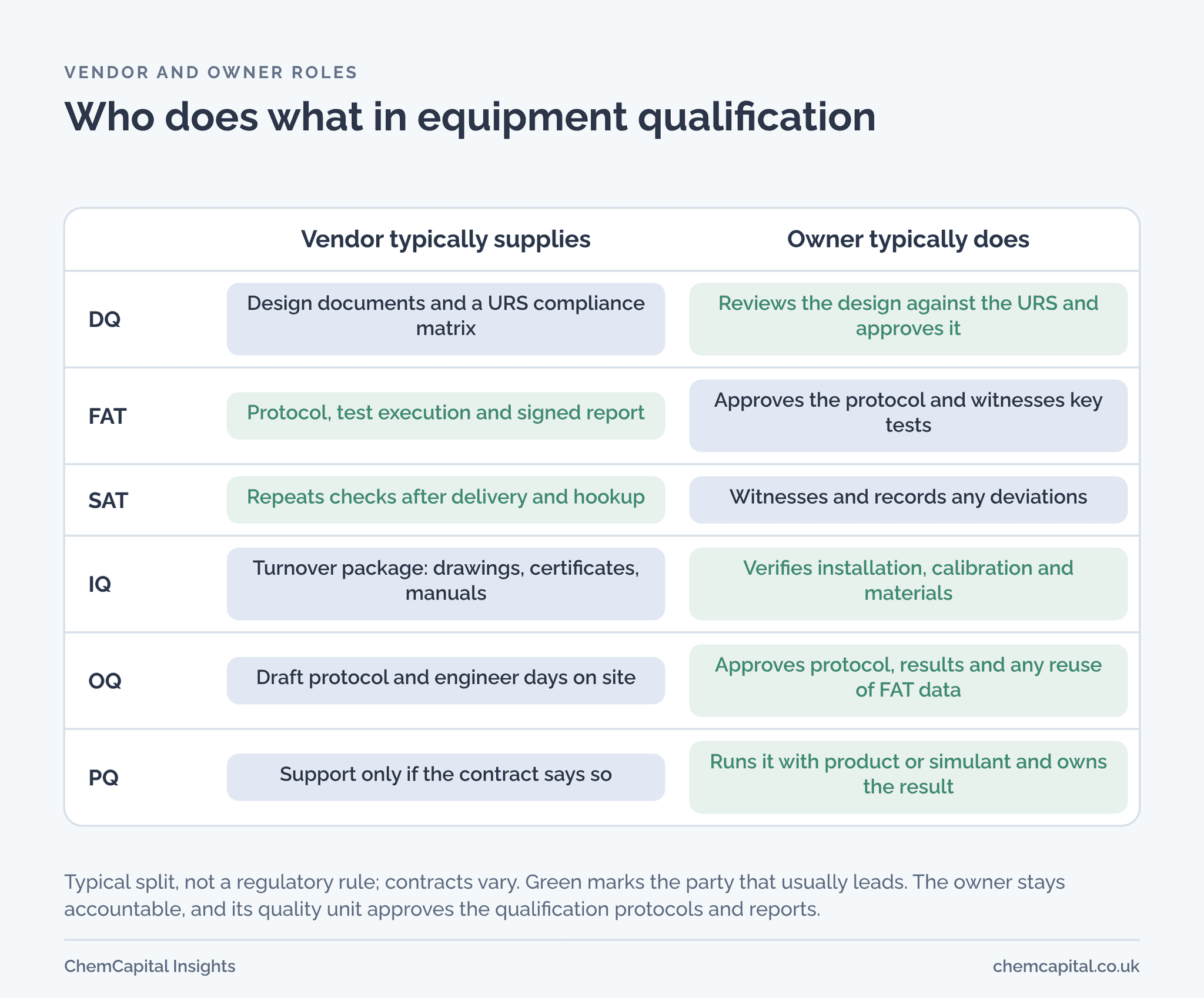
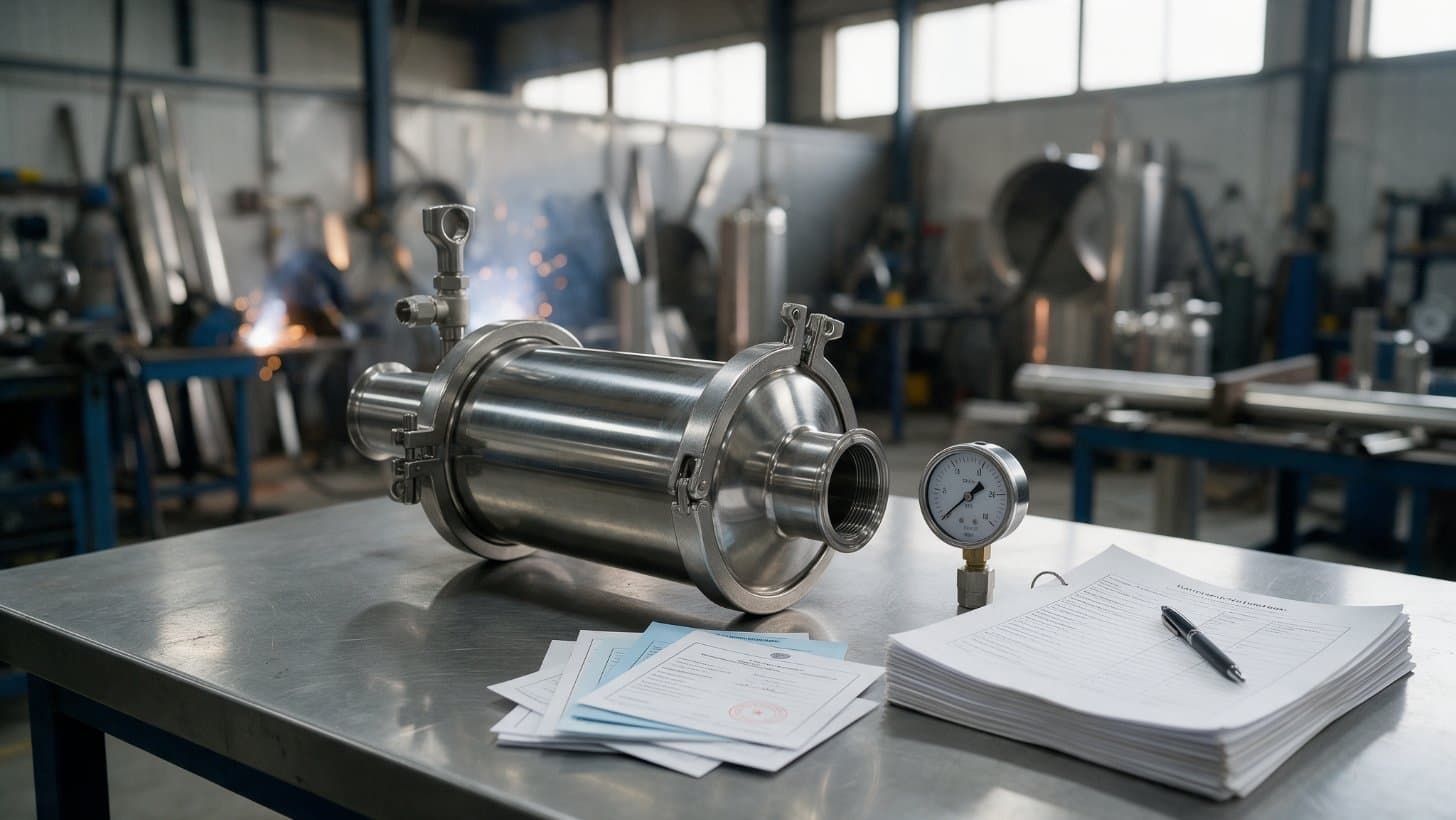
Annex 15 lets owners use vendor work, with conditions. Where a vendor supplies protocols or documents, site staff should confirm they are suitable and meet internal procedures before approving them, and may add to them [1]. Where it is appropriate and justified, documents checked and tests passed at FAT can count towards IQ or OQ without being rerun, provided you can show that shipping and installation leave that function unchanged. Results produced outside your own programme are acceptable only with a documented justification and good evidence that the work was properly controlled at the time [1].
That last condition decides whether a FAT counts. In practice, a FAT record you plan to count should follow an approved protocol, be carried out by named, trained people and be recorded at the time. Our FAT checklist for process skids covers the test itself.
The ISPE Baseline Guide on commissioning and qualification (second edition, June 2019) sets out one industry approach. It uses a system risk assessment to identify critical aspects and critical design elements, and Good Engineering Practice documentation standards [7]. ASTM E2500, whose current edition dates from 2025, takes a science and risk based approach to specifying, designing and verifying pharmaceutical and biopharmaceutical systems and equipment [8].
Some vendors sell this support as a service. Sartorius, for example, offers site acceptance testing with documentation, sample qualification documents on request before its engineer visits, and requalification [9]. Asking for samples at RFQ stage shows early whether a vendor's format will satisfy your quality unit.
Some things stay with the owner whoever does the work. The URS is the owner's statement of requirements, the owner approves every protocol and report, PQ is run to the owner's approved process and product specification, and the owner controls changes after handover. Annex 15 expects equipment to be reviewed periodically to show it is still under control, and sets out how changes are controlled [1]. WHO adds that a series of small changes can add up to a need for requalification, and that replacing parts calls for a decision on how much to repeat [6].
How to write it into the purchase order
Put these in the RFQ and carry them into the purchase order:
- URS and compliance matrix. Name the URS revision and ask for a clause by clause response. This is your DQ input.
- Deliverables list. Design documents for DQ review; a FAT protocol for approval before the test; signed FAT and SAT reports; and the IQ documentation package, often called the turnover package: as built drawings, material certificates for product contact parts, calibration certificates, manuals and spare parts lists. If the equipment has a programmable logic controller (PLC) or operator screens, add the software and configuration documents needed to validate it as a computerised system, which Annex 15 places under Annex 11 [1].
- Format and timing. Whose protocol templates are used, your review time in working days, and that changes after approval need your agreement.
- Witnessing. Name the FAT tests you will witness, set as hold or witness points.
- Site support. Engineer days for SAT, IQ and OQ, the day rate for extra days, and who provides utilities and test materials.
- Payment. Tie the final payment to your approval of the IQ package and completed OQ, not to delivery.
Practical example
An illustrative order: a skid mounted 1,500 litre jacketed stainless steel vessel with agitator and load cells for a UK biologics site, priced at £420,000 ex works.
The vendor's OQ protocol has 48 tests. The owner's risk assessment accepts 30 of them, run at FAT, as functions shown not to be affected by transport and installation: PLC alarm logic, software interlock logic, sequence steps and operator screens. The other 18, including load cell checks and jacket temperature control on site utilities, are repeated on site. At six tests per engineer day, on site OQ falls from eight days to three.
| Qualification support item | Basis (illustrative) | Cost |
|---|---|---|
| Design and IQ documentation package | Fixed price | £14,000 |
| FAT | Protocol £2,400 plus 3 days at £1,200 | £6,000 |
| SAT and IQ support on site | 2 days at £1,200 | £2,400 |
| OQ support on site | 3 days at £1,200 (18 tests) | £3,600 |
| Total | £26,000 |
That is about 6.2% of the equipment price in this example. Without reusing FAT results, OQ would take eight days (£9,600) and the total would be £32,000, so the saving is five engineer days, or £6,000, plus the owner's own staff time.
Payment in this example is 30% with the order (£126,000), 40% on the approved FAT report (£168,000), 20% on delivery (£84,000) and 10% on approval of the IQ package and completed OQ (£42,000), totalling £420,000. Here the saving depends on the FAT running to the approved protocol with the owner's witness present; otherwise all 48 tests are repeated on site.
Getting every bidder to price the same support
Support is easiest to compare when every bidder prices the same deliverables. On ChemCapital, structured RFQs go to all suppliers at once and quotes sit side by side. Purchase orders are formal and confirmed by the supplier, suppliers post milestone updates such as a completed FAT, and the audit trail logs every interaction, revision and decision with a timestamp. See how it works.
This is general information, not legal advice. Check current editions with your quality unit.
Ready to make qualification deliverables part of every quote? Start free with ChemCapital.
Frequently asked questions
What is the difference between IQ, OQ and PQ?
IQ confirms the equipment was built and installed as specified, OQ confirms it works across its expected operating ranges, and PQ confirms it performs reliably with production materials, qualified substitutes or simulated product. They normally run in that order, although EU GMP Annex 15 allows IQ and OQ to be combined.
Can a vendor's FAT replace IQ or OQ?
In part. Where it is appropriate and justified, Annex 15 lets checks and tests completed at FAT count towards IQ or OQ without being rerun, provided shipping and installation are shown not to affect that function. Site staff should confirm any vendor protocol suits their procedures before approving it.
Who is responsible for PQ, the vendor or the owner?
The owner. A vendor can support PQ if the contract says so, but PQ is run to the owner's approved process and product specification, and the owner approves the result.
Is EU GMP Annex 15 changing?
A revision is in progress. A concept paper agreed by the EMA inspectors and PIC/S, dated 19 January 2026, proposes extending Annex 15 to active substance manufacturers and aligning it with ICH Q9(R1), with a draft planned for December 2026 and Commission publication planned for April 2028. In Great Britain the existing text, from 2015, continues to apply unless replacement guidance is published under the Human Medicines Regulations 2012.
Continue reading
Informational only, not procurement or legal advice. Cited names, frameworks, and statistics belong to their respective owners.
Join ChemCapital to streamline sourcing and connect with verified partners
Whether you're buying or supplying, ChemCapital gives you the tools to manage the complete procurement cycle in one platform.
Get started freeRelated articles

How to Get on a Pharmaceutical Company's Approved Vendor List (and Stay On It)
What an approved vendor list is, how pharma buyers qualify equipment suppliers, what to have ready, why vendors stall, and how to get invited in the first place.
The Supplier Qualification Questionnaire: How an Equipment Vendor Answers It Without Losing Weeks
What GMP buyers check in a supplier questionnaire, what evidence to attach to each section, and an answer kit that returns 120 questions in five working days.
User Requirement Specification for Process Equipment: URS Template
How to write a user requirement specification that suppliers can quote against: URS vs FS and DS, testable requirements, a URS template and a jacketed vessel example.