
User Requirement Specification for Process Equipment: URS Template
How to write a user requirement specification that suppliers can quote against: URS vs FS and DS, testable requirements, a URS template and a jacketed vessel example.
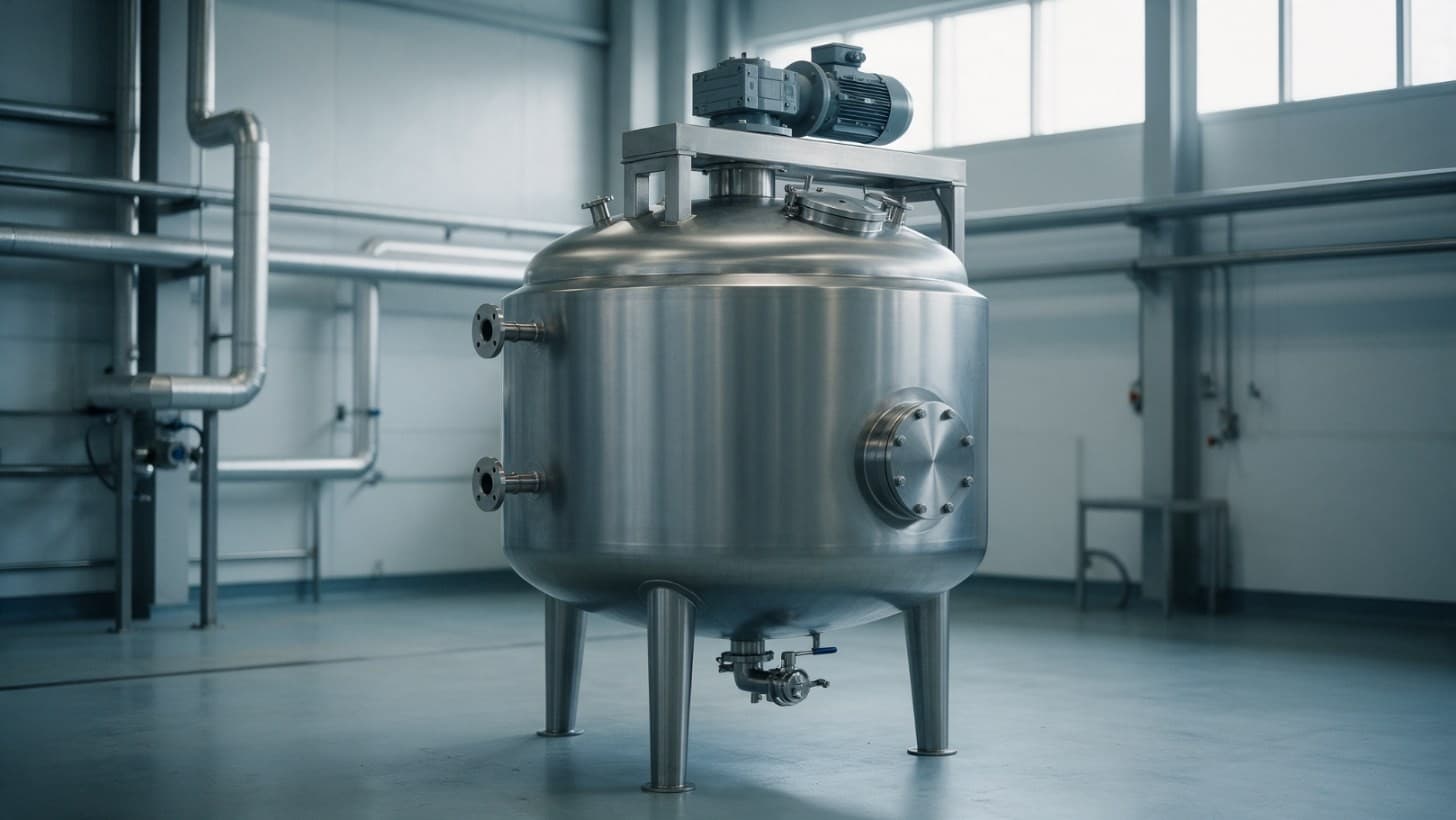
A user requirement specification (URS) is the buyer's written statement of what a piece of equipment must do, set out as numbered, testable requirements before any supplier is asked to quote. In GMP manufacturing it is also the first qualification document: EU GMP Annex 15 says the equipment specification belongs in a URS, a functional specification or both, and the URS remains the benchmark for the whole validation life cycle [1, 2]. A good URS states what you need rather than how to build it, marks which lines are GMP critical, and says how each line will be checked.
Why this matters now
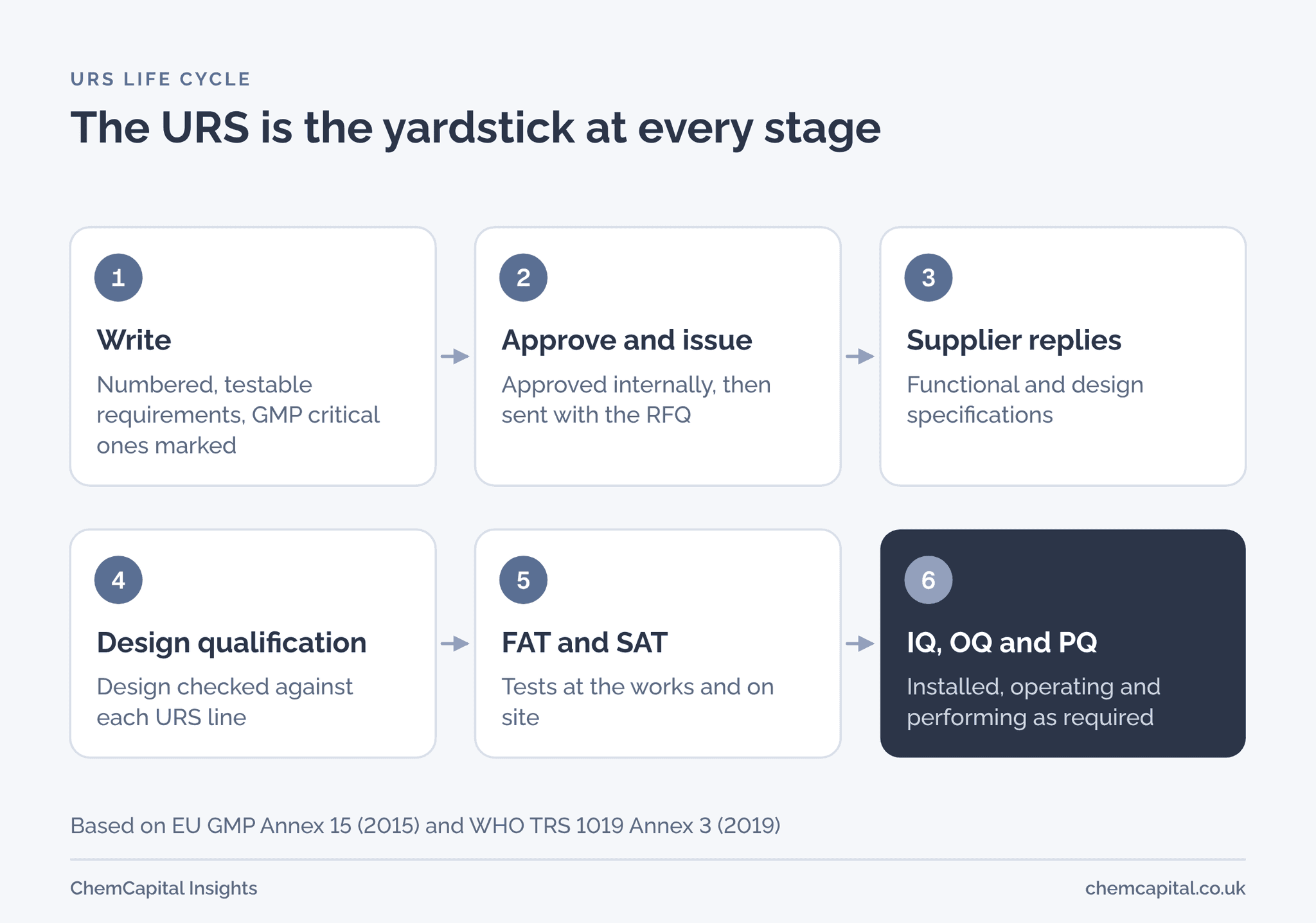
The URS is the yardstick at every later stage. Under Annex 15, its requirements are checked during design qualification (DQ), the documented check that the design is fit for purpose, and equipment is confirmed against it, where applicable at the vendor's site, before installation [1]. WHO guidance puts the URS at the start of qualification and expects the buyer to use it to choose the item from an approved supplier [2]. In the UK, licensed manufacturers must follow GMP, and the MHRA publishes the EU GMP guidance in its Orange Guide [9]. This is general information, not legal advice.
ASTM E2500, the guide to specifying, designing and verifying pharmaceutical manufacturing systems, was issued in a major revision on 15 March 2025 [3]. The 2025 edition separates product and process user requirements, which carry the critical quality attributes and critical process parameters, from general user requirements such as capacity, availability and environmental discharges [3].
Commercially, the URS is what you compare bids against. Approved internally before the tender goes out, it gives every supplier the same target and becomes the basis for holding the chosen supplier to account [7]. A vague URS produces quotes that cannot be compared and late change requests, yet ISPE's Q&A on commissioning and qualification says the factory acceptance test (FAT) and site acceptance test (SAT) are not the place to introduce changes [4]. Our guide to technical bid evaluation picks up from there.
Create and manage RFQs in minutes
ChemCapital handles the entire procurement cycle, from structured RFQs and supplier comparisons to formal purchase orders and delivery tracking.
URS, functional specification and design specification
| Document | Question it answers | Usually written by | Checked mainly at |
|---|---|---|---|
| User requirement specification (URS) | What must the equipment do, and to what standard? | The user company: production, quality, engineering and procurement [2, 5, 7] | DQ, FAT and SAT, and finally performance qualification (PQ) in intended use [1, 2] |
| Functional specification (FS) | Which functions, performance and interfaces will meet each requirement? | The supplier, in reply to the URS [7] | FAT and operational qualification (OQ), up to the operating limits [1, 2] |
| Design specification (DS) | How will it be built: drawings, materials, components? | The supplier or designer, working from the URS [4] | Design review, then installation qualification (IQ) against drawings [1, 2] |
WHO guidance on computerised systems even allows the URS and FS to be combined in one document [2]. For engineered equipment, keep them apart: the URS is yours, the FS is the supplier's answer, and the gap between them is what you evaluate. Our IQ, OQ and PQ guide covers later stages.
What stays out of the URS matters as much. ISPE's commissioning and qualification Q&A puts engineering specifications and standards, the means of meeting each requirement and contract terms outside it [4]. NHS guidance warns against requirements that limit the contractor's flexibility for no good reason [5]. Name the codes and regulations the equipment must meet without copying them in, and put price, delivery and payment terms in the RFQ (request for quotation).
For the control system, ISPE GAMP 5 (second edition, July 2022) covers computerised systems, and it encourages full use of supplier knowledge, experience and documentation [8].
How to write requirements suppliers can quote against
NASA's checklist for good requirements works for a vessel or skid too [6]:
- One requirement per line, uniquely numbered, so bids, tests and deviations can refer to it [6, 7].
- "Shall" for a requirement, "should" for a goal and "will" for a statement of fact [6].
- Describe the need and leave the solution open [6]. Leave the design to the supplier [7].
- Make it verifiable: a value, a tolerance and a method. Words such as adequate, easy, robust, sufficient and user friendly cannot be tested [6]. WHO's appendix on computerised systems asks for user requirements that can be tested or verified [2].
- Do not leave blanks. Where a value is unknown, give a best estimate marked "to be resolved", with an owner and a date [6].
- Prioritise every line [7], and classify it as below.
A GMP critical requirement traces back to a critical quality attribute (CQA), a product property that must stay within limits, a critical process parameter (CPP), a process setting that affects a CQA, or a design feature that affects cleaning or product quality [3, 7]. Business requirements cover capacity, availability, discharges, safety and site needs [3, 7]. Separately, mark each line mandatory or desirable. A bid that misses a mandatory line should be clarified or excluded, not scored on price.
Outside GMP, in chemicals or food, every line may be business, but the same rules apply.
A URS template, section by section
The layout below is our own, drawing on NHS and ISPE guidance [3, 4, 5]. Write one URS per item of equipment or system [5], and size it to the risk: a catalogue item may need only a data sheet and an order confirmation [7].
| No. | Section | What to include |
|---|---|---|
| 1 | Purpose and scope | Process, product, batch size, supplier's scope and its boundaries |
| 2 | Regulatory and quality basis | GMP status, codes and regulations (by reference), supplier quality system |
| 3 | Process and performance | Capacity, operating ranges, CPPs with tolerances, heating and cooling duties |
| 4 | Materials and construction | Product contact materials, surface finish, drainability, cleanability |
| 5 | Controls, alarms and data | Control functions, alarms, data recording and retention, user access |
| 6 | Utilities and site | Power, steam, cooling water, gases, space, access, lifting |
| 7 | Cleaning and maintenance | Cleaning in place (CIP) or manual cleaning, inspection access, spares |
| 8 | Safety and environment | Guarding, isolation, discharges, hazardous area classification |
| 9 | Documentation | Drawings, material certificates, manuals, instrument lists, calibration certificates |
| 10 | Testing and qualification | FAT and SAT scope, support for IQ and OQ, training |
| 11 | Approval and change record | Named authors and approvers, version history, glossary |
Add a traceability matrix as an appendix: each requirement number against the document or test that proves it [7]. After approval, changes to the URS go through version control [5], but it remains a living document, revised through change management whenever requirements change [4].
Practical example
An illustrative case: a buyer needs a 2,000 litre stainless steel vessel for a liquid product, heated through a jacket (an outer shell carrying steam or cooling water) and stirred by a top mounted agitator. The first draft said it "shall heat the batch quickly and be easy to clean". Neither phrase can be priced or tested. The rewritten lines follow; every figure is illustrative, and barg is bar above atmospheric.
| ID | Requirement | Type | Priority | Verified at |
|---|---|---|---|---|
| 4.1 | Working volume shall be 2,000 L, and the agitator shall be able to run at any fill from 400 L upwards | Business | Mandatory | DQ, FAT |
| 4.2 | The jacket shall heat 2,000 L of water from 20 °C to 70 °C in 90 minutes or less, using steam at 3 barg | Business | Mandatory | FAT, SAT |
| 4.3 | Batch temperature shall stay within plus or minus 2 °C of any set point from 20 °C to 70 °C | GMP critical | Mandatory | OQ |
| 4.4 | Product contact parts shall be 316L stainless steel, with EN 10204 3.1 certificates | GMP critical | Mandatory | DQ, IQ |
| 4.5 | Spray devices shall wet all product contact surfaces, shown by a coverage test | GMP critical | Mandatory | FAT, OQ |
| 4.6 | Batch temperature shall be recorded at least once a minute, with time stamped alarms | GMP critical | Mandatory | OQ |
| 4.7 | Two fitters should be able to replace the agitator seal within one shift | Business | Desirable | FAT |
For line 4.4, see our guide to EN 10204 3.1 and 3.2 certificates.
Line 4.2 also lets each bidder test feasibility. Taking water as about 1 kg per litre and 4.18 kJ/kg K, the batch needs 2,000 × 4.18 × 50 = 418,000 kJ, or 418 MJ. Over 90 minutes (5,400 seconds), that is an average duty of about 77 kW for the water alone, before vessel steel and losses: a figure a supplier can size the jacket against, where "quickly" was a guess.
Bidder A meets all six mandatory lines. Bidder B quotes a heat up time of 120 minutes, missing line 4.2, so its bid goes back for clarification before anyone compares prices. A draft line asking for delivery within 20 weeks of order was moved into the RFQ terms, because it is a contract term, not a user requirement [4].
Send one URS to every bidder
A URS only works if every supplier quotes against the same version. With ChemCapital, you send one structured RFQ to all your suppliers at once and compare their answers side by side. The audit trail logs every interaction, revision and decision with timestamps, which helps when a URS question resurfaces at DQ or FAT.
Ready to get bids you can compare line by line? Start a free 14 day ChemCapital trial, with no credit card needed.
Frequently asked questions
What is a user requirement specification in GMP?
It is the regulated company's document setting out what equipment, a utility or a system must do, written before design and purchase. Under EU GMP Annex 15 the URS stays the benchmark through validation, and its requirements are checked during design qualification.
What is the difference between a URS and a functional specification?
The URS says what the user needs; the functional specification, usually written by the supplier, describes the functions, performance and interfaces that will meet it. Annex 15 lets the specification sit in either or both, but keeping them apart makes bids easier to evaluate.
Who should write the URS?
The user company writes and approves it, drawing on production, quality, engineering, maintenance and procurement, and suppliers respond to it. Sign it off internally before any supplier sees it.
What should a URS template include?
Scope, regulatory and quality basis, process and performance, materials, controls and data, utilities, cleaning and maintenance, safety, documentation, and testing and qualification, plus an approval record. Every requirement should be numbered, testable and marked as GMP critical or business.
Continue reading
Informational only, not procurement or legal advice. Cited names, frameworks, and statistics belong to their respective owners.
Create and manage RFQs in minutes
ChemCapital handles the entire procurement cycle, from structured RFQs and supplier comparisons to formal purchase orders and delivery tracking.
Start for freeRelated articles

How to Get on a Pharmaceutical Company's Approved Vendor List (and Stay On It)
What an approved vendor list is, how pharma buyers qualify equipment suppliers, what to have ready, why vendors stall, and how to get invited in the first place.
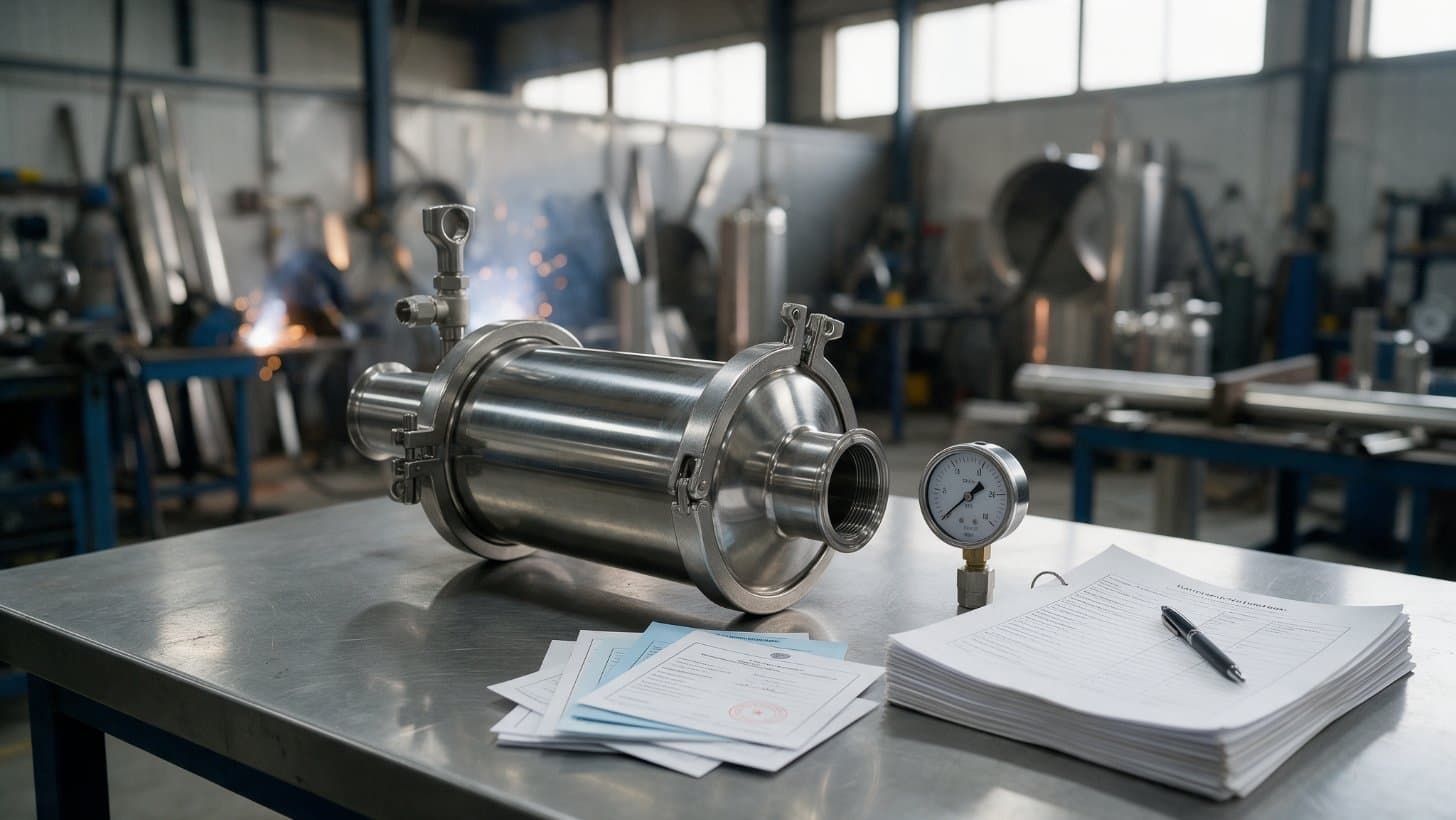
The Supplier Qualification Questionnaire: How an Equipment Vendor Answers It Without Losing Weeks
What GMP buyers check in a supplier questionnaire, what evidence to attach to each section, and an answer kit that returns 120 questions in five working days.
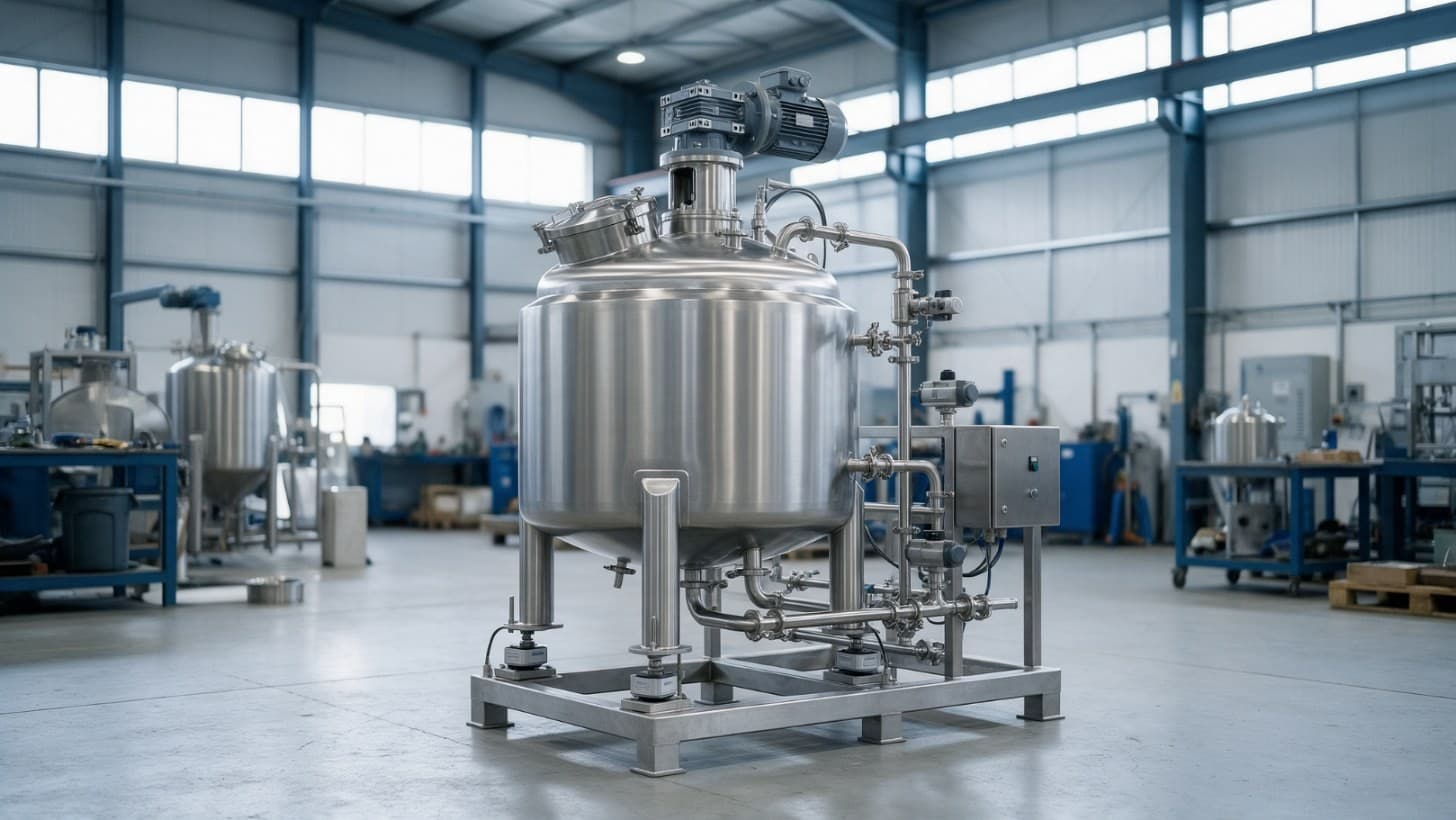
IQ OQ PQ Explained: What to Require from Equipment Vendors
DQ, IQ, OQ and PQ explained from the buyer's side: what EU GMP Annex 15 expects, what the equipment vendor should supply, and how to write it into the purchase order.