
Mechanical Seal Plans and API 682: A Pump Buyer's Guide
How API 682 classifies pump seals by category, arrangement and type, what the common piping plans such as 11, 23, 52, 53A and 53B do, and what to specify so seal bids can be compared.
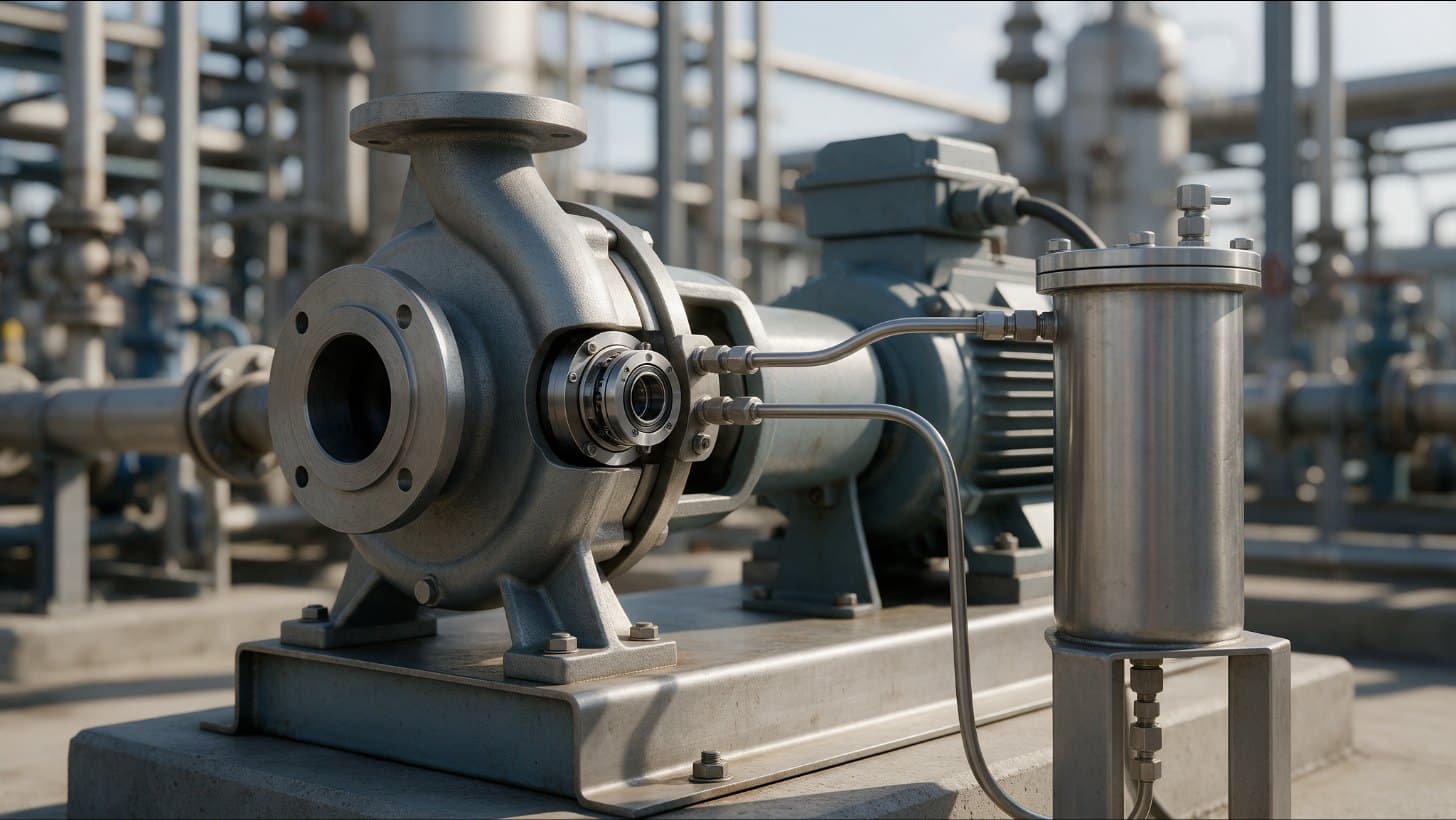
API 682 is the American Petroleum Institute standard for mechanical seals on centrifugal and rotary pumps. It describes each seal by three choices, its category, arrangement and type, and pairs it with a numbered piping plan that supports the seal by flushing, cooling or supplying a buffer or barrier fluid. For a buyer, the seal code and the piping plan are the two lines that decide whether pump bids are comparable: two pumps with the same hydraulics but different seal arrangements are not the same offer.
The most common choices are a single seal with a flush from the pump discharge (Plan 11), a single seal with a cooled circulation loop (Plan 23), a dual unpressurised seal with a buffer fluid pot (Plan 52), and a dual pressurised seal with a barrier fluid kept above process pressure (Plans 53A, 53B, 53C or 54).
Why this matters now
The fourth edition of API 682, published on 1 May 2014 according to AESSEAL, kept the seal types, arrangements and configurations of earlier editions but added detail to the auxiliary systems, with construction and size defaults for Plans 53B, 53C, 65 and 75 [1]. EagleBurgmann's summary of the edition lists other changes buyers meet in bids: a barrier refill interval of at least 28 days for Plan 53 systems, transmitters in place of switches, and new plans including 65A, 65B, 66A, 66B and 99 [2]. Older specifications that still ask for level switches or quote third edition plans produce bids that do not match.
Seal choices also follow the fluid. Hazardous processes push towards dual seals, which cost more up front [3]. Our guide to life cycle cost when comparing quotes explains why the cheapest seal is often not the cheapest pump.
Create and manage RFQs in minutes
ChemCapital handles the entire procurement cycle, from structured RFQs and supplier comparisons to formal purchase orders and delivery tracking.
Category, arrangement and type
Category sets the pump family and the design envelope. EagleBurgmann's application guide gives category 1 as minus 40 °C to 260 °C and up to 20 bar, with seal chambers to the ASME B73 chemical pump standards; categories 2 and 3 cover minus 40 °C to 400 °C and up to 40 bar, with seal chambers to API 610, and category 3 requires a qualification test [4]. KSB's seal range document makes the same split in plain words: category 1 for non API pumps, categories 2 and 3 for API pumps [5]. Check the limits in the standard itself before relying on them.
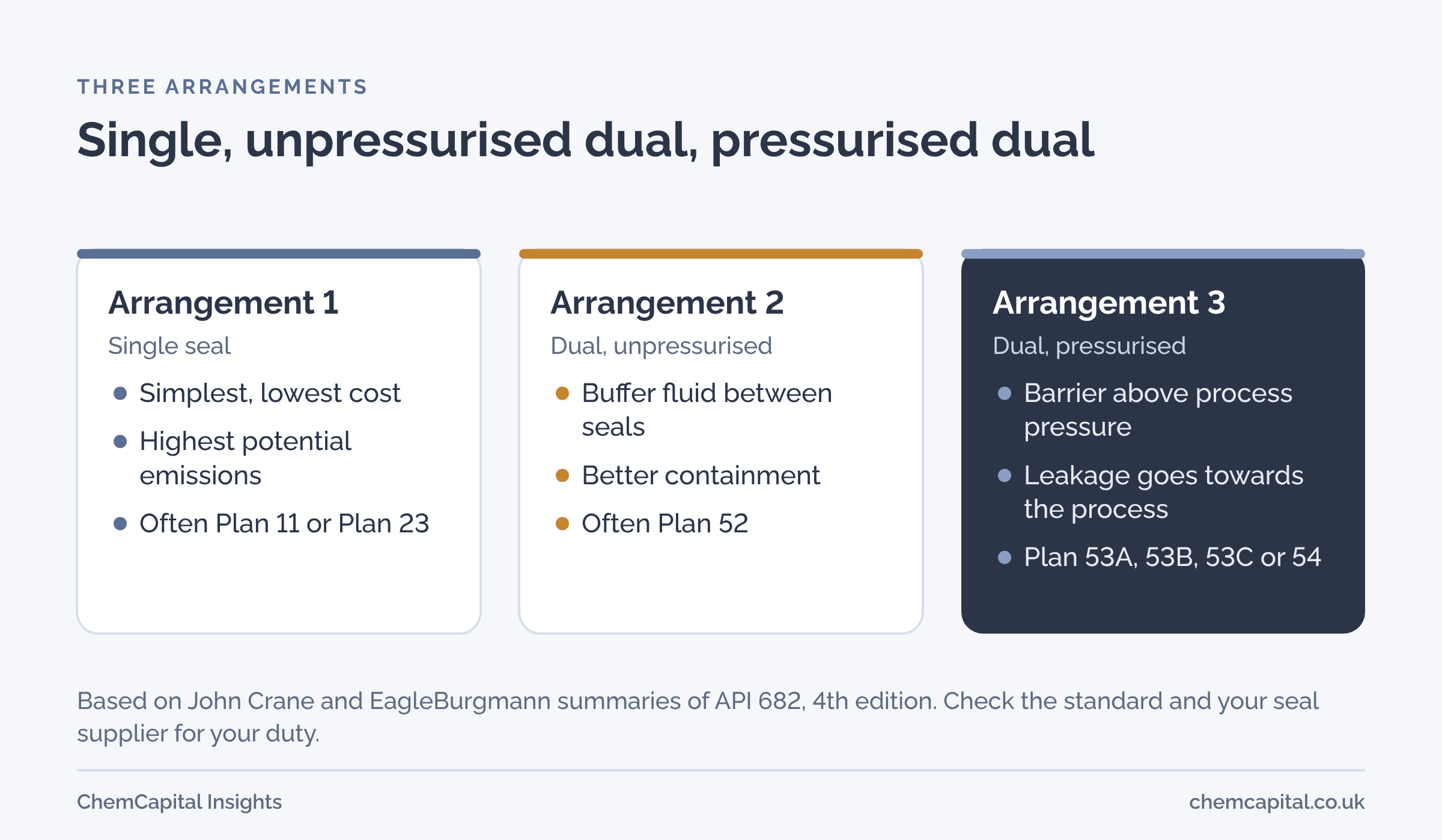
Arrangement is the number of seals and how the space between them is pressurised. John Crane describes arrangement 1, a single seal, as the simplest and lowest cost with the highest potential for emissions; arrangement 2, a dual unpressurised seal, as improving containment while some process leakage still enters the buffer fluid; and arrangement 3, a dual pressurised seal, as offering maximum safety, with leakage directed towards the process and zero emissions to atmosphere under normal operation [3].
Type is the seal design: type A is a pusher seal, type B a flexible metal bellows, and type C a metal bellows for higher temperatures; KSB's type C range runs up to 400 °C [3] [5]. John Crane's overview cites an API 682 performance expectation of 25,000 hours, nearly three years, of continuous operation [3].
The piping plans buyers meet most
| Plan | What it does | Typical use | What it adds to the scope |
|---|---|---|---|
| 11 | Flushes the seal with liquid from the pump discharge [6] | Clean, cool liquids; the most used plan [7] | An orifice and small bore piping |
| 23 | Circulates seal chamber fluid through a cooler [6] | Hot liquids; a smaller cooler than Plan 21 [7] | Seal cooler, cooling water, pumping ring |
| 32 | Injects a clean flush from outside the pump [6] | Where the pumped liquid cannot be used to flush the seal | External flush source and its control |
| 52 | Unpressurised buffer fluid pot for a dual seal [6] | Dual unpressurised seals; the most used plan for them [7] | Pot, level and pressure instruments, buffer fluid |
| 53A | Barrier fluid reservoir pressurised directly with gas [6] | Dual pressurised seals up to about 10 barg [7] | Reservoir, nitrogen supply, instruments |
| 53B | Barrier fluid pressurised by a bladder accumulator [6] | Higher pressures; sites without continuous gas supply [7] | Accumulator, cooler, instruments, refill system |
| 53C | Piston accumulator that tracks seal chamber pressure [6] | Variable seal chamber pressure | Piston accumulator, instruments |
| 54 | External pressurised barrier system [6] | High heat loads, shared systems, high pressures | External pump unit, piping, controls |
John Crane's 2026 review names Plans 11, 23, 52, 53A and 53B as the five that dominate the oil and gas industry, describes Plan 53B as the most commonly selected plan for dual pressurised seals, and notes that Plan 53A is generally limited to about 10 barg, because nitrogen can dissolve in the barrier fluid at higher pressure [7].
How the seal is selected
EagleBurgmann's guide sets out the selection as a five step procedure, working from the seal category through the arrangement to the piping plan [4]. The buyer's job is to give the bidders what they need to do this the same way: the fluid, its hazards and its vapour pressure, the seal chamber pressure and temperature, and any solids or tendency to crystallise.
What to put in the RFQ
- The fluid data, including vapour pressure at pumping temperature, hazards, solids and any tendency to polymerise or crystallise.
- The seal requirement, either a full seal code with category, arrangement, type and piping plan, or a statement such as "dual pressurised seal required" with the plan left to the bidder, so long as every bidder is told the same.
- Who supplies what: the seal, the seal support system, the instruments and their wiring, and the barrier or buffer fluid first fill.
- Utilities available: nitrogen pressure, cooling water temperature and pressure.
- Instrumentation: transmitters, not switches, in line with the fourth edition [2], and the signals you need at your control system.
- Spares: a spare seal cartridge for critical pumps, and the price for it fixed with the order.
- The seal data sheet completed by the bidder, so offers can be compared line by line.
Our centrifugal pump datasheet guide shows where the seal fields sit on the main datasheet.
Practical example
In this illustrative example, a buyer asks three bidders for an API 610 pump in a flammable, toxic hydrocarbon service with a seal chamber pressure of about 14 barg, and the specification calls for a dual pressurised seal.
| Bidder A | Bidder B | Bidder C | |
|---|---|---|---|
| Seal offered | Arrangement 1, Plan 11 | Arrangement 3, Plan 53A | Arrangement 3, Plan 53B |
| Seal and support system price | £3,500 | £11,200 | £16,500 |
| Complies with specification | No: single seal | Questionable at 14 barg | Yes |
Bidder A is cheapest only because it ignored the seal requirement, so it is either asked to requote or set aside. Bidder B offers the right arrangement, but Plan 53A is normally limited to about 10 barg [7], below this pump's seal chamber pressure; the buyer raises a technical query, and the bidder changes to a Plan 53B system and requotes. Only then are the bids comparable, and the difference between B and C can be judged on price, delivery and the barrier refill routine.
Where ChemCapital fits
ChemCapital sends one structured RFQ with line items and attachments, so the pump datasheet, seal data sheet and fluid data reach every bidder in the same form. The AI quotation comparison extracts price, lead time, materials, certifications and scope from each quote, keeps the source text beside every extracted field, and checks incoming quotes for missing fields and compliance gaps. A quote that fails a mandatory requirement you set, such as a dual pressurised seal, is flagged and left out of the ranking, and people make the final call.
Ready to compare pump bids with the seal scope on the same basis? Start a free 14 day ChemCapital trial, with no credit card needed.
Frequently asked questions
What is a seal plan in API 682?
A piping plan is a standard numbered arrangement of pipes, vessels and instruments that supports a mechanical seal, for example by flushing, cooling or supplying a buffer or barrier fluid. Plan 11, for instance, flushes the seal with liquid from the pump discharge.
What is the difference between Plan 53A and Plan 53B?
Both supply a pressurised barrier liquid to a dual seal. Plan 53A pressurises the reservoir directly with gas and is limited to about 10 barg because gas can dissolve in the liquid at higher pressure; Plan 53B uses a bladder accumulator to keep the gas separate, which suits higher pressures and sites without a continuous gas supply.
What are API 682 seal categories?
Category 1 covers seals for chemical standard pumps with seal chambers to ASME B73, from minus 40 °C to 260 °C and up to 20 bar. Categories 2 and 3 cover API 610 pumps up to 400 °C and 40 bar, with category 3 requiring qualification testing.
Continue reading
Informational only, not procurement or legal advice. Cited names, frameworks, and statistics belong to their respective owners.
Create and manage RFQs in minutes
ChemCapital handles the entire procurement cycle, from structured RFQs and supplier comparisons to formal purchase orders and delivery tracking.
Start for freeRelated articles
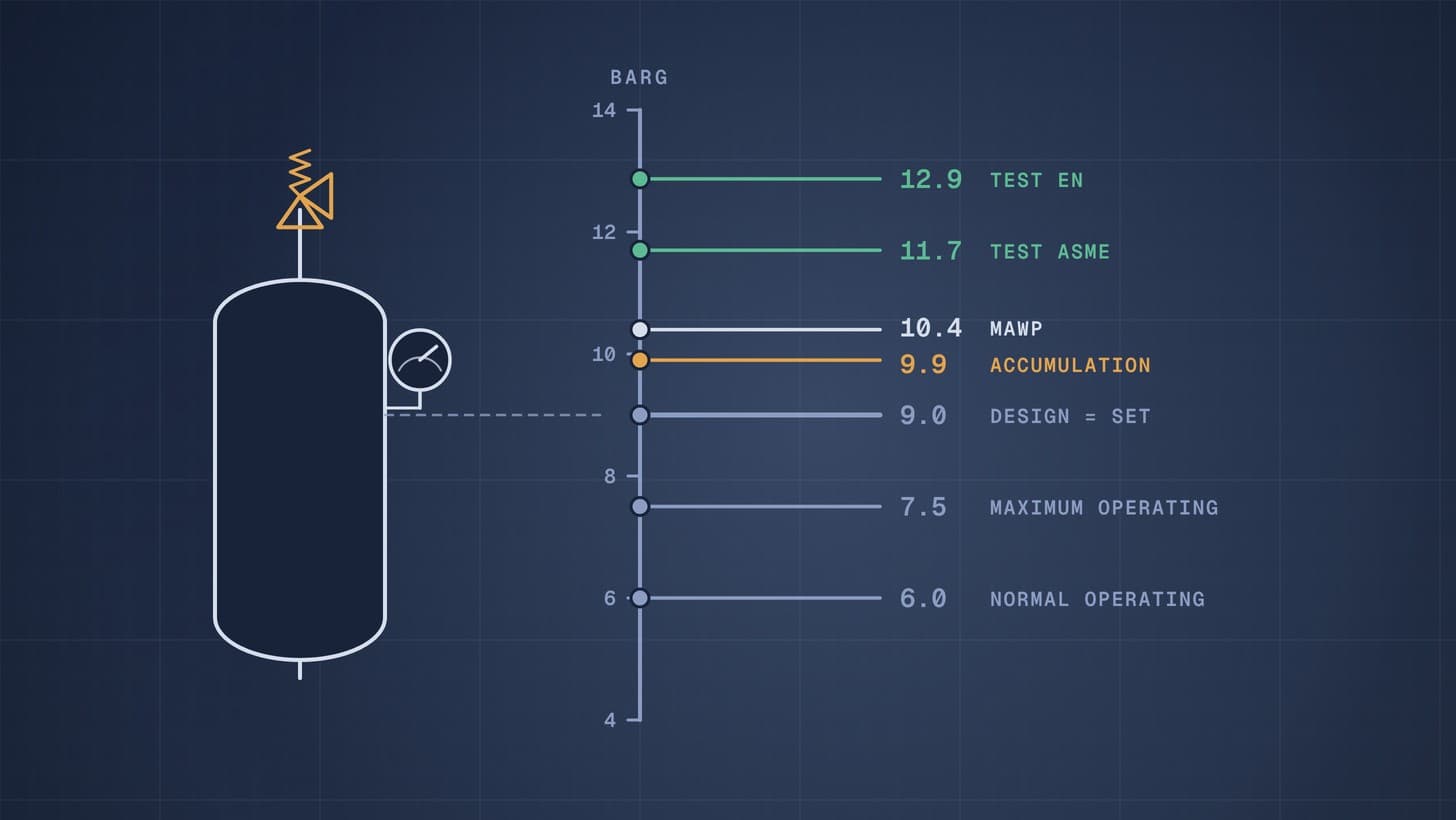
Design Pressure, MAWP and Operating Pressure in a Vessel RFQ
The difference between operating pressure, design pressure, MAWP and PS, how much margin to add, how relief valves and hydrostatic tests follow from them, and what to put on the vessel datasheet.
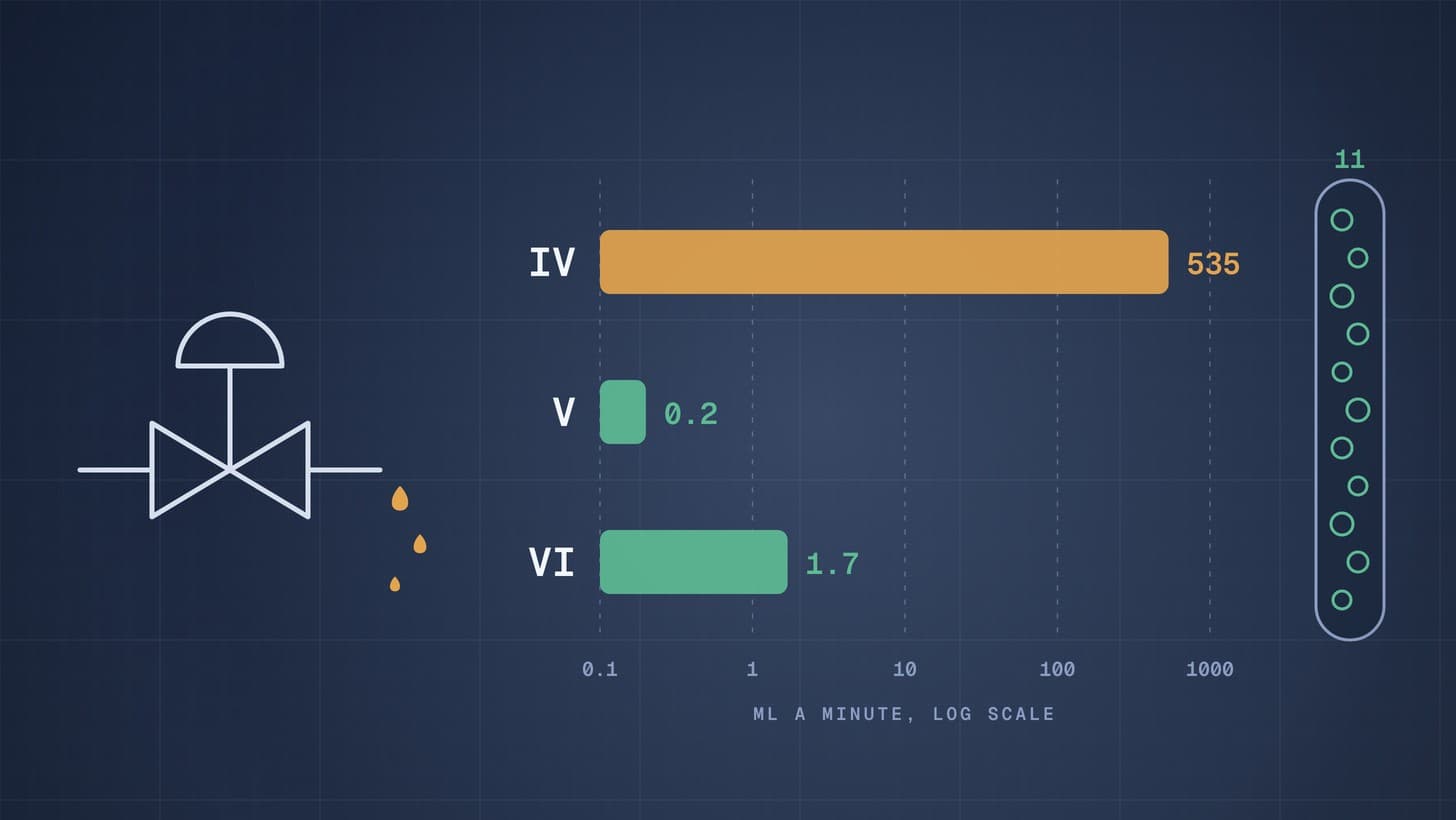
Valve Seat Leakage Classes Explained: FCI 70 2, API 598 and ISO 5208
What control valve leakage classes II to VI allow, how API 598 and ISO 5208 rate isolation valves, and how to specify shut off in an RFQ so bidders quote the same tightness.
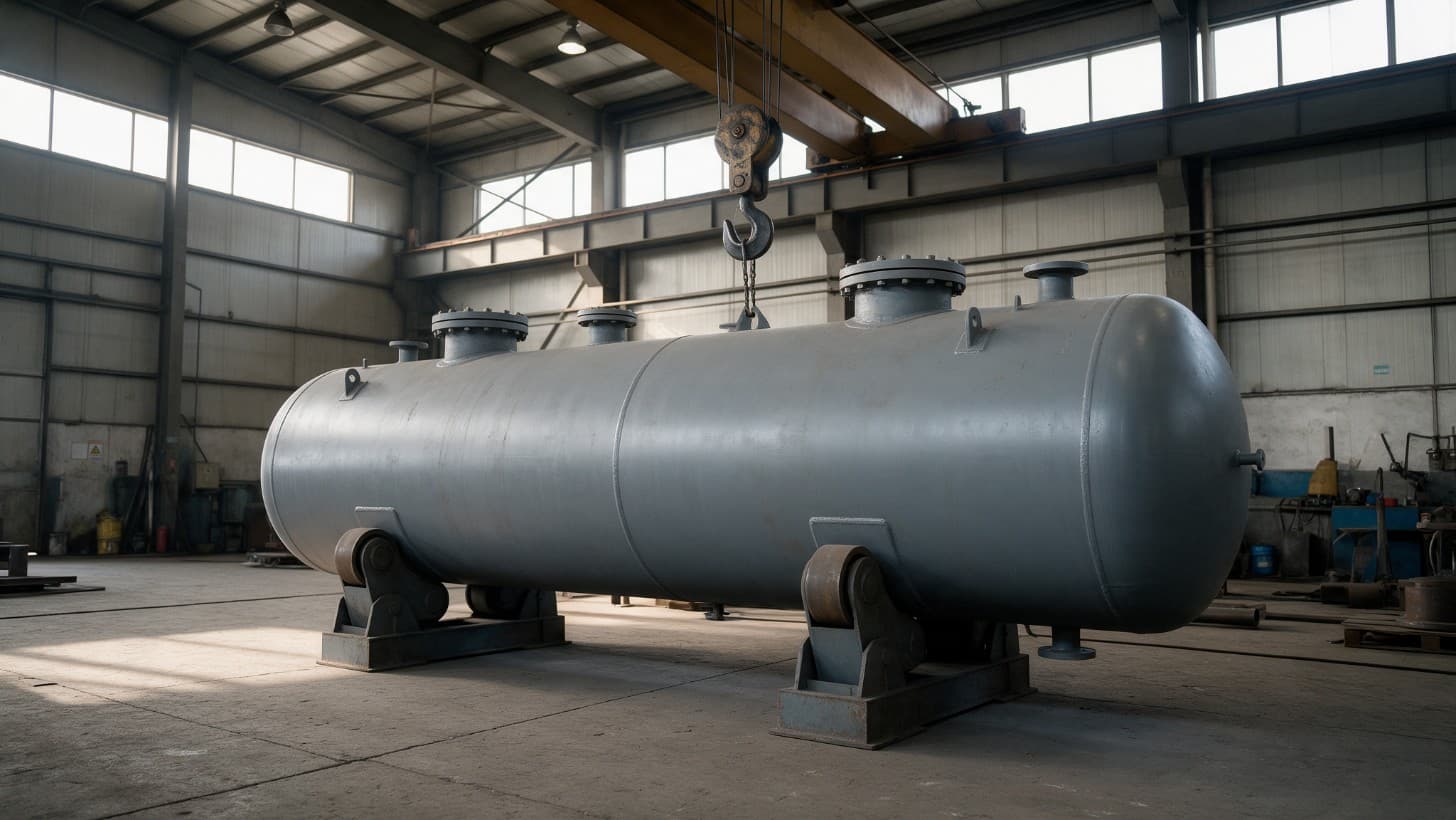
Pressure Vessel and Process Datasheets for Quotations
The difference between a process and a mechanical datasheet for vessels, the fields a fabricator needs to quote, and the omissions that cause requotes.