
Punch List Categories and Mechanical Completion for Process Plant
What a punch list is, how category A, B and C items gate mechanical completion, start up and handover, who clears them, and a template for vendor equipment packages.
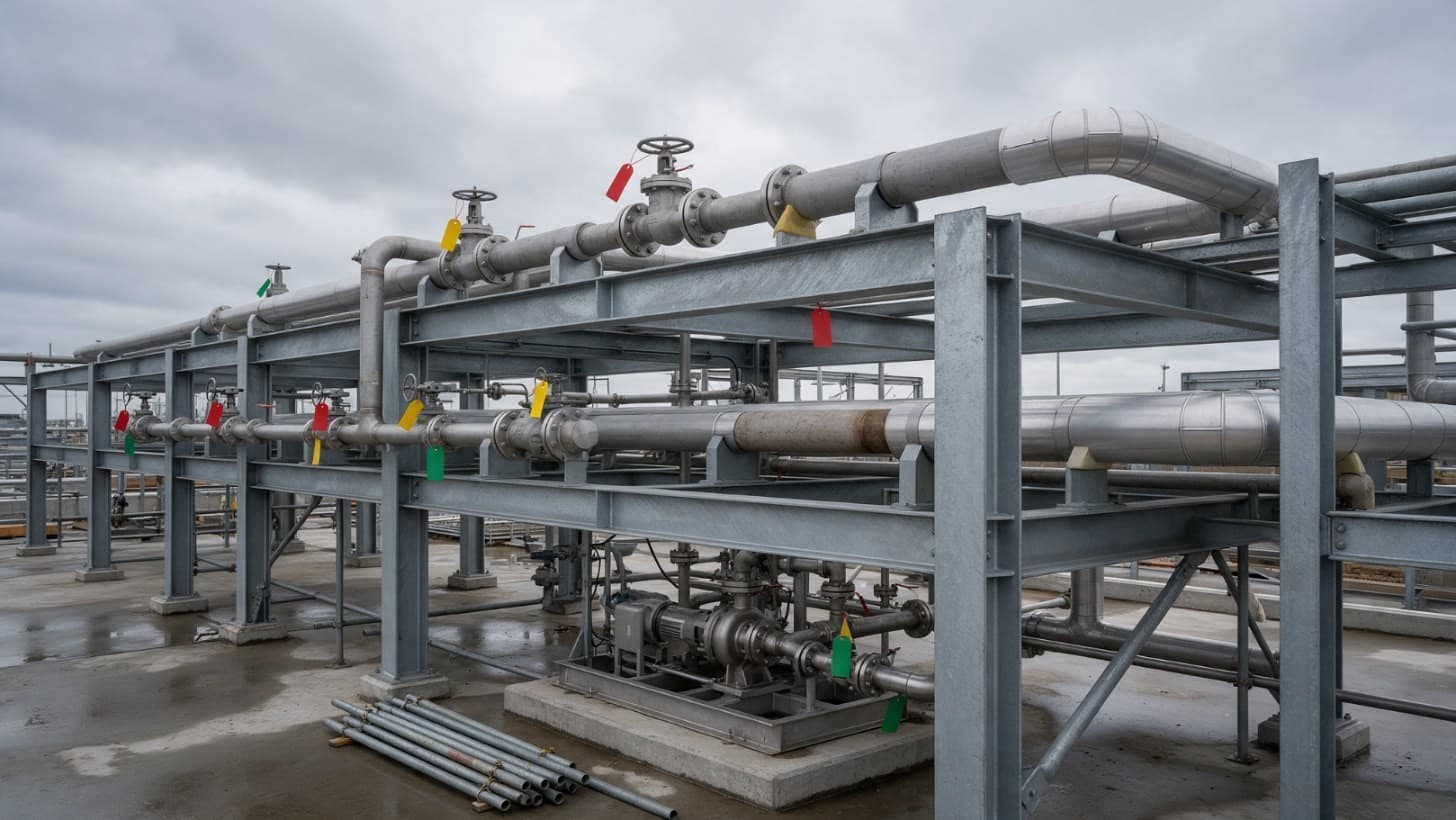
A punch list is the register of items found incomplete, damaged or not to specification when a system or equipment package is inspected near the end of construction. Each item gets a category that says which milestone it holds up. On many process plant projects a category A item stops a system moving into its next phase, a category B item can be carried forward by agreement, and some projects add category C for work that can wait until after handover [1, 2].
There is no single industry definition: the contract or the project's completions procedure decides what each letter means.
Mechanical completion is the point at which everything in a system is installed to the design documents and codes [1], and has been inspected, tested and verified against the drawings [4].
Why this matters now
Completion milestones move money and risk. Under the NEC4 Engineering and Construction Contract, certifying Completion stops delay damages under option X7 and, under the retention option X16, halves the retention held [8]. An article in IChemE's Consultants and Contractors File (2014) notes that completion of construction can also be used to assess delay and apply liquidated damages, and warns that take over should not be rushed by pressure to start production [7].
So moving an item from A to B is a commercial decision as much as a technical one. The vendor wants the milestone paid; the owner wants a system that can be commissioned safely. This is general information, not legal advice.
Create and manage RFQs in minutes
ChemCapital handles the entire procurement cycle, from structured RFQs and supplier comparisons to formal purchase orders and delivery tracking.
How projects define punch list categories
The letters look standard; the definitions are not. Three published sets, and one contract that uses no letters:
| Source | Category A | Category B | Category C |
|---|---|---|---|
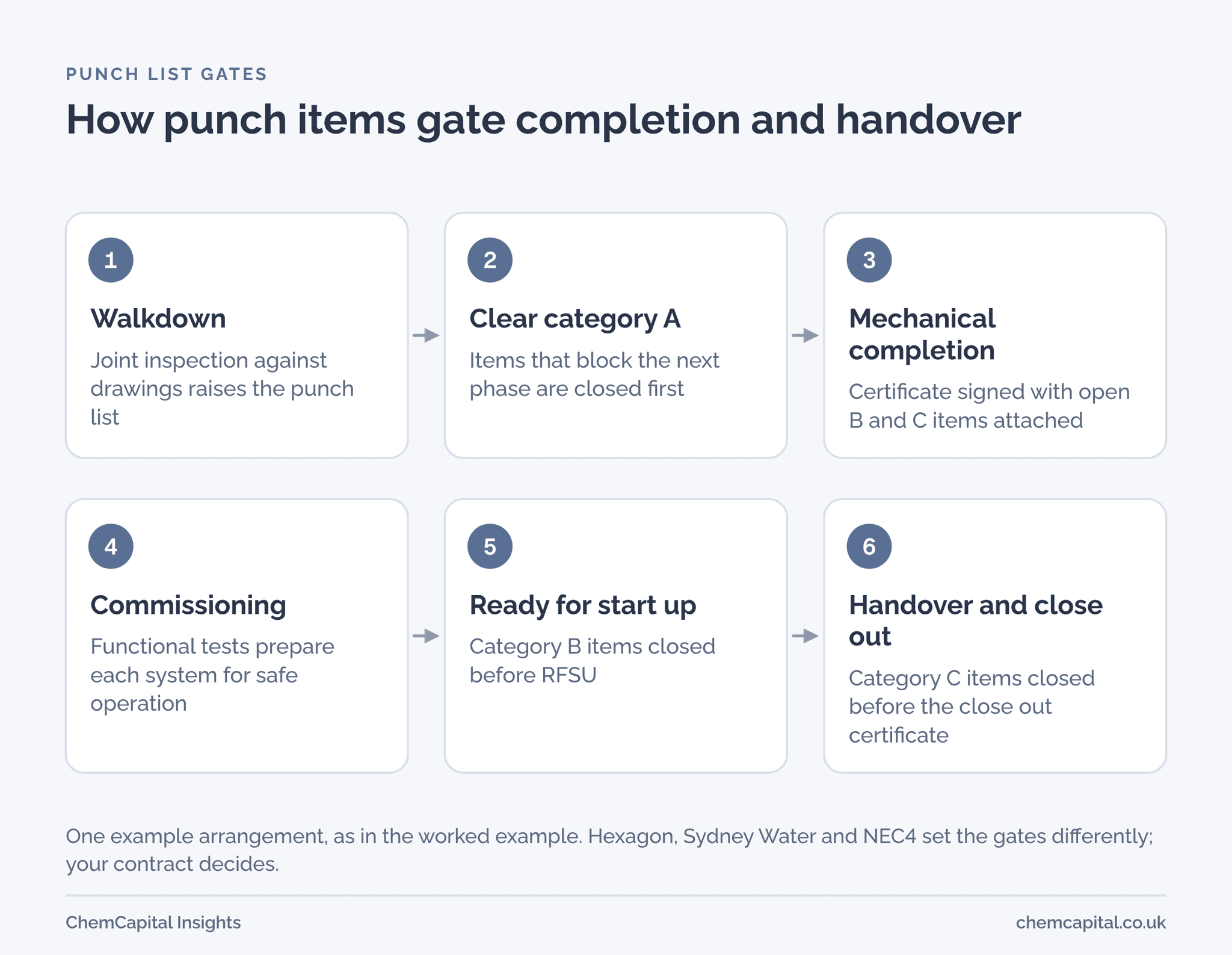
| Hexagon, Smart Completions glossary | Prevents the system being pre commissioned, commissioned or energised, for safety or operability reasons [1] | Does not prevent safe operation; rolled over to the next phase by agreement [1] | Finished after handover, before the close out certificate [1] |
| Sydney Water, an Australian water utility, 2026 (calls them defects) | Safety issues and failed assets or tests; none affecting safety, compliance or operation may be open when commissioning starts [2] | No effect on moving to the next stage; may stay open with an agreed fix; closed before project completion [2] | Not defined |
| InEight completions software | Must be resolved before the ready for pre commissioning certificate [3] | Not defined on the page | Not defined on the page |
| NEC4 Engineering and Construction Contract | No letters: defects that would stop the client using the works are corrected before Completion [8] | Small defects that leave the works usable may be put right in the defect correction period [8] | Not used |
So the same letter can guard different gates, and someone needs the final say on category. Sydney Water keeps that decision for itself as owner [2]; a buyer of a vendor package should write the same into the purchase order.
Typical process plant examples, as a starting point rather than a rule:
- A, blocks the next phase: a relief valve missing or without its set pressure certificate; a pressure test not done or its record missing; earthing or bonding not connected; a coupling guard missing on a pump; a trip instrument not installed or its loop not checked.
- B, carried forward by agreement: insulation incomplete on lines that need no personnel protection; tag plates missing; spares or special tools not yet delivered.
- C, after handover: paint touch ups, final housekeeping and the last as built drawings.
In Great Britain, some items stop start up whatever letter the project gives them. Under the Pressure Systems Safety Regulations 2000, the user must not operate a pressure system, or allow it to be operated, without a written scheme for its examination by a competent person, covering its protective devices and the vessels and pipework in which a defect could give rise to danger. Where appropriate, the scheme also provides for an examination before first use [9], which then becomes another gate. No written scheme of examination, no start up.
How punch items gate mechanical completion, start up and handover
Completion is managed system by system. Hexagon's glossary describes systems divided into sub systems to ease mechanical completion, function testing, commissioning and handover [1]. InEight gives as examples a chain of certificates: construction complete, ready for commissioning, ready for start up (RFSU), ready for operation and facility acceptance [3].
Each certificate is a gate. InEight's example for a ready for pre commissioning certificate needs the construction checklists complete, every category A punch item resolved, a final walkdown done and a turnover package prepared [3]. A walkdown, the joint inspection of the installed system against drawings and check sheets, raises most punch items.
IChemE contracts use other names. Completion of construction confirms the plant is physically built; take over, run under the schedule 15 procedures, should wait until the contractor has proved the plant meets the specification and can receive raw material [7].
Who owns clearing punch items
The party whose scope contains the item clears it. Hexagon's term for work the fabricator has not finished is carry over work, and the fabricator still owns it [1]. In Sydney Water's scheme both the owner and the service provider can raise defects, and the service provider updates the register at the end of each commissioning phase [2].
Closing an item should take two signatures: the action party's, and that of the raiser or the owner's representative, who checks it. Bob Prieto's turnover note for the National Academy of Construction says the turnover plan should define how punch items are categorised and signed off, and that prompt closure lets systems be checked out and started up [6].
A punch list template
Sydney Water asks the register to record at least the defect, the corrective action, target dates and the responsible people [2]. A template that also settles ownership and evidence looks like this:
| Field | What to record |
|---|---|
| ID | Unique number, never reused |
| System and tag | System or sub system, plus the equipment or line tag |
| Description | What is wrong, where, and against which drawing or check sheet |
| Category | A, B or C under the contract's definitions |
| Raised by and date | Name, company and walkdown date |
| Owner | The action party who must clear it |
| Due date | Set by the gate the category blocks |
| Closure evidence | Certificate, photo, test record or revised drawing |
| Closed by and date | Action party's sign off |
| Verified by and date | The raiser or the owner's representative |
Applying this to a vendor equipment package
For a skid, vessel or pump set, the punch list starts at the factory. Items found at the factory acceptance test (FAT) that the vendor agrees to finish on site are carry over work [1], and should go straight onto the site punch list with a category.
The vendor's mechanical completion check record closes the loop. Reference data based on NORSOK Z 001 treats it as the last inspection record for supplied products: the supplier, the customer and any third party sign it, and it lists every punch item that still applies [5].
The purchase order is where the rules belong. Prieto also asks the turnover team to check that each purchase order covers the vendor's documents, tests, commissioning spares and support [6]. Add the category definitions, who decides a disputed category, how long the vendor has to clear each category, and which payment is linked to which gate.
Practical example
An illustrative CIP (clean in place) skid is ordered for £360,000. The payment terms, also illustrative, are 10% with order, 60% on delivery after FAT, 20% on the mechanical completion certificate and 10% retention, released at the end of a 12 month defects period. The order says category A items must be closed before mechanical completion, B before RFSU and C before close out. It also lets the buyer hold back twice the estimated cost of open items from the completion payment.
The walkdown raises 38 items: 4 category A, 22 B and 12 C. The A items are an uncertified relief valve on the steam heater, a missing bonding strap, an unchecked return conductivity trip loop and a missing coupling guard. The vendor clears them in six working days, and the certificate is then signed with the 34 open B and C items attached.
| Item | Count | Gate in this order | Payment effect |
|---|---|---|---|
| Category A | 4 | Before the mechanical completion certificate | The whole £72,000 milestone waits |
| Category B | 22 | Before RFSU | Part of the £7,600 held back |
| Category C | 12 | Before close out | Part of the £7,600 held back |
| Retention | Not applicable | End of the 12 month defects period | £36,000 |
The open B and C items are estimated at £3,800 to complete, so £7,600 is held back and £64,400 of the £72,000 milestone is paid. Had the four A items been downgraded to B, the milestone would have fallen due six working days earlier, with an uncertified relief valve still on the skid.
Put the rules in the order, then track them
Punch list disputes are cheaper to prevent at RFQ stage than to settle at the walkdown. ChemCapital sends one structured RFQ to all your suppliers at once, so every bidder prices the completion obligations you set out. Suppliers confirm formal purchase orders and post milestone updates, and an audit trail logs every revision and decision with a timestamp.
Ready to put clear completion rules into every order? Start a free 14 day ChemCapital trial, with no credit card needed.
Frequently asked questions
What are punch list categories A, B and C?
Category A items stop a system moving into its next phase, such as commissioning or energising; category B items can be carried forward by agreement; and on projects that use it, category C covers work that can be finished after handover but before close out. Definitions differ between projects and contracts, so the contract or completions procedure governs.
What is a mechanical completion certificate?
It records that a system or equipment package is installed to its design documents and has been inspected and tested against its drawings, so commissioning can begin. Check what your contract requires to be closed before it is signed, and attach the list of open items you are accepting.
Who is responsible for clearing punch list items?
The party whose scope contains the item, usually the contractor or the equipment vendor, with the raiser or the owner's representative verifying closure. Write into the contract who decides a disputed category and how long each category has to be cleared.
What should a punch list template include?
At least an ID, system and tag, description, category, who raised it and when, the owner, a due date, closure evidence, and who closed and verified it. Sydney Water's commissioning specification, for example, requires the defect, corrective action, target dates and responsible people.
Continue reading
Informational only, not procurement or legal advice. Cited names, frameworks, and statistics belong to their respective owners.
Create and manage RFQs in minutes
ChemCapital handles the entire procurement cycle, from structured RFQs and supplier comparisons to formal purchase orders and delivery tracking.
Start for freeRelated articles
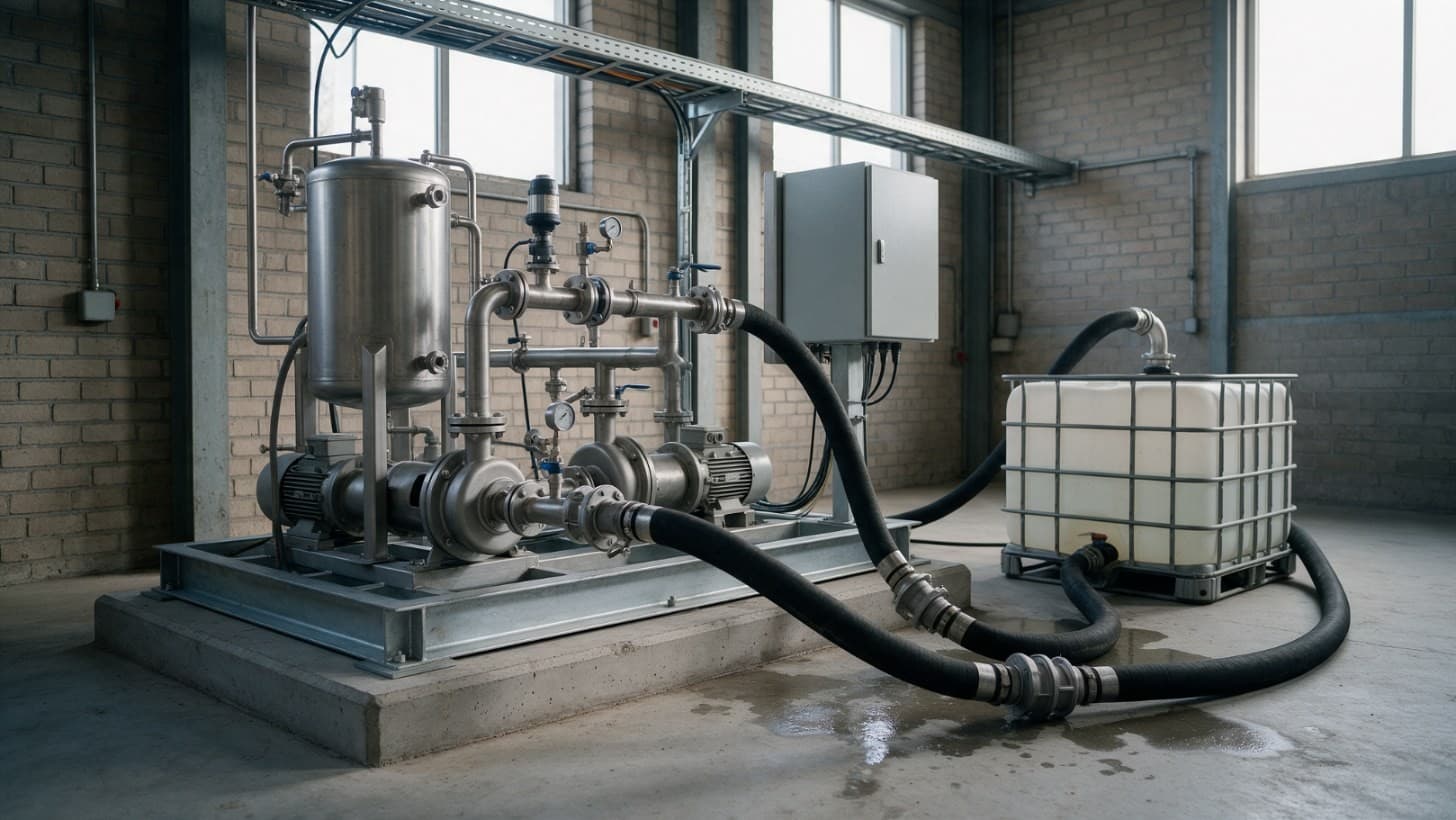
Site Acceptance Test (SAT) Checklist for Process Skids
What a site acceptance test must prove once a skid is installed, how SAT differs from FAT and commissioning, a full SAT checklist and how to handle failed tests.
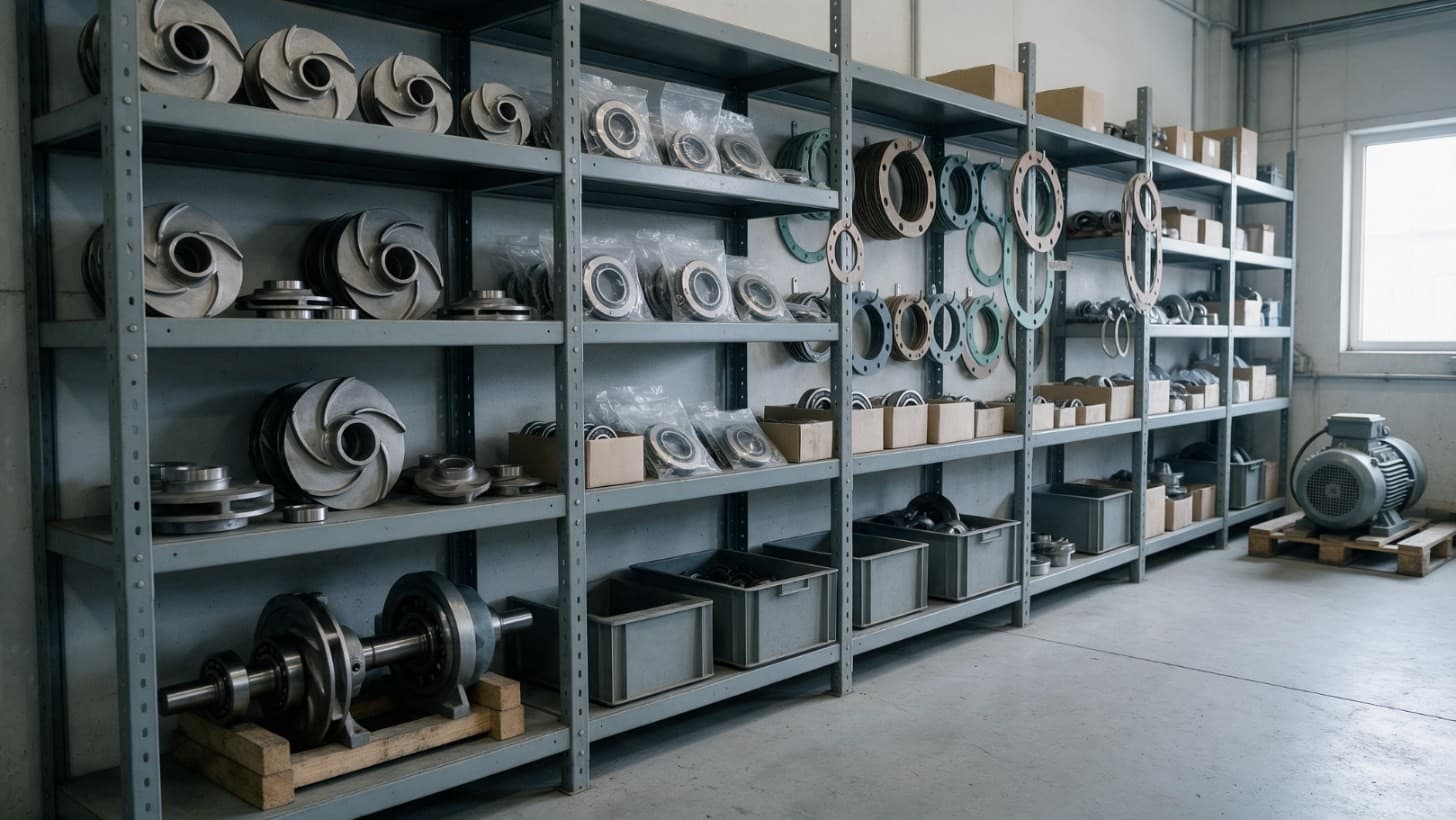
Recommended Spares List: Commissioning, Operating and Insurance Spares
What a recommended spares list should hold: commissioning, two year operating and insurance spares, criticality, what to ask in the RFQ, and a pump and vessel template.
Payment Milestones, Retention and Bonds on Process Equipment Orders
How to tie payment milestones to evidence on process equipment orders, when to hold retention, and what advance payment guarantees, bonds and PCGs secure.