ChemCapital logoChemCapital
How It WorksAI CompareP&ID to RFQFind SuppliersNEWProject CostingInsightsProcurementPricingEnterprise
Log InGet Started
Insights/design pressure vs operating pressure

1 articles

Tag: design pressure vs operating pressure

All articles tagged with "design pressure vs operating pressure".

AllCost EstimatingSupplier QualificationDigitisationContracts & Post AwardRisk & ResilienceProcess ExcellenceRFQ & TenderingSupplier Relationships
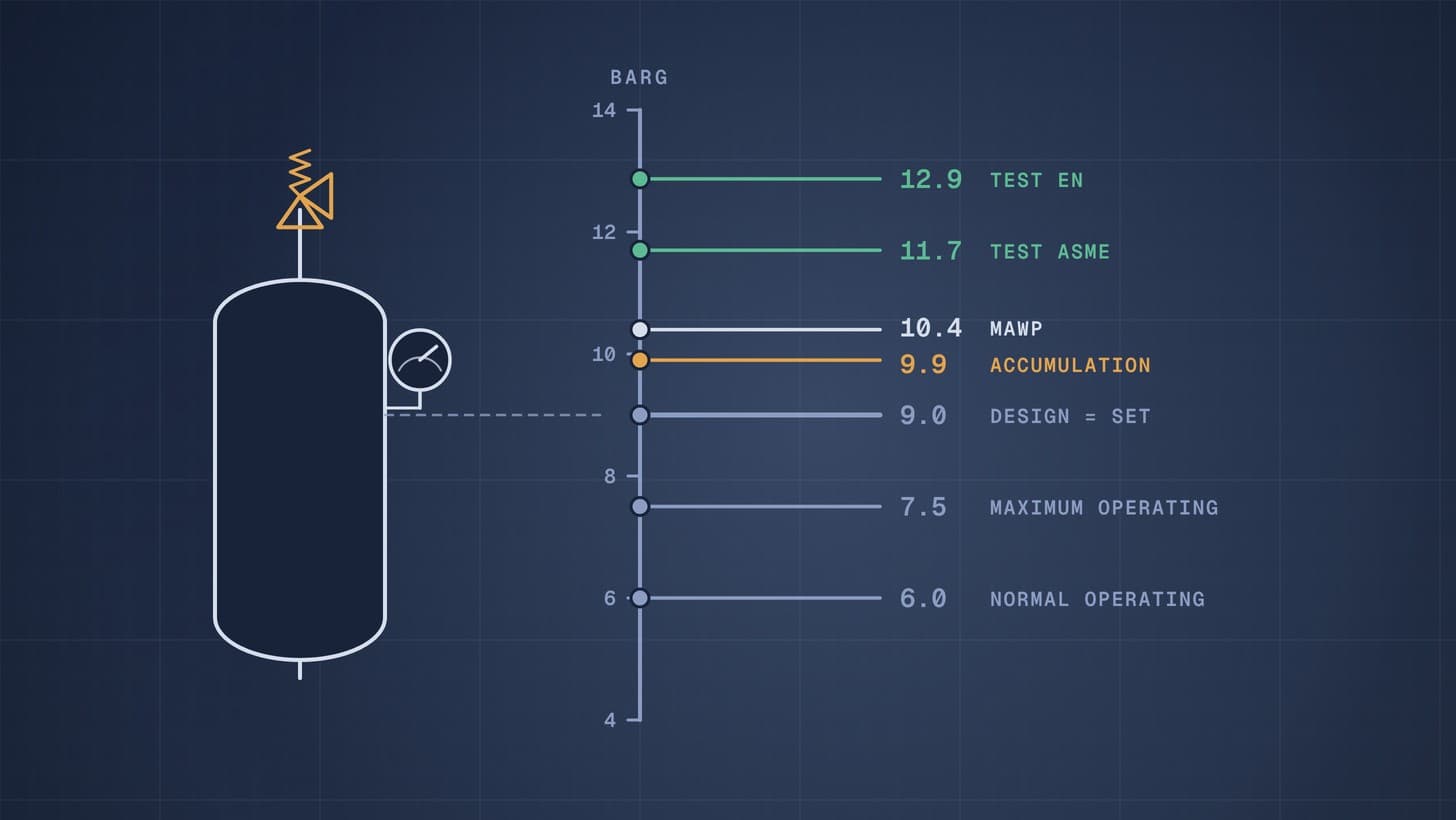
Blueprint style graphic: a pressure ladder beside a vessel with a relief valve: normal operating 6.0, maximum operating 7.5, design and set pressure 9.0, maximum during relief 9.9, calculated MAWP 10.4 with the vessel stamped at 9.0, and hydrostatic test 11.7 to 12.9 barg
RFQ & TenderingFor everyone

Design Pressure, MAWP and Operating Pressure in a Vessel RFQ

The difference between operating pressure, design pressure, MAWP and PS, how much margin to add, how relief valves and hydrostatic tests follow from them, and what to put on the vessel datasheet.

7 min read·30 Oct 2026
ChemCapital logoChemCapital

The end-to-end procurement platform for process equipment. Source with AI, cost projects, run RFQs, compare quotes, and track orders across pharmaceutical, chemical, and industrial sectors.

Platform

  • Insights
  • How It Works
  • AI Quote Comparison
  • P&ID to RFQ
  • Supplier Discovery
  • Project Costing
  • Benefits for Procurement
  • Benefits for Suppliers
  • Industries
  • Pricing

Enterprise

  • Enterprise
  • Trust Centre
  • Data Security
  • DPA / Sub-processors
  • ALCOA+ Data Integrity
  • Security Questionnaire
  • Continuity & Exit
  • Regulated Compliance Briefing
  • Privacy Data Request

Company

  • About ChemCapital
  • Contact

Legal

  • Terms of Use
  • Supplier Terms
  • Buyer Terms
  • Privacy Notice
  • Cookie Notice
  • Acceptable Use
  • Billing Terms
  • AI Disclaimer
  • Complaints / Report Abuse

Account

  • Log In
  • Sign Up

© 2026 ChemCapital. All rights reserved.

Privacy PreferencesData SecurityPrivacy NoticeTerms of Use