
WPS, PQR and Welder Qualification: What Equipment Buyers Should Check
What a welding procedure specification, a procedure qualification record and a welder qualification each prove, how ISO 15614, ISO 9606 and ASME IX differ, and what to check before fabrication starts.
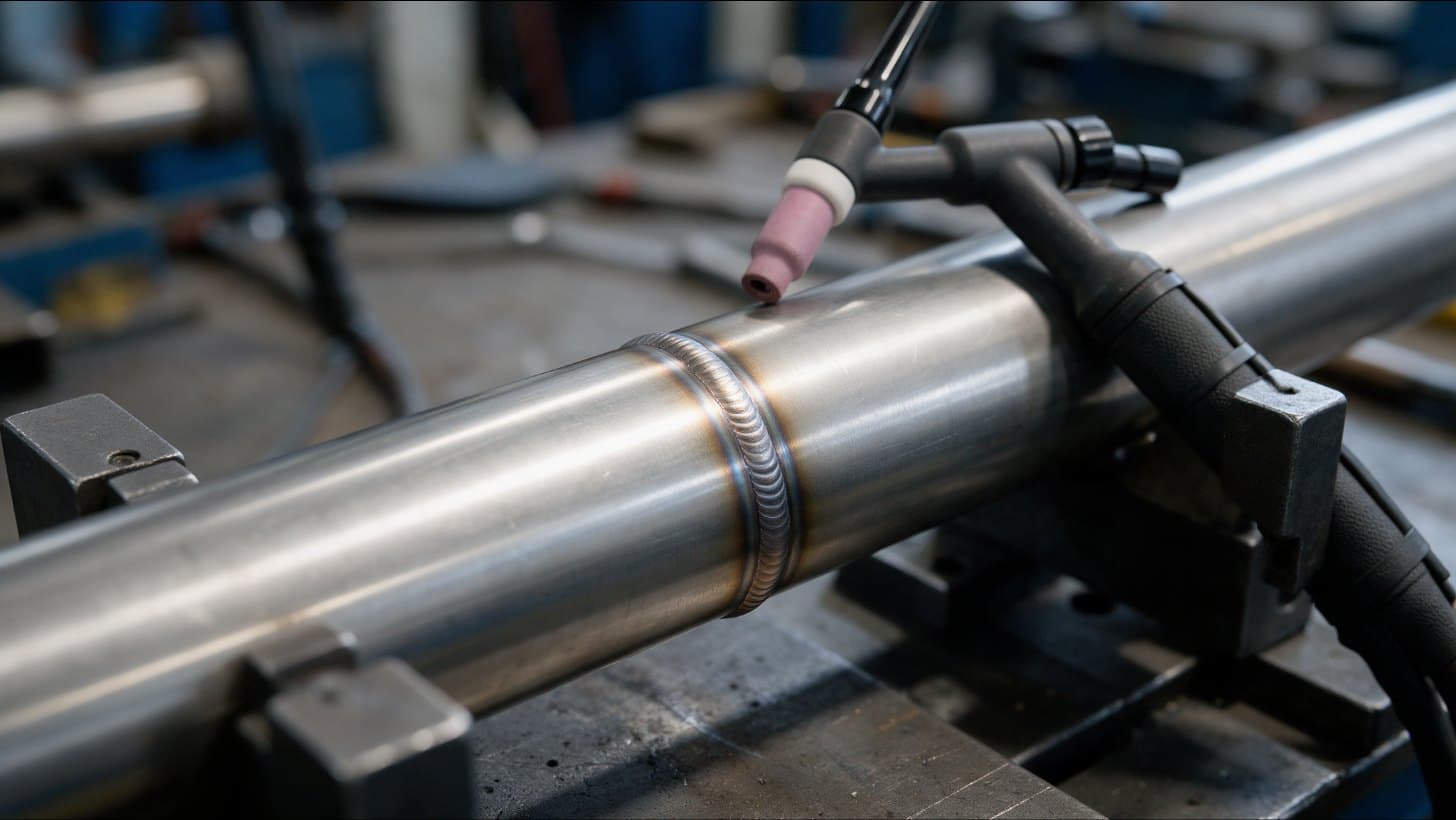
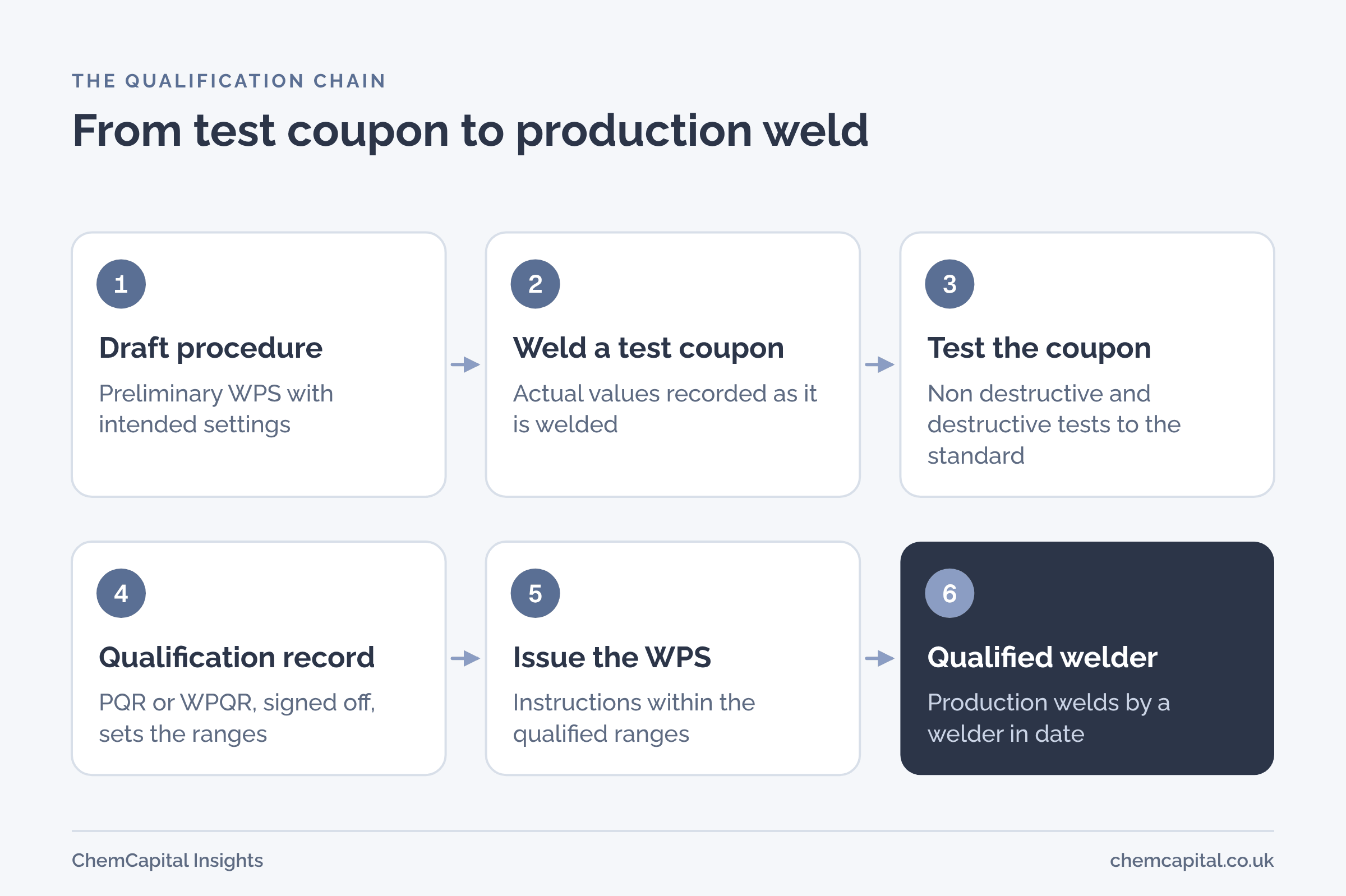
A welding procedure specification (WPS) is the written instruction a welder follows to make a particular weld: process, materials, filler, thickness range, position, preheat, interpass temperature and electrical settings. A procedure qualification record (PQR, or WPQR in ISO standards) is the evidence behind it: the actual values used to weld a test piece and the results of the tests that proved the weld sound. A welder qualification proves that an individual welder can make an acceptable weld within a given range. A buyer needs all three to line up for every weld on the equipment: each weld made to a WPS, each WPS supported by a qualification record that covers it, and each welder qualified and in date.
These records sit in the fabricator's quality system, and most buyers never ask to see them until something goes wrong. Asking before fabrication starts is cheaper.
Why this matters now
The rules for procedures changed shape with ISO 15614 1:2017, and many fabricators now hold a mix of records. According to TWI, the 2017 edition introduced two levels: level 1, based on the requirements of ASME Section IX and less demanding, and level 2, based on the earlier ISO editions, with more testing and narrower ranges [1]. Level 2 applies when a contract does not say which, a level 2 qualification also satisfies level 1 but not the other way round, and for compliance with the Pressure Equipment Directive only level 2 is permitted [1]. Older qualifications remain valid [1].
So a fabricator that welds to both American and European codes may offer you a perfectly good procedure that is simply the wrong kind for your vessel.
Join ChemCapital to streamline sourcing and connect with verified partners
Whether you're buying or supplying, ChemCapital gives you the tools to manage the complete procurement cycle in one platform.
Three records, three questions
| Record | What it is | The question it answers | What to check |
|---|---|---|---|
| WPS | Instructions with ranges for each variable | How will this weld be made? | Covers your material, thickness, process, position and heat treatment |
| PQR or WPQR | Actual values from a test weld and its test results | Has this way of welding been proven? | Results pass; ranges cover the WPS; made by this manufacturer |
| Welder qualification | Test of an individual welder within a range | Can this welder make it? | Range covers the job; confirmed and in date |
Morrison Maierle's plain summary is a good one to share with colleagues: the WPS sets out the parameters and variables for a weld, the PQR records the actual values from welding a test coupon, and the PQR is the basis for developing the WPS [2].
What to check in a procedure
Ask the fabricator for its weld map or list of procedures for your job, with the supporting qualification records, and check each one against the drawings:
- Material. Base metals and grades or groups, including dissimilar joints such as stainless to carbon steel.
- Thickness and diameter within the qualified range.
- Process, and whether manual, partly mechanised or automatic.
- Filler metal and any shielding or backing gas.
- Position for both procedure and welder.
- Preheat, interpass temperature and post weld heat treatment. TWI notes that adding or deleting post weld heat treatment has no range of approval in either ISO 15614 1 or ASME IX [3].
- Toughness and hardness. If your design code or specification requires impact tests, the qualification must include them. ISO 15614 1 requires hardness testing for ferritic steels with a specified minimum yield strength above 275 MPa; ASME IX does not [3].
- The manufacturer. TWI lists the manufacturer among the variables with no range of approval [3]. A procedure qualified by a sister company or a previous owner is not automatically valid in this shop.
ISO 15614 1 and ASME IX are not interchangeable
| Point | ISO 15614 1 | ASME Section IX |
|---|---|---|
| Variable categories | No variables treated as non essential | Essential, supplementary essential and non essential |
| Impact testing | Charpy tests for steels over 12 mm thick when the material specification calls for them; heat input is an essential variable | Supplementary variables, including heat input, apply only when toughness is required |
| Hardness testing | Required for ferritic steels above 275 MPa specified minimum yield | Not required |
| Preheat reduction | None allowed without requalifying | Up to 55 °C reduction allowed |
| Interpass increase | None allowed above the qualified value | Up to 55 °C increase allowed |
| Manual to automatic | Essential variable | Non essential variable |
These differences come from TWI's comparison, which was written against the 2012 edition of ISO 15614 1 [3], so check the current editions. The practical point stands: tell bidders which standard and which level your equipment needs, and do not accept a substitute without your welding engineer's agreement.
Welder qualifications and their validity
Under ISO 9606 1, the manufacturer must confirm each welder's qualification every six months. TWI describes three ways to keep it valid beyond that: retest every three years; revalidate every two years if two welds made in the previous six months were tested by radiography, ultrasonics or destructive tests, with records kept; or keep validity without a time limit, if the welder stays with the same manufacturer, the manufacturer's quality system is verified to ISO 3834 part 2 or 3, and acceptable welds are documented [4]. That last option is not permitted for equipment under the Pressure Equipment Directive, and the chosen method must be stated on the certificate when it is first issued [4].
ISO 3834 itself sets quality requirements for fusion welding at comprehensive, standard and elementary levels, and works alongside ISO 9001 rather than replacing it [5]. If a fabricator relies on the unlimited validity route, ask to see its ISO 3834 certificate.
Pressure equipment adds a third party
For pressure equipment, the approval of joining procedures and personnel is not left to the fabricator alone. TÜV NORD's published rules, for example, cover approval of both personnel and operating procedures for permanent joining of pressure equipment in categories II, III and IV, with the body's inspector supervising the qualification tests [6]. Ask whose name is on the approval and check that it covers the category and process you need. Our guide to pressure equipment categories under the PED and the UK's PER 2016 explains how category is decided.
Practical example
In this illustrative example, a buyer orders a 316L vessel in a category that needs third party approval of joining, and asks for the weld map and supporting records before fabrication. The review finds three problems, none of them unusual:
- The procedure for the nozzle welds is supported by a level 1 qualification to ISO 15614 1. For a PED vessel only level 2 is permitted [1], so the fabricator must use a different qualified procedure or qualify a new one.
- One procedure qualification was made by the fabricator's sister company in another country. Because the manufacturer has no range of approval [3], it does not support work in this shop.
- Two welders' ISO 9606 1 certificates show no six monthly confirmation for the past year [4]. Unless the fabricator can prove they kept welding within range throughout, their qualifications have lapsed and they must be retested before they work on this job.
Each point took minutes to find on paper. Found at the hydrostatic test, or worse at an inspection by the notified body, the independent organisation that assesses pressure equipment against the law, any one of them could have cost weeks.
What to put in the RFQ and order
- Name the welding standard and, for ISO 15614 1, the level.
- Ask bidders to list the procedures they will use, with qualification references, and to confirm they cover the materials and thicknesses on the datasheet.
- Make submission of the weld map and procedures a hold point in the inspection and test plan, before fabrication starts.
- Require welder qualification records, in date, for every welder assigned.
- Agree who witnesses any new procedure qualification test.
For suppliers, the same list is a way to stand out: a clear weld map and an organised record set in the bid tell a buyer more about your shop than a brochure.
Where ChemCapital fits
ChemCapital sends one structured RFQ with line items and attachments, so your welding requirements and inspection and test plan reach every bidder in the same form. After award, purchase orders are issued in the platform, each order has its own message thread, suppliers post milestone updates, and every interaction and decision is logged with a timestamp and the person who made it. See how it works.
Want welding records requested and recorded with the order? Start free with ChemCapital.
Frequently asked questions
What is the difference between a WPS and a PQR?
A WPS is the written instruction a welder follows, with ranges for each variable. A PQR records the actual values used on a test weld and the test results that proved it; the WPS must fall within what its supporting PQR qualifies.
How long is a welder qualification valid under ISO 9606 1?
The employer must confirm it every six months. It is then revalidated by retesting every three years, by revalidation every two years with recent tested welds, or kept valid indefinitely under conditions that are not permitted for equipment under the Pressure Equipment Directive.
Can an ASME IX procedure be used for a PED vessel?
Only if your notified body, or other recognised third party, accepts it. For categories II to IV, joining procedures must be approved by a competent third party. TWI notes that only level 2 of ISO 15614 1:2017 is permitted for PED compliance and that level 1, which is based on ASME IX, gives no presumption of conformity, so expect extra tests or a new qualification.
Informational only, not procurement or legal advice. Cited names, frameworks, and statistics belong to their respective owners.
Join ChemCapital to streamline sourcing and connect with verified partners
Whether you're buying or supplying, ChemCapital gives you the tools to manage the complete procurement cycle in one platform.
Get started freeRelated articles
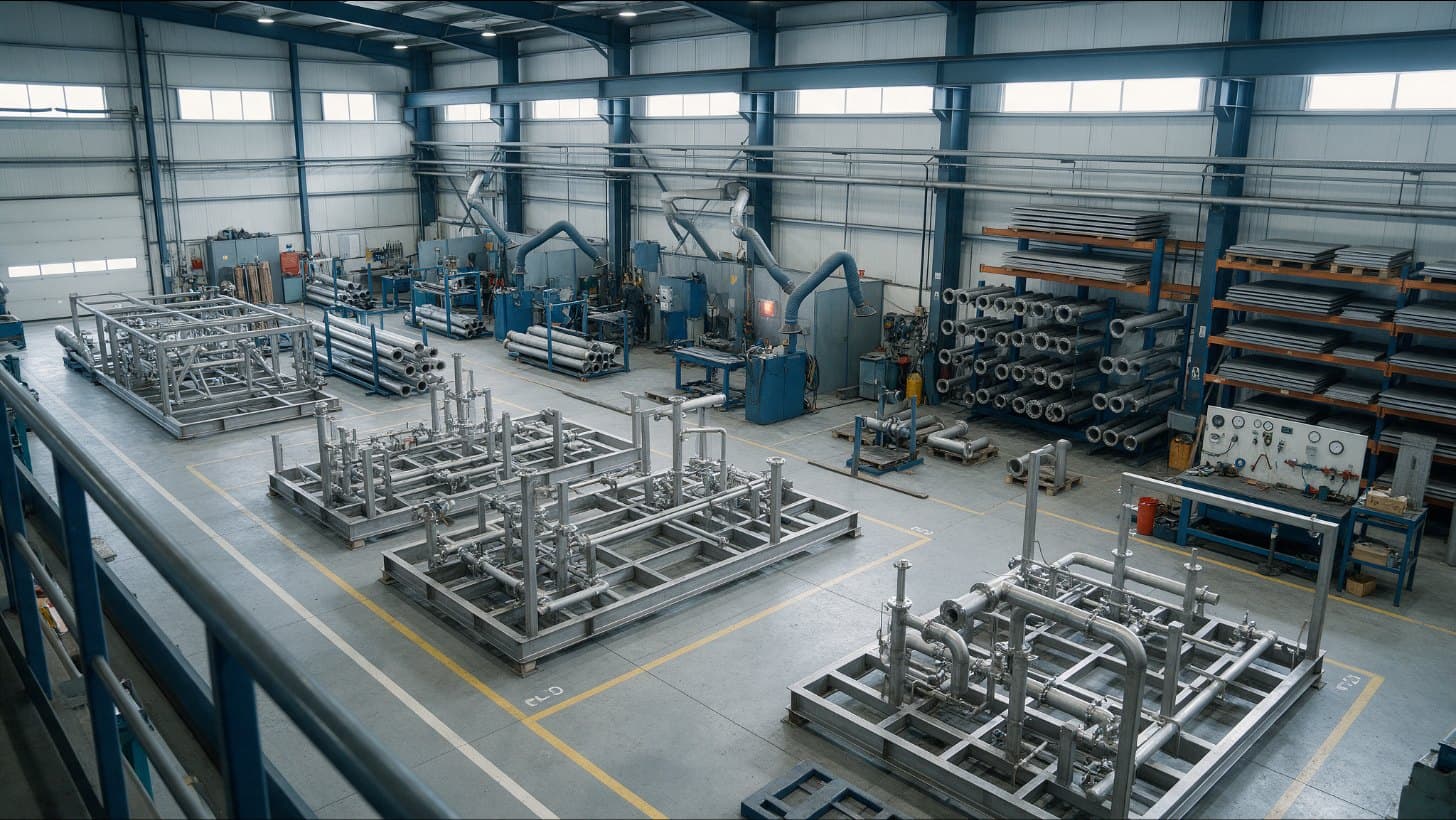
Supplier Audit Checklist for Process Equipment Fabricators
A practical checklist for auditing a vessel, skid or pipework fabricator before award: what to request in advance, what to check on the shop floor, red flags, scoring and follow up.

Commissioning and Qualification: ASTM E2500 vs Traditional IQ OQ PQ
How the science and risk based ASTM E2500 approach differs from traditional IQ, OQ and PQ, who does what, how vendor tests can be reused, and what to put in the RFQ.

21 CFR Part 11 and Electronic Signatures on Procurement Records
A plain guide to 21 CFR Part 11 for buyers at GMP sites: which purchasing and vendor records fall in scope, what electronic signatures must show, and what to check in a tool.