
Cost of Late Equipment Delivery: Worked Example
How to calculate the weekly cost of late equipment delivery, compare it with liquidated damages and use it to set a damages rate a supplier can accept.
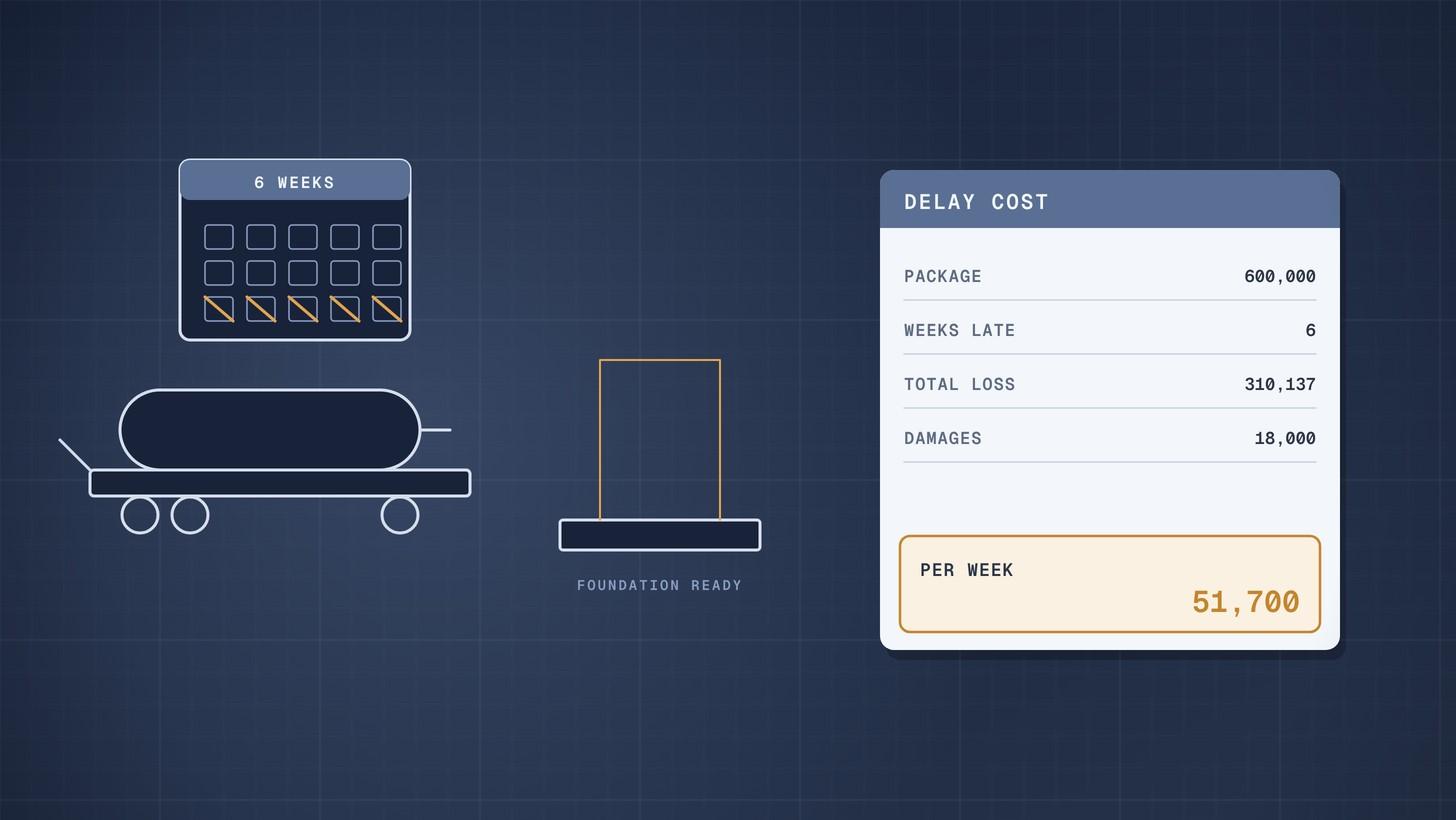
The cost of late equipment delivery is the margin you lose while the plant cannot run, plus the extra costs that keep running while you wait: contractors, your own project team, hired plant and the finance on money already spent. In the worked example below, a £600,000 reactor package arriving six weeks late costs the project about £310,000, or £51,700 a week. Liquidated damages at 0.5% a week recover £18,000 of it.
That gap is normal, and it is why the delay cost needs to be worked out before the contract is signed, not after the supplier misses the date.
Why this matters now
Most equipment contracts deal with lateness through liquidated damages: a sum per day or week of delay agreed in advance. Norton Rose Fulbright describes the rate as a reasonable estimate of the buyer's likely loss, such as lost revenue, extra financing costs and disruption downstream [1].
Yet delay damages are capped. Freeths, the law firm, notes that in England and Wales delay damages are often subject to a sub cap of typically 10% to 15% of the contract price [2]. On a project where one late package holds up a whole line, the cap is reached long before the loss stops growing.
Create and manage RFQs in minutes
ChemCapital handles the entire procurement cycle, from structured RFQs and supplier comparisons to formal purchase orders and delivery tracking.
Step 1: list the costs of each week of delay
Group the costs into four heads:
- Lost margin. The contribution the plant would have earned. This is usually the largest item, and only applies while the late item is on the critical path.
- Contractor costs. Standing time or demobilising and remobilising the installation contractor, and rebooking cranes and specialists.
- Owner's costs. Your project team, site facilities and consultants kept on for longer.
- Finance. The cost of money already spent on the project that is not yet earning.
Contractors claiming for delay face the same problem from the other side. Pinsent Masons notes that successful prolongation claims are usually based on actual costs during the delay, and warns against simply using an average weekly rate taken from the contract price [3]. Build your estimate the same way: real resources, real rates.
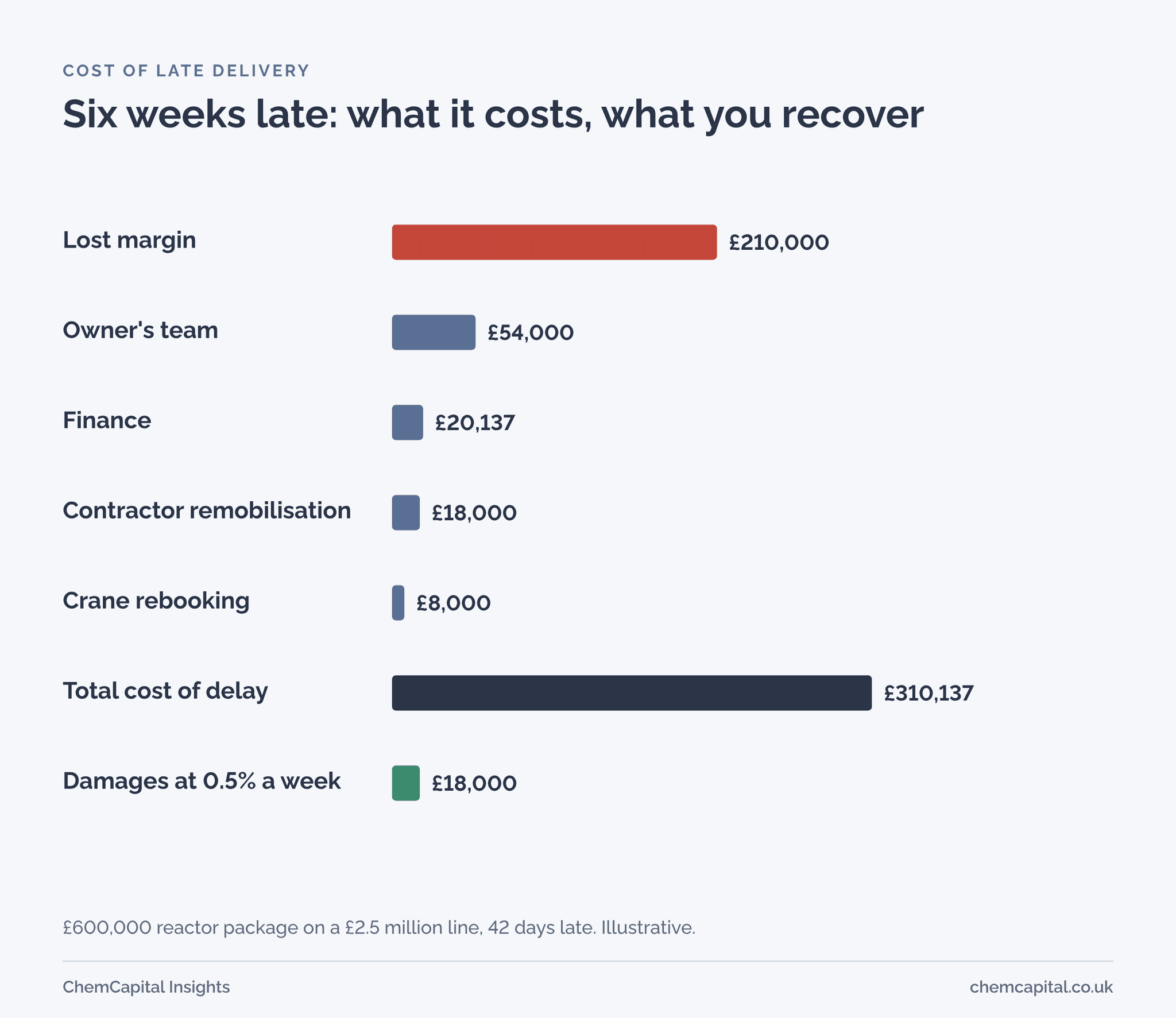
Worked example: a reactor package six weeks late
A manufacturer is building a new £2.5 million production line. The critical item is a £600,000 reactor package, which arrives six weeks late. All rates are illustrative.
| Cost head | Basis | Cost |
|---|---|---|
| Lost margin | £5,000 a day for 42 days | £210,000 |
| Owner's team | 3 people at £600 a day for 30 working days | £54,000 |
| Finance | £2.5 million at 7% for 42 days | £20,137 |
| Contractor remobilisation | Fixed charge to stand down and return | £18,000 |
| Crane rebooking | Cancelled and rebooked heavy lift | £8,000 |
| Total | £310,137 |
That is about £51,700 a week, or more than half the price of the package over six weeks. The 7% finance rate is Bank Rate, 4% since 5 November 2026 [4], plus an illustrative margin.
Compare the liquidated damages. The contract sets delay damages at 0.5% of the package price a week, capped at 10%:
- 0.5% × £600,000 = £3,000 a week
- Six weeks: £18,000, about 6% of the loss
- The cap of £60,000 is reached after 20 weeks
Even at the cap, damages would cover less than a fifth of a six week loss.
Step 2: set the liquidated damages rate
The weekly loss is the starting point, not the answer. A supplier with a £600,000 order will not accept £51,700 a week, and a rate far above any real loss risks being unenforceable.
The test in English law comes from the Supreme Court's 2015 decision in Cavendish v Makdessi: a damages clause is a penalty if it imposes a detriment out of all proportion to the innocent party's legitimate interest in performance. Fenwick Elliott advises recording the commercial reasons for the rate when the contract is made, and notes that a clause negotiated between parties of similar bargaining power with legal advice is likely to be presumed proportionate [5].
In practice:
- Calculate the weekly loss as above, and keep the working on file.
- Set the rate below it, at a level the supplier can carry. A rate a supplier can accept is better than one it prices in or refuses.
- Check the cap against the delay you can realistically suffer, and say whether it is based on the contract price or the final contract value [1].
- Avoid both extremes. Freeths points out that rates set too low leave the buyer under compensated, while rates set too high risk being struck down [2].
This is general information, not legal advice; take advice on the drafting of any damages clause.
Step 3: cover the rest of the risk
Because damages will not cover the full loss, prevention matters more:
- Interim dates. Put damages or payment holds on drawing approval and the factory test, not just delivery, so slippage shows early.
- Float. Build realistic float around critical packages in the programme.
- Expediting. Visit the supplier and check sub orders for long lead parts such as forgings and motors. Our guide to expediting equipment orders sets out the routine.
- Choice of supplier. A slightly dearer bid with a credible delivery date may be the cheaper one once delay cost is counted.
Our guide to liquidated damages in equipment contracts covers the clause itself. With ChemCapital's structured RFQs, every bidder quotes against the same delivery date and damages terms, so their delivery promises can be compared directly.
Ready to compare equipment bids on delivery risk as well as price? Start a free 14 day ChemCapital trial, with no credit card needed.
Frequently asked questions
How do you calculate the cost of late equipment delivery?
Add up the lost margin while the plant cannot run, contractor standing or remobilisation costs, your own extended project team and site costs, and the finance cost of money already spent. In the worked example, a six week delay on a £600,000 package costs about £310,000.
What is a typical liquidated damages rate for late delivery?
Rates are often expressed as a percentage of the contract price per day or week, with a cap. In England and Wales delay damages are often capped at around 10% to 15% of the contract price. The right rate depends on your own estimate of the weekly loss.
Can liquidated damages be too high?
Yes. Under English law a damages clause is a penalty, and unenforceable, if it imposes a detriment out of all proportion to the buyer's legitimate interest in performance. Recording why the rate was chosen when the contract is made helps show it is proportionate.
Do liquidated damages cover the full cost of delay?
Rarely. Because rates are set at a level the supplier can accept and are capped, they usually cover only part of the loss. In the worked example they recover about 6% of the cost of a six week delay.
Continue reading
Informational only, not procurement or legal advice. Cited names, frameworks, and statistics belong to their respective owners.
Create and manage RFQs in minutes
ChemCapital handles the entire procurement cycle, from structured RFQs and supplier comparisons to formal purchase orders and delivery tracking.
Start for freeRelated articles
Payment Milestones and Supplier Cash Flow: Worked Example
How payment milestones, bonds and retention shape an equipment supplier's cash curve, with a worked example comparing two schedules on a £400,000 order.

Performance Guarantees and Performance Tests for Process Packages
What a process package supplier should guarantee, how the performance test is run, and what happens when the plant falls short, with a worked example of performance liquidated damages.
Packing and Shipping Specification for Process Equipment: Seaworthy Crates, ISPM 15 and Marking
What a packing specification for process equipment should say: packing levels, ISPM 15 wood, barrier foil and desiccant, lifting points, shipping marks and documents. With a worked crate example.