
Performance Guarantees and Performance Tests for Process Packages
What a process package supplier should guarantee, how the performance test is run, and what happens when the plant falls short, with a worked example of performance liquidated damages.
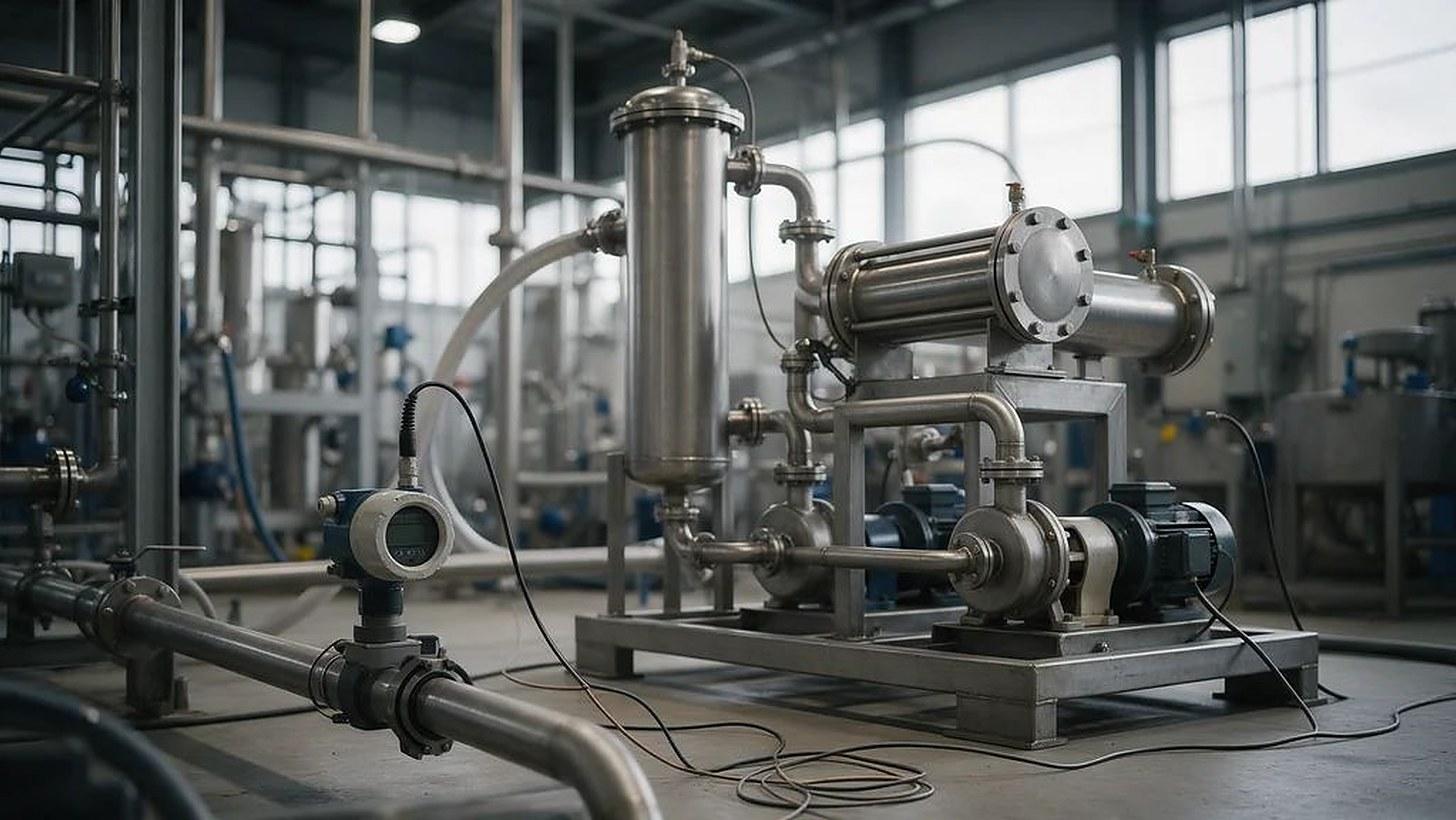
A performance guarantee is the supplier's binding promise that a process package will deliver stated results, such as capacity, yield, utility use and emissions, when tested under agreed conditions. The performance test proves it, and the contract says what happens if the plant falls short: the supplier fixes it and retests, pays performance liquidated damages, or in the worst case the buyer can reject.
Why this matters now
Process plant contracts are largely output based. You are not only buying steel and pumps built to a drawing; you are buying a result [1]. If the guarantees are vague, the test procedure is left to be agreed later, or the damages are never calculated, you have very little bargaining power when a skid makes 5% less than it should.
Most of the hard work happens before the order. Once the purchase order is signed, the supplier has every incentive to argue about test conditions, instrument accuracy and what "design rate" meant. Writing the regime into the RFQ means every bidder prices the same risk.
Create and manage RFQs in minutes
ChemCapital handles the entire procurement cycle, from structured RFQs and supplier comparisons to formal purchase orders and delivery tracking.
What gets guaranteed
The classic set for a process package covers capacity, consumption of raw materials and utilities, and product quality. Availability, reliability, byproducts and effluents can be added [2]. One experienced contractor's advice is to limit guarantees to the parameters that really matter, because every extra one adds test time, cost and argument [2].
| Parameter | Typical guarantee | How it is measured |
|---|---|---|
| Capacity | Feed or product rate, for example 5.0 t/h | Calibrated flowmeters or weighed batches over the test period |
| Yield or recovery | Percentage of product recovered, for example 98.5% | Mass balance from analysed samples |
| Product quality | Purity, moisture, particle size | Laboratory analysis to an agreed method |
| Utilities | Steam, power, cooling water per tonne of product | Utility meters over the same period |
| Emissions and effluent | Concentration or mass limit at the outlet | Stack or effluent sampling to a named method |
| Availability | Hours available over a reliability run | Operating log, with agreed exclusions |
Pick figures that are measurable on site with the instruments you will actually have. A guarantee that needs a laboratory you do not own is a guarantee you cannot enforce.
How the performance test is run
The test procedure belongs in the contract, not in a meeting after mechanical completion. It should name the method, often a recognised standard, who supplies the test instruments and how sensitive they are, and the base case conditions with the correction method for deviations [3]. ASME's Performance Test Codes exist for exactly this reason: uniform rules for planning, running and reporting tests, including methods for test uncertainty and for correcting results to guarantee conditions, so both sides work from the same reference [4].
A sound procedure covers:
- Preconditions. Mechanical completion, commissioning done, feed within the design envelope, utilities at the stated conditions.
- Stabilisation. A period at steady conditions before the clock starts.
- Duration. Long enough to be representative. One power station specification set a four hour efficiency test after a four hour stabilisation period, and a separate 168 hour continuous run [5].
- Measurement. Which instruments, calibrated by whom and when, and how samples are taken and analysed.
- Corrections. How results are adjusted when feed composition or ambient conditions differ from the design basis.
- Tolerance. The measurement tolerance, stated as a number. Some buyers allow none; the same power station specification said guarantees had no tolerance and no allowance for instrument inaccuracy [5].
- Who runs the plant. Under the IChemE Red Book the purchaser controls the timing and operation of the tests, and a back stop deems them passed if they are never started [2].
Under the IChemE Red Book, the tests sit in Schedule 16 and the guarantees and damages for failure in Schedule 17 [1]. FIDIC's Yellow Book has no prescribed schedules, so the buyer's team has to write measurable ones [1].
The performance test usually follows a factory test and a site test. Our FAT checklist for process skids and site acceptance test checklist cover those earlier steps.
What happens when the plant falls short
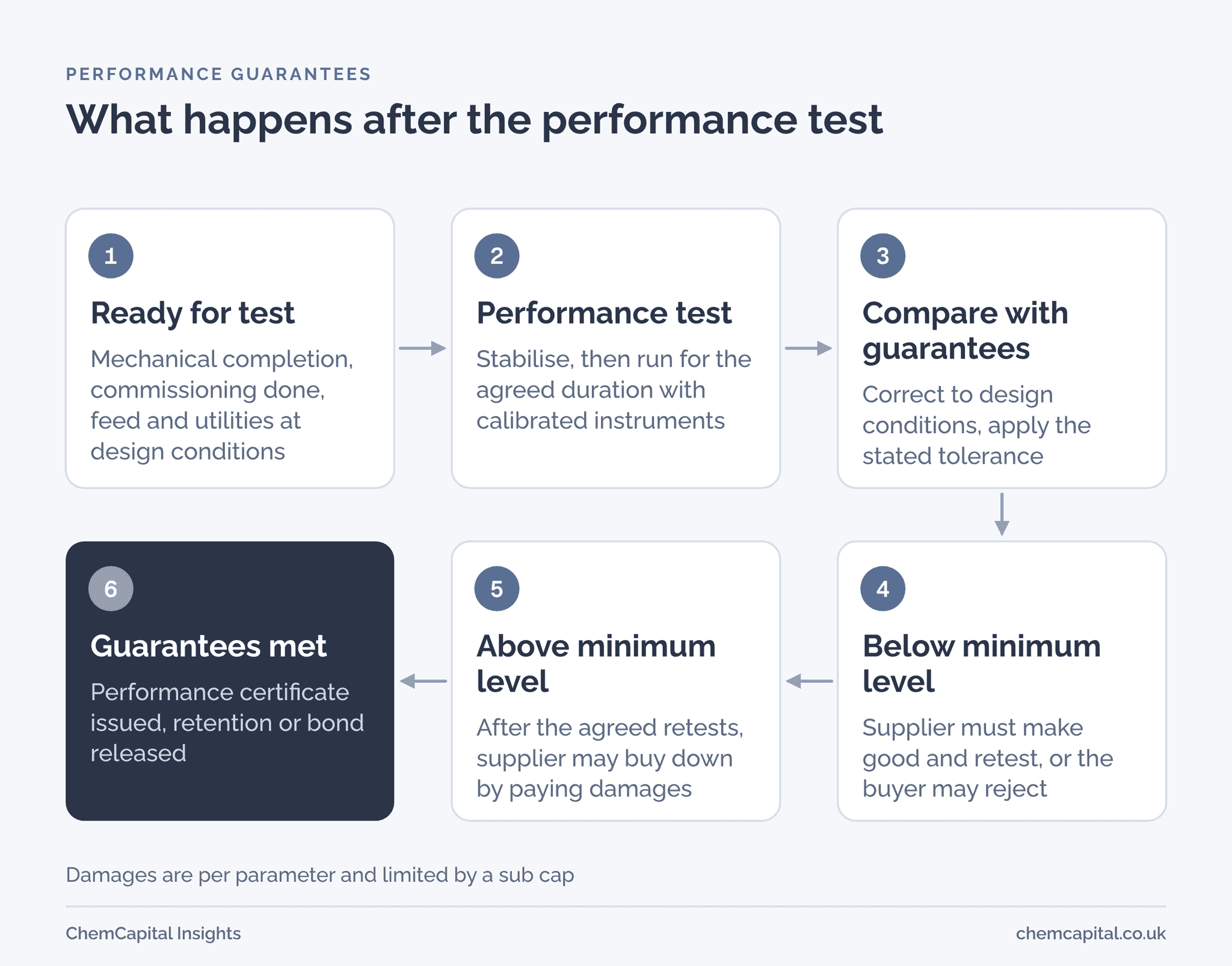
Three remedies work together, and the contract should say in what order they apply.
Make good and retest. The supplier investigates, adjusts and retests. Under the IChemE approach, the contractor keeps working on the plant until the guaranteed levels are met, and the purchaser must give reasonable access to do so [2]. Many contracts allow an extended testing period after the minimum guarantees are met before damages are demanded [3].
Buy down with performance liquidated damages. A minimum performance level sets a floor. Below it, make good continues. Above it, the supplier may pay performance liquidated damages instead of closing the gap, and owners can require a minimum number of retest cycles before that option opens [6]. The damages are set per parameter, per unit or percentage of shortfall, and must be a genuine pre estimate of loss [2]. Running cost shortfalls are often priced on one to three years of operation at design rate, and capacity shortfalls as a percentage of the contract price in proportion to the deficiency [2].
Rejection. For a major process plant, rejection is rarely practical, which is why absolute minimum criteria matter [2]. For a smaller package, a right to reject below a hard floor and recover payments is a real lever.
Performance damages normally sit under their own sub cap, which should at least cover the gap between the minimum level and the full guarantee [6]. Caps are often a percentage of the contract price or a fixed sum, and delay and performance damages can be cumulative rather than exclusive unless the contract says otherwise [7]. Our guide to liquidated damages in equipment contracts covers delay damages and the overall cap.
When bids come back, each supplier will have edited the guarantee table in its own way. ChemCapital's AI quotation comparison puts each bid's guarantees, exclusions and deviations side by side, so a missing utility guarantee is obvious before award.
Practical example
Illustrative figures. A solvent recovery package costs £2,400,000. The contract guarantees 5.0 t/h feed capacity, steam use of 1.10 t per tonne of feed, and 98.5% recovery. The flow measurement tolerance is 1%, the steam tolerance 2% of the guaranteed value. Capacity damages are 0.5% of the price for each 1% of shortfall beyond tolerance. Steam damages are the excess steam over three years at design rate, 8,000 hours a year, at £30 a tonne. The minimum performance level is 95% of guaranteed capacity, and performance damages have a sub cap of 10% of the price.
| Parameter | Guaranteed | Measured | Counted shortfall | Damages |
|---|---|---|---|---|
| Capacity | 5.0 t/h | 4.85 t/h | 3.0% minus 1% tolerance = 2.0% | 2 × 0.5% × £2,400,000 = £24,000 |
| Steam | 1.10 t/t | 1.14 t/t | 0.04 minus 0.022 = 0.018 t/t | 0.018 × 40,000 t × 3 years × £30 = £64,800 |
| Recovery | 98.5% | 98.7% | None | £0 |
| Total | £88,800 |
The measured capacity of 4.85 t/h is above the 4.75 t/h minimum level, so the supplier may buy down rather than keep modifying. The £88,800 total is well inside the £240,000 sub cap. Whether that is a fair price for three years of extra steam and 3% less throughput is a commercial judgement you should make before you sign, not after the test.
Common gaps to close before award
- No feed specification. If the guarantee does not state the feed composition it depends on, the supplier can blame the feed for any shortfall.
- No tolerance figure. "Normal measurement tolerance" invites a dispute; write a number per parameter.
- No damages formula. A guarantee without a priced remedy only gives you a claim to argue about.
- No link to payment. Tie the final payment or the release of a performance bond to the performance certificate; see payment milestones, retention and bonds.
If you are the supplier
Price the guarantee, do not just accept it. Ask for the test procedure and the feed specification before you bid, state your measurement tolerance, list the conditions your guarantee depends on, and check the sub cap against the damages formula. A guarantee you cannot test fairly is an open ended liability.
Where ChemCapital fits
Put the guarantee table, test procedure and damages formula in the RFQ so every bidder prices the same risk. ChemCapital's structured RFQs carry those requirements to each supplier, and the RFQ to purchase order workflow keeps the agreed figures attached to the order.
Ready to compare guarantees properly before you award? Start a free 14 day ChemCapital trial, with no credit card needed.
Frequently asked questions
What is a performance guarantee in a process plant contract?
A binding promise by the supplier that the plant or package will achieve stated results, such as capacity, yield, utility consumption and emissions, when tested under conditions set out in the contract.
What are performance liquidated damages?
Agreed sums the supplier pays for each unit or percentage of shortfall against a guarantee. They must be a genuine pre estimate of the buyer's loss and are usually limited by a sub cap.
What is a minimum performance level?
A floor below which the supplier must keep fixing the plant and retesting. Above it, the supplier can usually choose to pay performance liquidated damages instead of closing the remaining gap.
How long should a performance test last?
Long enough to be representative, after a stabilisation period. One published specification used a four hour efficiency test after four hours of stabilisation, plus a separate 168 hour continuous run. The contract should state the duration.
Who runs the plant during a performance test?
It depends on the contract. Under the IChemE Red Book the purchaser controls the timing and operation of the tests, so the test procedure should say who operates the plant and who supplies the instruments.
Continue reading
Informational only, not procurement or legal advice. Cited names, frameworks, and statistics belong to their respective owners.
Create and manage RFQs in minutes
ChemCapital handles the entire procurement cycle, from structured RFQs and supplier comparisons to formal purchase orders and delivery tracking.
Start for freeRelated articles
Cost of Late Equipment Delivery: Worked Example
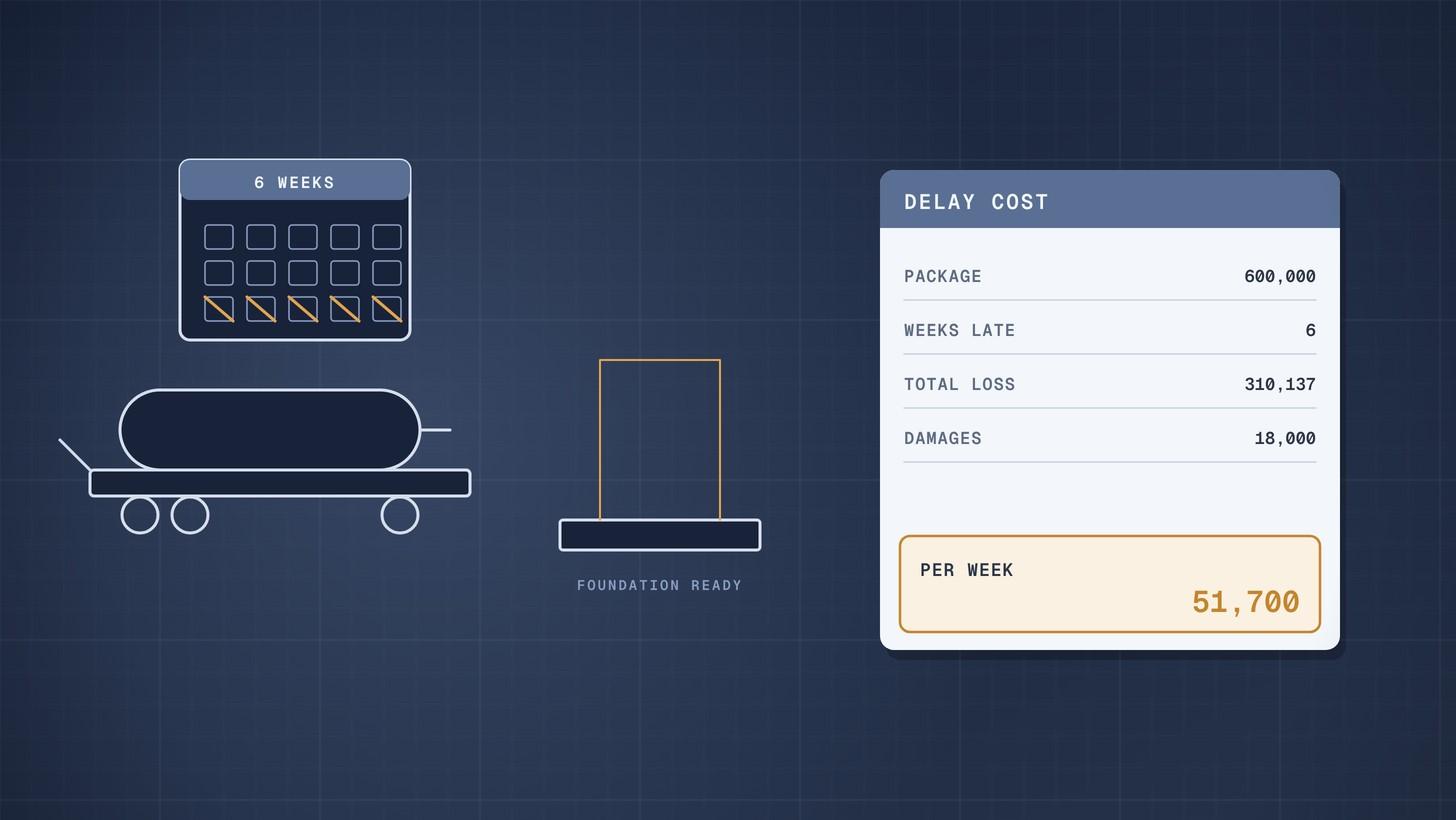
How to calculate the weekly cost of late equipment delivery, compare it with liquidated damages and use it to set a damages rate a supplier can accept.
Payment Milestones and Supplier Cash Flow: Worked Example
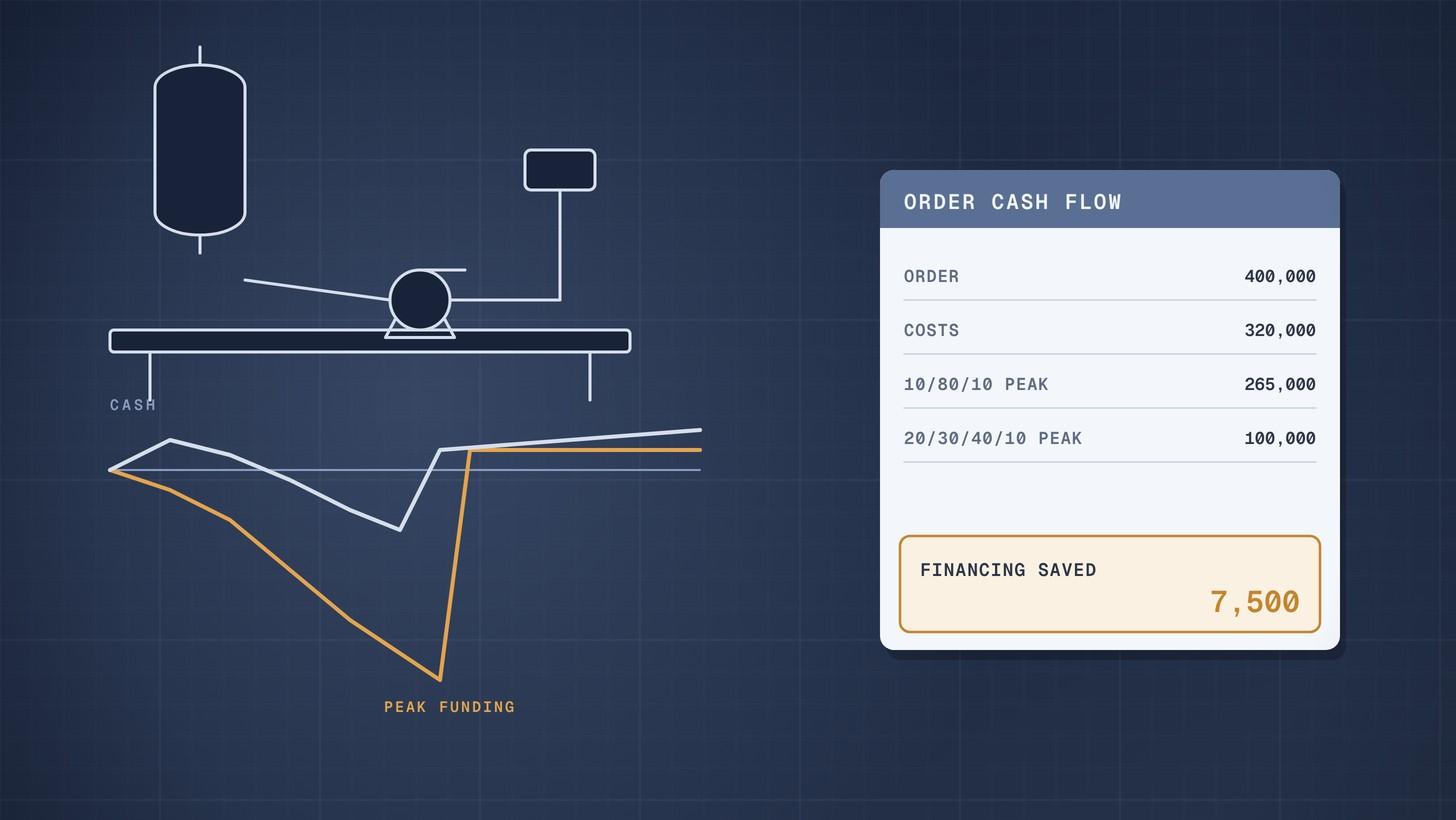
How payment milestones, bonds and retention shape an equipment supplier's cash curve, with a worked example comparing two schedules on a £400,000 order.
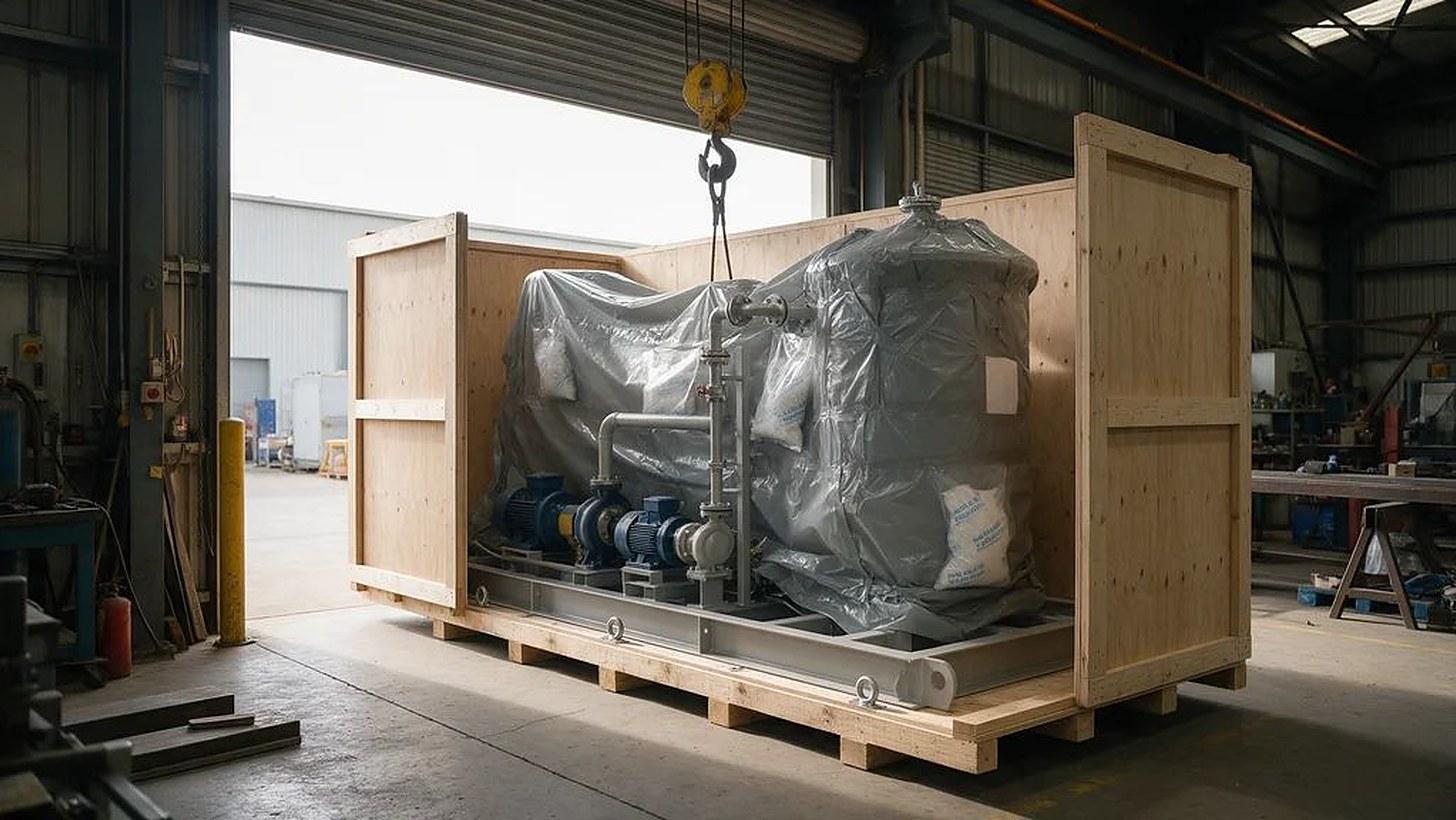
Packing and Shipping Specification for Process Equipment: Seaworthy Crates, ISPM 15 and Marking
What a packing specification for process equipment should say: packing levels, ISPM 15 wood, barrier foil and desiccant, lifting points, shipping marks and documents. With a worked crate example.