
Delivery Delay Letter: How Equipment Suppliers Tell a Customer Early and Limit Liquidated Damages
How an equipment supplier should notify a customer of a late delivery: notice clauses, excusable delay, what to put in the letter, a template, and how early notice limits liquidated damages.
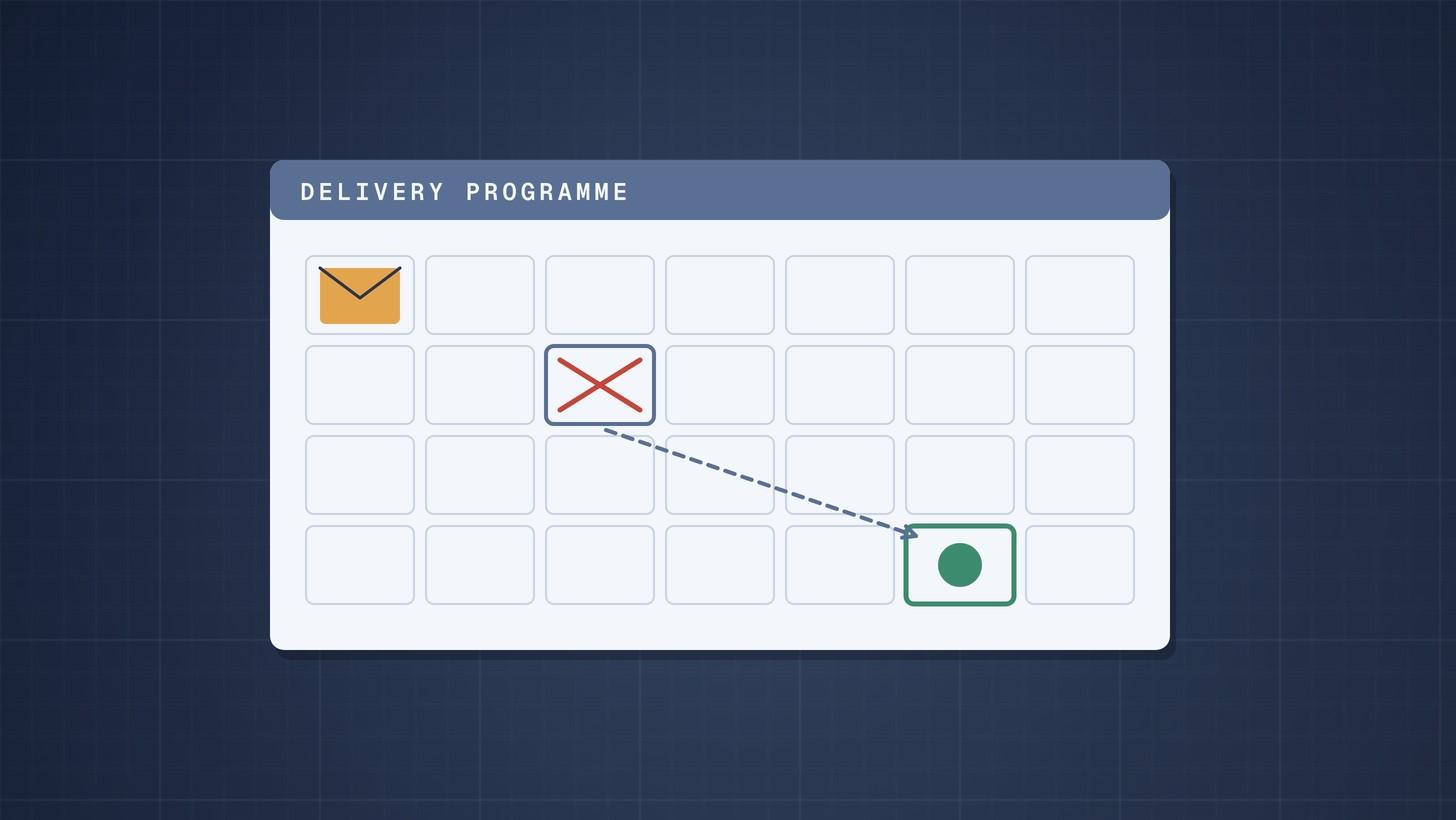
A delivery delay letter is the written notice a supplier sends as soon as it knows an equipment order will be late. Send it early, in writing, to the person the contract names, and say what is late, why, the new date you can commit to, and what you are doing about it. If any of the delay was caused by the buyer, or by an event the contract excuses, the letter is also how you protect your right to more time, which is what limits the liquidated damages you pay.
Free download: delivery delay letter pack (Word, 6 pages). Ready to fill in, free to use, no sign up needed.
Why the letter matters more than the apology
Most equipment contracts give the buyer liquidated damages (LDs) for late delivery: a fixed sum per week, up to a cap. Our article on liquidated damages for late equipment delivery explains how they are set. The supplier's protection is the extension of time clause, and that clause usually depends on notice.
One European standard form for machinery supply, Orgalime S 2000, shows the pattern. If the supplier expects to miss the delivery date, it must notify the purchaser in writing at once, giving the reason and, if possible, the date delivery can be expected. Delay caused by the purchaser, or by the relief events listed in the conditions, extends the delivery time by a reasonable period. LDs then run at 0.5% of the price per completed week, capped at 5% [1].
Construction forms are stricter. Under FIDIC, a contractor must give notice of a claim within 28 days of becoming aware of the event, or lose the extension and the money [2]. Under NEC4, a contractor who does not notify a compensation event within eight weeks of becoming aware of it loses the right to more time and money [3]. Courts treat clauses like these as conditions precedent when they set a precise time limit and say the right is lost if notice is late [2].
Access real procurement opportunities from global buyers
Join ChemCapital to get discovered by verified procurement teams across pharmaceutical, chemical, and industrial manufacturing.
Excusable and non excusable delay
Sort the causes before you write. Some delay is yours: a late casting from your own sub supplier, a failed weld, a busy shop. Some is excusable: the buyer approved drawings late, changed the scope, or held up an inspection; or an event the contract lists as force majeure or relief occurred.
The buyer generally cannot charge LDs for delay it caused itself. This is the prevention principle; where the contract has no way to extend time for the buyer's delay, the date can fall away altogether, leaving the supplier to finish within a reasonable time [4]. But the principle is only an implied term. The English Court of Appeal confirmed in North Midland v Cyden Homes that clear contract wording, for example saying concurrent delay earns no extension, still applies [4]. So read your clause; do not rely on the principle.
For force majeure, check what the clause demands: the form and deadline of the notice, the evidence, and whether performance must be "prevented" or merely "delayed", because "prevent" is a higher bar [5].
What to put in a delay letter
Want this as a file? Download the delivery delay letter pack (Word, 6 pages).
- Contract and item references. Purchase order, item or tag numbers, and the contractual delivery date.
- What is late and by how much. The revised date you can commit to, not a hopeful one.
- The cause, in facts. Dates, documents and events, without blame or adjectives.
- The contract clause you rely on. If the cause is excusable, name the extension of time or force majeure clause and say plainly that you claim an extension. A vague note will not do. In Obrascon, a progress report saying rain had affected the works was held not to be a notice; a statement that excavating rock "will entitle us to an extension of time" was [2].
- Mitigation. What you are doing to recover: overtime, a second source, part delivery, air freight. Record these steps: a party relying on force majeure must mitigate its effects, and should be able to show what it did [5].
- What you need from the buyer. Drawing approvals, decisions or access, with dates.
- Next update. When you will report again. Hogan Lovells Cadwalader advise notifying at the earliest opportunity and following up with periodic updates [5].
Send it to the address and person the notice clause names, by the method it names. Keep a copy, and log every later conversation.
Template delay letter
Subject: Purchase order [number]: notice of delay and claim for extension of time
Dear [name],
Under clause [x] of the purchase order, we notify you that delivery of [item, tag numbers], due on [date], will be delayed. We expect to deliver on [date].
The delay arises from [facts and dates; for example, approval of the general arrangement drawing was due on 3 March and received on 24 March].
[If excusable:] This delay is caused by [the purchaser / an event under clause y]. We claim an extension of the delivery date of [three weeks] under clause [z]. We will send supporting records by [date].
To reduce the delay we are [mitigation steps]. To hold the new date we need [decision or document] by [date].
We will update you on [date], or earlier if anything changes.
Yours sincerely, [name, role]
Practical example
Illustrative figures. A supplier has a £400,000 order with LDs of 0.5% per completed week, capped at 5%, the same structure as Orgalime S 2000 [1]. The skid ships six weeks late. Three of those weeks were caused by the buyer approving drawings three weeks late, and the supplier notified that in writing within days.
| Case | Weeks charged | LDs |
|---|---|---|
| No notice, no extension | 6 | £12,000 |
| Prompt notice, 3 week extension granted | 3 | £6,000 |
| Cap (5% of £400,000) | reached at 10 weeks | £20,000 |
The letter is worth £6,000 here, and much more on a larger order or a stricter form. Under NEC4, missing the eight week window would forfeit the claim entirely [3].
Common mistakes
- Waiting for certainty. Prompt notice exists so matters can be checked while they are current [2]. Give notice when you know there is a risk, then update.
- Phone calls only. A conversation with the buyer's expediter is not written notice under the clause.
- Moving the date every week. Each new date costs trust. Commit to a date you can hold; our guide to expediting equipment orders shows what buyers track.
- Treating scope changes as delay. If the buyer changed the order, price and programme belong in a change order, agreed in writing.
- Silence after the event ends. Under Orgalime, the relief notice covers when the event starts and when it ends; failing to notify lets the buyer claim its extra costs [1].
This is general information, not legal advice; check the current text before you rely on it.
Where ChemCapital fits
Buyers remember which suppliers told them early. Honest delivery records and clear communication help you stay on shortlists, and a free ChemCapital profile shows buyers what you make and the documents you deliver through Supplier Discovery. See what suppliers get from ChemCapital.
Ready to win more of the orders you can deliver on time? List your company on ChemCapital. It is free to start.
Frequently asked questions
How do I inform a customer about a delay in delivery?
In writing, as soon as you know, to the person and address the contract names. State what is late, the new date you can commit to, the cause in facts, the clause you rely on if the delay is excusable, your mitigation steps and when you will update them.
Does a delay letter stop liquidated damages?
Not by itself. Liquidated damages still apply to delay that is your responsibility. A prompt notice protects your right to an extension of time for delay caused by the buyer or by an excused event, and that extension reduces the damages.
What happens if I give notice late?
It depends on the clause. Some contracts make notice a condition precedent, so a late notice loses the extension. FIDIC sets 28 days from awareness and NEC4 eight weeks for compensation events.
Is a phone call enough to notify a delay?
Usually not. Most contracts require written notice to a named person by a named method. Follow any call with a letter or email that meets the notice clause.
Continue reading
Informational only, not procurement or legal advice. Cited names, frameworks, and statistics belong to their respective owners.
Access real procurement opportunities from global buyers
Join ChemCapital to get discovered by verified procurement teams across pharmaceutical, chemical, and industrial manufacturing.
List your companyRelated articles
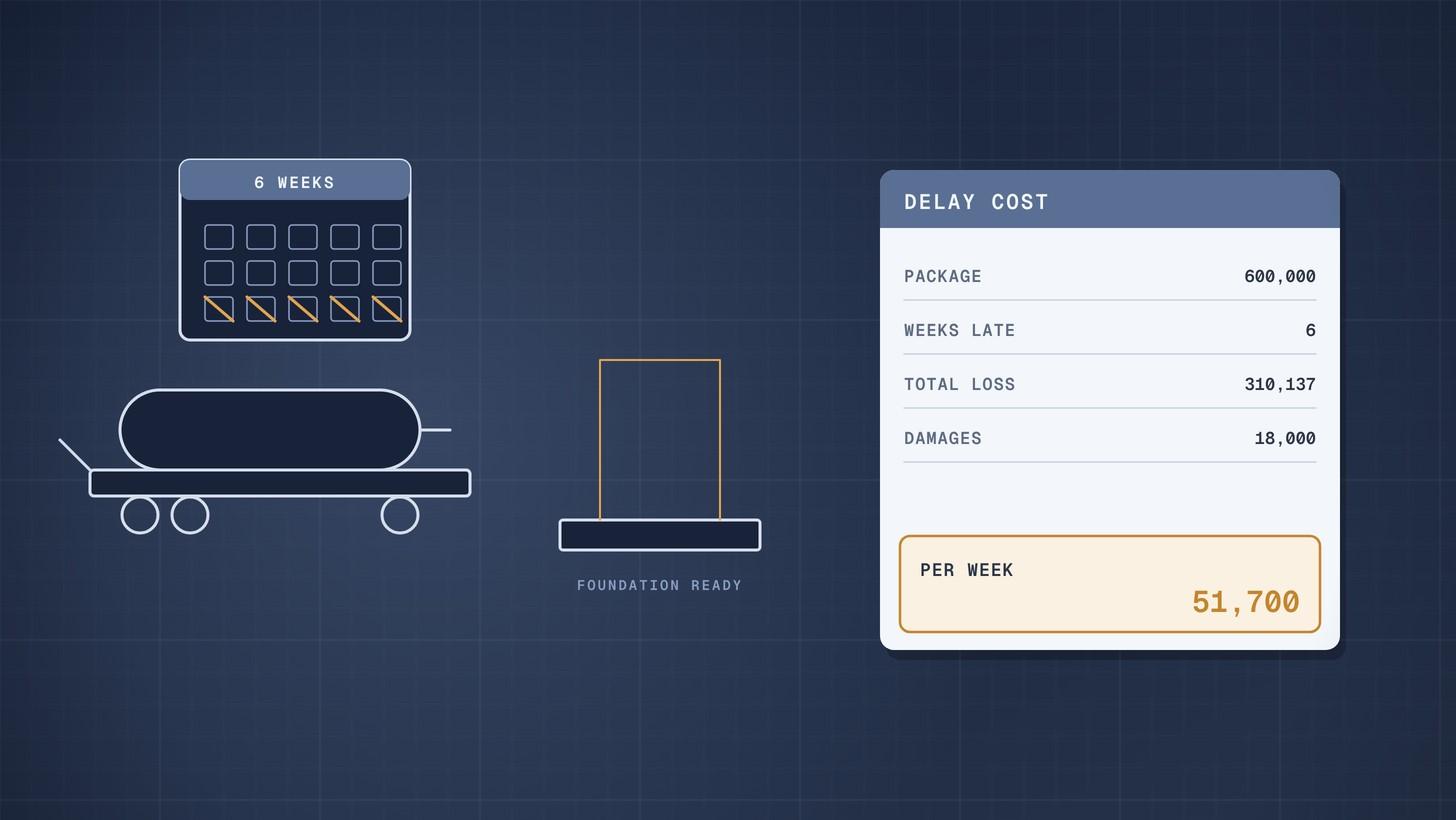
Cost of Late Equipment Delivery: Worked Example
How to calculate the weekly cost of late equipment delivery, compare it with liquidated damages and use it to set a damages rate a supplier can accept.
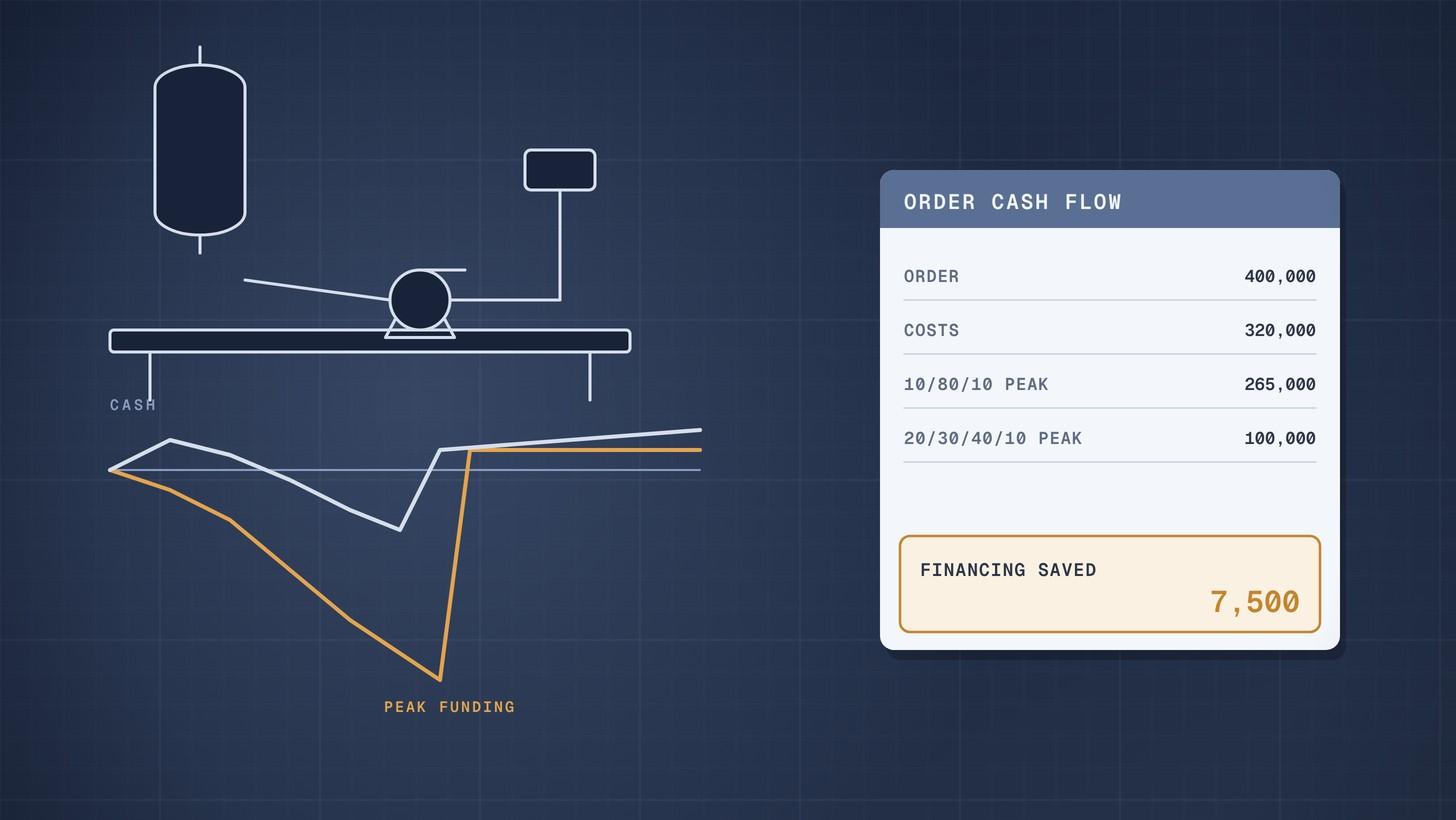
Payment Milestones and Supplier Cash Flow: Worked Example
How payment milestones, bonds and retention shape an equipment supplier's cash curve, with a worked example comparing two schedules on a £400,000 order.

Performance Guarantees and Performance Tests for Process Packages
What a process package supplier should guarantee, how the performance test is run, and what happens when the plant falls short, with a worked example of performance liquidated damages.