
Equipment Cost Estimating: How to Get Budget Prices for Exchangers, Vessels and Pumps
Five ways to get budget prices before firm quotes, how accurate each can be by estimate class, what drives the price of each equipment type, and a worked example.
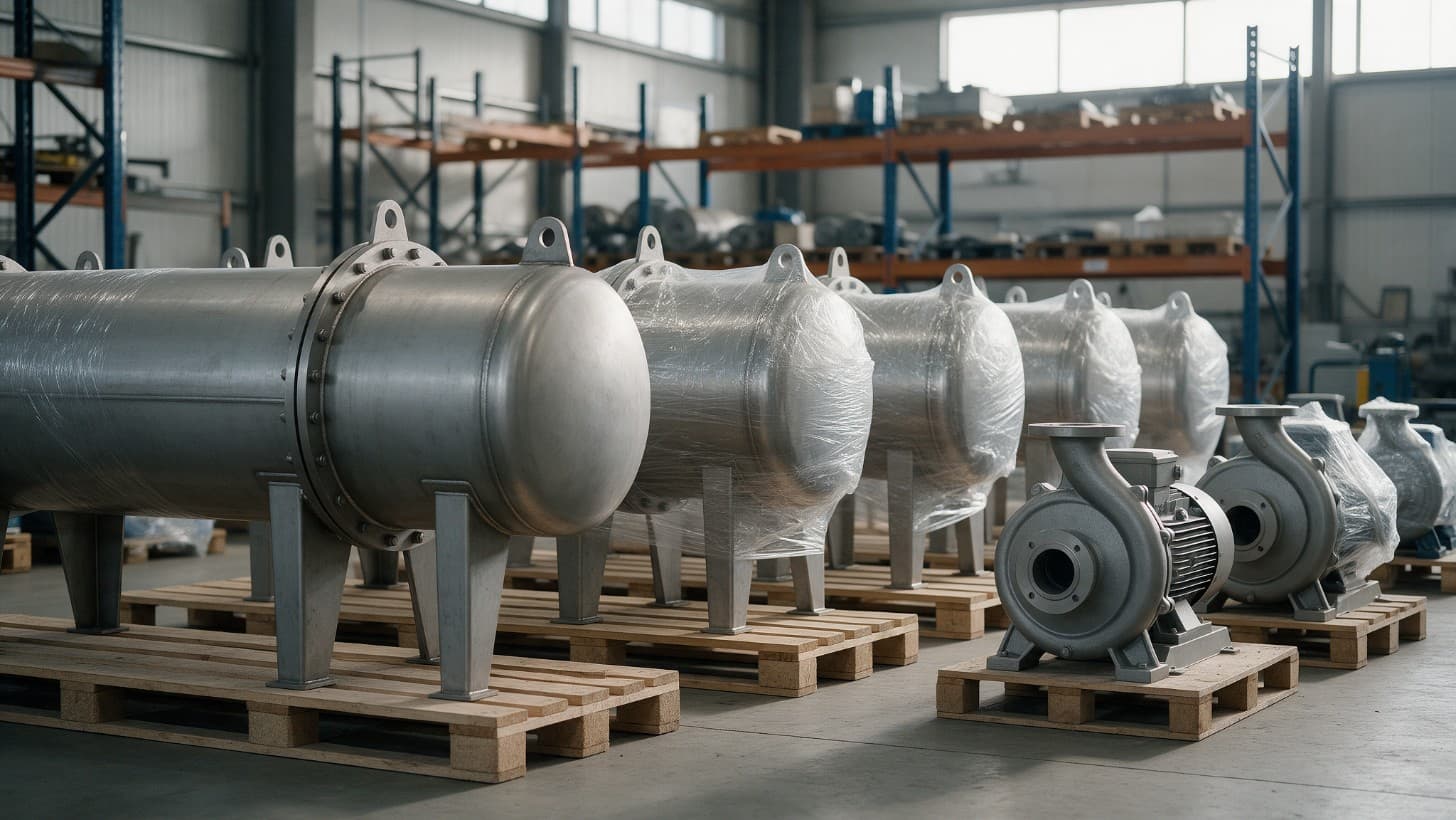
Before firm quotes arrive, there are five practical ways to get a budget price for a heat exchanger, a pressure vessel or a pump: ask suppliers for a budgetary quote, adjust an old quote for size and time, use a published cost correlation, use a supplier's list price for catalogue items, or factor from a similar reference. Which one you use should match how well the project is defined, and every number should travel with its range and its method.
The AACE International classification shows how wide those ranges are. A screening estimate made when very little of the project is defined can land anywhere from 20% to 50% below to 30% to 100% above the final cost; an estimate good enough to authorise a budget narrows that to 10% to 20% below and 10% to 30% above [1].
Why this matters now
Prices have started rising again. Chemical Engineering reports that the 2025 annual average of its plant cost index rose 1.6% above 2024, ending two years of decreases [2]. Budgets built on quotes from 2023 and 2024 without any adjustment are now likely to be low, so every reused price needs a date and an index basis.
Join ChemCapital to streamline sourcing and connect with verified partners
Whether you're buying or supplying, ChemCapital gives you the tools to manage the complete procurement cycle in one platform.
Match the method to the estimate class
AACE's Recommended Practice 18R 97, last revised in 2020, links each class of estimate to how much of the project is defined and what the estimate is for, and stresses that real accuracy ranges also depend on risk analysis, not only on maturity [3]. The figures below are from the matrix as reproduced in a public board paper [1].
| Class | Project definition | Typical use | Typical methods | Expected range |
|---|---|---|---|---|
| 5 | 0% to 2% | Screening, long range planning | Cost and capacity curves, factors | Minus 20% to 50%, plus 30% to 100% |
| 4 | 1% to 15% | Feasibility, preliminary budget | Equipment factored or parametric | Minus 15% to 30%, plus 20% to 50% |
| 3 | 10% to 40% | Budget authorisation | Semi detailed unit costs | Minus 10% to 20%, plus 10% to 30% |
| 2 | 30% to 70% | Control baseline, bid estimates | Detailed unit costs | Minus 5% to 15%, plus 5% to 20% |
| 1 | 50% to 100% | Bid checking, negotiation | Detailed unit costs, full take off | Minus 3% to 10%, plus 3% to 15% |
The EPA's cost manual, for comparison, aims its study estimates at about plus or minus 30%, which it equates to an AACE Class 4 estimate [4].
Five ways to get a budget price
1. Budgetary quotes from suppliers
For the items that drive the budget, a budgetary quote is usually the best value: two or three makers price a short datasheet without a full RFQ. Say clearly that it is budgetary, give the duty, materials, design code and key options, and ask for the basis, validity and exclusions. Our guide to budgetary versus firm quotes explains what suppliers can and cannot commit to at this stage.
2. Old quotes, adjusted
A recent quote for similar equipment is a strong starting point once you adjust it. Scale for size with the six tenths rule or a better exponent, then update for time with a cost index such as the CEPCI; see CEPCI and cost escalation. Adjust currency, scope and delivery terms too. Two limits apply. The adjusted figure can be no more accurate than the quote you started from [5], and the EPA treats escalation over more than five years as generally inappropriate, advising new quotes instead [4].
3. Published cost correlations
Process design textbooks such as those by Turton, Towler and Sinnott, and Seider publish equations for purchased cost against a size parameter: area for exchangers, power for pumps and compressors, volume or weight for vessels. One open source costing tool bundles 417 of them and notes that each has its own reference year and size limits, and must be brought forward with the CEPCI [6]. They are fast and free, but they usually describe carbon steel at a stated base year and location, and give purchased cost, not installed cost.
One open textbook notes that the CEPCI tracks whole plant costs, including installation and piping, while other indices are aimed at individual equipment [7], so check that your index matches what you are updating.
4. List prices for catalogue items
Standard pumps, motors, valves and small packaged items often have list prices or online configurators. Ask for the discount structure; list price is rarely the price paid on a project order.
5. Factored from a similar reference
For fabricated vessels and tanks, experienced estimators often price from weight and material, using rates from recent orders. It works well when the reference is truly similar and fails across material or code changes.
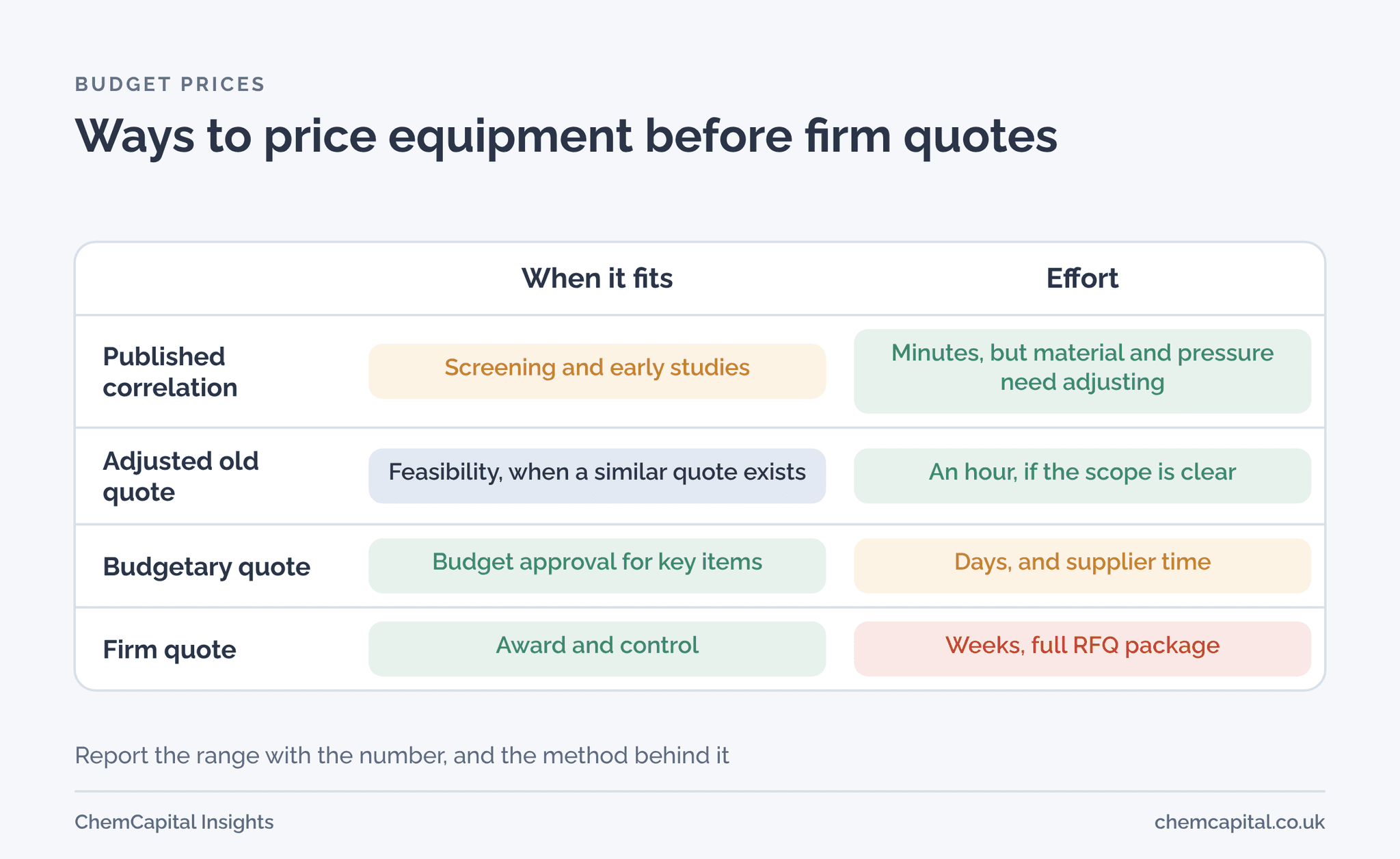
How to ask for a budgetary quote suppliers will answer
Suppliers give budgetary quotes for free because they hope to bid later, so make it easy and honest.
- Send one or two pages, not the full RFQ package: duty, size, materials, design code, key options and the delivery country.
- Say what the number is for, for example "feasibility estimate, order expected in about a year".
- Ask for the price basis, Incoterm, validity, main exclusions and an indicative lead time.
- Ask what would move the price most, such as a material change or a test, because that answer helps you set the range.
- Do not use a budgetary quote to drive a competitor's price down. Suppliers remember, and the next request goes to the bottom of the pile.
Common mistakes in budget estimates
- Mixing purchased and installed cost. A correlation or quote for the equipment alone is not the cost of the installed item, which adds foundations, piping, instruments, electrical work and labour.
- Dropping the date. A price without a date and an index basis cannot be updated later.
- Ignoring scope gaps. One quote includes the motor, seal system and documents, another does not.
- False precision. Writing £182,950 on a Class 4 estimate suggests an accuracy the method cannot give. Round it, and state the range.
What drives the price of each type
| Equipment | Main size driver | Other big cost drivers |
|---|---|---|
| Shell and tube heat exchanger | Heat transfer area | Material of tubes and shell, design pressure, TEMA type and class, removable bundle |
| Pressure vessel | Weight of steel, set by diameter, length and wall thickness | Material, design code, nozzles and internals, inspection and heat treatment |
| Centrifugal pump | Flow and head, so power | Design standard, wetted materials, mechanical seal and seal system, motor and certification |
Getting these right in the request matters more than the method. A budget quote for a carbon steel exchanger is no help if the duty needs duplex tubes.
Practical example
In this illustrative example, a team needs a budget for three items at feasibility stage.
| Item | Method | Budget |
|---|---|---|
| Shell and tube exchanger | Budgetary quote from one maker | £48,000 |
| 25 m³ stainless steel vessel | 2021 quote for a 10 m³ vessel of £60,000, scaled with exponent 0.6 and an index rise from 700 to 800 | £118,800 |
| Two centrifugal pumps | List price of £9,500 each, less a 15% discount | £16,150 |
| Total | £182,950 |
At Class 4, the honest answer is a range. Using the narrow end of the Class 4 band, minus 15% to plus 20%, the total sits between about £155,500 and £219,500; at the wide end, minus 30% to plus 50%, it runs from about £128,000 to £274,000. Reporting "about £183,000, Class 4, minus 15% to plus 20%" tells the reader far more than a single figure, and the vessel, as the biggest and least certain item, is where a budgetary quote would narrow the range fastest.
Where ChemCapital fits
Project Costing builds capital cost estimates from areas, packages and line items, using past supplier quotations you upload into a reusable library. Old quotes can be repriced through a deterministic normalisation covering exchange rates, cost indices such as the CEPCI, geography and Incoterms, with every adjustment shown. A dashboard separates firm quotes, repriced estimates, indicative values and items not yet quoted, ranges are linked to project maturity, and any line item can be turned into a live RFQ in one click when it is time to replace an estimate with a quote.
Ready to build your next budget from prices you can trace? Start free with ChemCapital.
Frequently asked questions
How do I estimate the cost of a heat exchanger before getting quotes?
Ask two or three makers for a budgetary quote against a short datasheet, or scale a recent quote for a similar exchanger by area and update it with a cost index. Published textbook correlations give a quick order of magnitude, but they are usually for carbon steel at a stated base year and need material and pressure adjustments.
How accurate is a budget estimate for process equipment?
It depends on how well defined the project is. AACE's classification gives early screening estimates a range from minus 20% to 50% up to plus 30% to 100%, narrowing to minus 10% to 20% and plus 10% to 30% for estimates used to authorise a budget.
Can I use an old quote to estimate a new equipment price?
Yes, if you adjust it for size, time, currency and scope. Indices lose accuracy over long periods, and the EPA's cost manual treats escalation over more than five years as generally inappropriate, so request a new quote for older prices.
Informational only, not procurement or legal advice. Cited names, frameworks, and statistics belong to their respective owners.
Join ChemCapital to streamline sourcing and connect with verified partners
Whether you're buying or supplying, ChemCapital gives you the tools to manage the complete procurement cycle in one platform.
Get started freeRelated articles
Rapid Plant Cost Estimates for Sales Engineers: Days, Not Weeks
How a sales engineer prices an integrated process package in days from historical quotes: escalation, scaling, material and currency adjustments, and a defendable Class 4 budget.
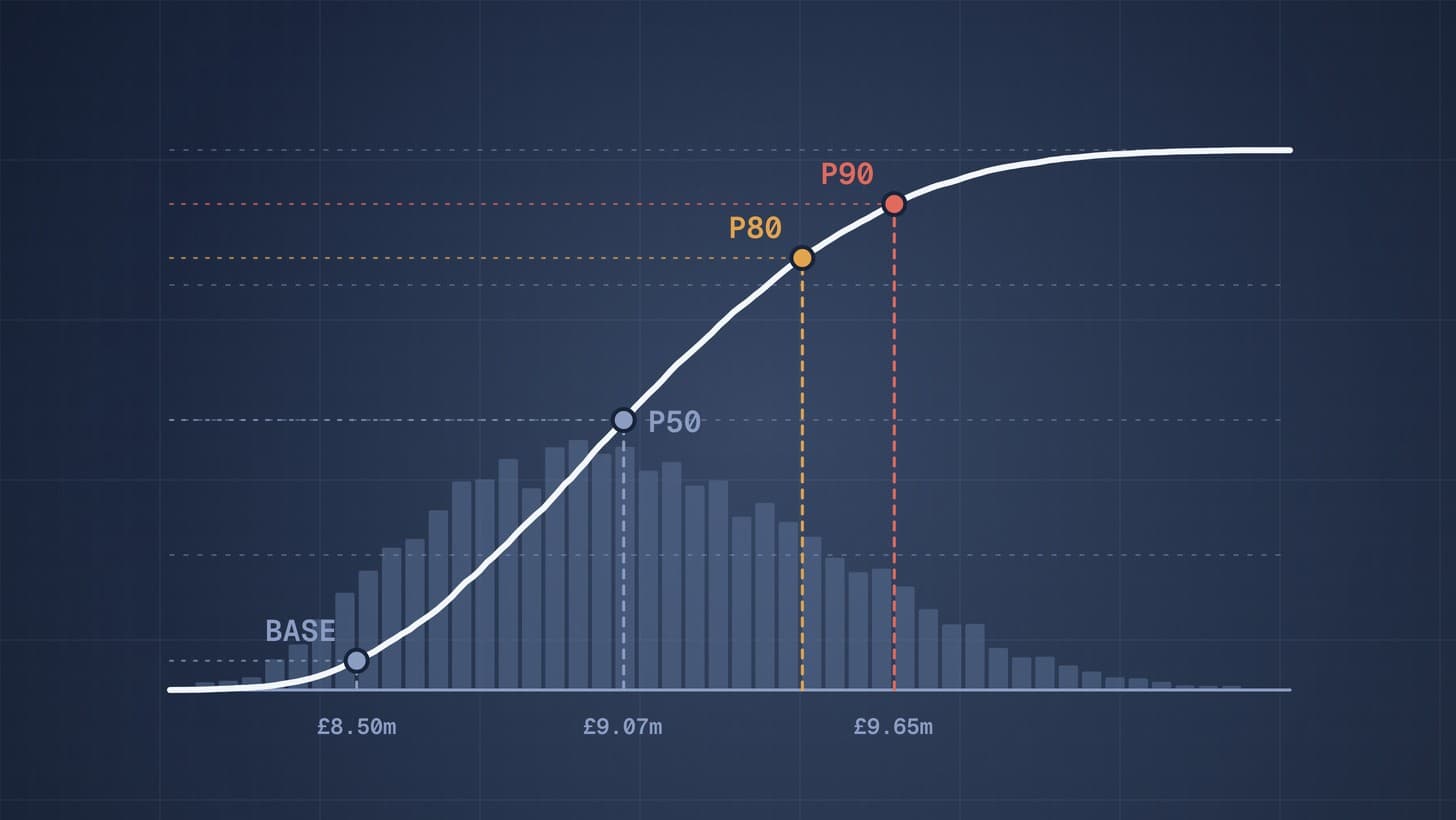
Cost Risk Analysis: P50, P80 and P90 Estimates with a Worked Example
What P50, P80 and P90 mean, how range estimating and Monte Carlo simulation produce them, a worked three item example, and how owners choose a funding level.
Price Adjustment, Escalation and Currency Clauses in Equipment Quotes
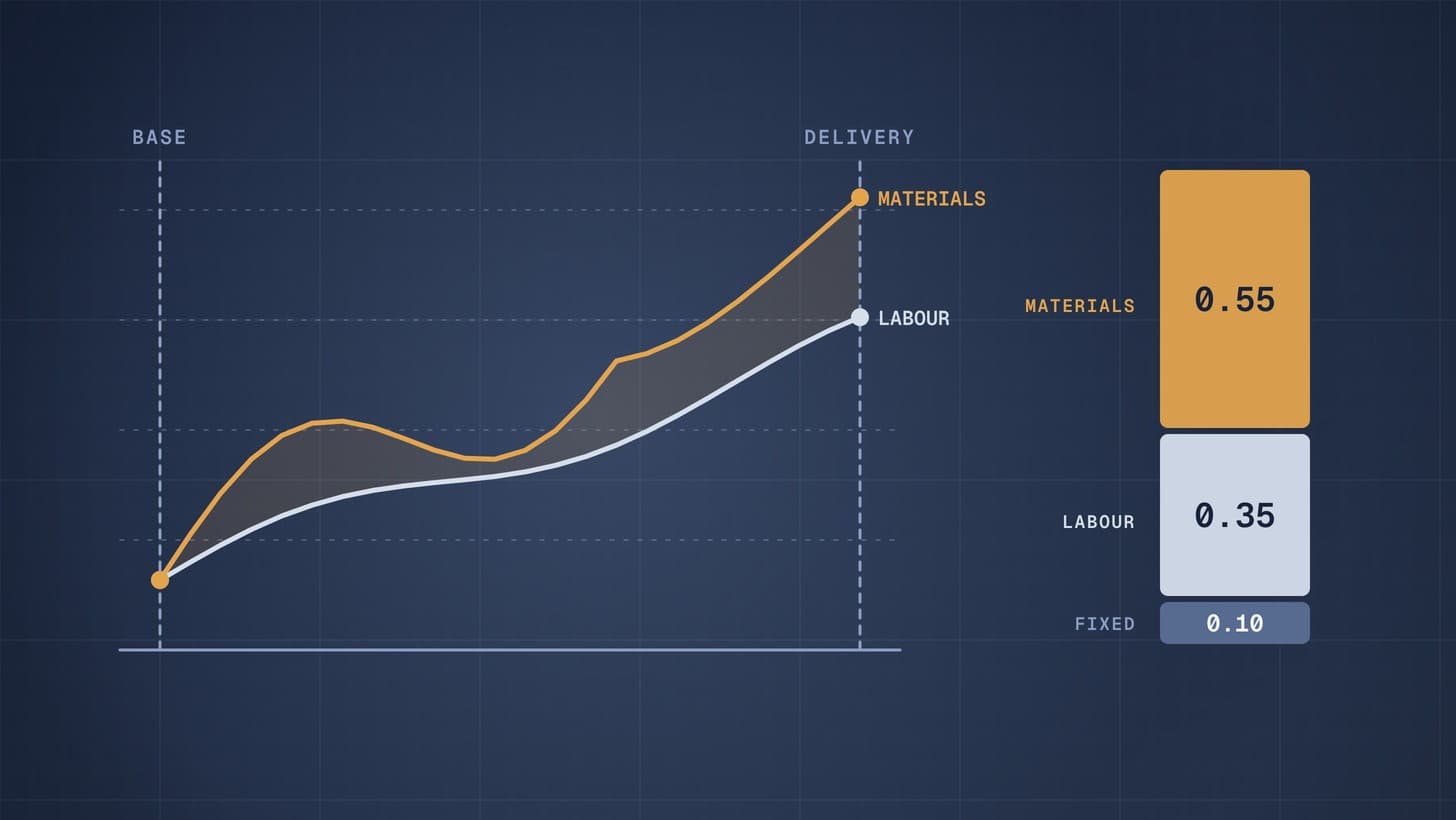
Why long lead equipment quotes carry escalation and alloy surcharge clauses, how the standard index formula works, what to agree, and how to compare a fixed and an adjustable bid.