
Pipe Thermal Expansion: Worked Example
How to calculate pipe thermal expansion for carbon and stainless steel, what restrained expansion does, and how loops and expansion joints absorb it.
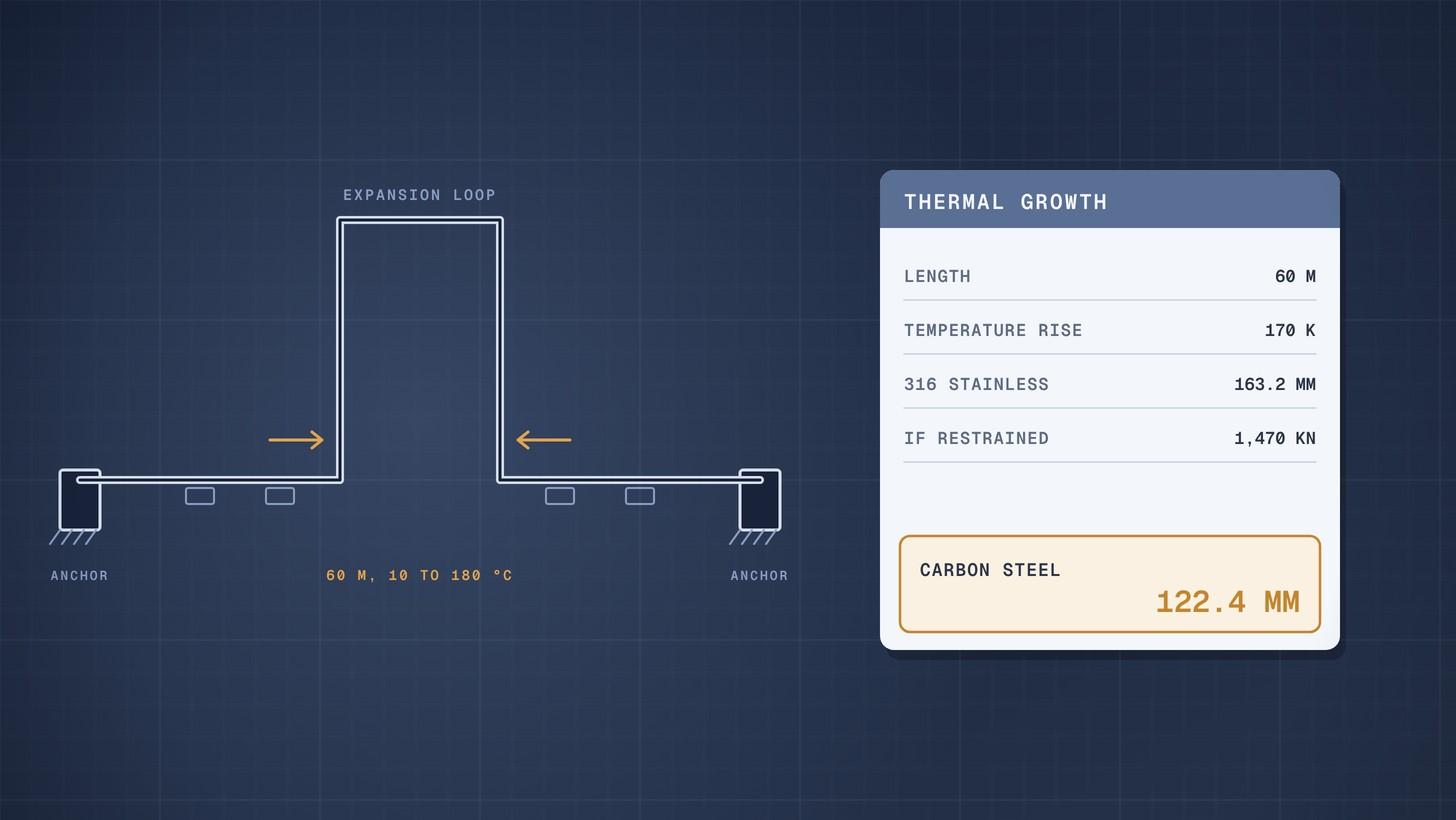
Pipe thermal expansion is ΔL = α × L × ΔT: the expansion coefficient of the material times the pipe length times the temperature rise. In the worked example below, a 60 m carbon steel line heated from 10 °C to 180 °C grows by about 122 mm; the same line in stainless steel grows by about 163 mm. Stop either from moving and the force on the anchors runs to well over a hundred tonnes.
The calculation takes a minute. What it tells you about loops, guides and expansion joints is what matters.
Why this matters
Every hot line grows, and that growth has to go somewhere. A Projectmaterials guide notes that if expansion is restrained, the forces can overstress the pipe, damage the nozzles of connected equipment, overload supports and cause flange leaks or fatigue failures [1]. Pump and vessel nozzles are the usual victims: the pipe pushes, the nozzle has a load limit, and the result is misalignment, leaking seals or cracked welds.
For buyers, expansion shows up in several places: the nozzle loads you allow on equipment datasheets, the expansion joints you order, and the pipe supports and loops in a piping contractor's price.
Create and manage RFQs in minutes
ChemCapital handles the entire procurement cycle, from structured RFQs and supplier comparisons to formal purchase orders and delivery tracking.
The formula and the coefficients
ΔL = α × L × ΔT, where ΔT is the change from the installed temperature to the operating temperature [1].
Coefficients from the Projectmaterials guide, as millimetres of growth per metre of pipe per 100 °C [1]:
| Material | Growth per metre per 100 °C |
|---|---|
| Carbon steel, A106 grade B | 1.2 mm |
| Low alloy steel, A335 P11 | 1.25 mm |
| Duplex stainless steel | 1.3 mm |
| Austenitic stainless steel, 304 and 316 | 1.6 mm |
Engineering ToolBox lists steel at 10.8 to 12.5 × 10⁻⁶ per K, 304 stainless at 17.3 and 316 at 16.0 × 10⁻⁶ per K [2]. The coefficient also rises with temperature: a PDHonline course shows the mean value for carbon steel climbing steadily between 100 °F and 250 °F [3]. For accurate work, use the mean coefficient from your piping code for the actual temperature range.
Worked example: a 60 m hot oil line
A DN150 line runs 60 m straight between two anchors. It is installed at 10 °C and runs at 180 °C, a rise of 170 K. The line and temperatures are illustrative.
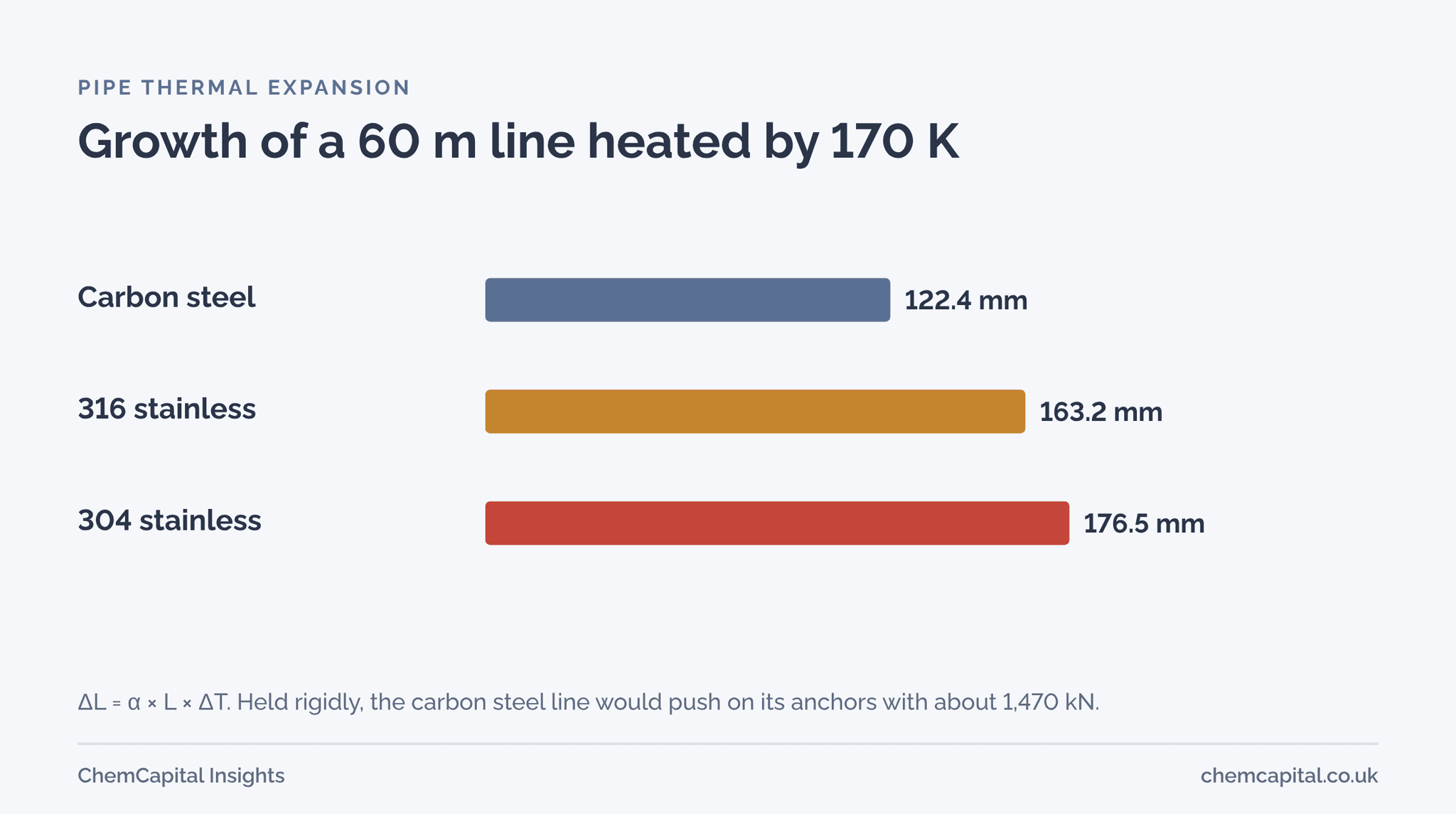
Carbon steel: 1.2 mm per m per 100 °C × 60 m × 1.7 = 122.4 mm
316 stainless steel: 1.6 × 60 × 1.7 = 163.2 mm
304 stainless steel at 17.3 × 10⁻⁶ per K: 17.3 × 10⁻⁶ × 60,000 mm × 170 = 176.5 mm
Stainless grows about a third more than carbon steel. Switching a line from carbon steel to stainless for corrosion reasons can therefore change its loops and supports, not just its price.
What happens if it cannot move
If the anchors held the carbon steel line rigidly, the growth would turn into stress. Engineering ToolBox gives the restrained stress as σ = E × α × ΔT and the force as that stress times the pipe wall area, with E about 200 GPa for steel [4].
- Stress: 200 GPa × 12 × 10⁻⁶ × 170 = 408 MPa
- Force on a DN150 pipe wall area of about 3.6 × 10⁻³ m² [4]: 408 MPa × 0.0036 = about 1,470 kN, roughly 150 tonnes
That is more than double the 168 MPa in Engineering ToolBox's own example for a 70 K rise [4], and no anchor, nozzle or flange is meant to take it. The pipe must be given a way to move.
Ways to absorb the growth
The PDHonline course lists the options: a commercial expansion joint, an expansion loop, rerouting the line with a 90° leg that bends to take up the growth, and hot bolting so that expansion happens before the final connection is made [3].
- Natural flexibility. Changes of direction that the layout already has. Projectmaterials calls this the preferred and most reliable method [1].
- Expansion loops. U shaped loops in long straight runs, with sliding supports and guides to let the pipe move along its axis [1].
- Expansion joints. Compact, but Projectmaterials notes they introduce potential leak points and need regular maintenance, so they are used where the layout limits flexibility [1].
Rough loop size
For a first estimate, What is Piping gives the guided cantilever formula for the loop leg length: L = √(3 × E × D × Δ ÷ S), where D is the pipe outside diameter, Δ the expansion to absorb and S the allowable stress [5].
For the carbon steel line, with D = 168.3 mm (check the outside diameter in your pipe specification), Δ = 122.4 mm, E = 200,000 MPa and an illustrative S of 150 MPa (take the real value for your material and temperature from the piping code):
L = √(3 × 200,000 × 168.3 × 122.4 ÷ 150) = about 9.1 m
The stainless line, with 163.2 mm to absorb, needs about 10.5 m on the same basis. The article recommends placing the loop midway between anchors, and treats the formula as a starting point before a proper stress analysis [5].
What to put in the RFQ
- Design and operating temperatures and the installation temperature for every hot line.
- Allowable nozzle loads on pumps, vessels and exchangers, so the piping designer knows the limits.
- Expansion joints: movement to absorb in each direction, pressure, temperature, material and the cycles expected.
- Pipe stress analysis as a deliverable for lines above an agreed temperature or size.
Our guides to the line list and the piping class specification show where these values sit. With ChemCapital's structured RFQs, every piping or skid supplier prices against the same temperatures and nozzle loads.
Ready to get skid and piping quotes on the same design basis? Start a free 14 day ChemCapital trial, with no credit card needed.
Frequently asked questions
How do you calculate pipe thermal expansion?
Multiply the material's expansion coefficient by the pipe length and the temperature rise from installation to operation. A 60 m carbon steel line heated by 170 K grows by about 1.2 mm per m per 100 °C × 60 × 1.7, or 122 mm.
How much does stainless steel pipe expand compared with carbon steel?
About a third more. Austenitic stainless steels such as 304 and 316 grow about 1.6 mm per metre per 100 °C, against about 1.2 mm for carbon steel.
What happens if pipe expansion is restrained?
The growth becomes stress equal to Young's modulus times the expansion coefficient times the temperature rise. For carbon steel heated by 170 K that is about 408 MPa, which can overstress the pipe, damage equipment nozzles, overload supports and cause flange leaks.
Expansion loop or expansion joint?
Loops are generally safer and need little maintenance but take up space and add elbows. Expansion joints are compact but add potential leak points and need regular inspection, so they are used where the layout cannot provide enough flexibility.
Continue reading
Informational only, not procurement or legal advice. Cited names, frameworks, and statistics belong to their respective owners.
Create and manage RFQs in minutes
ChemCapital handles the entire procurement cycle, from structured RFQs and supplier comparisons to formal purchase orders and delivery tracking.
Start for freeRelated articles
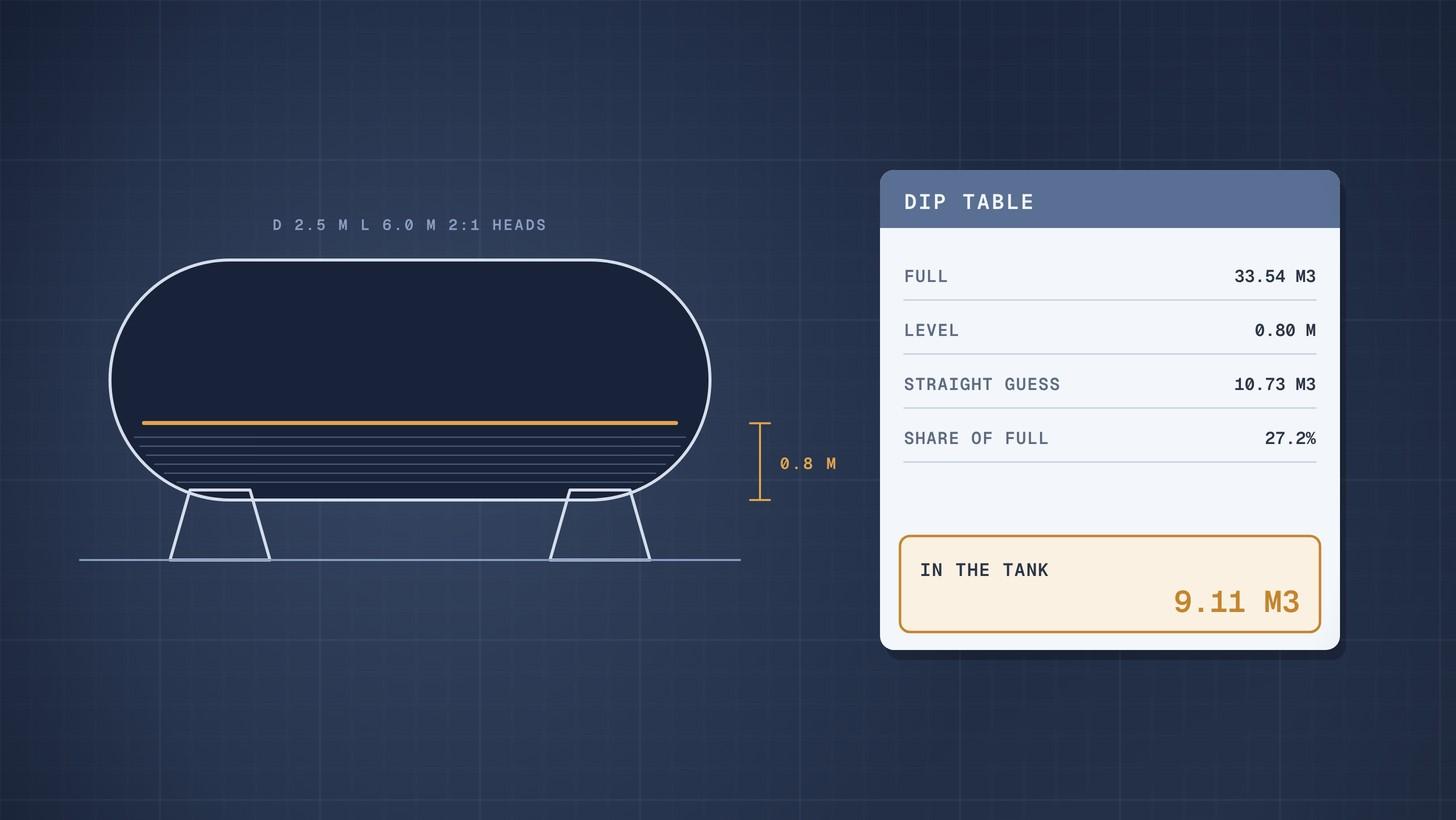
Horizontal Tank Volume When Partly Filled: Worked Example
How to calculate the volume of a partly filled horizontal tank with dished heads, with a worked example and a full dip table you can rebuild in a spreadsheet.
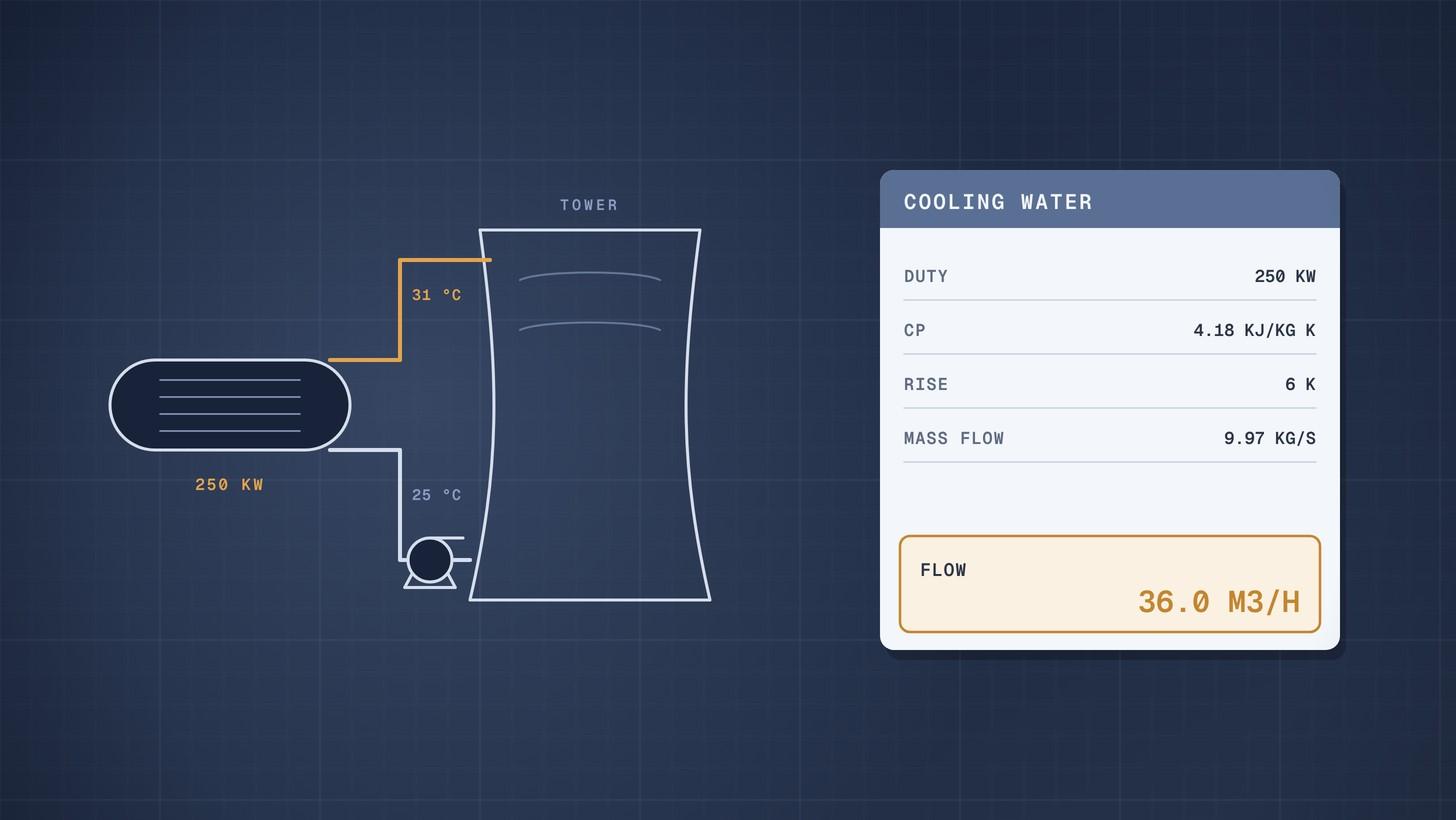
Cooling Water Flow Calculation: Worked Example
How to calculate cooling water flow from heat duty and temperature rise, then size the cooling tower circulation, evaporation and make up water.
Dryer Evaporation Load: Worked Example
How to calculate a dryer's evaporation load from wet and dry basis moisture, then the minimum and real heat input, with a worked filter cake example.