
Sparing Philosophy: N+1, 2 × 100% and 3 × 50% for Pumps and Packages
Sparing decides how many pumps go on the equipment list and in the RFQ. Here is what N+1, 2 × 100% and 3 × 50% mean, with availability and cost worked through.

A sparing philosophy says how many units are installed for each duty and how big each one is. Duty and standby, or 2 × 100%, means two pumps each able to carry the full duty, one running and one spare. N+1 means one more unit than the N needed to carry the load, so 3 × 50% is N+1 with N equal to 2. The choice sets how many items go on the equipment list, how big each one is, and therefore what goes in the RFQ.
Why this matters now
Sparing is usually fixed early, in the design basis, and then forgotten. Procurement meets it as a line on the equipment list: P101A and P101B, or P101A, B and C. But the choice drives installed capacity, cost, space and availability. One turbomachinery engineer describes an arrangement of 2 × 100% motor driven standby pumps behind a turbine driven duty pump, 300% of installed capacity, as an expensive solution chosen because full availability was required [1]. If you understand why the philosophy was chosen, you can challenge the expensive cases and protect the critical ones.
Create and manage RFQs in minutes
ChemCapital handles the entire procurement cycle, from structured RFQs and supplier comparisons to formal purchase orders and delivery tracking.
The common arrangements
| Arrangement | What it means | Installed capacity | Notes |
|---|---|---|---|
| 1 × 100% | One unit, no installed spare | 100% | Relies on repair or a warehouse spare |
| 2 × 100%, duty and standby | Two units, each able to carry the full duty | 200% | The classic N+1 with N equal to 1 |
| 3 × 50% | Three units, any two carry the full duty | 150% | N+1 with N equal to 2; one failure still leaves full capacity |
| 2 × 50% | Two units, both needed | 100% | No spare; a failure halves capacity |
Larger, critical plants use more elaborate mixes, such as two 50% steam driven pumps for normal duty backed by three 50% motor driven pumps [1].
Not every spare has to be installed. A pump spare strategy can instead keep the required number of pumps in service with a shared pool of spares on site or in a warehouse. An installed standby costs more to buy, while a shared spare must be transported and connected after a failure, adding lost production. In one simulated comparison of ten identical critical pumps over ten years, life cycle costs were similar, with installed standby slightly ahead, and the author cautions that different inputs could reverse it [2].
How to compare them: availability and cost
For identical, independent units, the chance that at least k of n units are available follows a simple binomial formula, used in reliability tools for k out of n systems [3]. For 3 × 50%, full flow needs at least two of three running.
Practical example
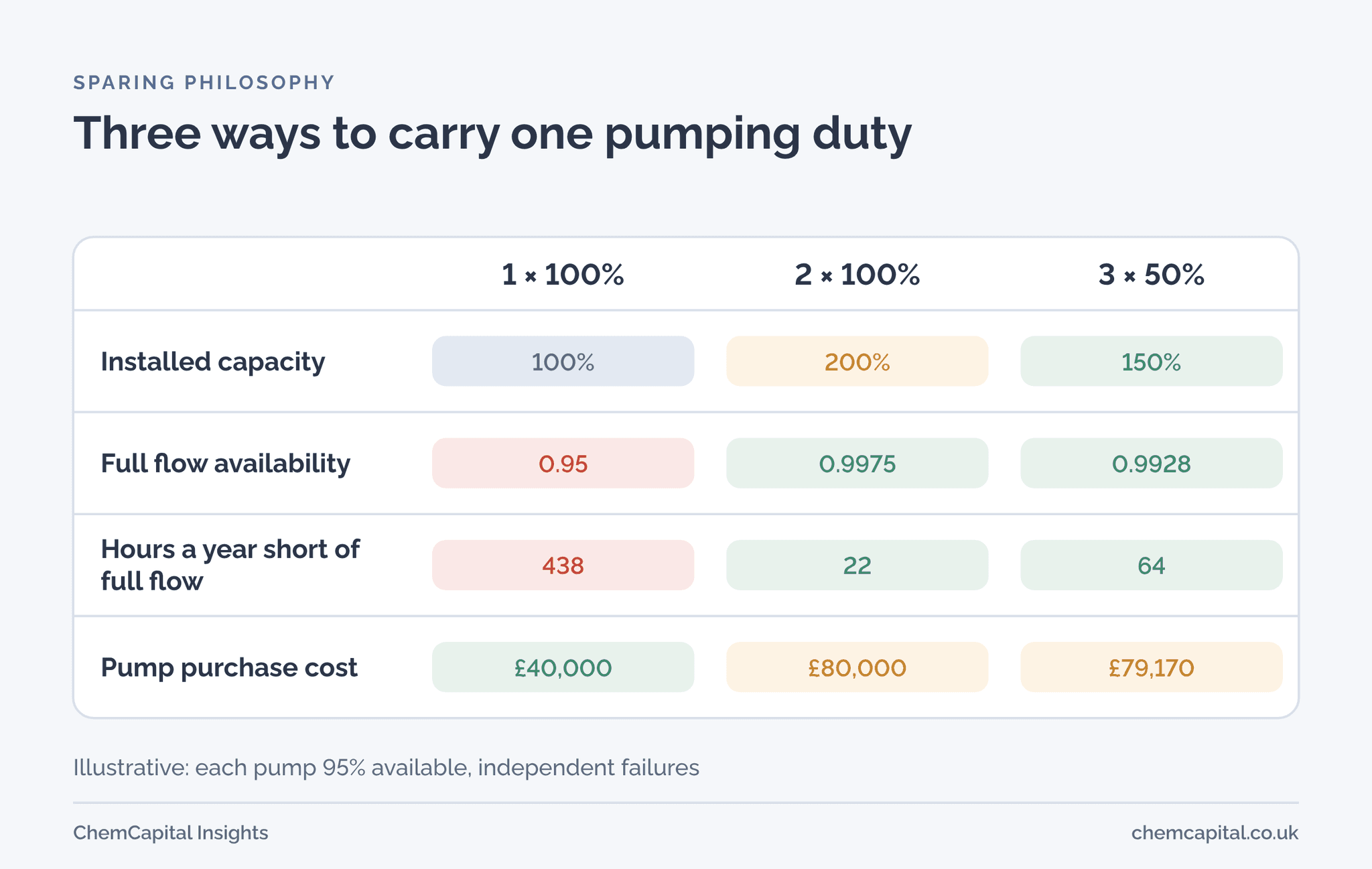
Illustrative figures. Each pump is available 95% of the time, failures are independent, and switching to the spare always works. A 100% pump costs £40,000. Using the six tenths rule, a 50% pump costs about £40,000 × 0.5 to the power 0.6, or £26,390.
| Arrangement | Availability of full flow | Expected hours a year without full flow | Pump purchase cost |
|---|---|---|---|
| 1 × 100% | 0.95 | 438 | £40,000 |
| 2 × 100% | 1 minus 0.05 squared = 0.9975 | 22 | £80,000 |
| 3 × 50% | 3 × 0.95² minus 2 × 0.95³ = 0.9928 | 64 | £79,170 |
The two spared options cost almost the same for the pumps alone. 2 × 100% gives slightly higher availability of full flow. 3 × 50% installs less total capacity and keeps at least half flow unless all three fail, which here is about 0.9999 of the time. It also means more motors, valves, instruments and piping, which the pump price does not show. Your own availability data, costs and the cost of lost production decide the answer; life cycle cost is the right frame.
Things the numbers do not show
- Switching risk. A standby that will not start is a hidden failure. Operating practice matters: some plants run the duty unit until it fails, others alternate duty and standby so each runs about half the time, spreading wear and revealing faults early [4].
- Common causes. Two pumps on one suction line, one power supply or one control signal can fail together.
- Part load. Pumps running well below their best efficiency point waste energy; one boiler feed system found a pump at about 73% of its best efficiency point with an estimated efficiency of about 36% [5]. 3 × 50% can sometimes run nearer the best point at reduced throughput.
- Real redundancy. A second pump only helps if it is truly a spare. Pumps in series or sharing the load gain no availability from each other [2].
What procurement should check
- The sparing philosophy in the design basis, and the reason for each spared duty.
- That the equipment list and P&ID match it, tag by tag; see our process equipment list template.
- That the RFQ asks for identical spared units, so parts are interchangeable.
- That spares holdings reflect the installed spares, so you do not buy a warehouse pump for a duty already spared.
Where ChemCapital fits
Spared duties appear on the P&ID as A, B and C tags. ChemCapital's P&ID to RFQ works from DEXPI P&IDs to carry those tags into structured RFQ lines, so the quantity in the RFQ matches the philosophy on the drawing.
Ready to make sure every spared pump reaches the RFQ? Start a free 14 day ChemCapital trial, with no credit card needed.
Frequently asked questions
What does N+1 mean for pumps?
One more pump than the number needed to carry the full duty. With one pump needed, N+1 is a duty and standby pair; with two needed, it is three pumps of 50% each.
What is the difference between 2 × 100% and 3 × 50%?
2 × 100% installs two full size pumps, one running and one spare, 200% of capacity. 3 × 50% installs three half size pumps, any two of which carry the duty, 150% of capacity.
Which has higher availability, 2 × 100% or 3 × 50%?
With identical, independent pumps, 2 × 100% usually gives slightly higher availability of full flow, while 3 × 50% keeps at least half flow more often and installs less capacity. Cost, part load running and common causes also matter.
Do all pumps need an installed spare?
No. Critical duties often justify one, but a shared pool of warehouse spares can be cheaper over the life cycle for less critical services. The decision should come from criticality and cost of downtime.
Continue reading
Informational only, not procurement or legal advice. Cited names, frameworks, and statistics belong to their respective owners.
Create and manage RFQs in minutes
ChemCapital handles the entire procurement cycle, from structured RFQs and supplier comparisons to formal purchase orders and delivery tracking.
Start for freeRelated articles
Pipe Thermal Expansion: Worked Example
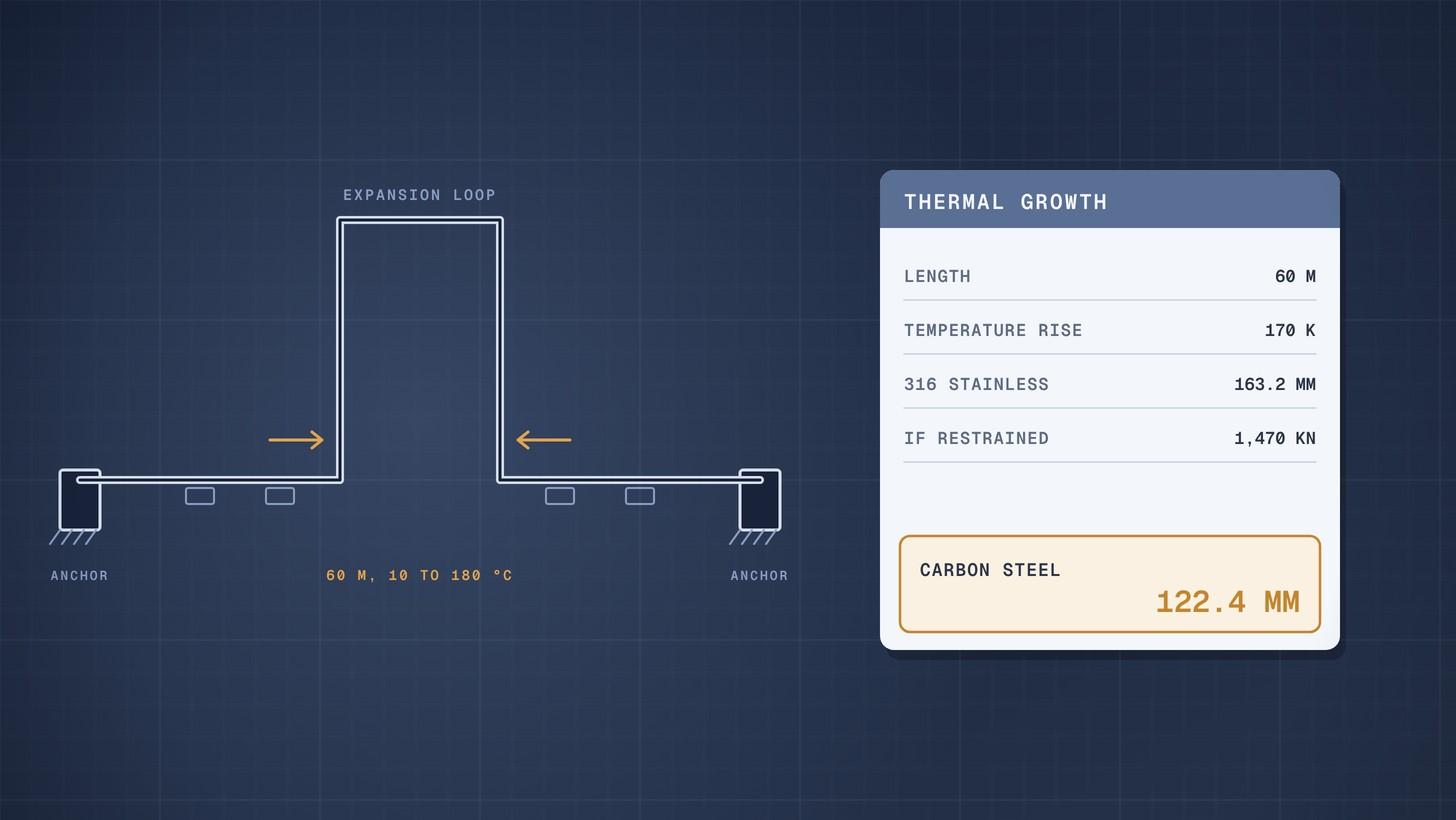
How to calculate pipe thermal expansion for carbon and stainless steel, what restrained expansion does, and how loops and expansion joints absorb it.
Horizontal Tank Volume When Partly Filled: Worked Example
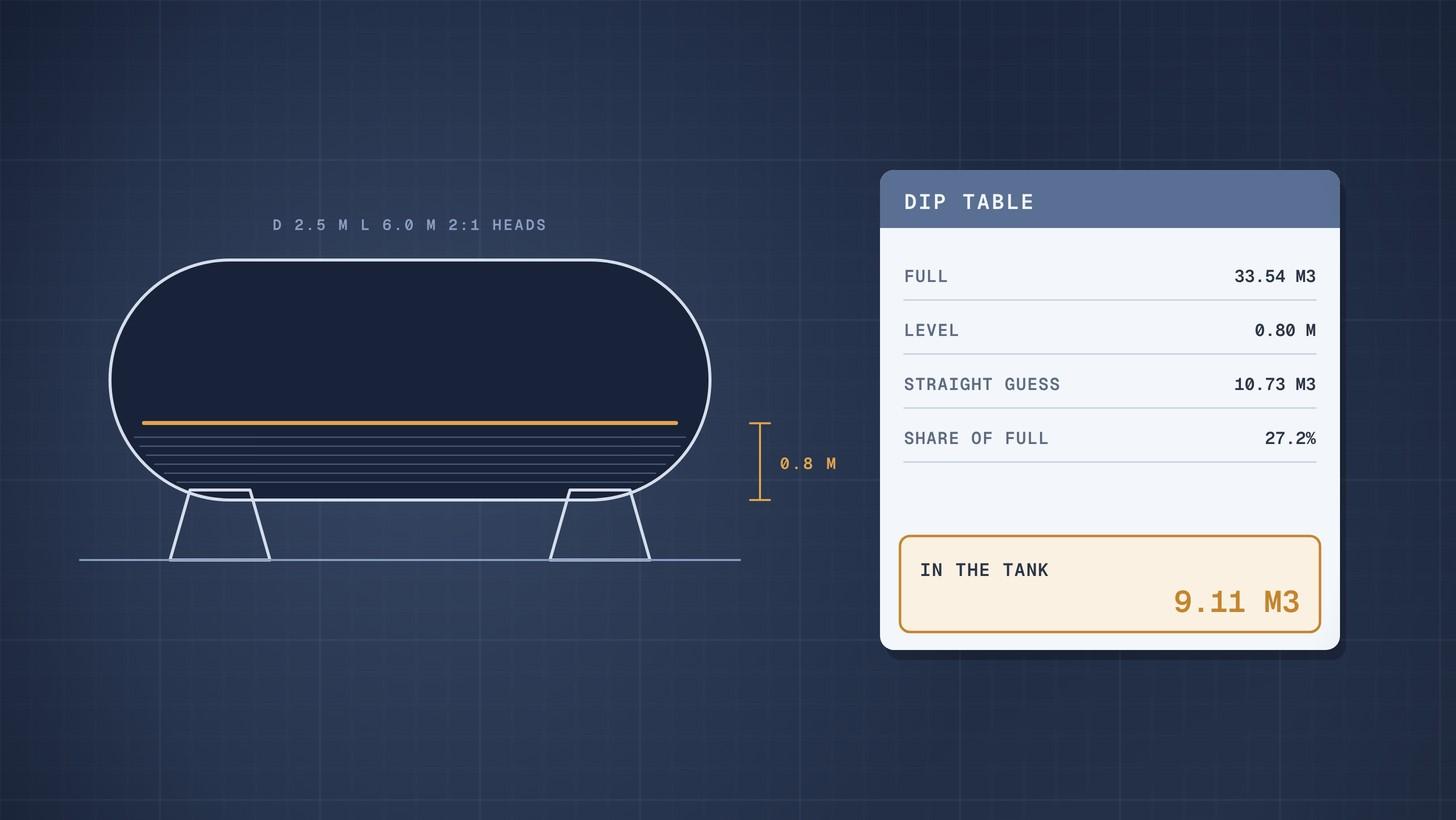
How to calculate the volume of a partly filled horizontal tank with dished heads, with a worked example and a full dip table you can rebuild in a spreadsheet.
Cooling Water Flow Calculation: Worked Example
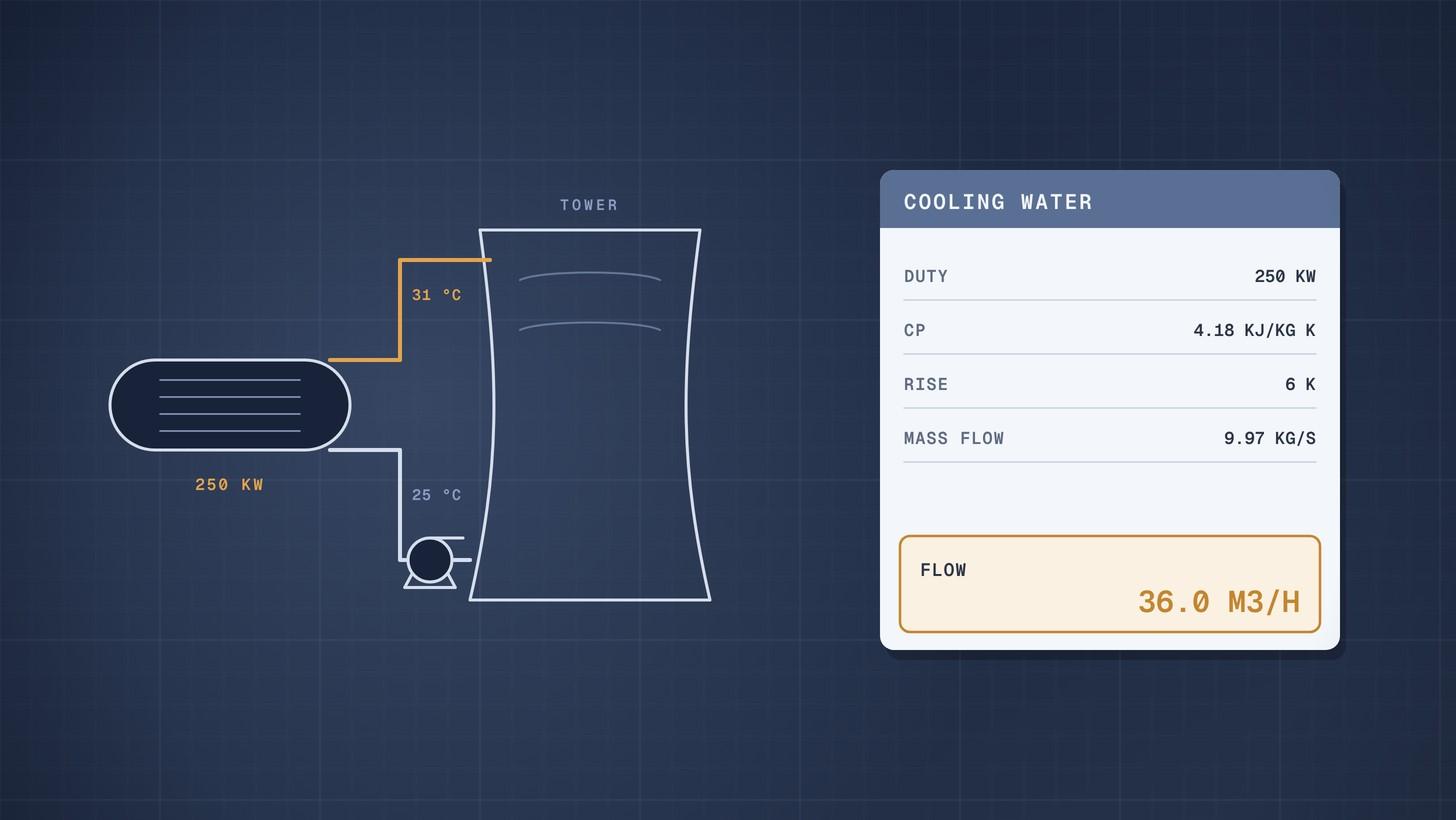
How to calculate cooling water flow from heat duty and temperature rise, then size the cooling tower circulation, evaporation and make up water.