
CBAM and Imported Steel Equipment: Tanks, Fittings and What Buyers Pay
Since 1 January 2026 the EU CBAM charges for the carbon in imported steel goods, including plain storage tanks, pipe fittings and structures. Here is which CN codes are in scope, the 50 tonne threshold, the UK CBAM from 2027 and a landed cost example.
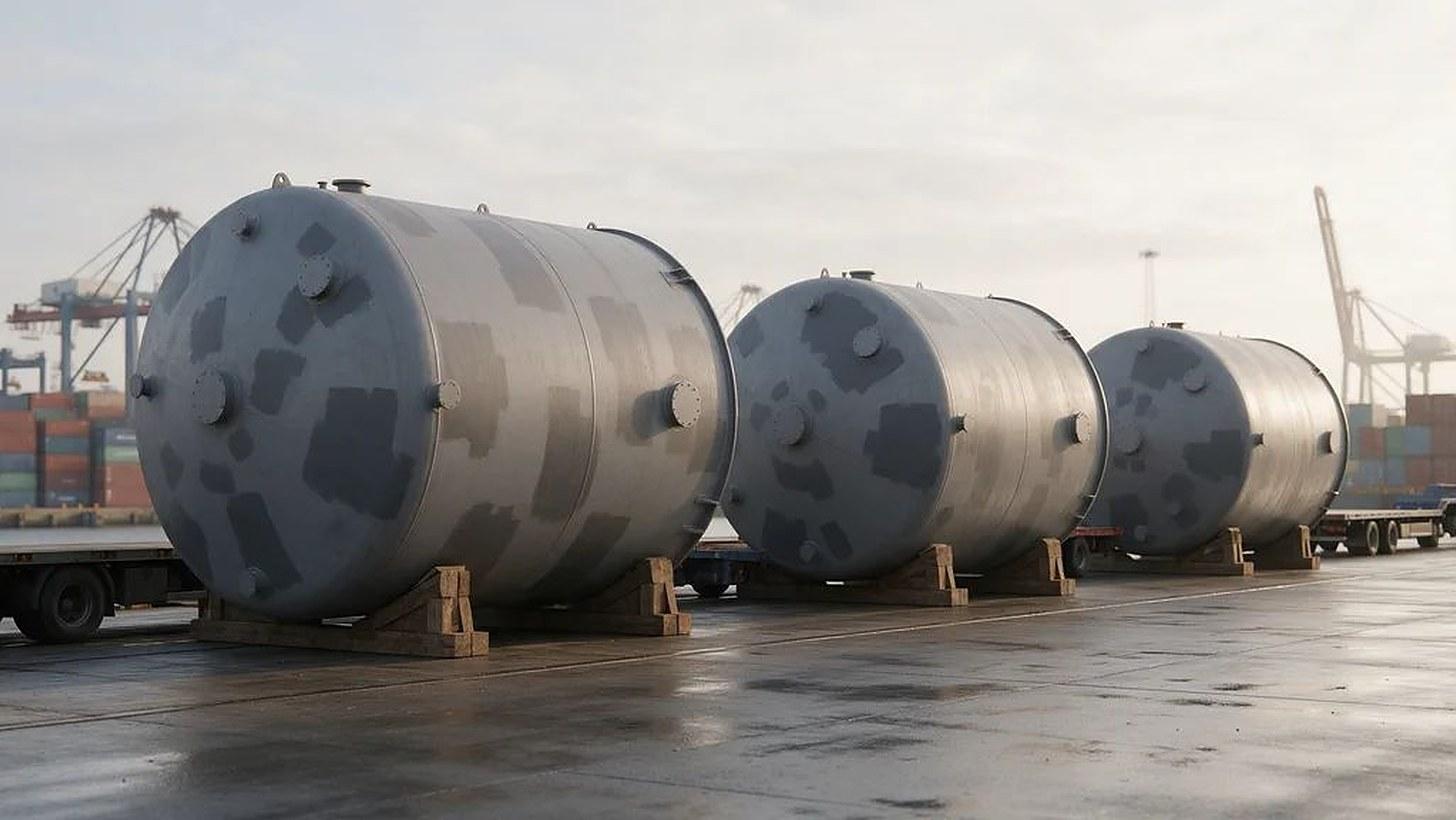
The EU Carbon Border Adjustment Mechanism (CBAM) puts a carbon cost on imported iron and steel goods, and since 1 January 2026 importers must hold authorisation and later buy certificates for the emissions embedded in them [1]. For process plant buyers it already covers more than raw steel: plain storage tanks over 300 litres, pipe fittings, steel structures and bolts are on the list, while an agitated or jacketed vessel usually is not. The UK starts its own CBAM on 1 January 2027 [2].
Why this matters now
Three things changed in the last year. The transitional reporting phase ended and the definitive regime began on 1 January 2026, so CBAM is now a cost, not just a report [1]. A simplification regulation added a 50 tonne a year exemption and moved the first payment dates into 2027 [3]. And in December 2025 the European Commission proposed extending CBAM to about 180 downstream products, including pumps, engines and electric motors, from 2028 [4].
If you import steel equipment into the EU, or will import into the UK from 2027, the questions are practical. Is my item in scope? Am I over the threshold? Who is the declarant? What will it add to the landed cost, now and in 2030?
Create and manage RFQs in minutes
ChemCapital handles the entire procurement cycle, from structured RFQs and supplier comparisons to formal purchase orders and delivery tracking.
Which steel equipment is in scope
CBAM applies by Combined Nomenclature (CN) code, the customs classification of the goods, not by what the item is called in your RFQ. Annex I of the CBAM Regulation lists the iron and steel codes [5]. The ones a process plant buyer meets most often:
| CN code | Covers | Typical example |
|---|---|---|
| 7304, 7305, 7306 | Tubes, pipes and hollow profiles | Pipe for a piping package, welded or drawn |
| 7307 | Tube or pipe fittings | Elbows, tees, flanges, couplings |
| 7308 | Structures and parts of structures | Pipe racks, platforms, structural steel |
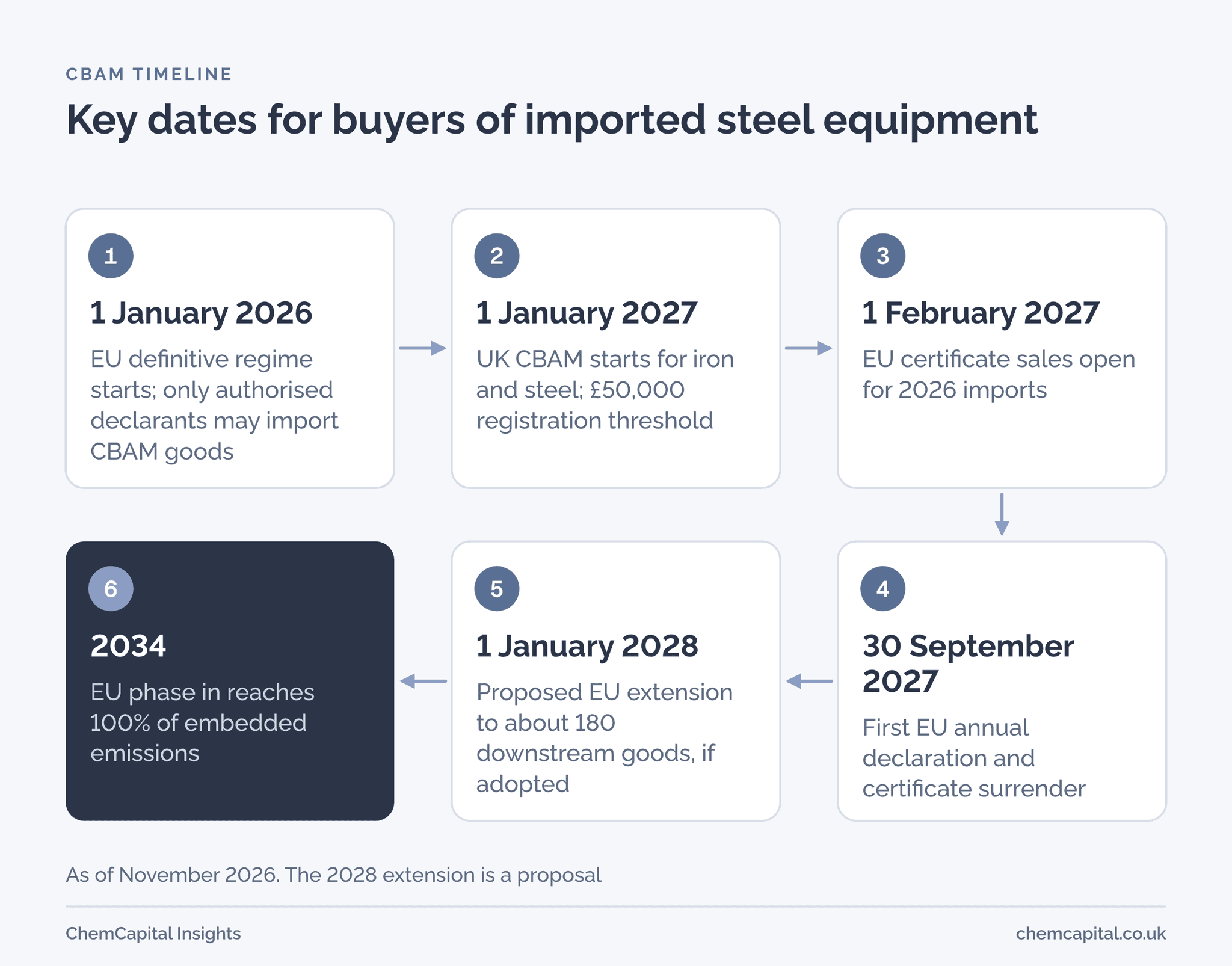
| 7309 00 | Reservoirs, tanks and vats over 300 litres, not fitted with mechanical or thermal equipment | A plain carbon or stainless steel storage tank |
| 7310 | The same up to 300 litres | Small drums and containers |
| 7311 00 | Containers for compressed or liquefied gas | Gas cylinders and some pressure containers |
| 7318 | Screws, bolts, nuts, washers | Stud bolts and nuts for flanges |
| 7326 | Other articles of iron or steel | Miscellaneous fabrications |
The wording of 7309 and 7310 matters. A tank fitted with mechanical or thermal equipment, such as an agitator or a heating jacket, is excluded from those headings [5] and is normally classified elsewhere in the machinery chapters, which CBAM does not cover today. So a plain bulk storage tank is in scope, and a jacketed reactor with an agitator usually is not. Classification is a customs decision; ask your customs broker to confirm the code for each item before you rely on it.
This is general information, not legal advice; check the current text before you rely on it.
Classification questions to raise early
Because scope follows the CN code, a few questions are worth settling with your customs broker before the order, not when the goods reach the border:
- Stainless as well as carbon steel. The chapter 73 headings cover articles of iron or steel, so a stainless storage tank is treated the same way as a carbon steel one.
- Heating coils and jackets. A tank with a heating coil or jacket is fitted with thermal equipment, which takes it out of 7309 [5]. A tank with only nozzles, a manway and a level gauge usually stays in.
- Loose steelwork. Platforms, ladders and frames shipped loose for site assembly may be classified as structures under 7308, even when the equipment they support is not in scope.
- Fasteners and fittings. Bolting and pipe fittings shipped as separate spares or bulk materials count towards your tonnage.
Record the agreed code for each line on the purchase order, so the importer, the supplier and your cost estimate all work from the same answer.
How the EU charge works in 2026 and 2027
- Authorised declarant. CBAM goods may only be imported by an authorised CBAM declarant, granted by the competent authority in the member state where the importer is established [5]. Importers that applied by 31 March 2026 could keep importing while their application was processed [6].
- The 50 tonne threshold. Importers bringing in 50 tonnes or less of CBAM goods a year, by cumulative net mass, are exempt; the threshold is estimated to exempt about 90% of importers while keeping 99% of embedded emissions in scope [3]. Exceed it at any point and all of that year's imports become subject to CBAM [6].
- Certificates. Certificate sales start on 1 February 2027 for 2026 imports, and the annual declaration and surrender deadline moves to 30 September of the following year [3]. For 2026 imports the price is the quarterly average EU ETS price; from 2027 it follows a weekly average [4]. One published figure for first quarter 2026 imports was €75.36 per tonne of CO2 [7].
- Embedded emissions. You declare actual verified emissions from the producer, or default values set by CN code and country of origin, which are deliberately set at the high end [4] [7].
- The phase in. CBAM rises as free allocation to EU producers falls. The schedule is 2.5% in 2026, 5% in 2027, 10% in 2028, 22.5% in 2029, 48.5% in 2030, then 61%, 73.5%, 86% and 100% by 2034 [8]. In 2026 importers therefore pay on only a small fraction of embedded emissions [7].
Undeclared imports by someone without authorisation can be refused customs clearance, and penalties for missing certificates follow the EU ETS rate of €100 per tonne of CO2 [6].
This is general information, not legal advice; check the current text before you rely on it.
Practical example
Illustrative figures. An EU plant imports four carbon steel storage tanks under CN 7309 00, 60 tonnes of steel in total, priced at €240,000. The producer cannot supply verified data, so we assume an embedded intensity of 3.0 tonnes of CO2 per tonne of steel. Published default values for some origins are higher; for example about 4.27 for one country's hot rolled coil [7]. We use €75.36 for 2026 and assume €80 later.
| Year of import | Phase in | Chargeable CO2 | Certificate cost | Share of the €240,000 price |
|---|---|---|---|---|
| 2026 | 2.5% | 180 t × 2.5% = 4.5 t | €339 | 0.14% |
| 2030 | 48.5% | 87.3 t | €6,984 | 2.9% |
| 2034 | 100% | 180 t | €14,400 | 6.0% |
In 2026 the cost is small. By 2034 it is €240 per tonne of steel, which is material for a commodity storage tank. Two things change the answer more than anything else. First, the threshold: if this importer's total CBAM imports for the year were 40 tonnes rather than 60, it would be exempt. Second, the producer's data: verified hot rolled coil from a scrap based electric arc furnace route can carry well under a tenth of the emissions of the blast furnace route [7].
Getting usable emissions data from suppliers
Default values are set at the high end on purpose, so a supplier who can give you verified actual emissions usually saves you money [4] [7]. Ask for it in the RFQ, not after the order. A useful request covers:
- The installation. Where the steel was made, not where the tank was fabricated. For a fabricated tank the embedded emissions come mostly from the plate and sections bought by the fabricator.
- The production route. Blast furnace, direct reduced iron with an electric arc furnace, or scrap based electric arc furnace. The difference between routes is large: published values for hot rolled coil range from about 1.37 to 0.07 tonnes of CO2 per tonne [7].
- Emissions per tonne of product, per CN code, with the reporting period.
- Verification. Who verified the figures, and when.
- Carbon price paid. Any carbon price already paid in the country of origin can be deducted with evidence [3].
Mill certificates already trace plate back to the mill that made it, so a fabricator that keeps good material records can usually answer. One that cannot will push you onto default values, and that is a fair point to score in a technical bid evaluation.
If you are the supplier
For fabricators outside the EU, CBAM is now part of your price whether or not you pay it. An EU buyer importing your tanks will compare your quote, plus freight, duty and CBAM at default values, with a local fabricator's quote. Supplying verified emissions data narrows that gap. So does sourcing plate from lower emission routes and saying so in the offer. If you sell under DDP terms, you or your agent become the importer, which means CBAM authorisation and certificates are yours to handle.
For fabricators inside the EU, CBAM removes part of the cost advantage of imported fabrications over time. It is worth stating in offers that no CBAM charge applies to locally made equipment.
The UK CBAM from 1 January 2027
The UK government's design, set out in October 2024, starts the UK CBAM on 1 January 2027 for iron and steel, aluminium, cement, fertiliser and hydrogen [2]. Key points from that response:
- Threshold. A business registers once its CBAM goods exceed £50,000 over a rolling 12 months [2].
- Who pays. The person responsible for the goods when they are released into free circulation [2].
- Timing. The first accounting period is a year, with the return and payment due by 31 May 2028 [2].
- Rate. Based on the UK ETS price, adjusted for free allocation, with relief for explicit carbon prices already paid abroad [2].
- Downstream goods. Not included from 2027; the government will review scope later [2].
Check HMRC's published commodity code list for each item, because the UK list does not have to match the EU's. This is general information, not legal advice; check the current text before you rely on it.
What may come next: downstream goods
On 17 December 2025 the Commission proposed adding about 180 downstream goods that contain steel or aluminium, including machinery and equipment such as engines, pumps, burners, industrial robots, cranes and electric motors, to apply from 1 January 2028 [4]. It is a proposal: the European Parliament and the Council must agree it before it applies [4]. If adopted in that form, a pump bought from outside the EU would carry a CBAM cost too.
What procurement should do now
- List imported steel items by CN code for every open package: storage tanks, piping, fittings, structures, fasteners.
- Add up tonnes per importer per year. The 50 tonne test is per importer across all CBAM goods, not per order.
- Decide who imports. Under Incoterms such as DDP the supplier or its agent is the importer; under EXW or FCA you are. Our guide to Incoterms for process equipment covers who clears customs.
- Ask suppliers for verified emissions data per installation and route, in the RFQ. Defaults are deliberately pessimistic.
- Add CBAM to the commercial terms. Say who bears the cost and how it is adjusted, in the same way as price adjustment clauses handle alloy surcharges.
- Price it in the estimate. For long projects, carry a CBAM line that rises with the phase in.
When comparing an EU fabricator with an overseas one, CBAM belongs in the evaluated price alongside freight and duty; our guide to commercial bid evaluation shows how to build that comparison. ChemCapital's AI quotation comparison lines up each bid's Incoterm, origin and exclusions so the importer and the CBAM exposure are clear before award.
Where ChemCapital fits
CBAM is one more cost that depends on where steel was made and who imports it. ChemCapital's Project Costing builds estimates from your own quote library, so you can see which lines rest on imported steel quotes and add the right allowance to them.
Ready to see the full landed cost of every bid? Start a free 14 day ChemCapital trial, with no credit card needed.
Frequently asked questions
Does CBAM apply to steel tanks?
Plain steel tanks, vats and reservoirs under CN 7309 00 (over 300 litres) and 7310 (up to 300 litres) are in scope, unless fitted with mechanical or thermal equipment such as an agitator or heating jacket.
What is the CBAM 50 tonne threshold?
Importers bringing in 50 tonnes or less of CBAM goods a year, by cumulative net mass, are exempt. Exceeding it at any point makes all of that year's imports subject to CBAM.
When do importers first pay for CBAM?
Certificates for 2026 imports go on sale on 1 February 2027, with the annual declaration and surrender due by 30 September 2027.
When does the UK CBAM start?
On 1 January 2027, covering iron and steel, aluminium, cement, fertiliser and hydrogen, with a £50,000 registration threshold and the first payment due by 31 May 2028.
Will CBAM cover pumps and machinery?
Not yet. In December 2025 the Commission proposed adding about 180 downstream goods, including pumps and electric motors, from 2028. It is a proposal until the Parliament and Council agree it.
Continue reading
Informational only, not procurement or legal advice. Cited names, frameworks, and statistics belong to their respective owners.
Create and manage RFQs in minutes
ChemCapital handles the entire procurement cycle, from structured RFQs and supplier comparisons to formal purchase orders and delivery tracking.
Start for freeRelated articles
Full Expensing for Plant and Machinery: Worked Example (UK)
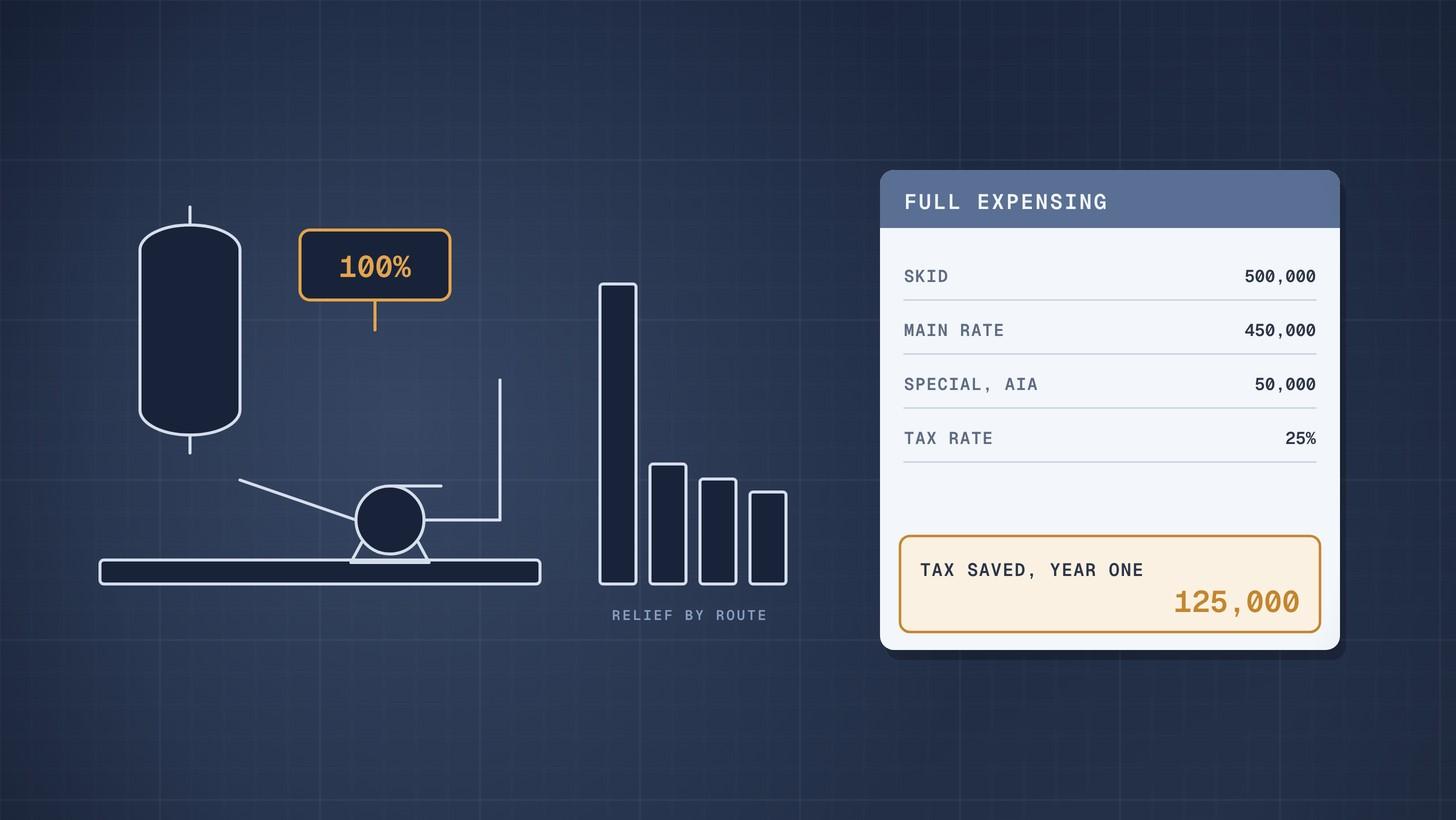
How full expensing, the annual investment allowance, first year allowances and writing down allowances apply to a £500,000 process skid, with the November 2026 rates.
Spare Parts Carrying Cost: Worked Example
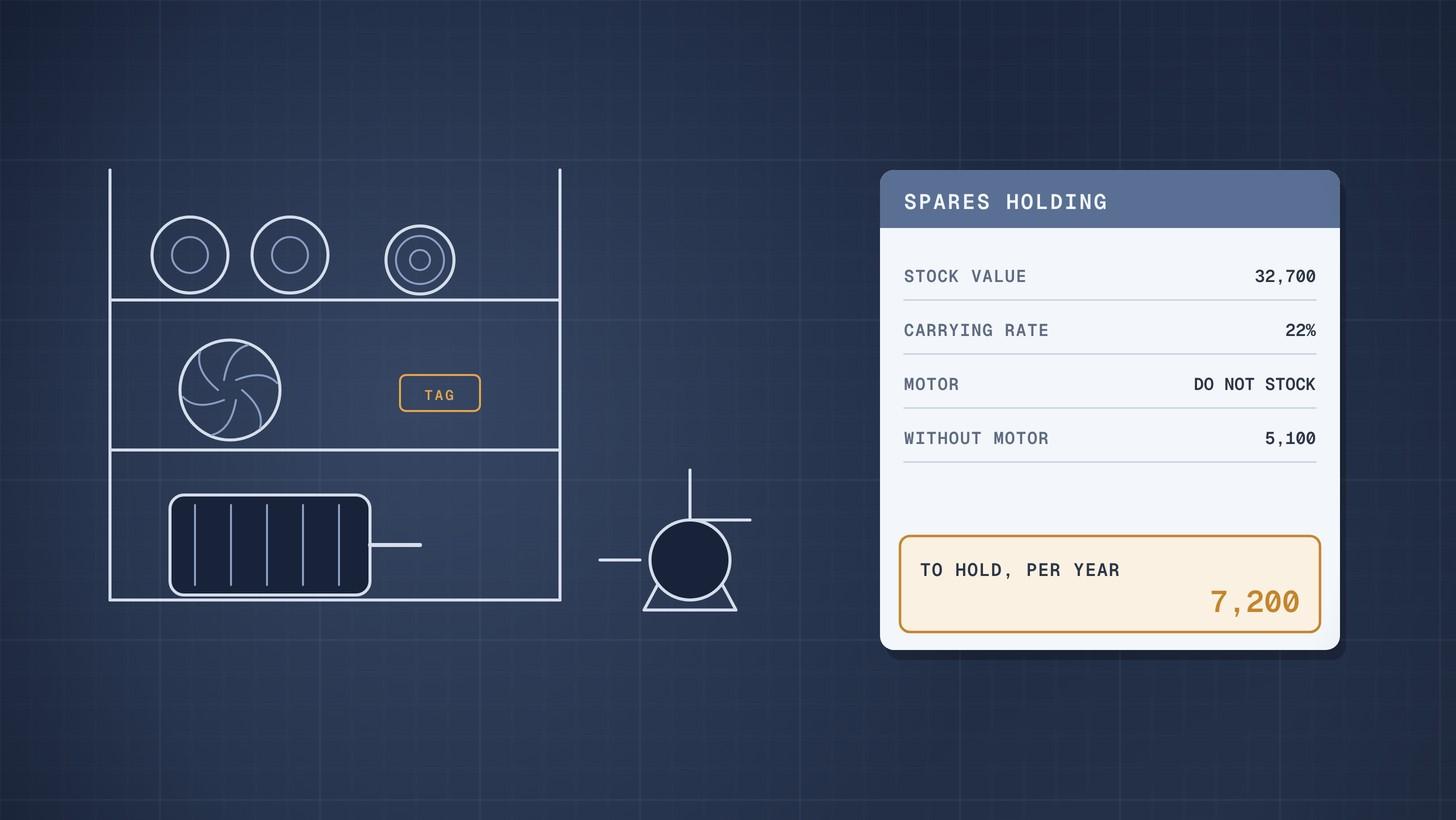
How to calculate the yearly carrying cost of spare parts, build your own carrying rate and decide which items on a recommended spares list are worth stocking.
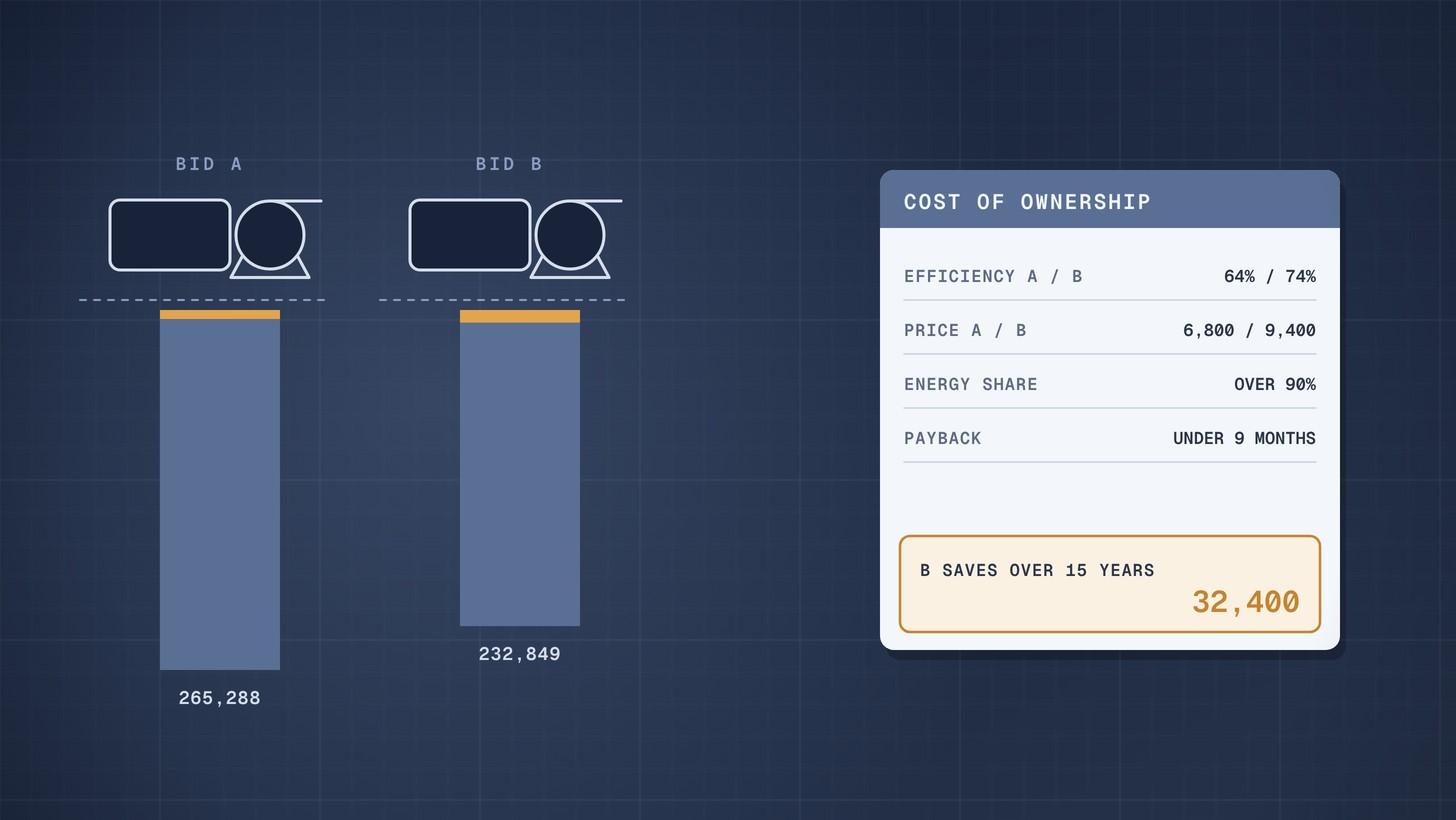
Pump Total Cost of Ownership: Worked Example
How to calculate a pump's total cost of ownership with the Hydraulic Institute and Europump life cycle cost method, comparing two bids over 15 years in present value.