
Functional Design Specification for a Skid: Answering the Buyer's URS
The FDS is where a pharma buyer decides whether you understood their URS. Here is the structure that answers it clause by clause, with a template outline and a traceability example.
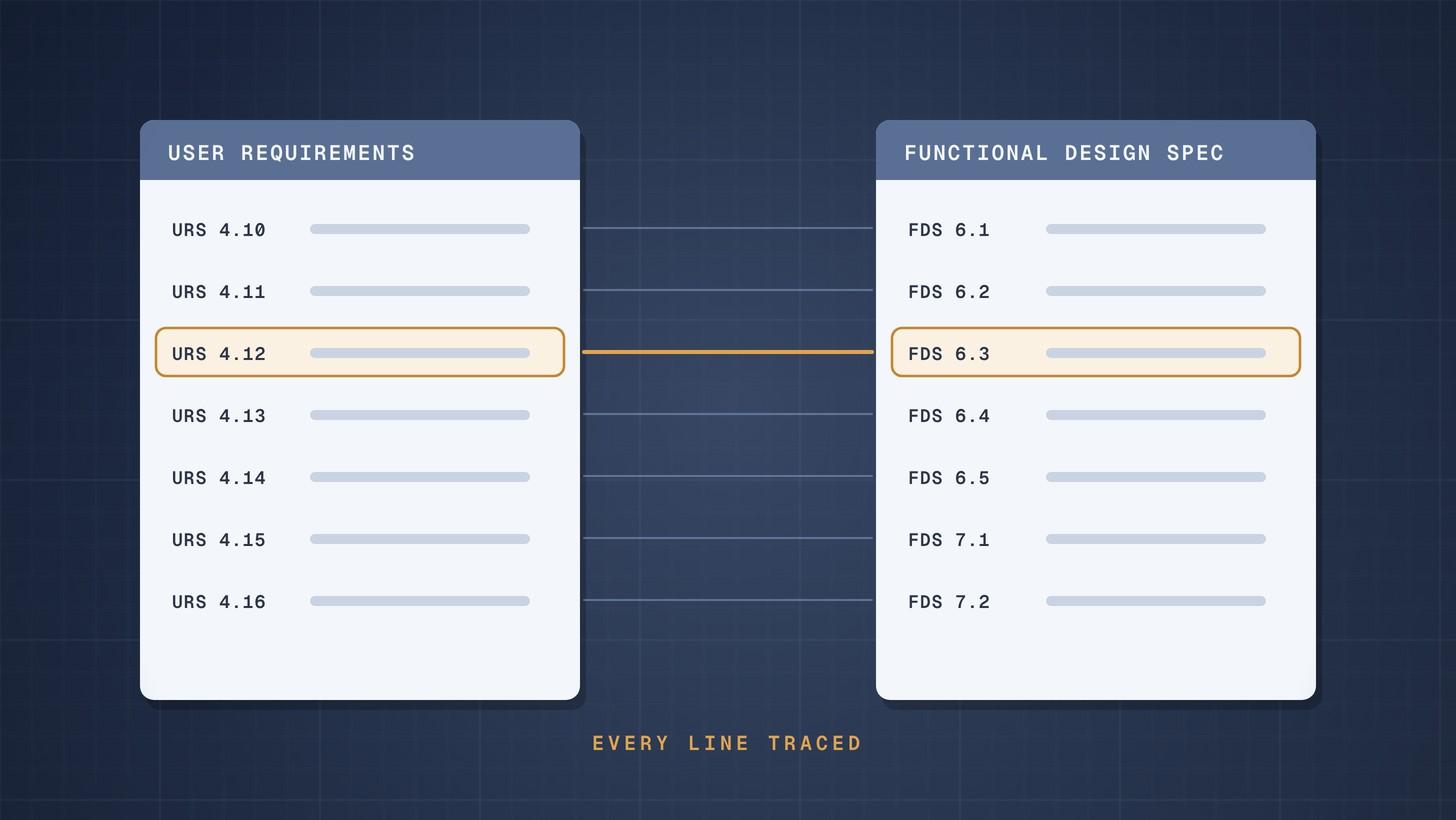
A functional design specification (FDS) is the supplier's written answer to the buyer's user requirement specification (URS): it says what the skid will do, in what order, with which interlocks, alarms and data, and it numbers each function so it can be traced back to a URS line and forward to a test. For a pharma buyer it is often the first real proof that you understood their process, and the document their validation team will test you against at the factory acceptance test.
This guide gives a structure that answers a URS clause by clause, explains how to write functions that can be tested, and shows a traceability example you can copy.
Why this matters now
EU GMP Annex 15 says the specification for equipment or a system should be set out in a URS and/or a functional specification, and that the URS should be the point of reference throughout the validation life cycle. Design qualification then has to show the design meets the URS. Before installation, the equipment should be confirmed against the URS or functional specification at the vendor's site, where applicable [1].
In plain terms: the buyer must prove your design meets their URS, and your FDS is the main evidence. Annex 15 also lets buyers rely on documentation review and some tests done at FAT, without repeating them at IQ and OQ, if transport and installation do not affect the function [1]. A clear FDS with traceable tests is what makes that reliance possible. It saves the buyer time on site, and buyers notice suppliers who save them time.
Access real procurement opportunities from global buyers
Join ChemCapital to get discovered by verified procurement teams across pharmaceutical, chemical, and industrial manufacturing.
URS, FDS and design specifications: who writes what
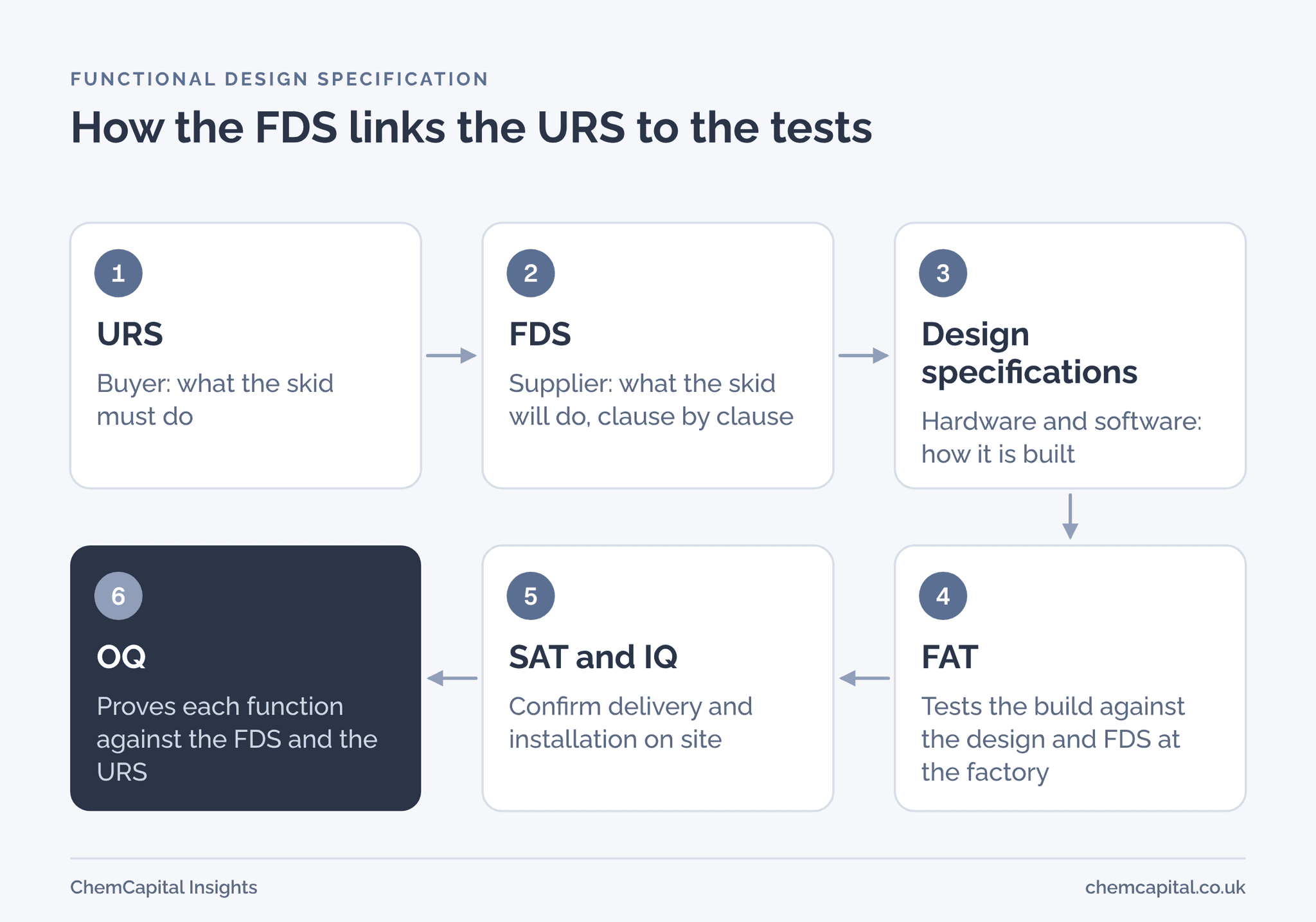
The buyer writes the URS: what the system must do, written from the user's side. Our article on the user requirement specification covers that side. The supplier answers with an FDS, then with design specifications for hardware and software that show how it is built.
The names vary. GAMP 5's second edition, published by ISPE in 2022, has an appendix on specifying requirements (D1), one on configuration and design (D3) and one on testing (D5). The old functional specification appendix, D2, is now marked as retired [2]. Its guidance on user and functional specifications was folded into D1 [3]. So you will meet "FS", "FDS" and "functional and design specification" in contracts. They mean the same job: turning what the user wants into what the system does.
The structure that answers a URS
Mirror the URS. If the buyer's URS has sections for process, controls, data, cleaning and documentation, use the same order, or add a column that maps each FDS section to its URS section. Reviewers read the two side by side, so make that easy.
| FDS section | What goes in it | URS points it usually answers |
|---|---|---|
| 1. Scope and references | Skid boundary, what is excluded, URS number and revision, P&ID and equipment list references | Scope of supply, battery limits |
| 2. System overview | Process description, units and equipment modules, main instruments and tags | Process requirements, capacity |
| 3. Modes and states | Manual, automatic, maintenance, cleaning, idle, emergency stop; allowed transitions | Operability, safe states |
| 4. Sequences | Each sequence as numbered steps with entry conditions, actions, transitions and timeouts | Process steps, recipes, cleaning |
| 5. Control loops | Each loop's measured variable, final element, set point limits and fail action | Accuracy, ranges |
| 6. Interlocks and permissives | Cause and effect for every interlock, with reset rules; safety functions identified separately | Equipment and personnel protection |
| 7. Alarms | Tag, condition, limit, priority, delay, operator action | Alarm requirements |
| 8. Users and screens | User roles, what each role may do, HMI screen list | Access control, usability |
| 9. Data and records | Batch or cycle records, reports, audit trail, electronic signatures, time sync, backup | Data integrity, Part 11, Annex 11 |
| 10. Interfaces | Signals to the plant DCS, MES or historian, protocol, data list | Integration |
| 11. Traceability matrix | URS line, FDS clause, design reference, test reference | Validation |
| 12. Deviations and clarifications | Every URS point not met, or met differently, with reason | Compliance statement |
Sequences. Many pharma buyers think in ISA 88 terms. Its procedural model runs from procedure to unit procedure, operation and phase; phases are the lowest level and issue commands, set alarms and change controller constants [4]. If the buyer's URS uses that language, write your sequences as phases they can map to their recipes.
Alarms. Give each alarm its attributes, not just a name. The ISA 18.2 approach treats an alarm as something that needs an operator response, and records for each one its cause, consequence, operator action and time to respond, with priority set by the severity of the consequence and the time available [5]. An alarm list built that way survives the buyer's alarm review.
Data and audit trail. For GMP use, the buyer's URS will usually call up Annex 11 and often US 21 CFR Part 11. Annex 11 expects, based on risk, a system generated audit trail of GMP relevant changes and deletions, with the reason documented [6]. Part 11 asks for secure, computer generated, time stamped audit trails that do not obscure earlier entries, plus checks that enforce the permitted sequence of steps and only let authorised people act [7]. Say exactly which events your system records and which it does not. Vague claims about "full compliance" are the fastest way to lose a reviewer's trust. Our article on GMP audit trail requirements covers what reviewers expect.
Interlocks and safety functions. Keep process interlocks and safety instrumented functions apart. A process interlock protects product or equipment and may be bypassed under a controlled procedure. A safety function protects people and is designed and changed under its own rules. Show both in a cause and effect table, mark which is which, and state who may reset each one and how. Reviewers check that every trip leaves the skid in a defined safe state, so say what that state is for each mode.
Cleaning and utilities. For hygienic skids, cleaning is a function, not a footnote. Describe the CIP and SIP sequences with the same care as production: circuits, flows, temperatures, contact times, and how the system proves each step happened. Say what happens if a utility fails part way through, for example loss of steam pressure during SIP, and how the operator is told.
Why buyers send an FDS back
The same few problems cause most review comments. Fix them before you issue:
- It restates the URS. Copying "the system shall be cleanable" back to the buyer answers nothing. Say how: which circuits, which sequence, which verification.
- No numbers. Ranges, accuracies, timings and limits are missing, so nothing can be tested.
- Silence on gaps. A URS line with no matching clause reads as a hidden deviation. Every line gets a row, even if the answer is "not supplied".
- Generic data integrity claims. "Compliant with Part 11" without a list of recorded events, user roles and signature points.
- Wrong project. Tags, names or options left over from another order. One is enough to make the reviewer read everything twice.
- No revision control. Comments answered in an email but not in the next issue of the document.
Write functions that can be tested
Annex 11 asks that requirements stay traceable through the whole life cycle [6]. That only works if each FDS clause is one testable statement with a number.
| Weak | Testable |
|---|---|
| The skid will be controlled safely. | FDS 6.3: Pump P101 shall not start unless LT101 reads above 20%. If LT101 falls below 10% while P101 runs, P101 stops and alarm LAL101 (high priority) is raised. |
| Temperature control will be accurate. | FDS 5.2: TIC201 shall hold the CIP supply at the recipe set point, within plus or minus 2 °C, once stable for 60 seconds. |
| The system has a full audit trail. | FDS 9.4: The audit trail records user, date, time, old value, new value and reason for every change to a recipe parameter or alarm limit. |
Three rules help. Use "shall" for every function. Give numbers and tags, not adjectives. Keep one function per clause, so a test can pass or fail it cleanly. Then write the FAT test reference next to it. Our FAT checklist for process skids shows how buyers plan those tests.
The traceability matrix and deviations
The matrix is the page the validation lead reads first. Each row is a URS requirement, with the FDS clause that answers it, the design document that implements it, and the test that proves it. Every URS line needs a row, including the ones you do not meet.
Be honest about those. If the URS asks for something you will not supply, or will supply differently, put it in a deviation list with the reason and, if possible, an alternative. A deviation found at FAT is a dispute; a deviation declared in the FDS is a decision the buyer can make in good time. Our guide to the deviation list in an equipment bid shows the format buyers expect. ChemCapital's supplier profiles let you show buyers the documents and capabilities they ask about before the RFQ even arrives.
Practical example
Illustrative figures. A supplier is answering a 142 line URS for a mobile CIP skid. After the FDS is drafted, the traceability matrix shows:
| Status | URS lines | Share |
|---|---|---|
| Met by the standard design | 118 | 83.1% |
| Met by configuration for this order | 17 | 12.0% |
| Met differently, declared as a clarification | 4 | 2.8% |
| Not met, declared as a deviation | 3 | 2.1% |
| Total traced | 142 | 100% |
One row from the matrix:
| URS | FDS | Design | Test |
|---|---|---|---|
| URS 4.12: The supply pump must be protected against running dry. | FDS 6.3: P101 start permissive LT101 above 20%; trip below 10% with alarm LAL101 | Cause and effect sheet CE 03, PLC routine IL_P101 | FAT 07: simulate LT101 at 15% and 8%, confirm no start and trip |
The three deviations go in section 12 with alternatives. The buyer's reviewer can sign off 139 lines quickly and spend their time on the three that matter. That is a better outcome for both sides than finding them at FAT.
How to run the FDS commercially
- Price it. An FDS for a configured skid takes real engineering hours. Include it in the quote as a line item, with the number of review rounds included.
- Make approval a milestone. Agree that design proceeds against the approved FDS revision, and that later changes go through change control with a price and programme impact.
- Keep revisions tight. Number each issue, record each comment and how you answered it, and issue a clean revision with changes marked.
- Plan the review time. Put FDS issue, buyer review and approval on the programme with durations agreed in the contract. If approval slips, design and long lead orders slip with it, and the programme should show that clearly rather than absorb it silently.
- Reuse, carefully. A good FDS template saves days, but a reviewer who finds another customer's tag numbers or a requirement you do not meet will doubt the rest.
If you are the buyer
Ask for the FDS structure and a traceability matrix in the RFQ, not after award. Ask suppliers to state Annex 11 and Part 11 functions explicitly, and to list deviations at bid stage. Then compare FDS quality alongside price: the supplier who answers your URS clearly usually runs a cleaner FAT too.
After award, review the FDS against the URS line by line, using the supplier's matrix as the checklist. Give comments a number, agree a response date, and approve a revision rather than a pile of emails. The approved FDS becomes the basis for your design qualification and your FAT protocol, so time spent here is repaid twice.
Where ChemCapital fits
Buyers in pharma and process industries shortlist suppliers who show they can document well. A clear profile, with the kinds of systems you build and the documents you deliver, gets you onto those shortlists earlier.
Ready to be found by buyers who value a well answered URS? List your company on ChemCapital. It is free to start.
Frequently asked questions
What is a functional design specification?
The supplier's document that describes what a system will do: modes, sequences, control loops, interlocks, alarms, users, data and interfaces. It answers the buyer's URS and is the basis for factory and site acceptance tests.
What is the difference between a URS and a functional specification?
The URS is written by the user and says what the system must do. The functional specification is usually written by the supplier and says how the system will behave to meet each requirement, in enough detail to test.
Is the functional specification still in GAMP 5?
Yes, as a concept. In GAMP 5 second edition (2022) the separate functional specification appendix, D2, is retired and its guidance sits in Appendix D1 on specifying requirements.
What should an FDS traceability matrix contain?
One row per URS requirement, with the FDS clause that answers it, the design document that implements it and the test that verifies it. Requirements that are not met appear too, linked to a declared deviation.
Who approves the FDS?
Normally the buyer's engineering and quality or validation representatives. Design then proceeds against the approved revision, and later changes go through change control.
Continue reading
Informational only, not procurement or legal advice. Cited names, frameworks, and statistics belong to their respective owners.
Access real procurement opportunities from global buyers
Join ChemCapital to get discovered by verified procurement teams across pharmaceutical, chemical, and industrial manufacturing.
List your companyRelated articles
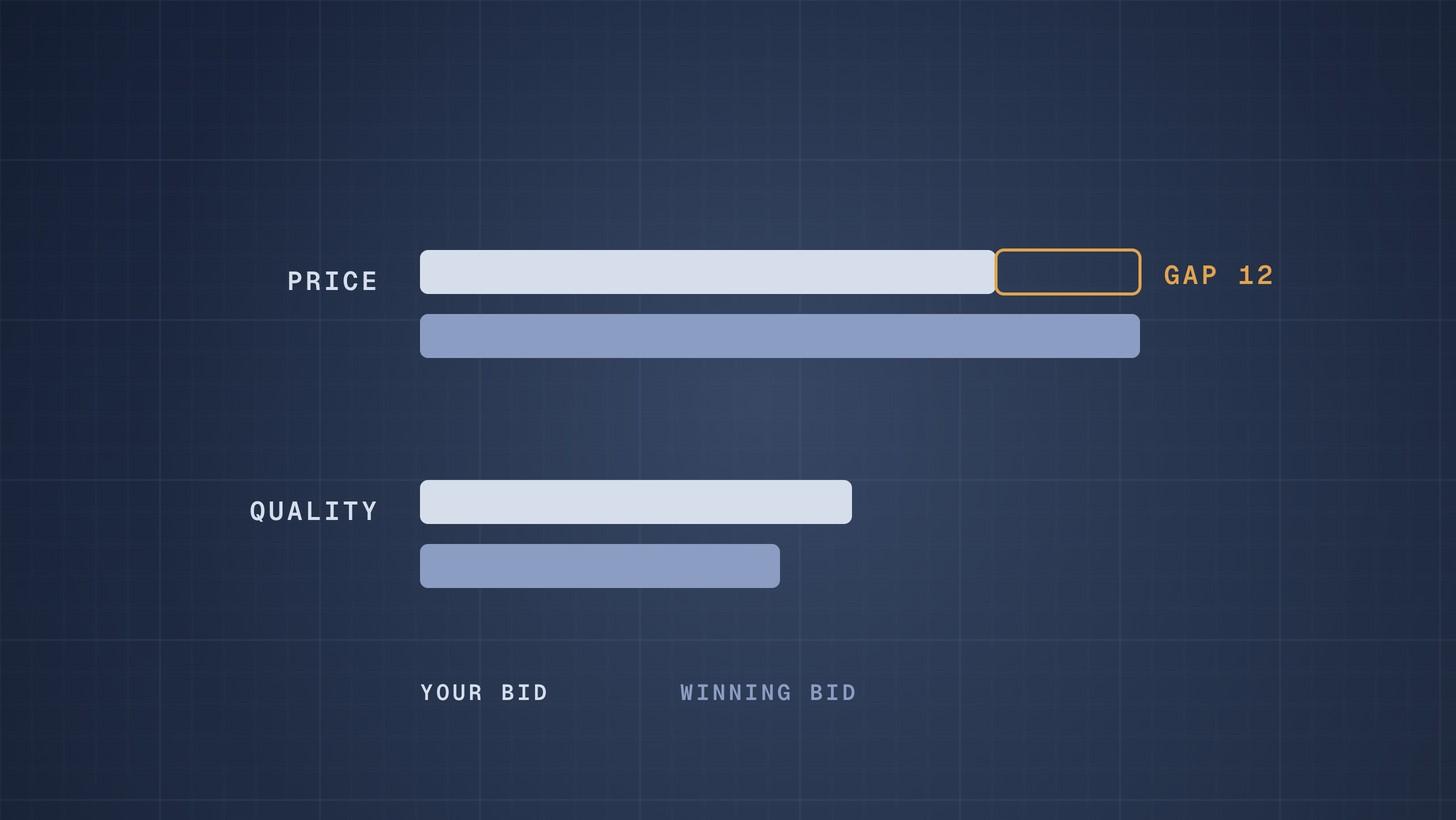
How to Ask for Feedback on a Lost Equipment Tender (With Email Template)
How equipment suppliers should ask for a debrief after losing a bid: when to ask, what to ask, what buyers can and cannot share, and how to use the answers. Includes a short email template.
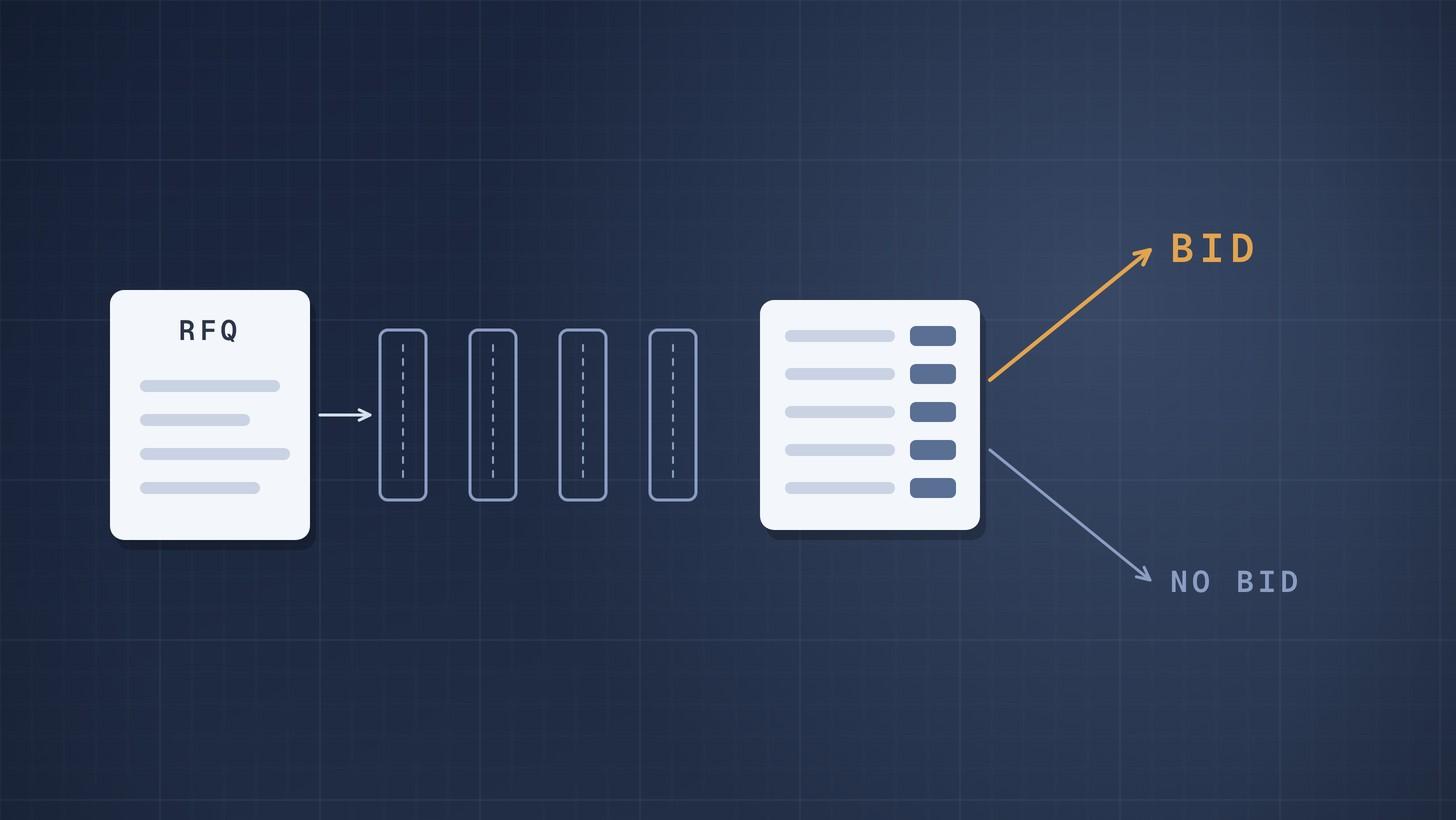
Bid or No Bid? A Scorecard for Engineered Equipment RFQs
A simple bid or no bid scorecard for equipment suppliers: the gates to check first, seven weighted criteria, a worked example and a template you can copy.
Equipment Quotation Template: A Proposal Buyers Can Compare
A ten section quotation template for engineered equipment suppliers: cover letter, scope and battery limits, compliance and deviations, price schedule, delivery, commercial terms, exclusions and documents.