
EU GMP Annex 1 for Equipment Buyers: What Changes in the RFQ
The 2022 EU GMP Annex 1 paragraphs that change how you specify sterile manufacturing equipment, mapped to the lines to add to your URS and RFQ, with the evidence to ask suppliers for.
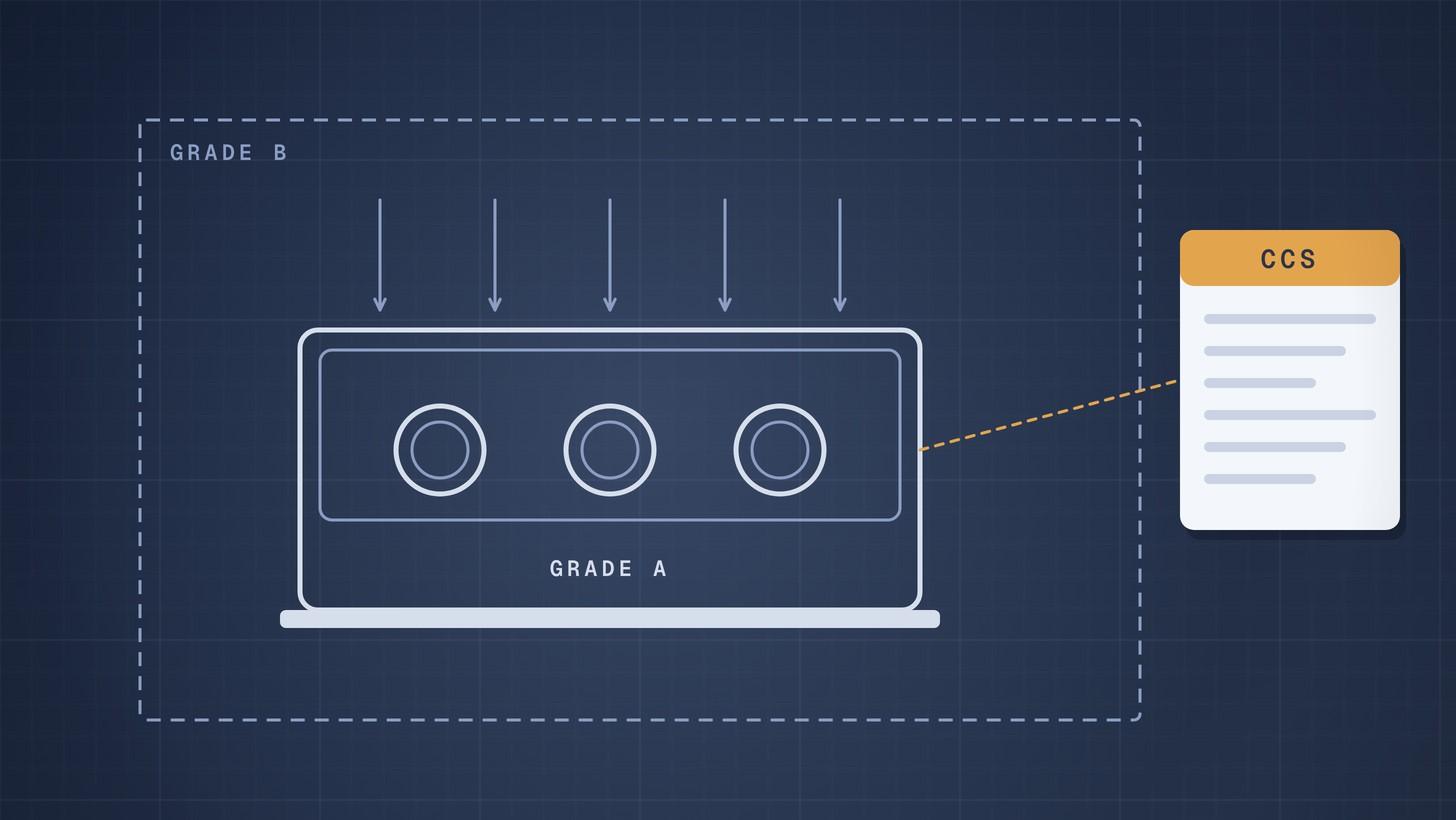
EU GMP Annex 1, the 2022 rules for making sterile medicines, has applied since 25 August 2023, with its freeze dryer loading paragraph applying from 25 August 2024. For an equipment buyer it changes the RFQ in four ways: every item must fit the site's contamination control strategy, barrier technology is the expected default, the user requirement specification must state monitoring, cleaning and sterilisation needs, and suppliers must hand over the evidence the strategy relies on. This guide maps the paragraphs that matter to the lines you should add to your RFQ.
Why this matters now
The revised Annex 1 was published on 25 August 2022 and came into operation a year later. Paragraph 8.123, on loading freeze dryers, had a further year [1]. PIC/S brought the same text into force in its GMP guide (version 17 of PE 009) on 25 August 2023, noting that the EU and PIC/S versions are identical apart from minor differences [2]. So a site inspected under either guide is judged against it.
The grace periods are over. Swissmedic's inspectors wrote that from 25 August 2023, barrier equipment not complying with the revised Annex 1 is considered deficient, though an extra implementation period of about a year may be acceptable depending on the corrective plan and interim measures [3]. An ISPE white paper names legacy equipment and facility designs as a source of gaps against current expectations, and says monitoring data should inform improvement "rather than justify inadequate designs or practices" [4].
For buyers, the consequence is simple. Equipment bought today is expected to meet Annex 1 by design, and the RFQ is where that starts.
Create and manage RFQs in minutes
ChemCapital handles the entire procurement cycle, from structured RFQs and supplier comparisons to formal purchase orders and delivery tracking.
What Annex 1 covers
Annex 1 applies to sterile medicinal products. Its principles can also inform non sterile manufacture, but NSF warns that using them is not the same as being required to follow them, and a site that does so should document which principles it applies [5]. The 2022 text is a complete rewrite and runs to 59 pages, against 16 for the 2008 version [5].
Equipment requirements are not confined to the short equipment section. They sit across the premises, equipment, utilities and production sections, from cleanroom surfaces in section 4 to freeze dryer loading and single use systems in section 8 [1], which is why buyers miss them.
Cleanroom grades in brief
Many equipment requirements depend on the grade of the room it sits in or the zone it creates, so it helps to have the grades straight. Grade A is the critical zone for high risk operations such as filling and making aseptic connections. Grade B is the background for grade A in aseptic preparation and filling. Grades C and D are clean areas for less critical stages [1]. For particles of 0.5 µm and larger, the limit for grade A is 3,520 per cubic metre both at rest and in operation; grade B allows 3,520 at rest and 352,000 in operation [1].
The equipment you buy can define a grade A zone itself, as an isolator, a RABS or a laminar airflow unit does, or it can sit inside a graded room. Either way, the RFQ should state the grade of every zone the equipment touches, at rest and in operation, so that the supplier designs airflow, materials and access accordingly. Cleanroom requalification runs at maximum intervals of 6 months for grades A and B and 12 months for grades C and D [1], so equipment that makes requalification awkward, for example by blocking test access, costs time twice a year.
The contamination control strategy comes first
Annex 1 asks every site to implement a contamination control strategy (CCS) across the facility, defining critical control points and assessing all controls [1]. The elements it lists include plant and process design, premises and equipment, utilities, cleaning and disinfection, and single use systems [1]. NSF calls the CCS the most significant new requirement, because the elements already existed but must now be brought together in one strategy that shows how they interact [5].
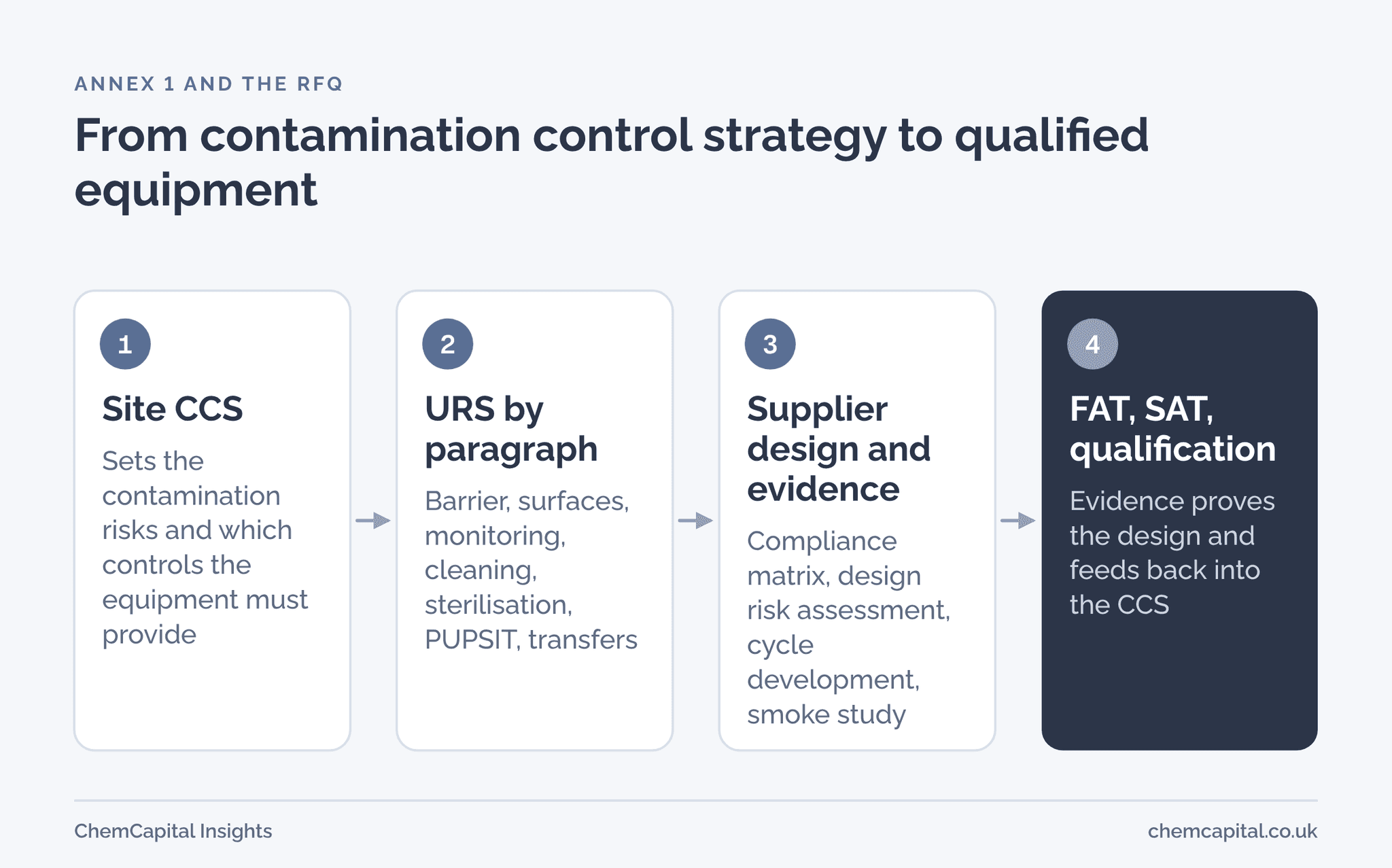
For an equipment purchase this has two effects. First, the URS should reference the CCS: which risks the equipment must control, and which of its features the strategy relies on. Second, many Annex 1 paragraphs let the site choose a lower control, such as a different glove replacement frequency or sterilisation interval, only if it is justified in the CCS. The justification needs data, and much of that data comes from the supplier. Our guide to the user requirement specification covers how to structure the URS.
What changes in the RFQ, paragraph by paragraph
The table lists the Annex 1 points that most often change an equipment specification. Paragraph numbers refer to the 2022 text [1].
| Annex 1 | What it says | What to put in the RFQ |
|---|---|---|
| 4.3 | RABS or isolators help assure the required conditions; alternatives need justification | State the barrier concept, or ask bidders to propose one with a justification |
| 4.5, 4.7 | Exposed surfaces smooth, impervious and unbroken; materials that minimise particles and withstand repeated cleaning and sporicidal agents | Surface finish, materials of construction, and the cleaning and sporicidal agents the equipment must tolerate |
| 4.19, 4.20 | Background grades: open isolators generally at least grade C, closed isolators at least grade D, RABS at least grade B | Confirm the room grade the design assumes |
| 4.21 | Glove materials with suitable resistance; isolator glove integrity tested at the start and end of each batch or campaign | Glove material data, glove port design and a glove testing method |
| 4.22 | Isolator bio decontamination automated, validated and including a sporicidal agent | Automated decontamination system, cycle development and validation support |
| 4.15, 4.30 | Airflow visualisation studies; unidirectional air speed of 0.36 to 0.54 m/s at the working position as guidance | Smoke study at FAT or SAT, recorded; air speed measurements |
| 5.1, 5.2 | Written equipment description with P&IDs kept up to date; monitoring requirements defined in the URS | As built P&IDs; a monitoring and alarm list |
| 5.3 | Operation, maintenance and repair from outside the cleanroom where practicable | Technical areas and access panels outside the clean zone |
| 5.4, 5.5 | Validated cleaning; sterilisation of direct and indirect product contact parts | Cleaning and sterilisation method, with validation support |
| 5.8 | No conveyors passing between grade A or B and lower grades unless continuously sterilised | Transfer concept between grades |
| 5.9 | Particle counter tubing typically no longer than 1 m; isokinetic heads in unidirectional airflow | Sample point locations and tubing lengths |
| 8.50, 8.60, 8.61, 8.63 | Redundant control and monitoring of heat cycles; weekly steriliser leak tests; daily air removal tests or an air detector; validated SIP with monitoring at representative points | Steriliser and SIP design for these tests, with probe locations |
| 8.87 | Sterilised filter assemblies integrity tested before use (PUPSIT) and after use | Filter housing and piping that allow PUPSIT without breaking sterility |
| 8.123 | Freeze dryers loaded manually without a barrier sterilised before each load | Loading system and sterilisation frequency |
| 8.128 to 8.130 | Aseptic connections after the final filter, for example intrinsic sterile connection devices; integrity measures in the CCS | Connector types and supplier failure mode data |
| 8.132 to 8.138 | Single use systems: supplier assessment, extractables and leachables, integrity, proof of sterilisation on receipt | Supplier qualification, E&L data and receipt documents |
Barrier technology
RABS and isolators are encouraged but not mandatory; NSF notes that new facilities and installations need clear reasons for not choosing them [5]. If your RFQ leaves the choice open, ask each bidder for the barrier concept and its justification against your CCS. Our comparison of RABS and isolators sets out the trade offs.
For isolators, Swissmedic adds that decontamination should always be automatic, and that risk assessments should already be carried out during design or selection of the isolator [3]. So ask the supplier for its design risk assessment, not just a promise that one will be done later.
Transfers into the clean zone
Equipment that moves materials between grades, such as pass through hatches, airlocks and transfer ports, needs particular care. Pass through hatches should protect the higher grade environment, and airlocks serving grade A and B areas need interlocks so both doors cannot open at once [1]. NSF highlights that transfer of materials, equipment and components into grade A and B areas must be unidirectional [5]. Swissmedic expects new facilities to have segregated airlocks for grade A and B zones, and existing ones without them to guarantee temporary separation of flows, supported by a risk analysis [3].
In the RFQ, describe every transfer: what passes, between which grades, how it is decontaminated, and how doors are interlocked and monitored. Ask the supplier to show the transfer sequence in its functional specification.
Monitoring, alarms and maintenance
Paragraph 5.2 places monitoring requirements in the URS itself and asks that alarms are evaluated for trends [1]. Write the list of monitored parameters, alarm limits and data outputs into the URS, and require the supplier to deliver an alarm list and data interface that the site's monitoring system can use. If the equipment includes a control system, our guide to EU GMP Annex 11 for equipment buyers covers the data integrity side.
Ask also where maintenance happens. Equipment that must be opened inside a grade A or B zone for routine work brings people and tools into the cleanest space; 5.3 prefers maintenance and repair from outside the cleanroom where practicable [1].
Utilities
Section 6 affects any skid that makes, stores or uses water, steam or gases. Water for injection should be kept in constant circulation above 70 °C, and WFI systems should include continuous monitoring such as total organic carbon and conductivity [1]. NSF notes that the annex regards in line monitoring as a better indication of overall system performance than discrete sampling [5]. Gases used in aseptic processes need a sterilising grade filter at the point of use, with a nominal pore size of 0.22 µm or less [1]. See our guide to pharmaceutical water systems for the wider design.
Filters and PUPSIT
Paragraph 8.87 expects the sterilised filter assembly to be integrity tested before use, after sterilisation, to catch damage from preparation, and a non destructive test after use before the filter leaves its housing. Where PUPSIT is not possible, an alternative needs a thorough risk assessment [1]. Swissmedic states that PUPSIT is the expectation, with flexibility only in justified cases covered by the CCS, and encourages redundant sterilising filters for new processes [3]. PUPSIT is much easier to design in than to add: it needs valves, vents and drains on the sterile side that can be operated without breaking sterility. Put it in the RFQ.
Freeze dryers and single use systems
Paragraph 8.123 requires a freeze dryer that is loaded or unloaded manually without barrier separation to be sterilised before each load. Where loading is automated or protected by a closed barrier, the sterilisation frequency must be justified and documented in the CCS [1]. That choice drives the loading system, as the example below shows; our freeze dryer buying guide covers the rest of the specification.
Single use systems have their own subsection. The CCS must consider risks such as adsorption, extractables and leachables, fragility, leaks and particles; suppliers of sterile single use systems must be assessed; integrity must hold under intended conditions, including freezing and thawing; and each delivery is checked for packaging, labelling, certificate of conformance and proof of sterilisation [1]. The RFQ for a single use assembly therefore needs supplier quality data as well as a drawing.
What to ask suppliers to deliver
Turn the table into a deliverables list, so the evidence arrives with the equipment rather than after an inspection finding:
- A statement of compliance against each Annex 1 paragraph in the URS, with deviations declared.
- Materials of construction, surface finish records and compatibility with your cleaning and sporicidal agents.
- Design risk assessment for barrier systems, transfers and aseptic connections.
- Cleaning, decontamination and sterilisation cycle development and validation support.
- Airflow visualisation study plan and recording, with air speed data.
- As built P&IDs, a monitored parameter and alarm list, and the data interface specification.
- For single use components: extractables data, integrity data and supplier quality documents.
Score these deliverables in the technical evaluation, not after award. ChemCapital's AI quotation comparison lines up each bid's compliance statements and deviations side by side, so gaps against Annex 1 show before you choose.
How to evaluate the bids
Score Annex 1 compliance as a technical criterion with weight, not as a pass or fail tick. For each paragraph in your URS, ask: does the design meet it, is it met by a procedure the site must run, or is it declared as a deviation? Designs that rely on site procedures to close a gap are cheaper to buy and more expensive to run, so price that in.
Check the evidence plan as carefully as the design. A bidder that offers cycle development, a recorded smoke study at FAT and a complete alarm list is selling you less risk at qualification, and that is worth money. Our guide to technical bid evaluation shows how to weight criteria like these.
Existing equipment
If you are buying to replace or upgrade legacy equipment, start with a gap assessment against the annex. Swissmedic expects an in depth internal evaluation of current barrier technology, and treats non compliant equipment as deficient, with interim risk reducing measures and a corrective plan [3]. The ISPE paper proposes a risk based path to new equipment and controls, prioritising control and monitoring of critical activities while the transition happens [4]. The gap assessment then becomes the scope of the RFQ.
Practical example
Illustrative figures. A site is specifying a new freeze dryer for a product made in five loads a week. Each sterilisation cycle takes the dryer out of use for about six hours.
| Option | Sterilisation frequency | Hours per week lost to sterilisation |
|---|---|---|
| Manual loading, no barrier | Before every load, as 8.123 requires | 5 × 6 = 30 |
| Automated loading behind a barrier | Weekly, if justified in the CCS | 1 × 6 = 6 |
| Difference | 24 hours a week |
Twenty four hours a week is a full day of capacity, or more than 1,100 hours over a 48 week year. That is the commercial case for automated loading, and it only works if the RFQ asks for the loading system and the supplier provides the data the site needs to justify the longer interval in its CCS.
Common mistakes
- Copying an old URS written before 2022, so PUPSIT, monitoring and decontamination requirements are missing.
- Leaving the CCS out of the RFQ, so suppliers design to their own assumptions.
- Asking for "Annex 1 compliance" in one line, which every bidder will tick and none will define.
- Treating evidence as an afterthought. Smoke studies, cycle development and E&L data cost less when they are planned into FAT and SAT.
This is general information, not legal advice; check the current text before you rely on it.
If you are the supplier
Buyers increasingly ask for paragraph by paragraph compliance. A clear compliance matrix, a risk assessment done at design stage and a defined evidence pack set you apart from bidders who answer "fully compliant". Our pharmaceutical industry page shows how buyers in this sector use ChemCapital.
Where ChemCapital fits
Sterile manufacturing RFQs are long and detailed, and comparing bids against them by hand is slow. ChemCapital helps buyers turn requirements into structured RFQs and compare the answers line by line.
Ready to run your next Annex 1 RFQ with a clear comparison? Start a free 14 day ChemCapital trial, with no credit card needed.
Frequently asked questions
When did the revised EU GMP Annex 1 come into force?
It came into operation on 25 August 2023, one year after publication. Paragraph 8.123 on freeze dryer loading applied from 25 August 2024. PIC/S adopted the same text from 25 August 2023.
Does Annex 1 require isolators or RABS?
Not strictly. RABS and isolators are encouraged, and alternative approaches must be justified in the contamination control strategy. New installations need clear reasons for not using them.
What is a contamination control strategy?
A site wide strategy that defines critical control points and assesses all controls against contamination, covering design, premises, equipment, utilities, cleaning and disinfection, single use systems and monitoring.
What is PUPSIT?
Pre use post sterilisation integrity testing: testing a sterilised filter assembly before use to detect damage from preparation. Annex 1 paragraph 8.87 expects it, with alternatives only after a thorough risk assessment.
Does Annex 1 apply to non sterile products?
It is written for sterile products. Its principles can inform non sterile manufacture, but a site that applies them should document which principles it uses.
Continue reading
Informational only, not procurement or legal advice. Cited names, frameworks, and statistics belong to their respective owners.
Create and manage RFQs in minutes
ChemCapital handles the entire procurement cycle, from structured RFQs and supplier comparisons to formal purchase orders and delivery tracking.
Start for freeRelated articles

Design Qualification (DQ) for GMP Equipment: What It Is and What the Vendor Provides
Design qualification is the documented check that a proposed equipment design meets the URS and GMP before it is built. Here is where DQ sits in EU GMP Annex 15, what evidence the vendor supplies, and a DQ checklist.
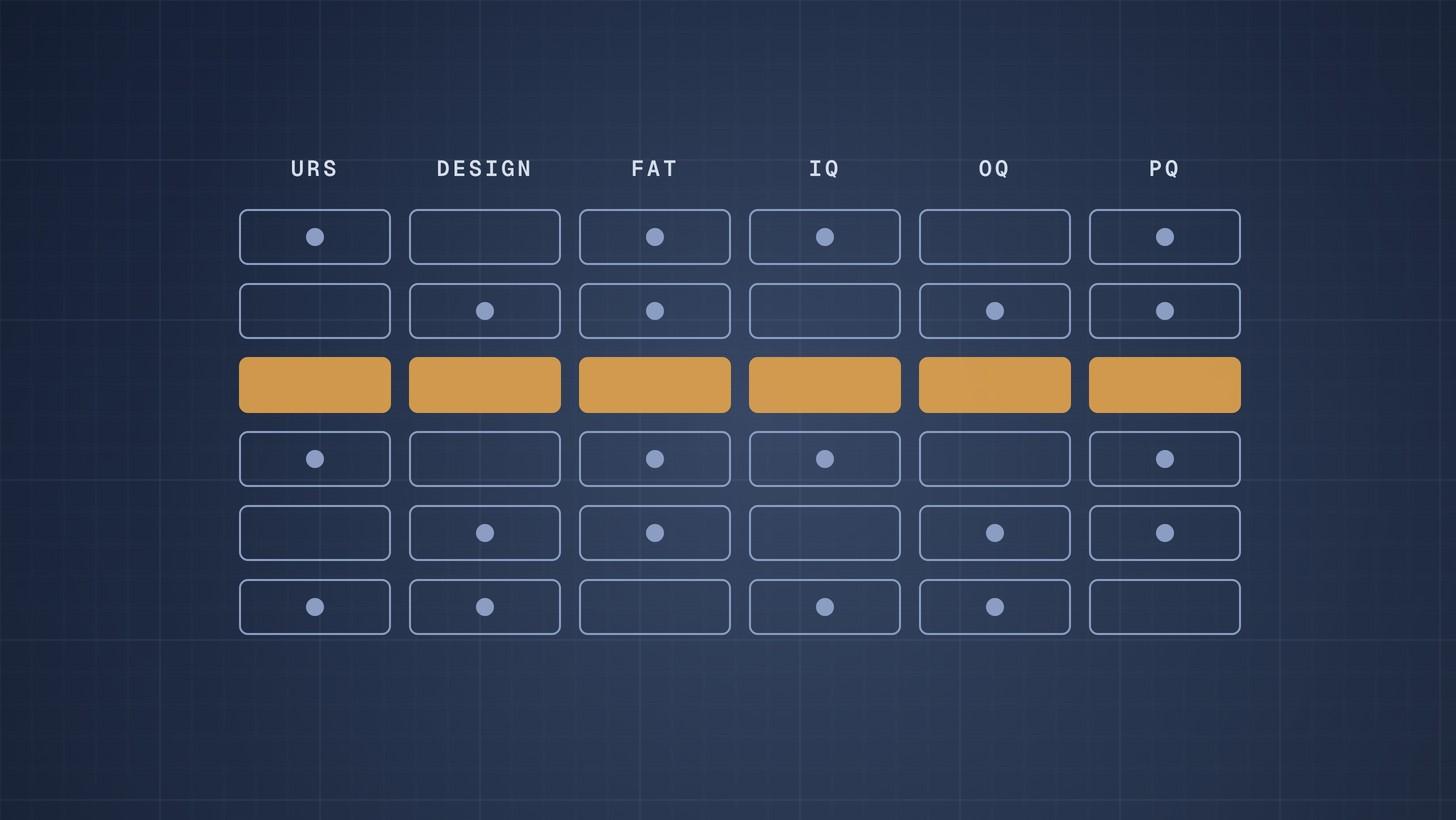
Requirements Traceability Matrix for GMP Equipment: From URS to PQ
A requirements traceability matrix links every URS line to the design document that meets it and the test that proves it, from DQ through FAT, SAT, IQ, OQ and PQ. Here is how to build one, with a template.
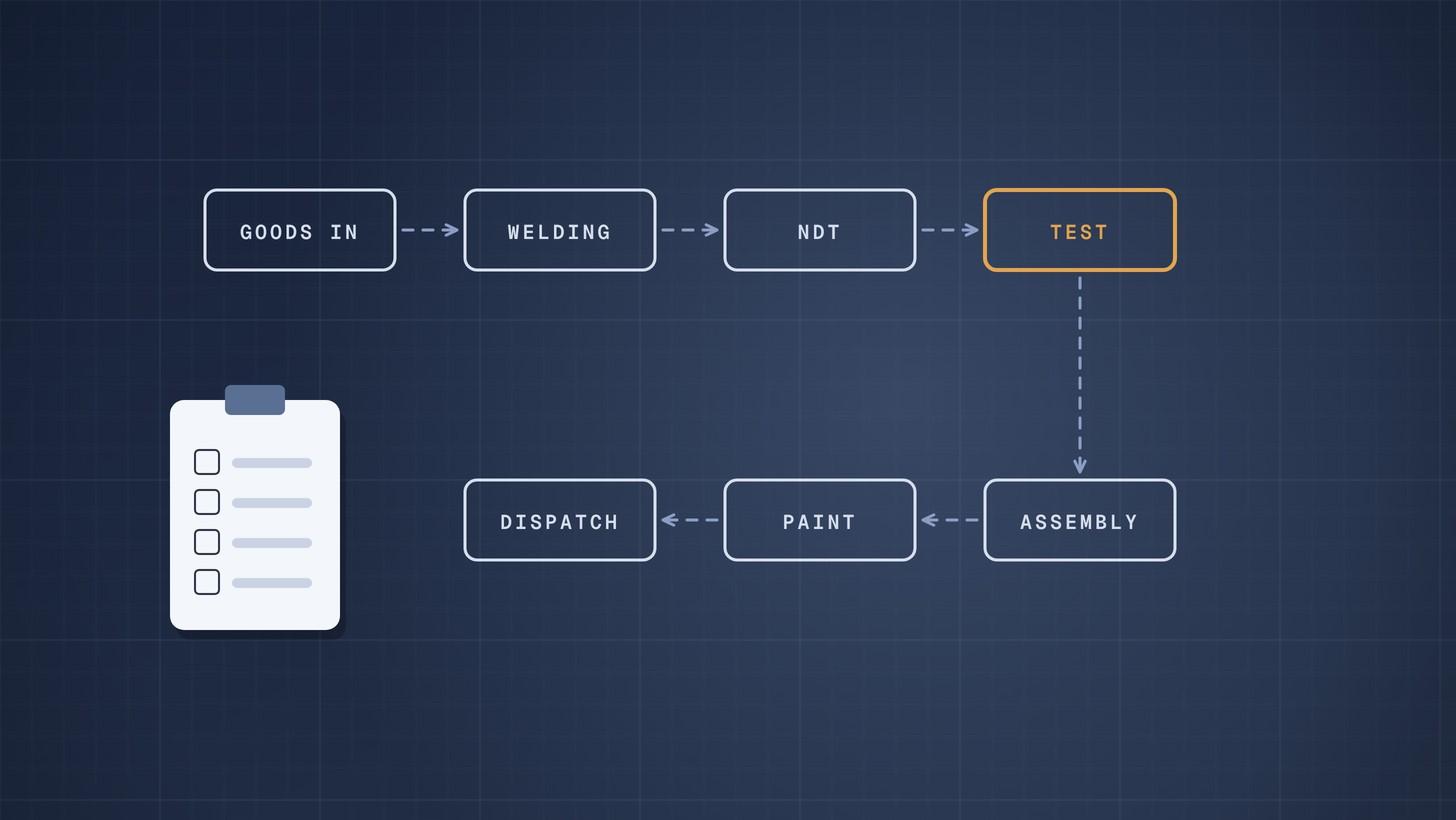
How to Prepare for a Customer Quality Audit as an Equipment Manufacturer
A practical guide for equipment makers facing a customer or vendor audit: the documents to have ready, how to run the walk through, the findings auditors raise most often and how to close them properly.