
Manufacturer's Data Book for Vessels and Skids: Compile It So You Get Paid
The final payment on many equipment orders waits for the data book. Here is what it contains, how to build it during fabrication, and how to get it accepted first time.
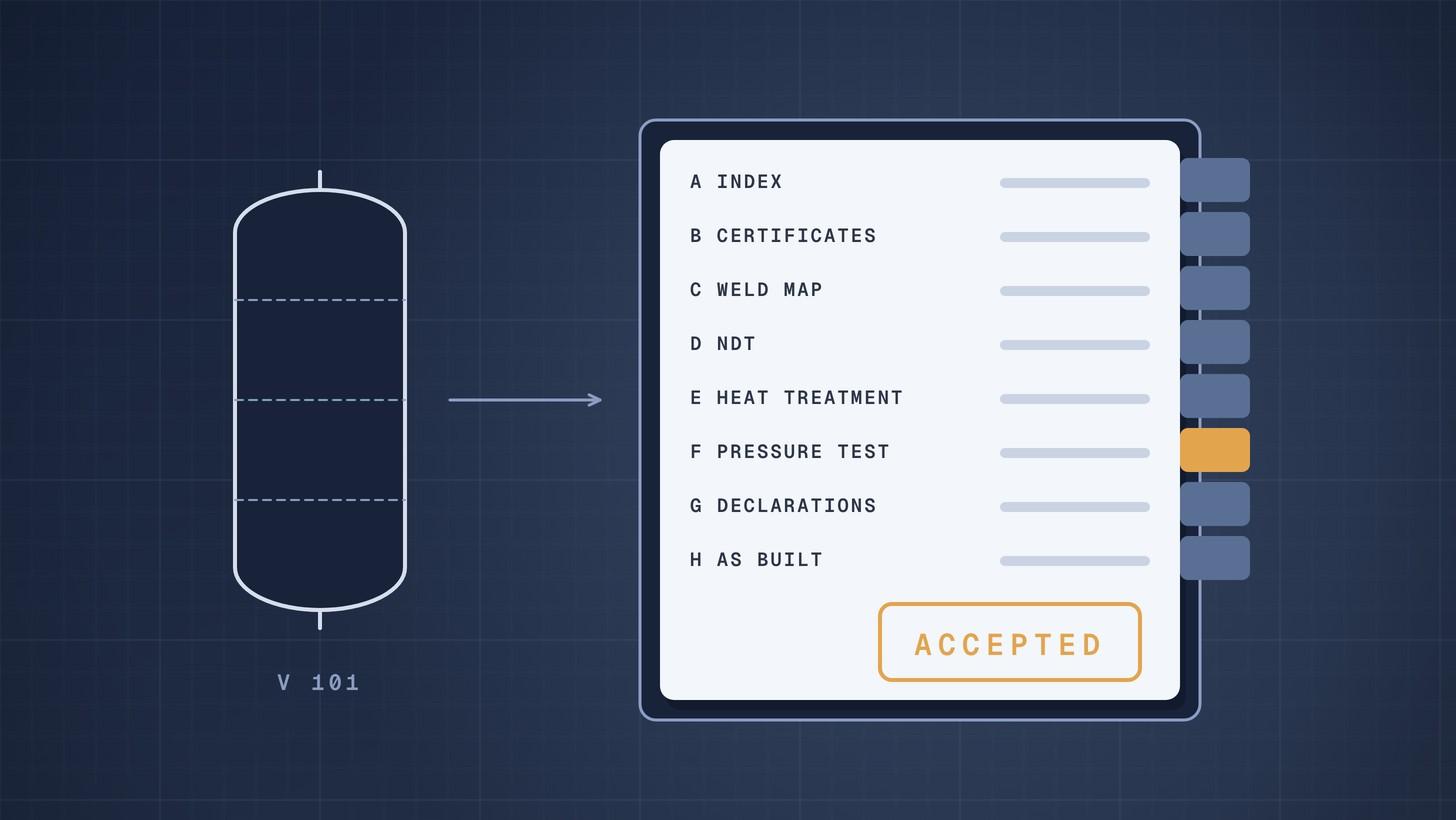
A manufacturer's data book is the bound set of quality records that proves a vessel or skid was built, inspected and tested as ordered: material certificates traced to a weld map, welding and NDT records, heat treatment, the pressure test, dimensional checks, declarations and as built drawings. On many orders the last 5 to 10% of the price is held until the buyer accepts it, so a data book compiled late or incomplete is money left on the table.
This guide covers what goes in, how to build it during fabrication rather than after shipment, and how to get it accepted first time.
Why this matters now
Retention of 5 to 10% is typical in equipment payment terms, and buyers are advised not to release it until documentation such as as built drawings, spare parts lists and manuals is delivered, against a formal acceptance certificate [1]. Some buyers go further and refuse to release equipment at all until the records are complete. One operator's 2026 specification makes completion of the document list, approval of every deviation and concession, closure of punch items and inclusion of the documentation in the record book conditions of its release note [2].
So the data book is not paperwork after the job. For the buyer it is the permanent quality record of the equipment, kept for its whole life [3]. For you it is the last invoice.
Access real procurement opportunities from global buyers
Join ChemCapital to get discovered by verified procurement teams across pharmaceutical, chemical, and industrial manufacturing.
What goes in a data book
Names vary: data book, manufacturing record book (MRB), manufacturer's data report (MDR) or final documentation dossier. In ASME work, "data report" also means the formal Form U 1 or U 1A, which records design pressure and temperature, test pressure, materials, NDE and joint efficiency, signed by the manufacturer and the Authorized Inspector [4] [3]. The data book contains that form, plus everything behind it.
A published operator specification lists the sections it expects, from the release certificate through concessions, material certificates and PMI, welding records, NDT, heat treatment, dimensions, NCRs, pressure tests, electrical and instrument certificates, nameplate photos and as built drawings [2]. Adapted for a typical vessel or skid:
| Section | Contents | Common gap |
|---|---|---|
| Index and certificate of conformity | Index agreed with the buyer, your signed release note | Index not agreed before compiling |
| Deviations and concessions | Every approved deviation, concession and technical query | Verbal approvals with no signed record |
| Material certificates | EN 10204 3.1 or 3.2 certificates, cross referenced to parts, PMI results | Certificate heat numbers not traceable to the weld map |
| Welding records | WPS, PQR, welder qualifications, weld map | Welder on the map not covered by a valid qualification |
| NDT | Reports for each weld per the ITP, with operator qualifications | Report missing for one repaired weld |
| Heat treatment | PWHT procedure and chart | Chart without thermocouple positions |
| Dimensional | Dimensional report, nozzle orientation check | Orientation measured but not recorded |
| Pressure test | Test procedure, record, gauge calibration, witness signature | Gauge certificate expired on test day |
| Code and regulatory | ASME data report or PED declaration of conformity, nameplate rubbing or photo | Nameplate photo unreadable |
| Inspection releases | Signed ITP, third party inspection release notes | Hold points signed after the event |
| Skid extras | Instrument calibration certificates, electrical test records, FAT report, hazardous area certificates | Instrument certificates for the wrong tag |
| As built drawings | General arrangement, P&ID, wiring, marked as built | Drawings still at "issued for construction" |
Under the Pressure Equipment Directive, the manufacturer must also keep material traceability for pressure parts from receipt through to final testing, carry out a final inspection of the equipment and its documents, and supply instructions for installation, commissioning, use and maintenance [5]. Those records belong in the book. Our articles on EN 10204 3.1 and 3.2 certificates and hydrostatic test pressure explain two of the sections reviewers check hardest.
Build it as you fabricate
The worst way to make a data book is to collect papers from the workshop after the vessel has shipped. People have moved on, a report is missing, and the inspector who signed a hold point is on another job.
Do it the other way round. The operator specification above asks for an index to be agreed before compiling starts, the file to be opened at the start of manufacturing, and records inserted as they become available [2]. That is good practice whoever your customer is.
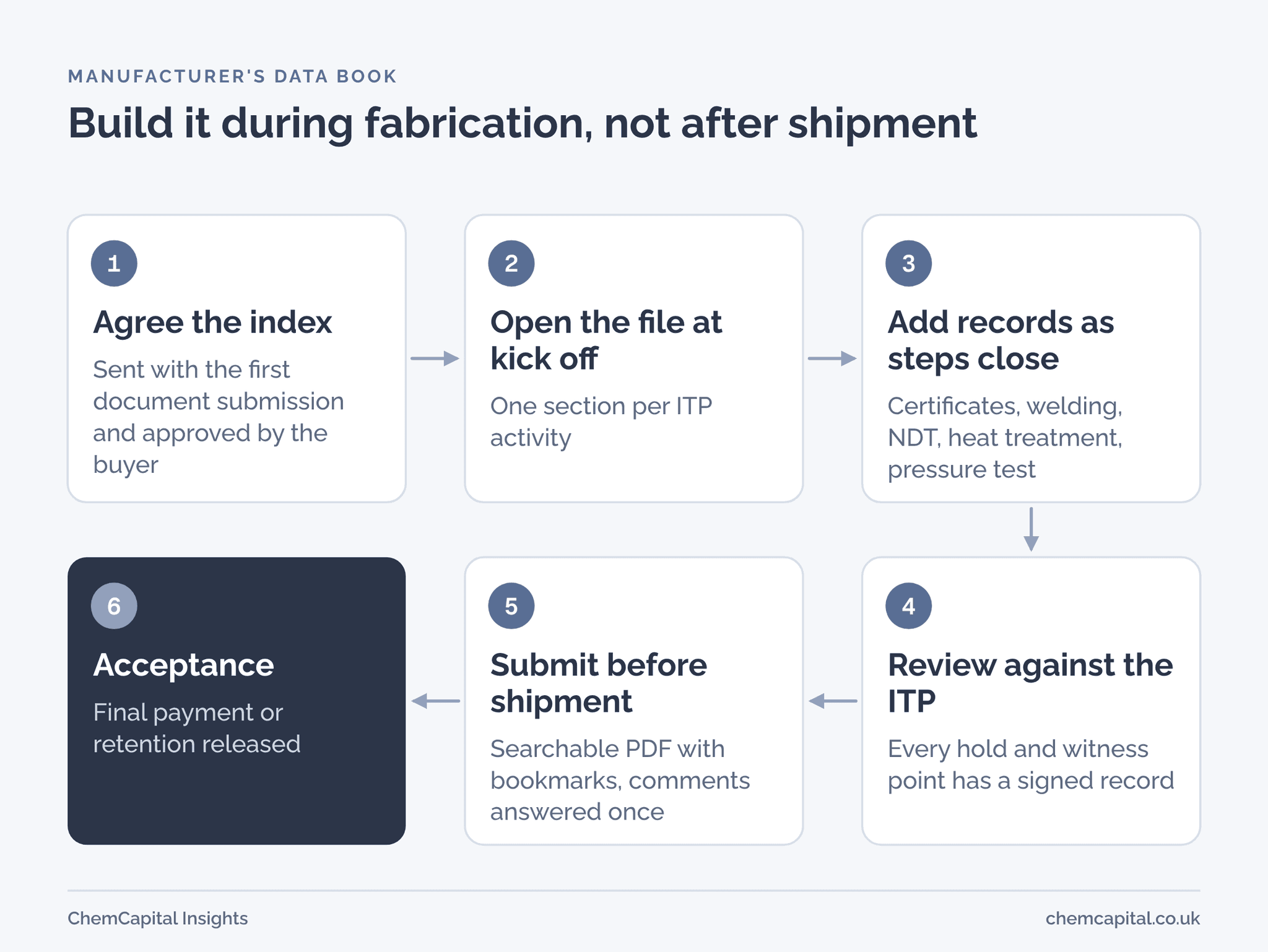
The tool that makes it work is the inspection and test plan. Every hold and witness point on the ITP should have a signed record in the book; checking the index against the ITP is how reviewers find gaps [3]. So set up the book with one tab per ITP activity and close each tab when the step closes. The vendor document requirement list on the purchase order tells you which documents the buyer expects and in what form.
Practical habits that save weeks:
- Agree the index first. Send it with the first document submission and get it approved.
- Number everything. Page numbers within each section and a cross reference from each certificate to the part and weld it covers.
- Scan as you go. Legible colour copies, no rotated pages, one searchable PDF with bookmarks per section. The operator specification asks for exactly that [2].
- Close NCRs in the book. An open NCR with no disposition is the commonest reason for rejection.
- Check sub supplier records early. Bought out items such as valves and instruments need their own certificates. Chasing them after delivery is slow.
Getting it accepted
Treat submission like a deliverable with a programme. Send a complete draft before shipment, so the buyer can review while the equipment travels. Answer comments in a register, and resubmit a clean revision rather than loose pages.
Make acceptance a defined event. If your contract links the final payment to "acceptance of final documentation", ask for a review period, such as 10 working days, and for comments to be raised once, not drip fed. That turns an open ended wait into a date you can invoice against. Our article on payment milestones, retention and bonds covers the commercial side.
What reviewers check first
Knowing the reviewer's order of attack lets you fix the weak spots before they do. Most start with three checks.
- Traceability. They pick a few pressure parts on the drawing, find each one on the weld map, then find its material certificate by heat number. If any link breaks, they assume others do too.
- ITP against records. They run down the signed ITP and look for the record behind each hold and witness point, including dates. A record dated after the next step started is a question you will have to answer.
- The pressure test. Test pressure against the design basis, hold time, gauge range and calibration date, and the witness signature. It is the single test that proves the vessel holds pressure, so it gets the closest reading.
Run those three checks yourself before you submit. They take an hour and prevent most second rounds.
Practical example
Illustrative figures. A fabricator supplies a skid worth £420,000. The final 10% is payable on acceptance of the data book.
| Compiled after shipment | Compiled during fabrication | |
|---|---|---|
| Final payment held | £42,000 | £42,000 |
| First submission | 6 weeks after shipment | 1 week before shipment |
| Review rounds | 3 | 1 |
| Acceptance | about 120 days after shipment | about 30 days after shipment |
| Financing cost of the wait at 8% a year | £1,105 | £276 |
The financing cost is the smaller part. The bigger cost is engineering and quality time spent chasing records months later, and a customer whose last memory of the job is a fight over paperwork.
If you are the buyer
Put the data book index in the RFQ, call it up in the vendor document list, and link retention release to acceptance with a defined review period. Review against the ITP, not page by page. And review promptly: holding a supplier's money because your own review is late damages the relationship you will need on the next order.
Where ChemCapital fits
Buyers remember suppliers whose documents arrive complete and on time. Showing the documentation you deliver, and the codes you build to, helps the right buyers find you. A ChemCapital supplier profile lets you list the codes, certifications and document packages you offer, so buyers see them before they send an RFQ.
Ready to show buyers the quality records you deliver as standard? List your company on ChemCapital. It is free to start.
Frequently asked questions
What is a manufacturer's data book?
The compiled quality records for a piece of equipment: material certificates, welding and NDT records, heat treatment, pressure test, dimensional reports, declarations and as built drawings. It is the buyer's permanent record of how the equipment was built.
What is the difference between a data book and an ASME data report?
The ASME data report is one form, such as U 1 or U 1A, signed by the manufacturer and the Authorized Inspector. The data book contains that form plus all the supporting records behind it.
Why is final payment linked to the data book?
Buyers commonly hold back 5 to 10% as retention and release it only when documentation is complete and accepted, because the records are needed for registration, inspection and the life of the equipment.
When should a manufacturer start compiling the data book?
At the start of fabrication, with an index agreed with the buyer. Records go in as each inspection and test step closes, so the book is nearly complete when the equipment ships.
What are common reasons a data book is rejected?
Material certificates not traceable to the weld map, open NCRs, missing NDT reports for repaired welds, expired gauge certificates on pressure test records, and drawings not marked as built.
Continue reading
Informational only, not procurement or legal advice. Cited names, frameworks, and statistics belong to their respective owners.
Access real procurement opportunities from global buyers
Join ChemCapital to get discovered by verified procurement teams across pharmaceutical, chemical, and industrial manufacturing.
List your companyRelated articles
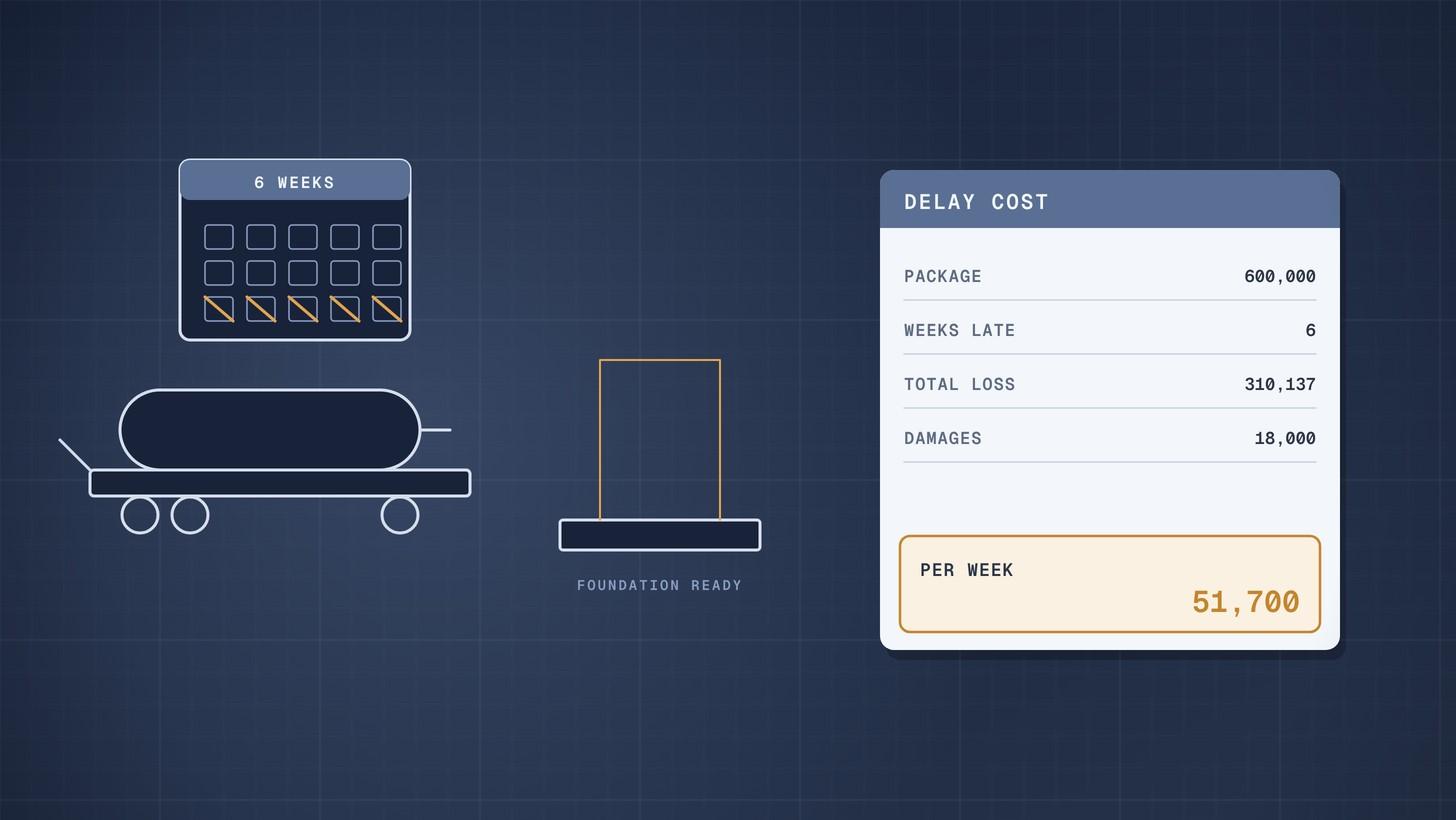
Cost of Late Equipment Delivery: Worked Example
How to calculate the weekly cost of late equipment delivery, compare it with liquidated damages and use it to set a damages rate a supplier can accept.
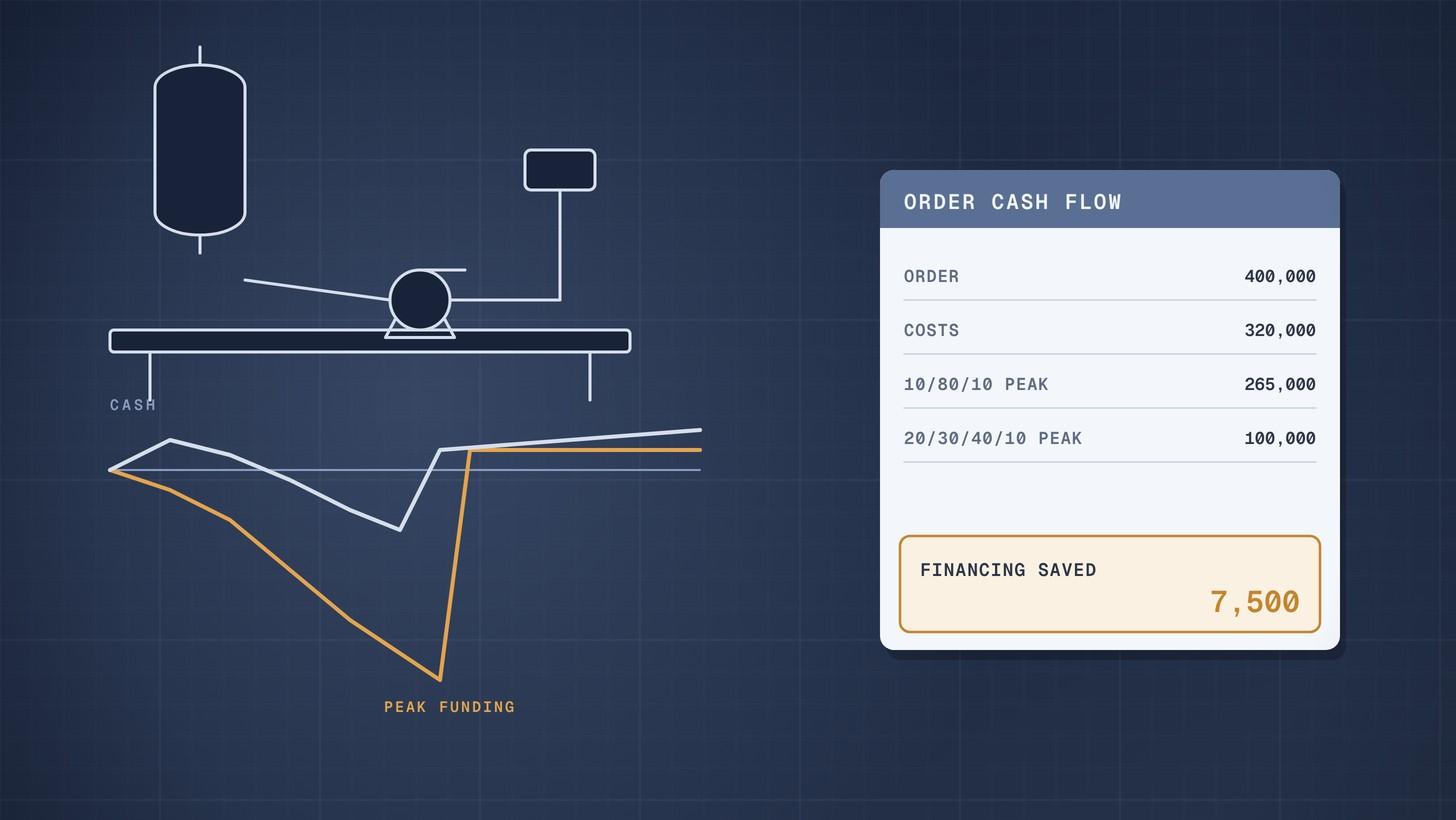
Payment Milestones and Supplier Cash Flow: Worked Example
How payment milestones, bonds and retention shape an equipment supplier's cash curve, with a worked example comparing two schedules on a £400,000 order.

Performance Guarantees and Performance Tests for Process Packages
What a process package supplier should guarantee, how the performance test is run, and what happens when the plant falls short, with a worked example of performance liquidated damages.