
Should Cost Analysis for Fabricated Equipment: Vessels and Skids
How to build a should cost model for a pressure vessel or process skid from materials, welding hours, testing, overheads and margin, with a worked stainless vessel example and how to use it.
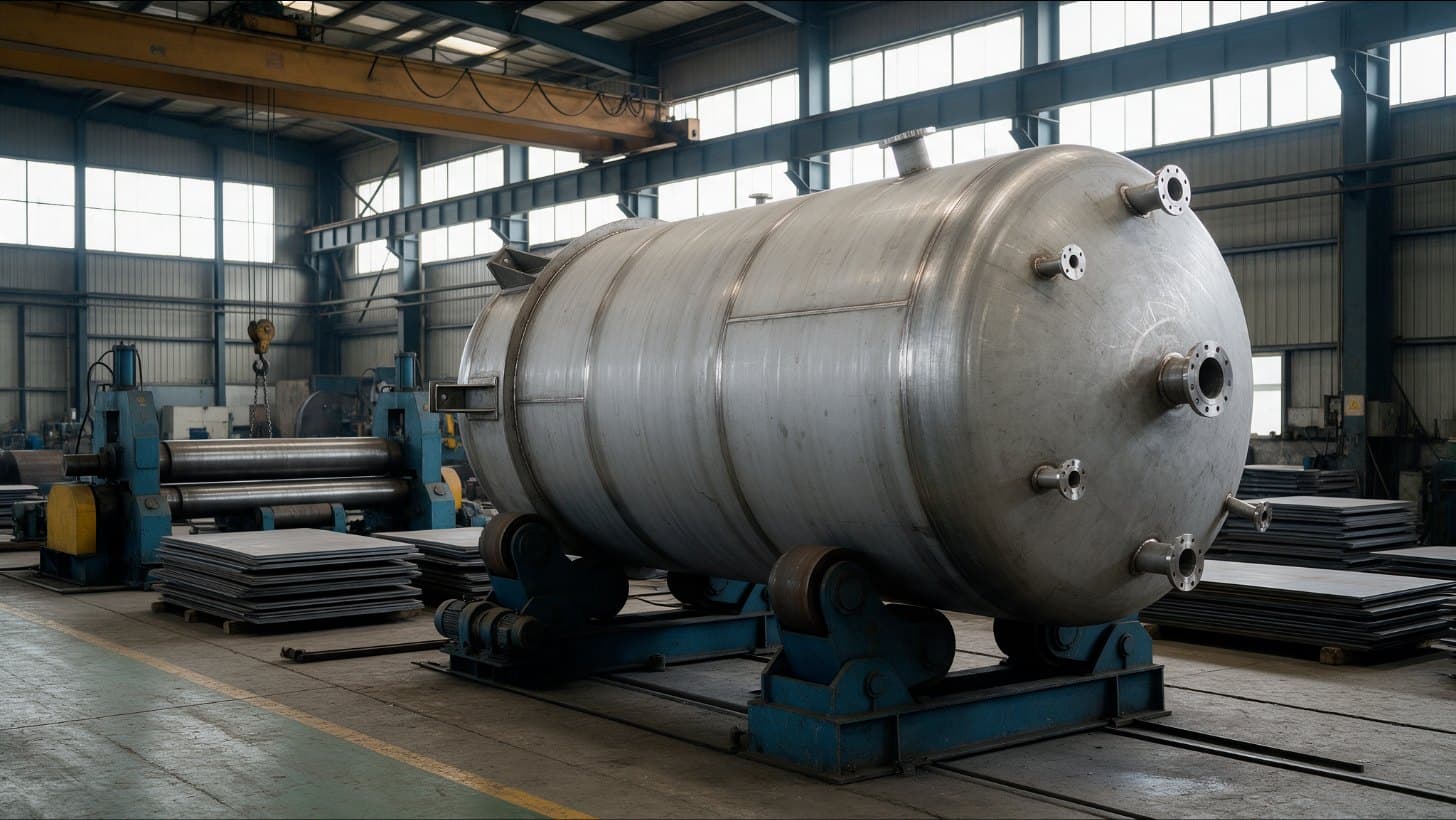
A should cost analysis estimates what a piece of fabricated equipment ought to cost by building the price up from its drivers: the material in it, the hours to cut, form, weld and finish it, the testing and documents, the fabricator's overheads and a fair margin. For a pressure vessel or a process skid, that build up takes a datasheet, a sketch and a spreadsheet. It does not tell you the right price to the pound, but it tells you which quotes are plausible, which are not, and what questions to ask about the gaps.
It differs from a budget estimate. A budget estimate asks what similar equipment has cost before; a should cost asks what this design should cost to make. The two complement each other, and the best negotiators carry both.
Why this matters now
Two things have pushed should cost up the agenda. The UK Cabinet Office's Sourcing Playbook, updated in September 2026, calls a should cost model good practice for all procurements, and mandatory for complex outsourcing in central government [1]. Its guidance note describes the model as a forecast of what something should cost regardless of who delivers it, used to understand cost drivers, test bids, prepare for negotiation and set a baseline for managing the contract [2]. The thinking applies just as well to a private company buying a vessel.
And material prices keep moving. For stainless equipment, much of the movement arrives through the producers' alloy surcharges. In January 2026 Aperam's surcharge was €1,939 a tonne for grade 304 and €3,213 a tonne for 316L [3], so the choice of grade alone shifts the material line before anyone picks up a welding torch. Our quarterly update on stainless steel and nickel prices in equipment quotes tracks the latest figures.
Join ChemCapital to streamline sourcing and connect with verified partners
Whether you're buying or supplying, ChemCapital gives you the tools to manage the complete procurement cycle in one platform.
Should cost versus a budget estimate
| Budget estimate | Should cost model | |
|---|---|---|
| Built from | Past prices, cost curves, capacity scaling | Materials, hours, rates, testing, overheads, margin |
| Needs | Size and type | Datasheet, general arrangement, specification |
| Best for | Feasibility and budget setting | Checking bids and preparing to negotiate |
| Explains why a price is high | No | Yes, line by line |
| Main weakness | Hides design differences | Depends on assumed hours, rates and margins |
AACE International's classification links bid checking and negotiation to the most defined estimates, built from detailed unit costs, with expected ranges as narrow as 3% to 10% below and 3% to 15% above for a Class 1 estimate [4]. A should cost model for a single vessel can approach that level of detail when the design is fixed. For earlier, top down methods, see our guides to equipment cost estimating and the six tenths rule.
The cost build up for a fabricated vessel
| Cost element | What drives it | Where the number comes from |
|---|---|---|
| Plate and heads | Weight from geometry, grade, scrap and offcut allowance | Geometry, density, current plate and surcharge prices |
| Nozzles, flanges, forgings, supports | Count, size, rating, material | Bill of materials, stockist prices |
| Welding | Length and size of welds, process, duty cycle | Weld map, deposition rates, shop rate |
| Other shop labour | Cutting, rolling, fit up, nozzles, finishing | Hour estimates by activity |
| Testing and inspection | NDT extent, pressure test, PMI, witnessing | The specification and inspection plan |
| Surface treatment | Pickling, passivation, polishing, painting | Area and finish specified |
| Design and documents | Code calculations, drawings, data book | Hours for engineering and quality |
| Overheads | Premises, equipment, indirect staff | A percentage on direct cost |
| Margin and risk | Market conditions, contract terms | A percentage, tested against market |
| Delivery | Size, weight, distance, Incoterm | Haulier quotes |
Materials
Start with weight. A cylindrical shell weighs its mean circumference times thickness times length times density, and 316L is about 7.99 g/cm³ [5]. A 2:1 ellipsoidal head has a surface area of about 1.08 times the diameter squared, plus its straight flange. Add an allowance for offcuts and scrap, then the nozzles, flanges, reinforcement pads and supports from the bill of materials. Price plate on the same surcharge month the bidders used, or the comparison is meaningless.
Welding
Welding hours follow from how much weld metal must be deposited and how fast. TWI's guidance on welding costs gives the steps: work out the weight of weld metal in the joint, multiply by a factor for the process to get the filler needed (1.1 for TIG, 1.05 for MIG and MAG, 1.02 for submerged arc, 1.5 for manual metal arc), and allow for the duty cycle, the share of a welder's time the arc is actually burning [6]. TWI's typical duty cycles are 25% to 40% for manual TIG, 30% to 45% for MIG and MAG, and 80% to 95% for submerged arc welding [6]. That is why the process a fabricator uses for the long seams changes the hours so much.
TWI also points to the costs that engineering decisions drive beyond the arc itself [6]: preparing and fitting joints, cleaning, heat treatment, inspection and repairs all take shop time. A should cost model that counts only arc time will undercount badly.
Testing, finishing and documents
These lines are where quotes differ most, because they follow the specification rather than the geometry. Radiography of every seam costs far more than spot checks; electropolishing costs far more than pickling and passivation; a full data book with material certificates for every part takes real hours. Read them straight off your specification and inspection plan, and see our guides to NDT methods and hydrostatic test pressure for what each test involves.
Overheads and margin
Overheads cover what the shop costs to run; margin is what the fabricator earns. Both are percentages you have to assume. Use a range, and resist the temptation to set margin low to make the model look clever: a should cost that leaves the supplier no profit is a recipe for claims, late delivery or a supplier that walks away.
Skids are built up differently
A packaged skid is mostly bought in items: pumps, valves, instruments, a control panel and perhaps a heat exchanger. Model it in layers. First, the bought in items, priced from supplier quotes or your own recent orders, with the skid builder's handling mark up shown separately. Second, the frame, priced by weight of structural steel. Third, the pipework, from the number and size of welds and spools. Fourth, electrical and instrument installation and wiring. Fifth, testing, including the factory acceptance test, and documents. Then overheads and margin. Our modular process skids buyer's guide covers what should be in the scope.
Practical example
In this illustrative example, a buyer has three quotes for a vertical 316L vessel: 1.6 m inside diameter, 3.0 m straight shell, 8 mm shell plate and two 10 mm 2:1 ellipsoidal heads, built to a pressure vessel code, with radiography of the main seams, pickling and passivation, and a standard data book.
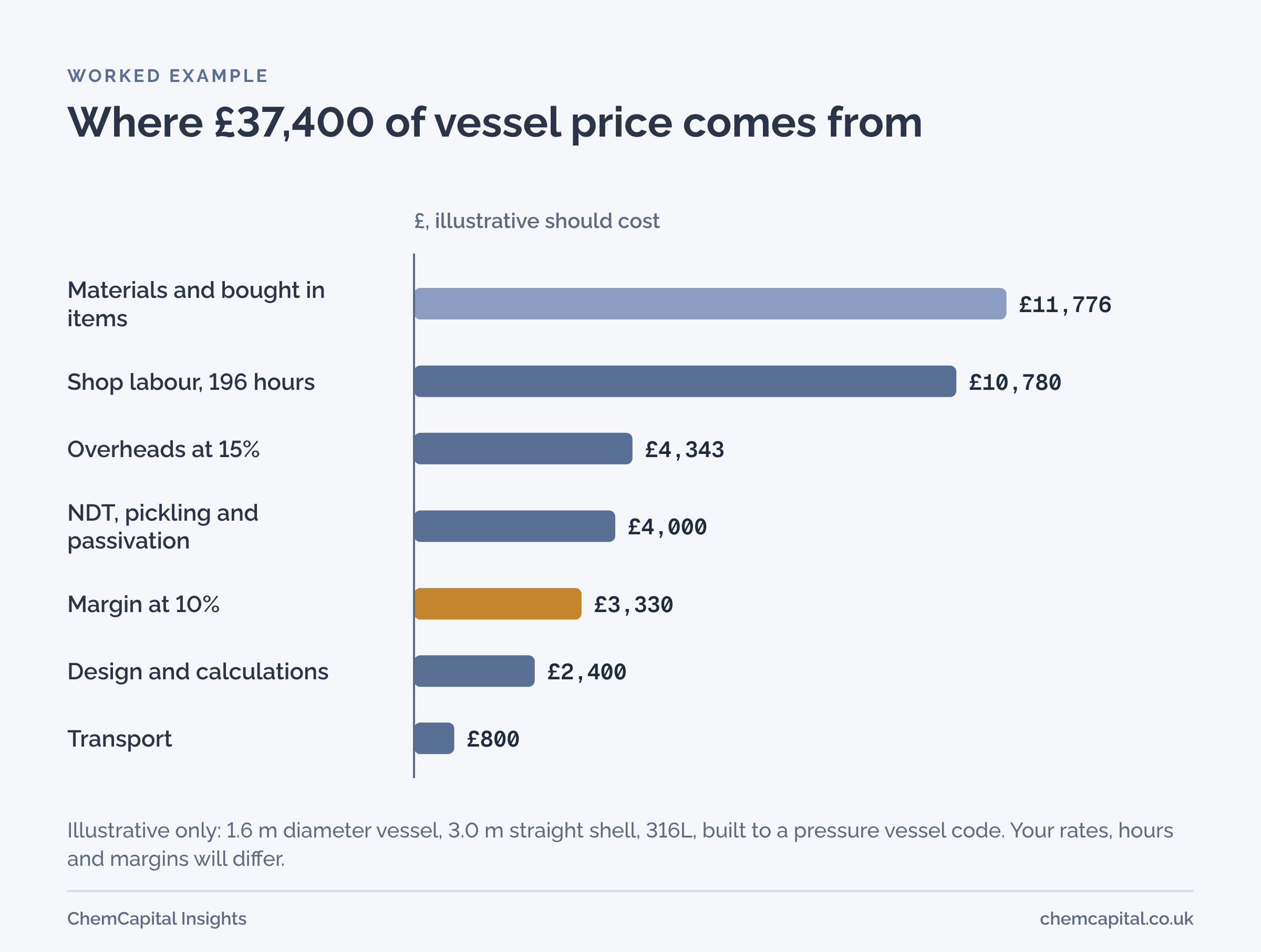
Materials. The shell weighs about 969 kg and each head about 238 kg, so about 1,444 kg of plate, or about 1,589 kg bought with a 10% allowance. At an assumed £4.80 a kilogram for plate, plus about 217 kg of nozzles, flanges and supports at £9.00 a kilogram, materials come to about £9,580. Head forming at £1,800 and consumables at £400 bring the line to £11,776.
Welding. The longitudinal seam (3.0 m) and two circumferential seams (about 10.05 m) total about 13.05 m. At an assumed 0.45 kg of weld metal per metre plus 3 kg for nozzles, that is about 8.9 kg of weld metal to deposit; the filler to buy is about 9.8 kg at TWI's TIG factor of 1.1 [6]. At an assumed deposition rate of 1 kg an hour, about 9 hours of arc time, and a 30% duty cycle, within TWI's range for TIG [6], that is about 30 welder hours.
Total. With 196 shop hours in all at £55 an hour (£10,780), design and calculations at £2,400, NDT at £2,500, pickling and passivation at £1,500, overheads at 15% and margin at 10%, plus £800 transport, the should cost is about £37,400.
| Quote | Price | Against should cost |
|---|---|---|
| Bidder A | £39,800 | 6% above |
| Bidder B | £46,500 | 24% above |
| Bidder C | £61,000 | 63% above |
Bidder A is close enough that its price is plausible. Bidder B is worth a conversation: is it pricing full radiography, a different surcharge month or a longer data book? Bidder C is either including something the others are not, such as electropolishing or a heavier inspection regime, or does not want the work. The model does not decide the award; it tells the buyer which questions to ask each bidder, and in which line of the price to look.
How to use the result
- Keep it to yourself, usually. The Cabinet Office guidance says a should cost model is normally not shared with bidders and is used to inform the buyer's negotiating position and to prompt discussion where bid costs are higher or lower than expected [2].
- Watch for prices that are too low. In central government, a bid more than 10% below the average of other bids or the should cost estimate must be referred for review [2]. Private buyers are not bound by that rule, but it is a sensible trigger to check scope before awarding.
- Treat it as a range. The guidance is blunt that more sophistication brings more risk of error, and that a model's inclusions and limits must be clear to whoever uses it [2]. Test the three assumptions that move the total most: hours, shop rate and margin.
- Ask, do not accuse. "Our estimate for NDT is lower; can you walk us through your inspection plan?" gets better answers than "your price is too high".
If you are the supplier
Buyers who build should cost models are not trying to squeeze margin to nothing; they are trying to understand your price. Make that easy. Break the quote into materials, labour, testing, documents and delivery; state your surcharge month and plate grade; list exclusions. A clear breakdown that matches the buyer's model shortens negotiations and protects you from being compared with a bidder who quietly left out the radiography.
Where ChemCapital fits
ChemCapital's Project Costing keeps past supplier quotes in a reusable library and reprices them through a deterministic normalisation that adjusts for exchange rates and cost indices such as the CEPCI, among other factors, with every adjustment shown. That gives you a market check to set beside a bottom up should cost, so you can see whether a new quote is out of line with what you have paid before as well as with what it ought to cost.
Want a clear view of what your equipment should cost before the quotes arrive? Start free with ChemCapital.
Frequently asked questions
What is a should cost model?
It is an estimate of what something ought to cost, built up from its cost drivers such as materials, labour, testing, overheads and margin, rather than taken from past prices. Buyers use it to judge whether quotes are reasonable and to prepare questions for negotiation.
Should you share a should cost model with suppliers?
Usually not. The UK Cabinet Office guidance says a should cost model is normally kept by the buyer to inform its negotiating position, and that sharing it carries risks and benefits that need weighing.
How accurate is a should cost estimate?
It depends on how complete the design is. Built from a full datasheet and drawings it can approach the detail of a bid estimate, but labour hours, shop rates and margins are assumptions, so treat the result as a range and test the assumptions that move it most.
Continue reading
Informational only, not procurement or legal advice. Cited names, frameworks, and statistics belong to their respective owners.
Join ChemCapital to streamline sourcing and connect with verified partners
Whether you're buying or supplying, ChemCapital gives you the tools to manage the complete procurement cycle in one platform.
Get started freeRelated articles
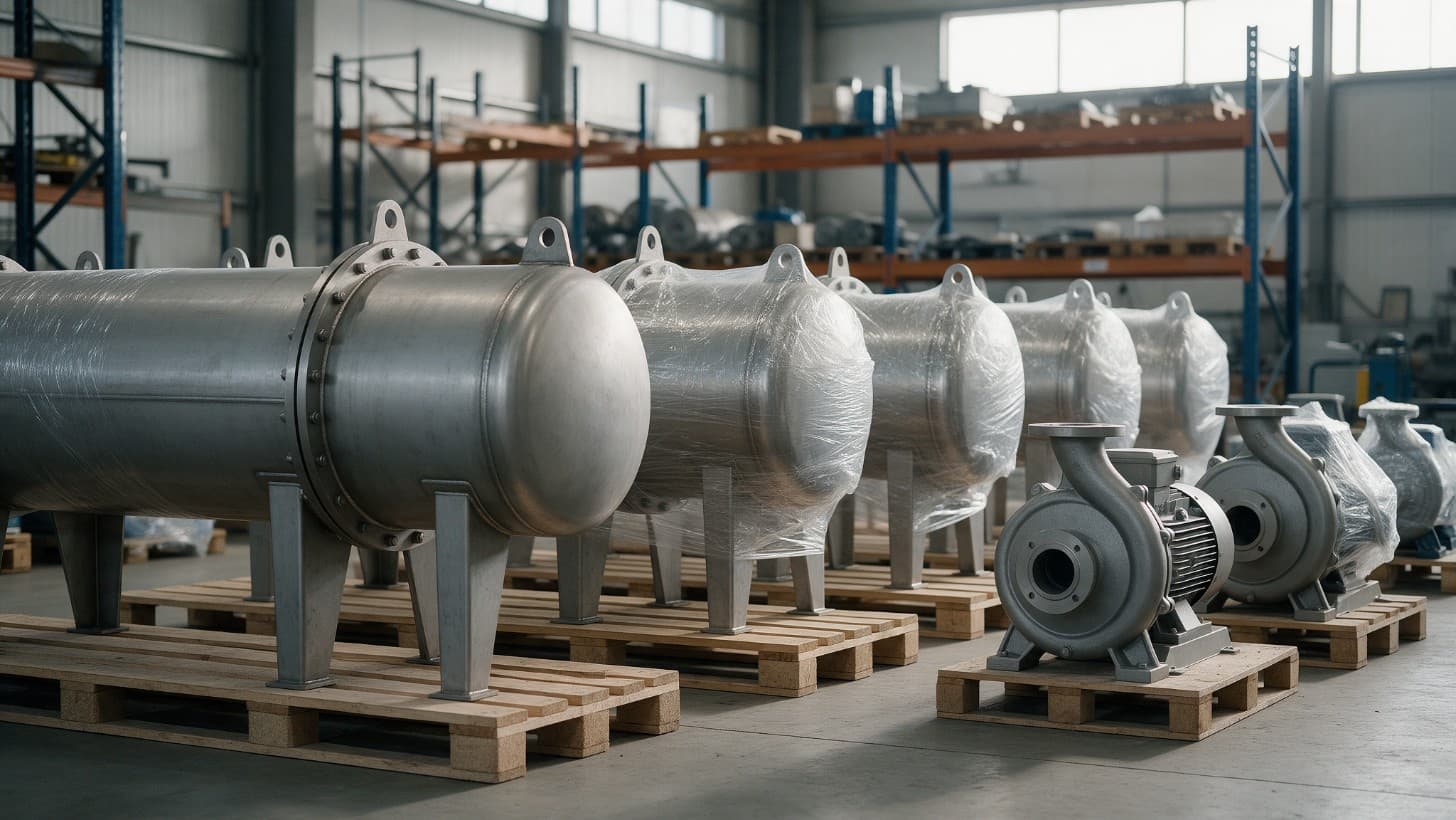
Equipment Cost Estimating: How to Get Budget Prices for Exchangers, Vessels and Pumps
Five ways to get budget prices before firm quotes, how accurate each can be by estimate class, what drives the price of each equipment type, and a worked example.
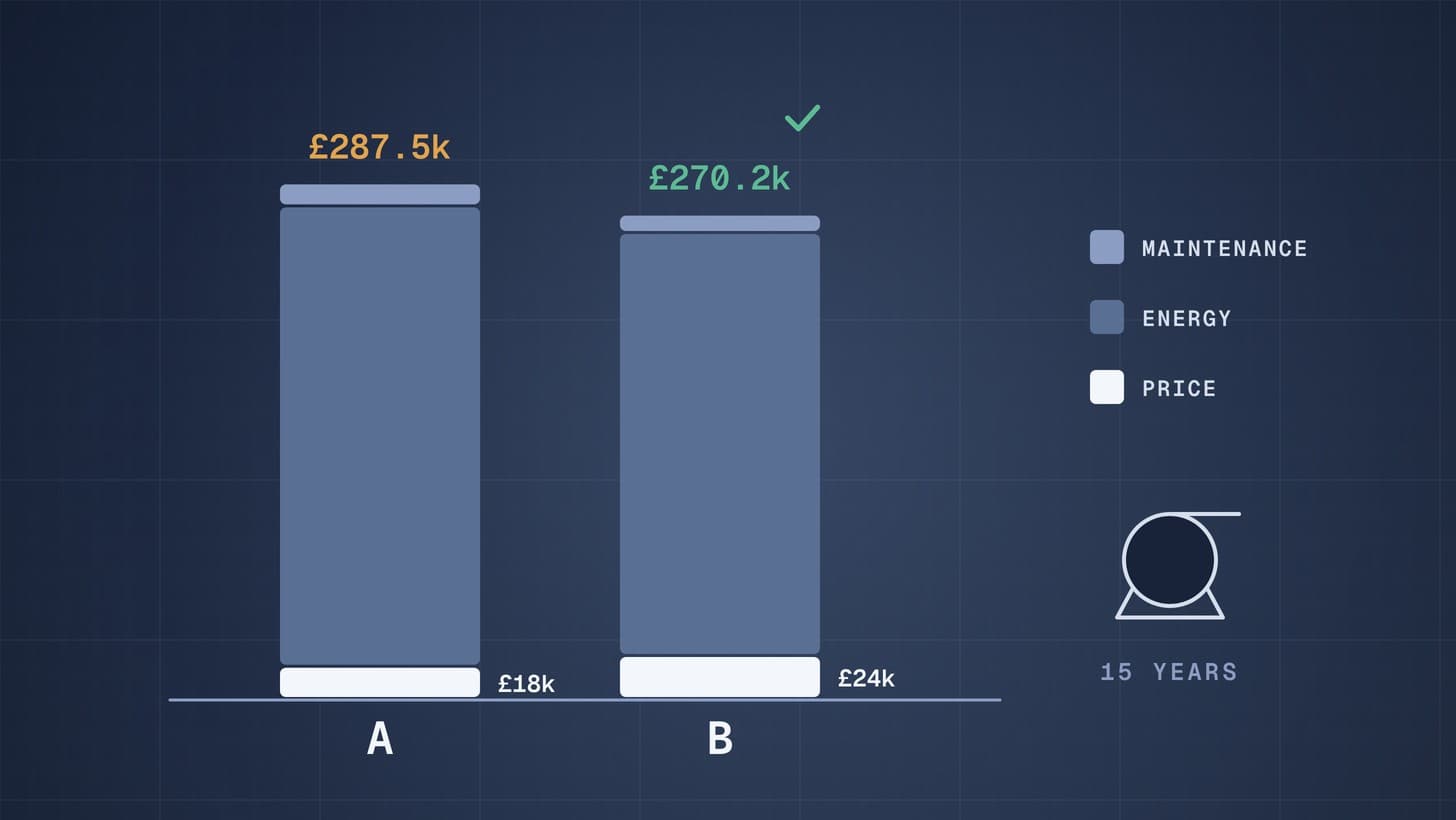
Life Cycle Cost: Comparing Equipment Quotes on Total Cost of Ownership
How to compare equipment quotes on life cycle cost instead of price: the cost elements, what to ask bidders for, discounting, and a worked pump example where the dearer quote wins.
Cost Risk Analysis: P50, P80 and P90 Estimates with a Worked Example
What P50, P80 and P90 mean, how range estimating and Monte Carlo simulation produce them, a worked three item example, and how owners choose a funding level.