
Pump Affinity Laws: Speed, Flow, Head and Power, With a Worked Example
The pump affinity laws say flow changes with speed, head with speed squared and power with speed cubed. Here is how to use them, where they break down with static head, and what they mean for motor size in a quote.
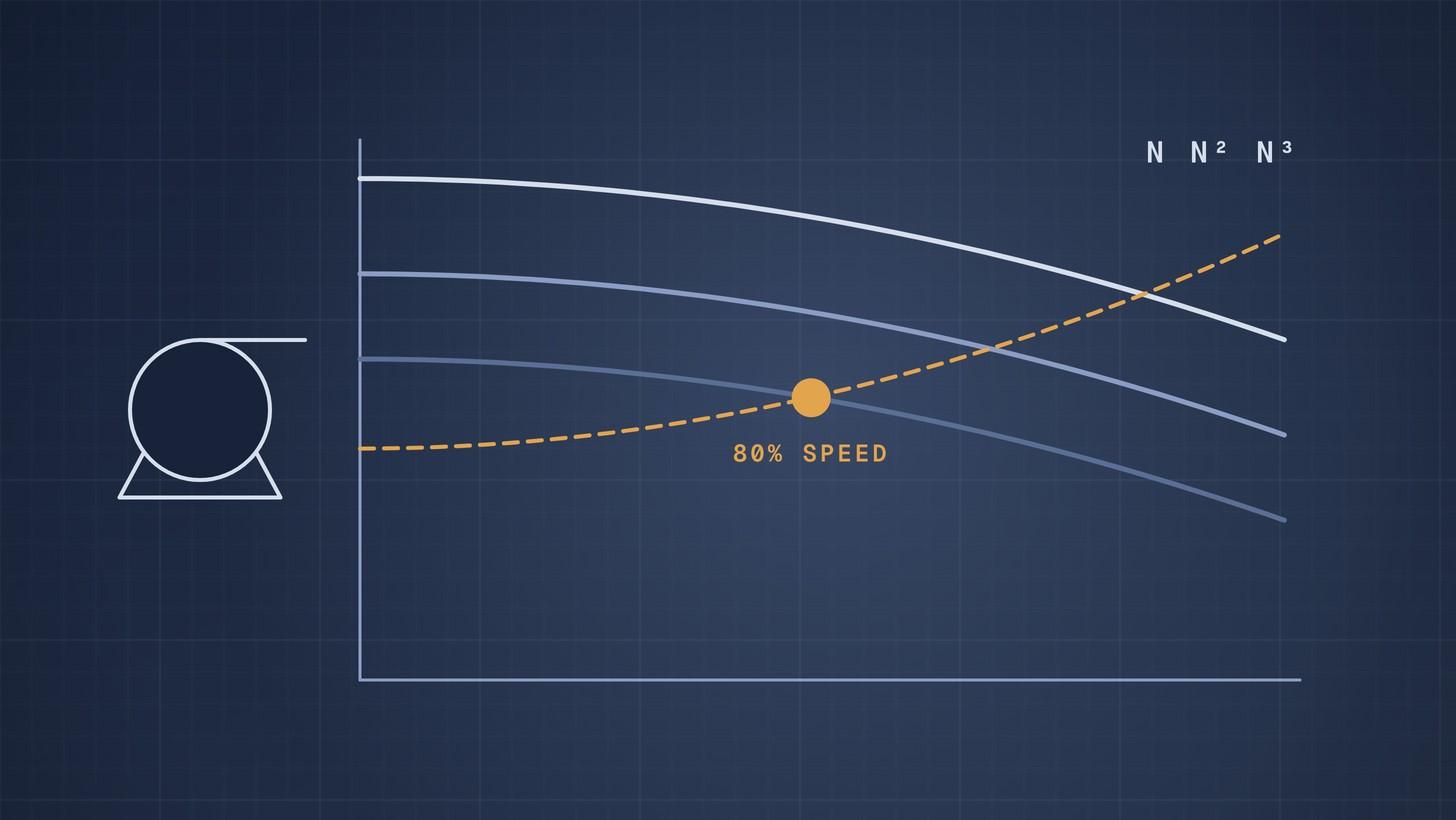
The pump affinity laws say that for a centrifugal pump, flow changes in proportion to speed, head with the square of speed and power with the cube of speed: Q2/Q1 = N2/N1, H2/H1 = (N2/N1)², P2/P1 = (N2/N1)³ [1]. They describe the pump's own curve, so they predict the duty point and the power saving accurately only when the system has little or no static head.
Why this matters now
Variable speed drives are common on new pump packages, and the affinity laws are how most people estimate what a drive will save. The US Department of Energy notes that a 20% cut in speed can reduce input power by roughly half [1]. That is true for a circulating system dominated by friction. For a pump lifting liquid into a tank or a pressurised vessel, it can be badly wrong, and the error shows up as a disappointing energy bill or a pump that stops delivering at low speed.
Create and manage RFQs in minutes
ChemCapital handles the entire procurement cycle, from structured RFQs and supplier comparisons to formal purchase orders and delivery tracking.
The laws, stated plainly
| Change | Flow | Head | Power |
|---|---|---|---|
| Speed from N1 to N2 | × (N2/N1) | × (N2/N1)² | × (N2/N1)³ |
| Impeller diameter from D1 to D2 (small trims) | × (D2/D1) | × (D2/D1)² | × (D2/D1)³ |
The speed laws assume the pump's hydraulic efficiency stays the same, which it largely does over a wide speed range [2]. Diameter changes are less forgiving. The Hydraulic Institute allows the affinity rules to be used for a trim of up to 5% of impeller diameter, and recommends the manufacturer's trim data beyond that, because efficiency falls and NPSH required can change [3]. In one published example, a heavily trimmed impeller delivered 400 gpm at 84 ft against a prediction of 466 gpm at 111 ft [2].
Where the laws break down: static head
The affinity laws predict how the pump curve moves. They do not predict where the moved curve meets your system curve [4]. That only matches the laws when the system curve passes through the origin, so head is all friction and follows H = KQ². Add static head and the error grows with it [4].
Three consequences matter for buyers:
- Less flow turndown per unit of speed. With high static head, a small speed cut takes a big bite out of flow.
- A minimum speed. Slow the pump enough and it reaches shut off head without delivering anything, which wastes energy and can damage the pump [5].
- Smaller savings. When static head is more than about half the total head, a variable speed drive may use more energy than running at full speed and switching on and off [5]. The drive and motor also lose efficiency at low load [5].
The Department of Energy reaches the same conclusion: use a system curve to find new duty points whenever there is static head [1]. Our guide on how to read a pump curve shows how to overlay the two.
Practical example
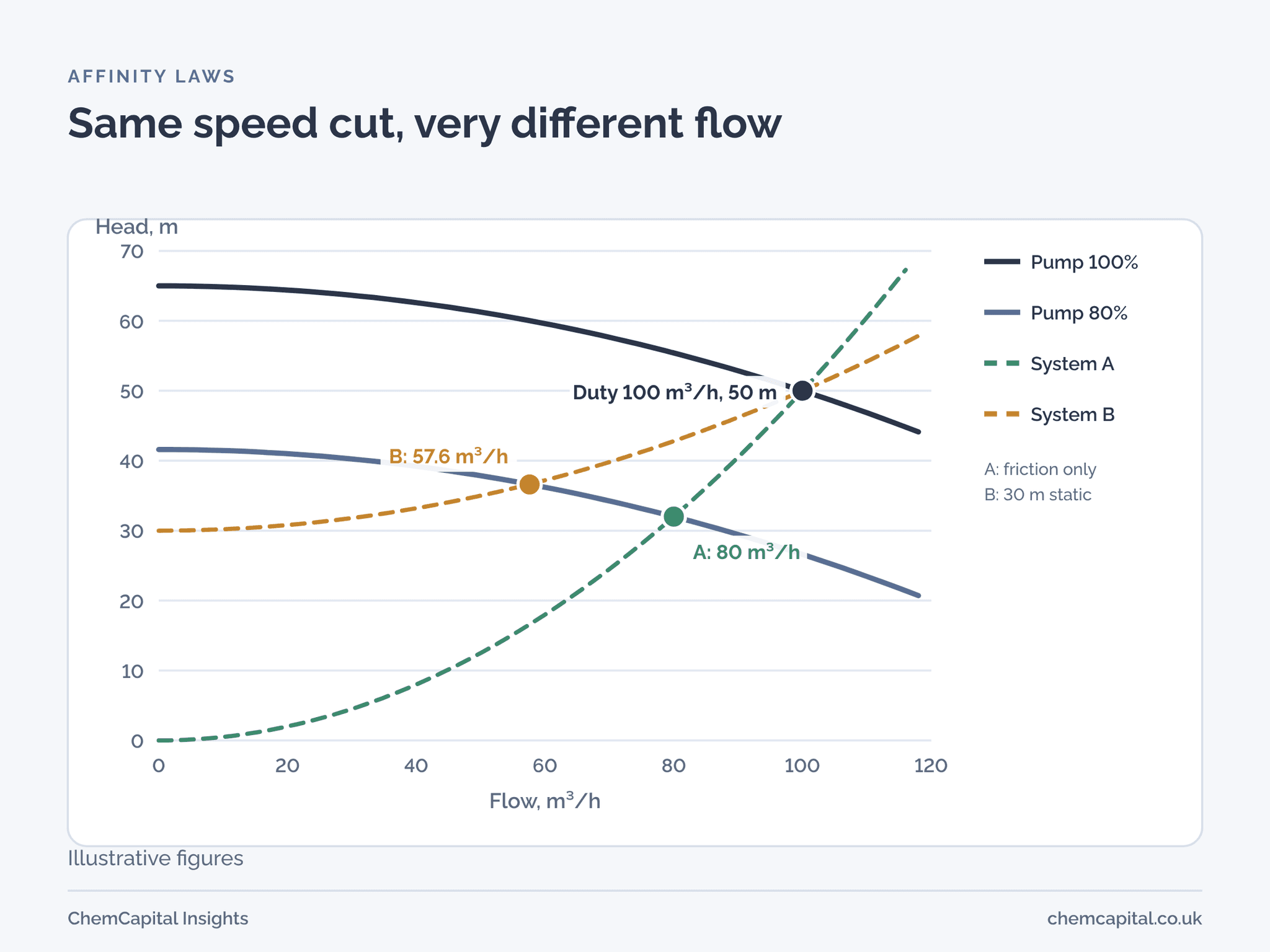
Illustrative figures. A pump runs at 2,960 rpm and delivers 100 m³/h at 50 m with 70% efficiency. Its curve is H = 65 minus 15 × (Q/100)² m. Hydraulic power is 1,000 × 9.81 × (100/3,600) × 50 = 13.6 kW, so shaft power is 19.5 kW. Two systems both need 50 m at 100 m³/h.
| System A: friction only | System B: 30 m static head | |
|---|---|---|
| System curve | H = 50 × (Q/100)² | H = 30 + 20 × (Q/100)² |
| Flow at 80% speed, 2,368 rpm | 80 m³/h at 32 m | 57.6 m³/h at 36.6 m |
| Speed needed for 80 m³/h | 80%, 2,368 rpm | 89.8%, 2,658 rpm |
| Shaft power at 80 m³/h | 10.0 kW | 13.3 kW at 70% efficiency |
| Lowest useful speed | No practical floor from static head | Below about 68%, 2,011 rpm, no flow |
In system A the affinity laws are exact: 80% speed gives 80% flow and 51% of the power. In system B the same speed gives only 58% flow, and holding 80 m³/h costs a third more power than the laws suggest. If the energy case for the drive was built on the cube law alone, it is overstated.
What it means for motor size and the quote
Affinity also works upwards. If the drive is set to run the pump at 110% speed, say 55 Hz on a 50 Hz motor, power rises by 1.1³, or 33%. In the example, 19.5 kW becomes 25.9 kW, which would overload a 22 kW motor. When you review bids:
- Check the maximum speed the supplier has sized the motor for, not just the duty point.
- Check the impeller. If it is trimmed, ask for power at maximum diameter in case you need more head later; see our centrifugal pump datasheet guide.
- Ask for the system curve basis. A drive saving claimed without your static head is a guess.
- Check NPSH at the highest speed, because NPSH required rises with speed; our NPSH guide covers the margin.
When bids differ on motor rating, speed range and drive scope, ChemCapital's AI quotation comparison puts those lines side by side so the gaps are visible before award.
Where ChemCapital fits
The affinity laws are a quick check, not a design tool. Put the duty points, static head and speed range in the RFQ so every supplier sizes the pump and motor on the same basis.
Ready to get pump quotes on a like for like basis? Start a free 14 day ChemCapital trial, with no credit card needed.
Frequently asked questions
What are the pump affinity laws?
For a centrifugal pump, flow is proportional to speed, head to speed squared and power to speed cubed. The same relationships apply approximately to small changes in impeller diameter.
Do the affinity laws apply to systems with static head?
They still predict the new pump curve, but not the new duty point. With static head, plot the reduced speed pump curve against the system curve; flow falls faster than speed and savings are smaller than the cube law suggests.
How much power does a 20% speed reduction save?
About half, since 0.8 cubed is 0.51, but only in a system dominated by friction. With significant static head the saving is smaller.
Can the affinity laws be used for impeller trimming?
For small trims. The Hydraulic Institute allows them for up to a 5% reduction in diameter; beyond that use the manufacturer's trim data, because efficiency and NPSH required change.
Continue reading
Informational only, not procurement or legal advice. Cited names, frameworks, and statistics belong to their respective owners.
Create and manage RFQs in minutes
ChemCapital handles the entire procurement cycle, from structured RFQs and supplier comparisons to formal purchase orders and delivery tracking.
Start for freeRelated articles
Pipe Thermal Expansion: Worked Example
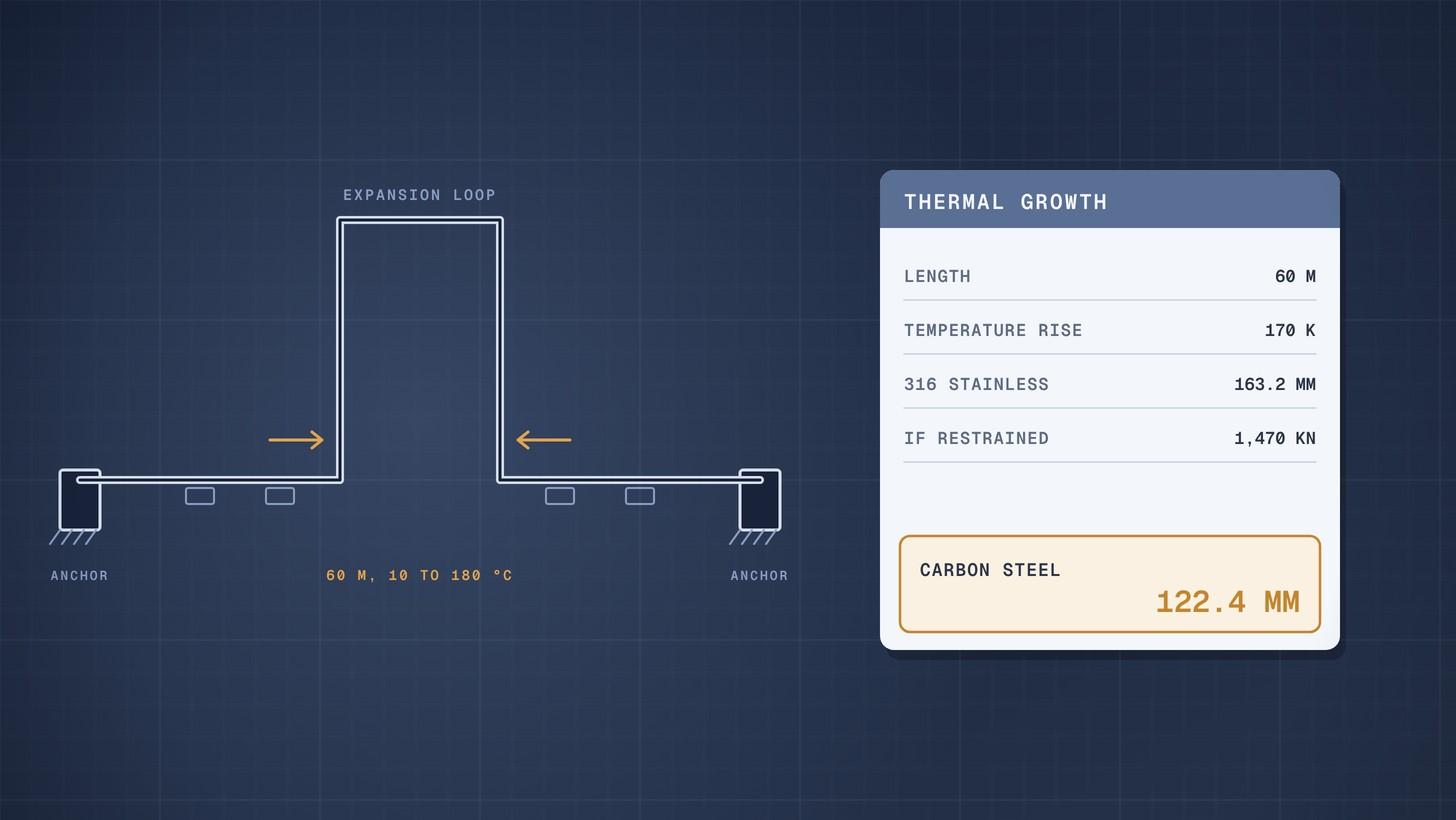
How to calculate pipe thermal expansion for carbon and stainless steel, what restrained expansion does, and how loops and expansion joints absorb it.
Horizontal Tank Volume When Partly Filled: Worked Example
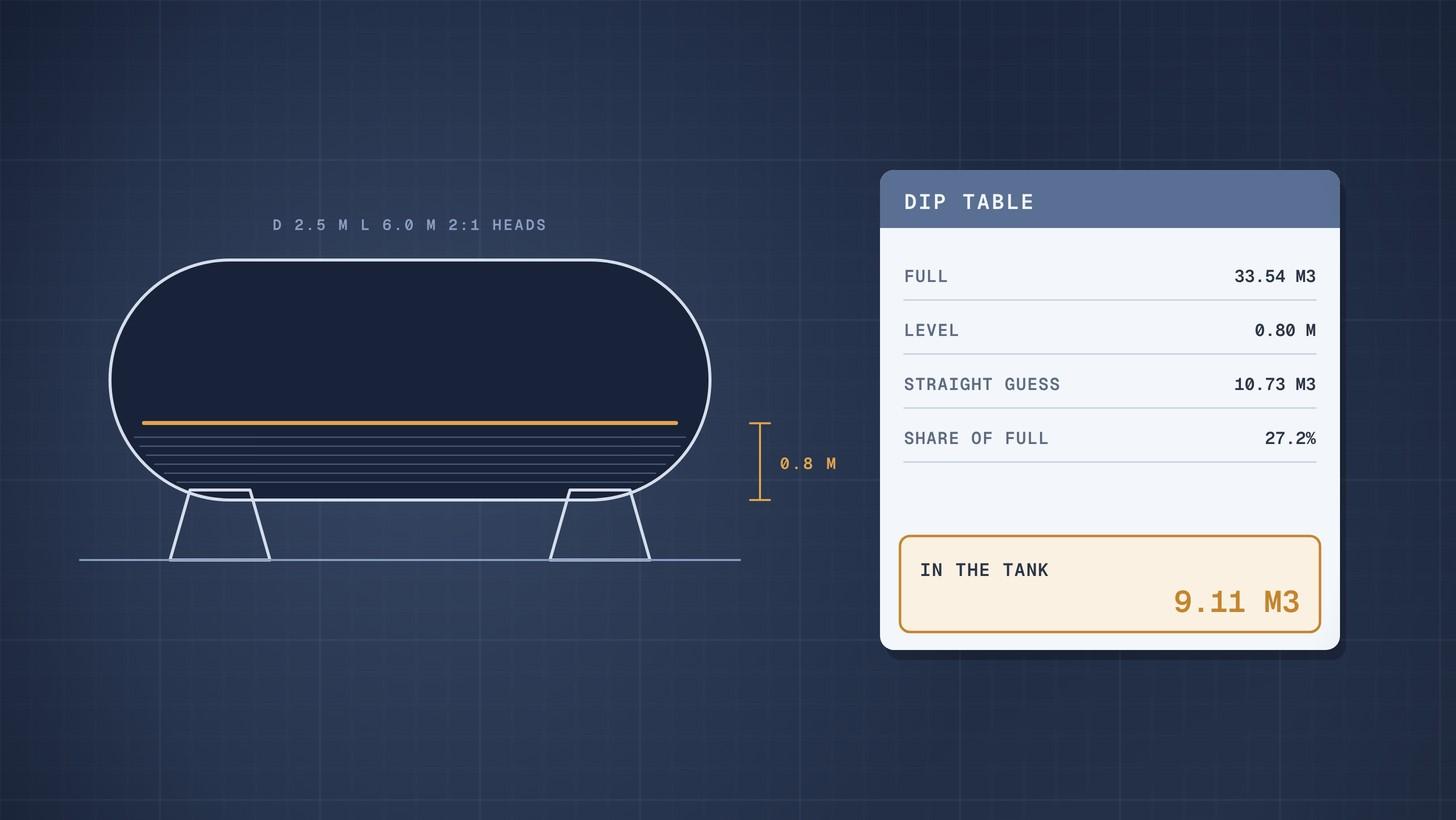
How to calculate the volume of a partly filled horizontal tank with dished heads, with a worked example and a full dip table you can rebuild in a spreadsheet.
Cooling Water Flow Calculation: Worked Example
How to calculate cooling water flow from heat duty and temperature rise, then size the cooling tower circulation, evaporation and make up water.