
Pump Power Calculation: Hydraulic, Shaft and Motor Power Worked Example
How to calculate pump hydraulic power, shaft power and electrical input, and how to size the motor for the end of curve, worked through for a 60 m³/h water pump.
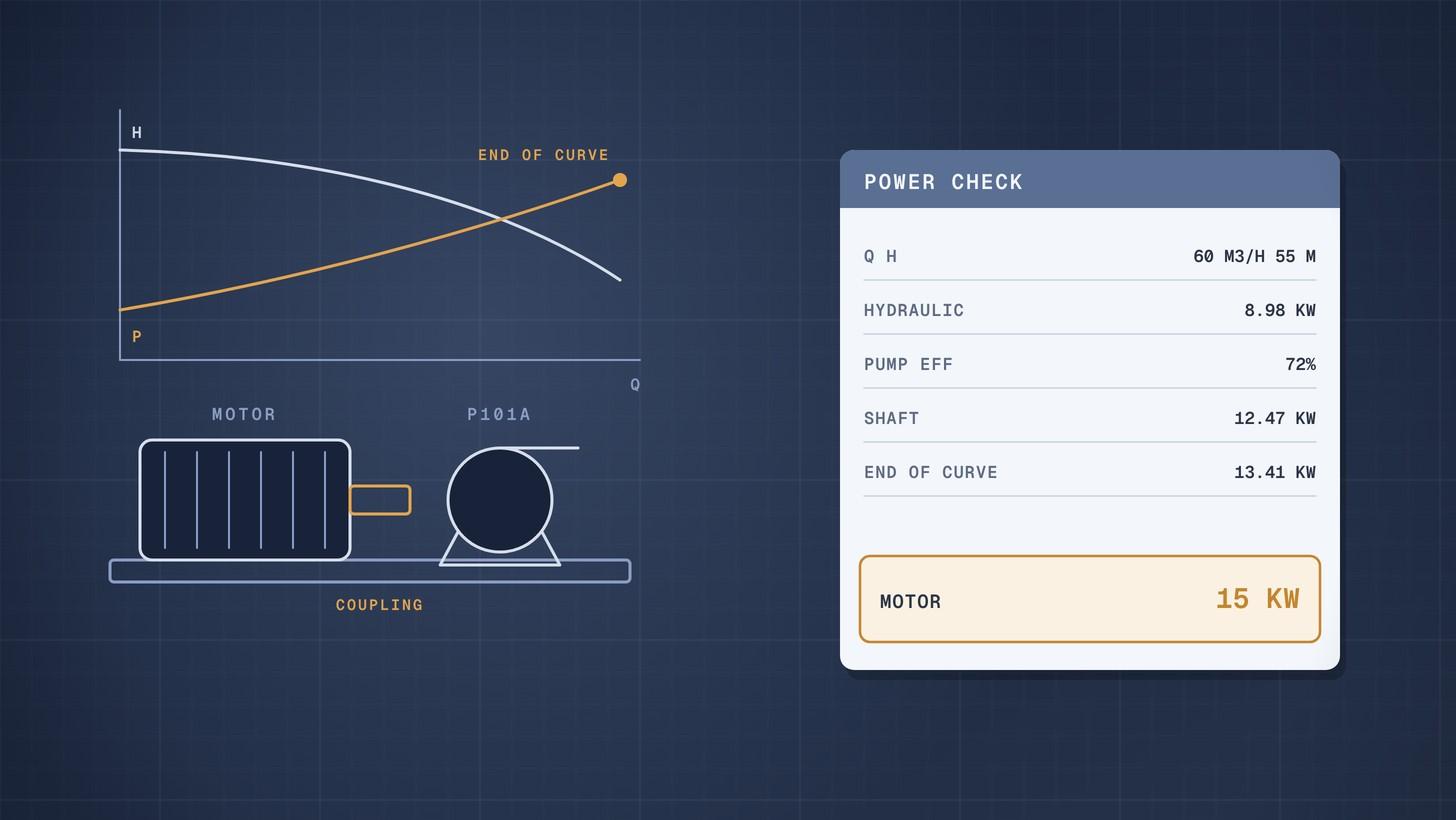
Pump power is calculated in three steps. Hydraulic power is ρ × g × Q × H, shaft power is hydraulic power divided by pump efficiency, and the motor is sized for the highest shaft power the pump can draw, usually at the end of its curve. In the worked example below, 60 m³/h of water at 55 m of head needs 8.98 kW of hydraulic power, 12.47 kW at the shaft and a 15 kW or 18.5 kW motor, depending on the margin rule you buy to.
The arithmetic is simple. What catches buyers out is the choice of operating point, the density of the real liquid and the margin rule. This guide covers all three.
Why this matters now
Motor size drives price, delivery and running cost. An undersized motor trips or overheats when the pump runs out along its curve. An oversized one costs more, runs at poor part load efficiency and pushes up the electrical scope. The US Department of Energy's pumping sourcebook notes that oversizing adds energy and maintenance cost, and usually reduces reliability rather than improving it [1].
Bids also quote power in different ways. One supplier gives absorbed power at the rated point, another at the end of curve, a third gives the motor nameplate. Unless you know which number is which, you cannot compare running cost or check that the motor is big enough.
Create and manage RFQs in minutes
ChemCapital handles the entire procurement cycle, from structured RFQs and supplier comparisons to formal purchase orders and delivery tracking.
The three powers in a pump set
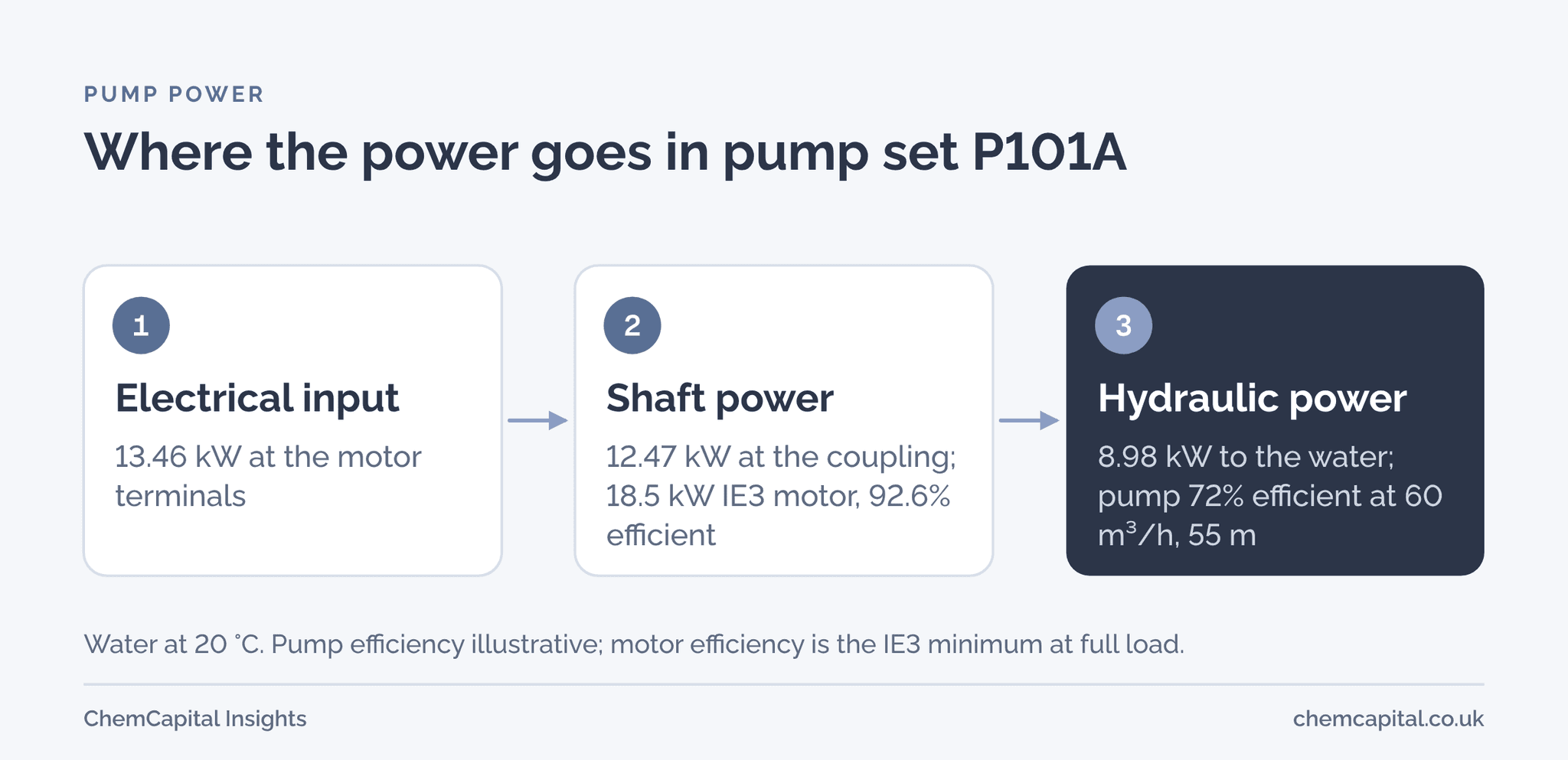
Hydraulic power is the useful power the pump gives the liquid. KSB calls it pump power output, the power transmitted to the fluid [2]. Grundfos writes it as PH = ρ × g × Q × H ÷ 3,600, with Q in m³/h, H in metres and ρ in kg/m³, giving watts [3].
Shaft power is the mechanical power the pump takes from the drive at the coupling [4]. It is hydraulic power divided by pump efficiency: P2 = PH ÷ η [3]. This is the "absorbed power" or "power input" on a pump curve.
Electrical input is shaft power divided by motor efficiency. It is the number on the electricity bill. For close coupled and canned pumps where the motor and pump cannot be separated, Grundfos notes that the motor input, P1, is the value to use [3].
Two shortcuts help with quick checks. For water at 20 °C, Grundfos gives PH = 2.72 × Q × H watts, with Q in m³/h and H in metres [3]. In US units, the DOE sourcebook gives fluid power in horsepower as head in feet times flow in gpm times specific gravity, divided by 3,960 [1].
Worked example: P101A at its rated point
P101A is the water transfer pump from our total dynamic head calculation. Its datasheet asks for 60 m³/h at 55 m. The pump efficiencies are illustrative values read from a bidder's curve.
- Flow Q = 60 m³/h = 0.016667 m³/s
- Head H = 55 m
- Water at 20 °C: ρ = 998.16 kg/m³ [5]
- Pump efficiency at rated flow: 72%
Step 1: hydraulic power. PH = 998.16 × 9.81 × 0.016667 × 55 = 8,976 W, or 8.98 kW. Grundfos's shortcut gives 2.72 × 60 × 55 = 8,976 W, the same.
Step 2: shaft power. P2 = 8.98 ÷ 0.72 = 12.47 kW.
Step 3: electrical input. With an IE3 motor of 18.5 kW, four pole, 50 Hz, the minimum full load efficiency is 92.6% [6]. Electrical input is about 12.47 ÷ 0.926 = 13.46 kW. A motor running below full load may be a little less efficient than its nameplate class, so treat this as an estimate.
At 8,000 running hours a year, that is about 108,000 kWh. Price it at your own electricity tariff to see what each point of efficiency is worth over the pump's life.
Size the motor for the worst point, not the rated point
Shaft power on most centrifugal pumps rises as flow increases [3]. If the control valve opens fully, or a second consumer starts, the pump runs out to the right of its rated point and draws more power. Jim Elsey of Summit Pump, writing in Pumps and Systems, says experienced pump engineers size the driver to be non overloading across the selected impeller's curve, and warns against relying on the motor's own service factor [7].
For P101A, say the bidder's curve ends at 75 m³/h and 46 m, with 70% efficiency there (illustrative).
- Hydraulic power at end of curve: 998.16 × 9.81 × (75 ÷ 3,600) × 46 = 9.38 kW
- Shaft power at end of curve: 9.38 ÷ 0.70 = 13.41 kW
Now pick the motor. IEC standard ratings run 11, 15, 18.5 and 22 kW in this range [6].
| Sizing rule | Power to cover | Motor |
|---|---|---|
| Rated point only | 12.47 kW | 15 kW, but no allowance for runout |
| Non overloading to end of curve | 13.41 kW | 15 kW, about 89% loaded at the worst point |
| API style factor of 1.25 on rated power | 12.47 × 1.25 = 15.6 kW | 18.5 kW |
The API figure needs a word of explanation. Elsey describes API pump specifications adding a factor once the base motor size is chosen: 1.25 for motors of 25 HP and under, 1.15 for 30 to 75 HP and 1.1 for 100 HP and above [7]. He stresses that this is not the motor maker's service factor. If your purchase specification calls up API 610 or a company standard, check the exact clause and edition, then apply it the same way to every bid.
When the liquid is not water
Pump curves are drawn for clean water. Elsey notes the standard test basis is water at 60 or 68 °F with a specific gravity of 1.0 and viscosity below 5 centipoise [7]. Real liquids change the power in two ways.
Density. Head in metres does not change with density, but power does, in direct proportion. Elsey's example shows rated power rising from 10.2 to 12.22 BHP when specific gravity goes from 1.0 to 1.2, enough to need a larger motor at runout [7]. For P101A, an SG of 1.2 would raise end of curve shaft power from 13.41 kW to 16.09 kW. The 15 kW motor would then be overloaded.
Viscosity. Thicker liquids cut head and efficiency and raise power. In Elsey's example, going from 1 to 50 centipoise raised rated power from 10.2 to 13 BHP [7]. Above a few centipoise, ask the supplier to apply the Hydraulic Institute viscosity correction and to state the corrected head, efficiency and power.
Check the cold case too. Many liquids are both denser and more viscous at start up or in winter, so the highest power may not occur at normal operating temperature.
What to check on a pump bid
- Which power is quoted. Absorbed power at rated flow, at end of curve, and the motor nameplate are three different numbers. Ask for all three.
- The duty point. It must match your datasheet, with the same liquid, density and viscosity. Our centrifugal pump datasheet guide lists the fields.
- The curve. Ask for the full curve with the offered impeller, showing head, efficiency, power and NPSH required against flow. Our guide on how to read a pump curve explains each line.
- Motor class and size. Ask for the IEC efficiency class and the full load efficiency. Minimum classes for new motors are set by law in Great Britain and the EU; our IE3 vs IE4 guide covers the current rules and when IE4 pays.
- Speed changes. If you plan a variable speed drive, power falls with the cube of speed under the pump affinity laws, but only when the system has little static head.
ChemCapital's AI quotation comparison extracts each bid's rated head, efficiency, absorbed power and motor size into one table, so a bid quoted at a different point, or with a smaller motor, shows up before the technical review.
From kilowatts to the RFQ
A good pump RFQ gives the supplier everything needed to size the motor the way you would: rated flow and head, the liquid and its properties across the temperature range, the margin rule, the motor efficiency class and the electrical supply. If the calculation behind the head is still to do, start with our pipe pressure drop calculation.
Ready to send pump RFQs that every supplier sizes the same way? Start a free 14 day ChemCapital trial, with no credit card needed.
Frequently asked questions
What is the formula for pump power?
Hydraulic power in watts is density times g times flow in m³/s times head in metres. Divide by pump efficiency to get shaft power, and by motor efficiency to get electrical input. For water at 20 °C, a quick form is 2.72 times flow in m³/h times head in metres, in watts.
How do I size a motor for a centrifugal pump?
Find the highest shaft power the pump can draw on the selected impeller, usually at the end of its curve, for the densest and most viscous liquid it will handle. Pick the next standard motor size above that, without relying on the motor's service factor. If your specification calls up API 610 or a company rule, apply its margin on top.
Does specific gravity affect pump power?
Yes. The head in metres stays the same, but power rises in direct proportion to specific gravity. A pump that needs 13.4 kW at end of curve on water needs about 16.1 kW on a liquid with a specific gravity of 1.2.
What is the difference between shaft power and hydraulic power?
Hydraulic power is the useful power the pump gives the liquid. Shaft power is the mechanical power the pump takes from the motor at the coupling. The difference is lost inside the pump, so shaft power equals hydraulic power divided by pump efficiency.
Continue reading
Informational only, not procurement or legal advice. Cited names, frameworks, and statistics belong to their respective owners.
Create and manage RFQs in minutes
ChemCapital handles the entire procurement cycle, from structured RFQs and supplier comparisons to formal purchase orders and delivery tracking.
Start for freeRelated articles
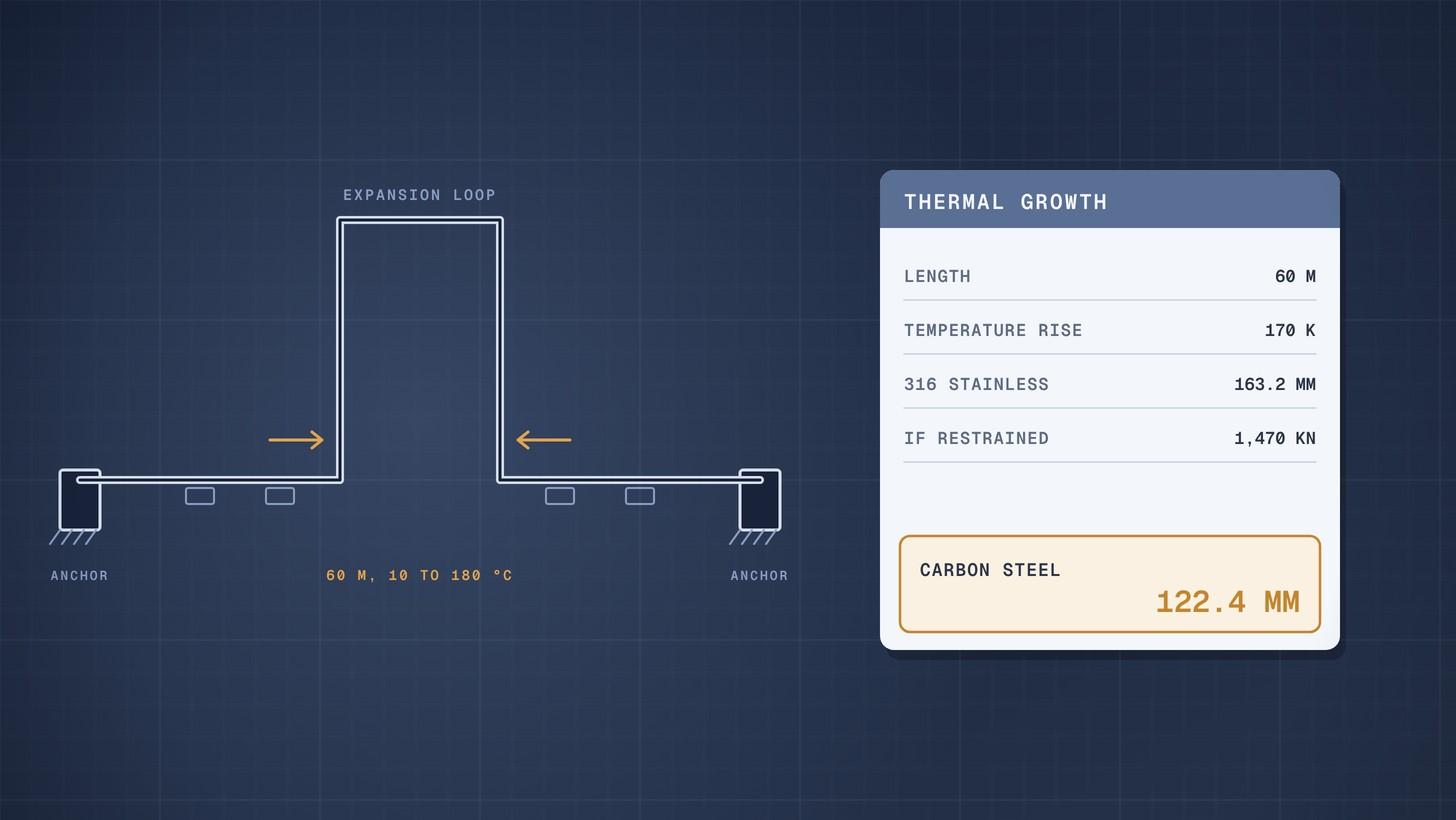
Pipe Thermal Expansion: Worked Example
How to calculate pipe thermal expansion for carbon and stainless steel, what restrained expansion does, and how loops and expansion joints absorb it.
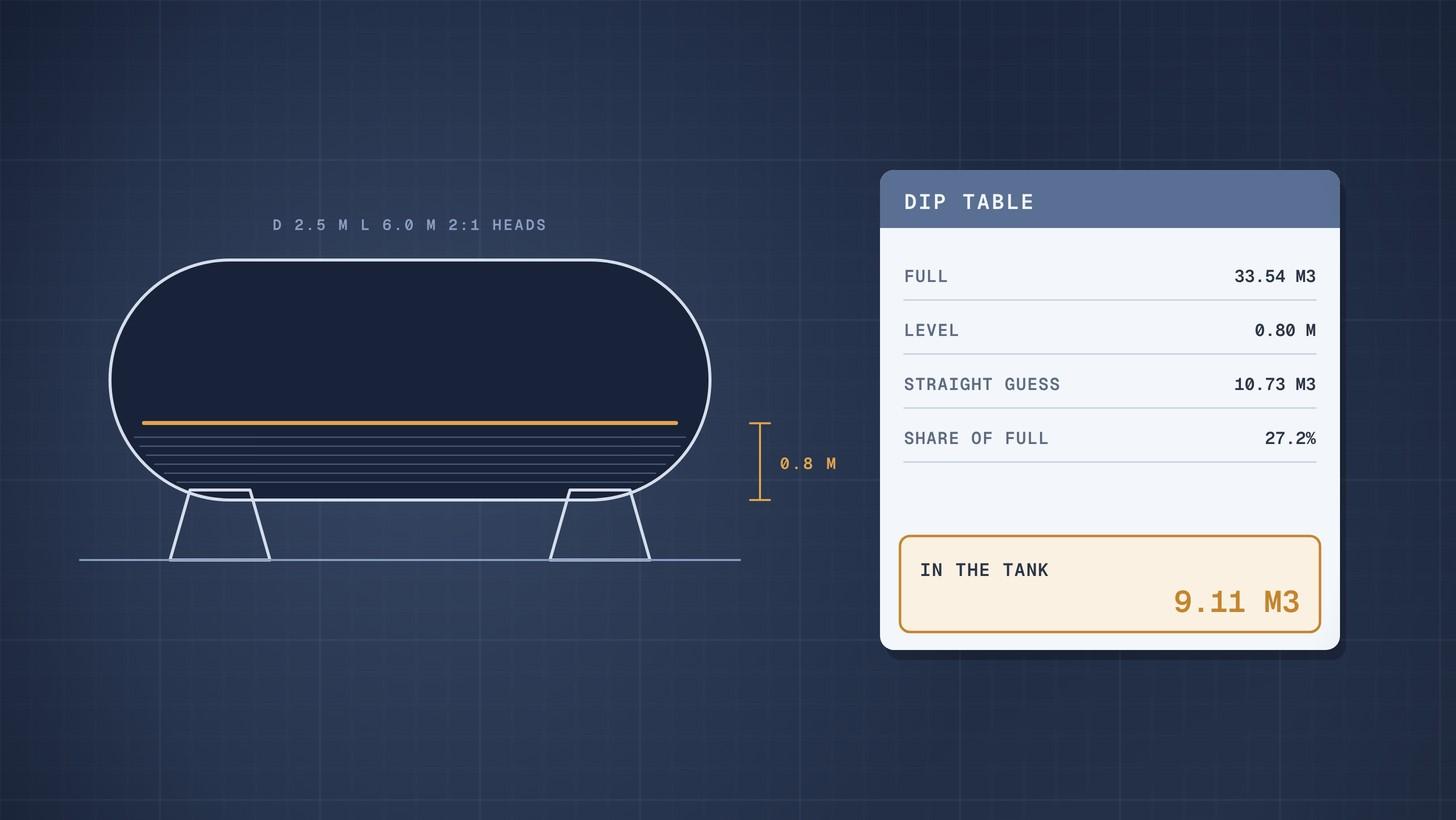
Horizontal Tank Volume When Partly Filled: Worked Example
How to calculate the volume of a partly filled horizontal tank with dished heads, with a worked example and a full dip table you can rebuild in a spreadsheet.
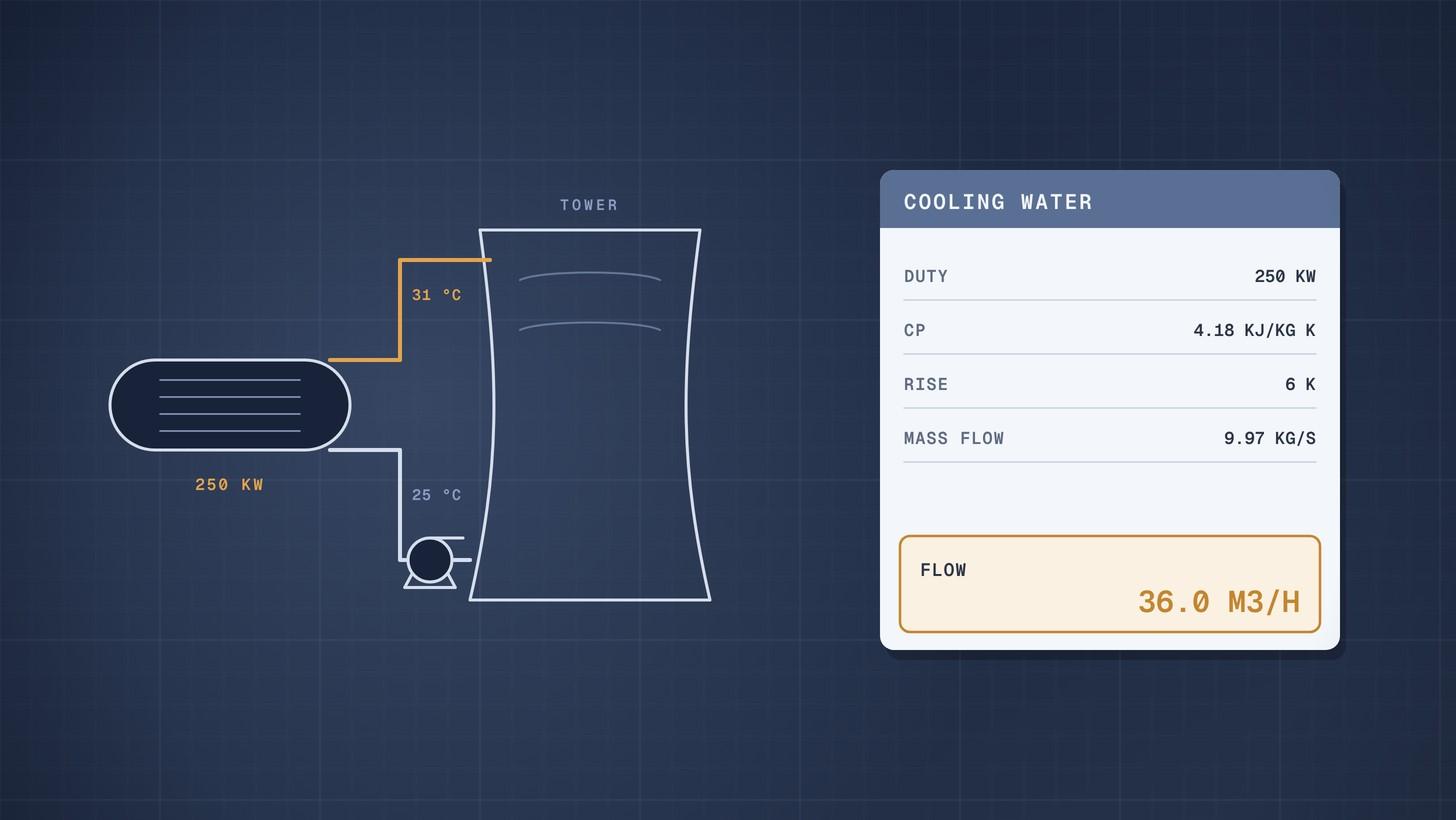
Cooling Water Flow Calculation: Worked Example
How to calculate cooling water flow from heat duty and temperature rise, then size the cooling tower circulation, evaporation and make up water.