
Negotiating Capital Equipment Purchases: The Levers Beyond Price
How to negotiate a capital equipment purchase when the price has little left to give: preparation, the levers that cost suppliers little but matter to you, how to trade them, and a worked example.
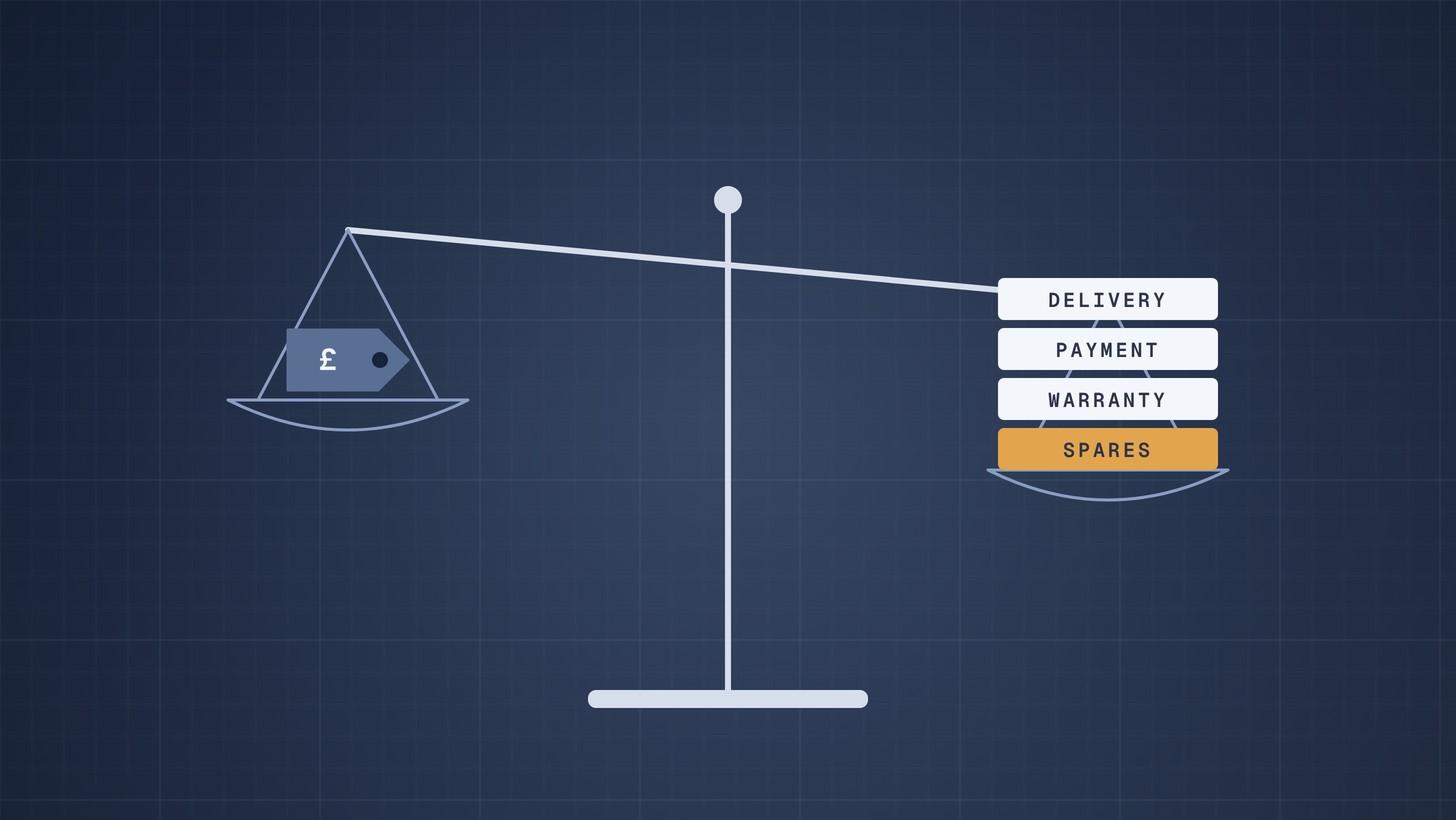
The best capital equipment negotiations are rarely won on price alone. Prepare your walk away position and a view of what the equipment should cost, list every term that has value, then trade terms that are cheap for the supplier but valuable to you: scope, specification, spares, payment terms, warranty, delivery, liquidated damages and price adjustment. A package of those usually beats a bare request for another few percent off.
Why price is the wrong place to start
A pump skid, a reactor or a filter package is bought once and run for years. The purchase price is only one part of what it costs you; spares, downtime, energy and support often matter more, as our guide to life cycle cost in equipment quotes shows. A supplier that has already sharpened its price has little left to give there, but often has plenty of room on terms that cost it little.
Price pressure alone also has limits. Push a supplier below a sustainable margin and the cost tends to come back later, as change orders, slow service or a tired project team. Negotiation on several terms at once lets both sides find trades that leave each better off.
Create and manage RFQs in minutes
ChemCapital handles the entire procurement cycle, from structured RFQs and supplier comparisons to formal purchase orders and delivery tracking.
Prepare before you talk
Know your alternative. Your best alternative to a negotiated agreement, or BATNA, is what you will do if this deal fails: the second bidder, a re tender, or a different design. Harvard's Program on Negotiation advises listing your alternatives, deciding in advance what you will do if talks fail, and working out your reservation value, the least favourable deal you will still accept [1]. It also advises thinking through the other side's alternatives as carefully as your own [1]. A supplier with a full order book negotiates differently from one with an empty shop.
Know what it should cost. A should cost estimate builds the price up from materials, labour, bought in items and overheads. McKinsey describes advanced should cost methods as a competitive edge in supplier negotiations, because they reveal what it really costs to design, make and deliver a product [2]. For fabricated equipment, our article on should cost for fabricated equipment shows how to build one. Even a rough estimate tells you whether a price is stretched or already tight.
Know where the bids differ. Normalise the offers first, as described in our guide to commercial bid evaluation. Differences in scope, spares, payment and warranty are often worth more than the gap in headline price, and each one is a lever.
Rank the levers. For each term, write down what you would ideally get, what you would accept, and how much it is worth to you. Then guess what it costs the supplier. The best trades are the ones where your value is high and their cost is low.
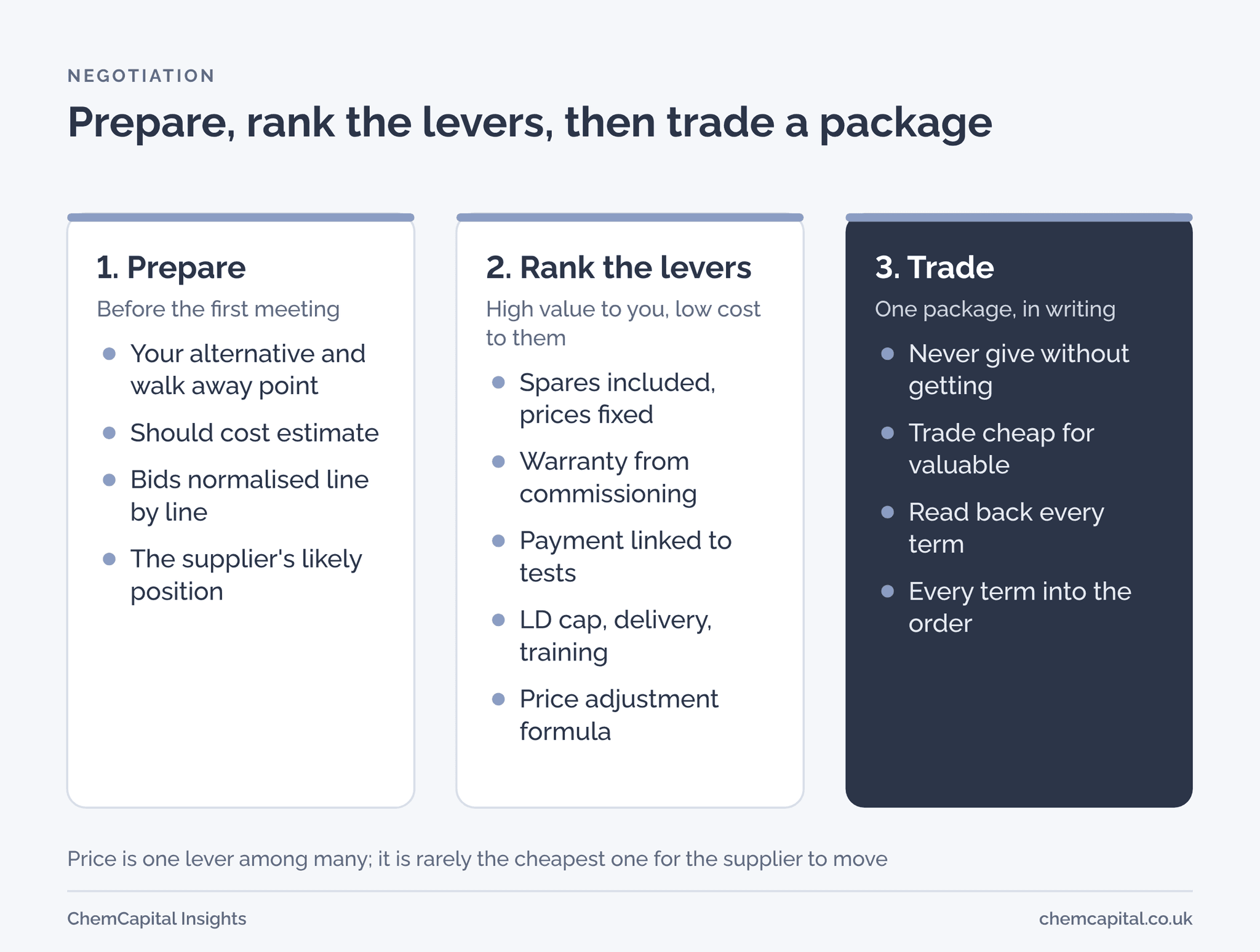
The levers beyond price
| Lever | What to ask for | Why it can be cheap for the supplier |
|---|---|---|
| Scope and battery limits | Include items you would otherwise buy separately, or remove ones you can supply better | Bundled items are bought at trade prices |
| Specification | Accept the supplier's standard design where your specification adds cost but no value | Standard designs avoid engineering hours |
| Spares | Commissioning spares included; operating spares prices fixed for several years | Parts cost the maker less than their list price |
| Payment terms | Smaller advance, more paid on delivery and performance, retention until tests pass | Depends on the supplier's cash position |
| Warranty | Longer period, or a period that starts at commissioning rather than delivery | A reliable design rarely fails in the extra months |
| Delivery | A firm date, staged delivery, or earlier delivery of long lead parts | Depends on shop load |
| Liquidated damages | Higher rate or cap, or LDs on key milestones | Costs nothing if the supplier delivers on time |
| Price adjustment | An index linked formula instead of a fixed price with a large risk margin | Removes risk the supplier had priced in |
| Documents and training | Full data books, extra training days, remote support hours | Engineers' time, often already planned |
Some notes on the main levers:
Payment terms. Standard supply conditions often front load payment. Orgalime S 2000, a European supply form, sets one third at contract formation, one third when the product is ready and the balance on delivery [3]. A buyer can ask to move money later, to delivery and to successful testing, but longer terms raise the supplier's capital commitment and can strain its liquidity [4], so expect a price for it. If you do pay an advance, secure it; our guide to payment milestones, retention and bonds covers the options.
Warranty. Orgalime limits the supplier's liability to defects that appear within one year of delivery, with a repaired part carrying a fresh year and an overall limit of two years [3]. If your skid sits in storage for six months before commissioning, a warranty from delivery is half used before you start. Ask for a period counted from commissioning, with a long stop date. Our article on equipment warranty terms has the detail.
Liquidated damages. Orgalime sets late delivery damages at 0.5% of the price per completed week, capped at 5%, and makes them the buyer's only remedy for delay [3]. A supplier confident in its programme can concede a higher cap at little real cost. See our guide to liquidated damages.
Spares. Commissioning spares, the parts you need during start up such as seals, strainers and flushing chemicals, are easy to forget in the budget. One reliability engineer describes using an allowance of 3% of project capital cost for them [5]. Negotiate them into the main order, where your bargaining power is highest, and fix prices for the recommended spares list before you sign, not after.
Price adjustment. On long deliveries in volatile metal markets, a fixed price carries a risk margin. An index linked formula can remove that margin; our article on price adjustment clauses explains the choices.
When to negotiate
Timing matters as much as tactics. Your bargaining power is highest while two or more suppliers are still in contention and falls sharply once you announce a preferred bidder. Clarify technical points with every shortlisted supplier, settle the commercial terms you care about with at least the top two, and only then award.
Agree the whole package before the purchase order, too. Spares bought after award, training added after commissioning, or a warranty extension asked for when the first fault appears are all priced by a supplier that knows you have no alternative. The same item can cost far more once you are committed than it would have in the original order.
Finally, decide who negotiates. One person should lead and speak for the buyer, with engineering and operations briefed on what can and cannot be conceded. Suppliers notice quickly when the engineer will accept a longer delivery that the buyer has just refused.
Running the meeting
Send the supplier an agenda listing the terms you want to discuss, so the right people attend and nobody can claim they need to "check with head office" on every point. Start with the areas where you agree, which builds momentum, then move to the open terms. Ask open questions about the supplier's constraints: what drives its delivery date, what its own sub suppliers require, where its risk margins sit. The answers often reveal trades neither side had considered. Close by reading back every agreed term, and send a written summary the same day.
How to trade
- Open with the package, not the price. Tell the supplier which terms matter to you and ask what it can do on each.
- Never give without getting. If you accept a longer delivery, ask for something in return. Phrase it as "if we can do this, could you do that".
- Trade cheap for valuable. Offer what costs you little, such as a reference, a faster drawing review or a firm order date, against what matters most to you.
- Put the whole package in writing. Confirm each agreed term in the purchase order or contract. Terms agreed in a meeting but missing from the order are terms you do not have.
- Keep the walk away real. If the package does not reach your reservation value, use your alternative.
When several suppliers' offers differ line by line, ChemCapital's AI quotation comparison sets price, scope, payment, warranty and delivery side by side, so you can see which levers each supplier has already used and which are still open.
Practical example
Illustrative figures. A buyer has a lowest compliant bid of £1,200,000 for a dosing skid. It wanted 2% off, or £24,000. The supplier says it can give no more than 1%. The buyer switches to a package.
| Term | Supplier's opening offer | Agreed | Measurable value to buyer |
|---|---|---|---|
| Price | £1,200,000 | £1,188,000 | £12,000 |
| Commissioning spares | Extra, quoted at £18,000 | Included | £18,000 |
| Operator training | 1 day | 3 days, at a quoted day rate of £2,000 | £4,000 |
| Warranty | 12 months from delivery | 12 months from commissioning, ending no later than 18 months from delivery | Not priced |
| Operating spares | List price at the time of order | Quoted prices fixed for 3 years, then index adjusted | Not priced |
| Total measurable | £34,000 |
The measurable value, £34,000, is 2.8% of the bid, more than the 2% the buyer first asked for, and the supplier keeps a margin it can live with. The warranty and spares terms add value that does not show in the price at all.
Common mistakes
- Negotiating before the bids are normalised, so the "cheapest" offer turns out to exclude spares, documents or site support.
- Conceding without trading, for example agreeing a later delivery date and getting nothing in return.
- Squeezing margin to zero, which tends to come back as claims and slow service.
- Forgetting the paperwork. Every agreed term must reach the purchase order.
If you are the supplier
Expect buyers to negotiate on terms, not just price, and decide your own trades in advance. Know which concessions cost you little: training days, standard spares, a warranty from commissioning on a design you trust. Hold firm on the ones that are expensive for you, and ask for something back each time you give.
Where ChemCapital fits
Good negotiation starts with a clear view of what each bid includes. ChemCapital's AI quotation comparison normalises supplier offers so the levers are visible before the first meeting.
Ready to negotiate from a clear comparison? Start a free 14 day ChemCapital trial, with no credit card needed.
Frequently asked questions
How do you negotiate a capital equipment purchase?
Prepare your walk away alternative and a should cost estimate, normalise the bids, list every term that has value, then trade terms that cost the supplier little but matter to you, such as spares, warranty start date, training and payment milestones.
What can I negotiate besides price?
Scope, specification, commissioning and operating spares, payment terms, warranty length and start date, delivery, liquidated damages, price adjustment, documents and training.
What is a BATNA in procurement?
Your best alternative to a negotiated agreement: what you will do if the deal fails, such as awarding to the second bidder or re tendering. It sets the point at which you walk away.
When is the best time to negotiate with an equipment supplier?
Before award, while at least two suppliers are still in contention. Bargaining power falls once a preferred bidder is announced, and items added after the order is placed usually cost more.
Continue reading
Informational only, not procurement or legal advice. Cited names, frameworks, and statistics belong to their respective owners.
Create and manage RFQs in minutes
ChemCapital handles the entire procurement cycle, from structured RFQs and supplier comparisons to formal purchase orders and delivery tracking.
Start for freeRelated articles
AMP8 for Equipment Suppliers: How Water Companies Buy, 2025 to 2030
AMP8 is the 2025 to 2030 investment period for water companies in England and Wales, with £104bn approved. Here is how the money is spent, how water companies buy through frameworks and delivery partners, and how equipment suppliers get in.
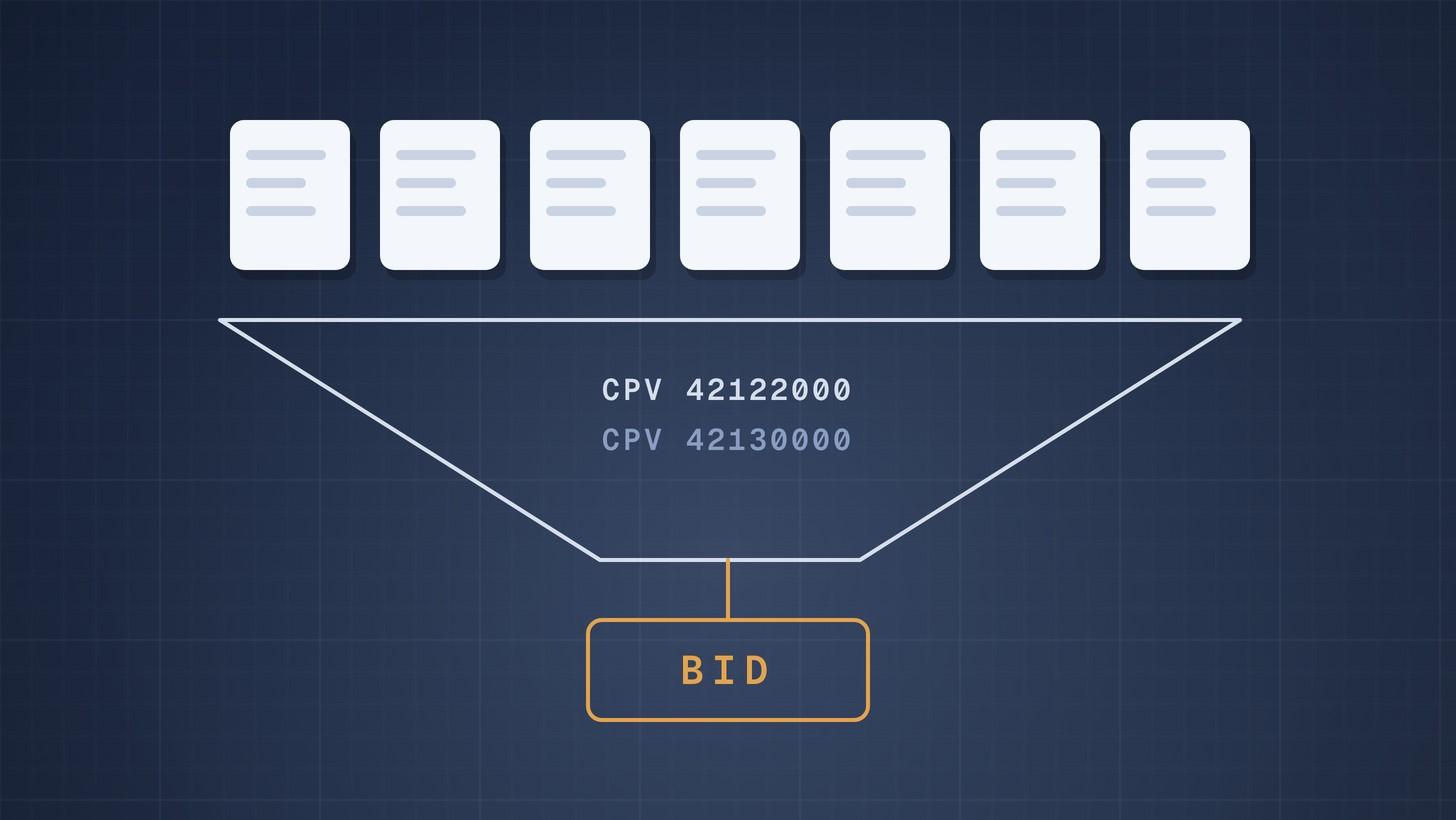
How to Find Tenders for Pumps, Valves and Process Equipment
Public tenders for process equipment are published free on Find a Tender in the UK, TED in the EU and SAM.gov in the US. Here is how to set alerts with the right CPV codes and where utility frameworks fit.

Framework Agreements for Pumps, Valves and Instruments: When They Beat Project Buying
A frame agreement for pumps, valves or instruments pays off when you buy the same types repeatedly. Here is when it beats project by project buying, what to put in it, and a worked example.